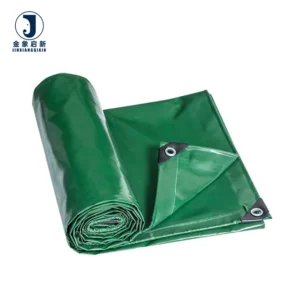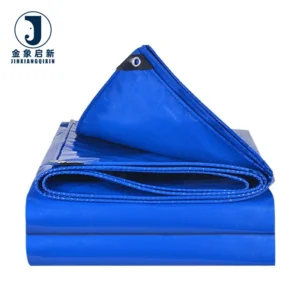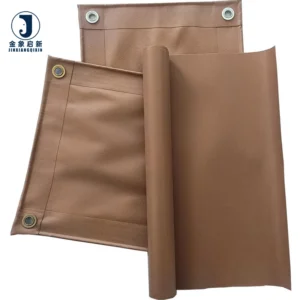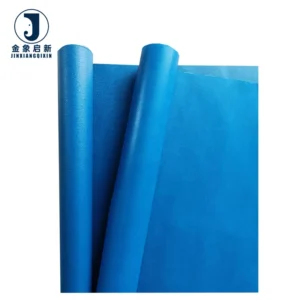
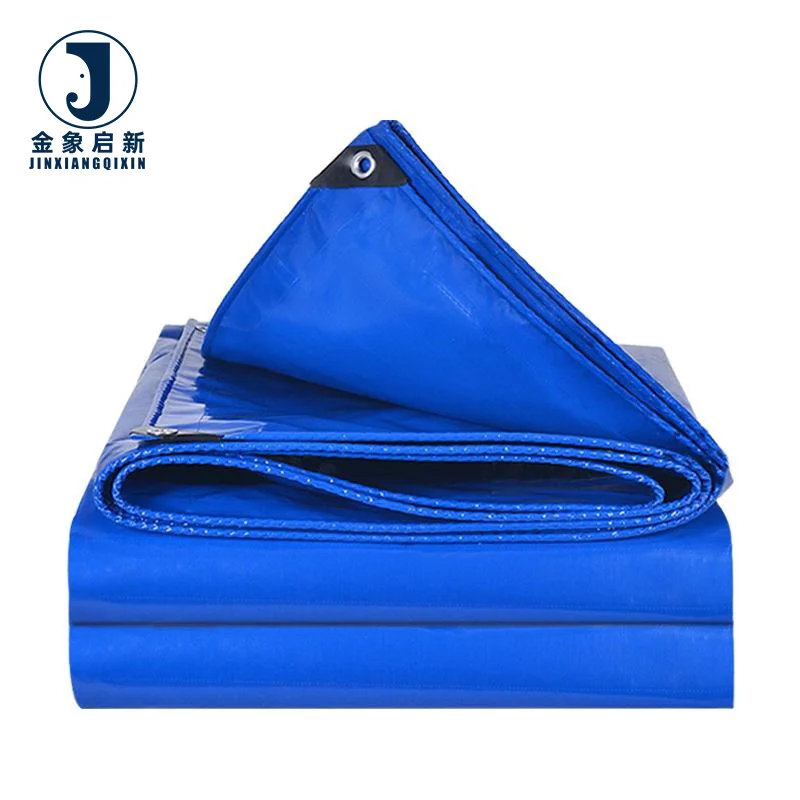
Coating Weight Control — Every roll of PVC coated tarpaulin material coating technology GSM we ship is verified against the quoted specification before dispatch, ensuring technical buyers receive exactly the fabric they engineered for.
Technical Specifications
| Parameter | Value |
|---|---|
| Product Type | PVC Coated Tarpaulin |
| Base Fabric | High-strength polyester mesh |
| Coating Method | Laminated technology & Hot-melt Coating technology |
| Weight Options | 350gsm / 420gsm / 500gsm / 550gsm / 600gsm / 750gsm |
| Total Thickness | 0.32mm / 0.35mm / 0.4mm / 0.45mm / 0.5mm / 0.65mm |
| Roll Width | 2m / 2.1m |
| Roll Length | 75m (for 2m width) / 50m (for 2.1m width) |
| Surface Finish | Glossy or Matt |
| Color Options | Blue, Red, Yellow, Light blue, Grey (Custom colors available) |
| Waterproof | Double-sided 100% waterproof construction |
| Anti-Static | Anti-static treatment available — confirm grade required for your site |
| Anti-Mildew | Yes |
| Cold Crack Resistance | Yes |
| Key Features | High tenacity yarns, strong adhesion for welding, outstanding tearing strength, best color fastness |
| Service Life | 3–7 years under normal circumstances |
| Standards | ISO, CE |
Application Suitability
| Application | Exposure & Requirement |
|---|---|
| Poultry coop curtains | Ammonia-laden air, daily mechanical rolling, moisture exposure, anti-static to reduce dust adhesion |
| Truck awning and cargo covers | Constant flexing at tie-down points, road debris abrasion, UV and rain exposure |
| Construction site enclosure | Wind load, scaffolding contact abrasion, weather exposure over multi-month projects |
| Fish tank and pool liners | Permanent water immersion, puncture risk from substrate, chemical exposure from water treatment |
| Tent and temporary structure covers | Tension loading at pole and ridge points, repeated folding and unfolding, sun exposure |
What the Coating Layer Actually Does Beyond Adding Weight
Coating weight alone does not determine how the fabric behaves on the welding table or under tension — the base fabric construction and adhesion method are equally critical to the finished performance.
Technical buyers often receive a quotation stating a specific GSM, only to find the delivered roll feels lighter or behaves differently during fabrication. The PVC coated tarpaulin material coating technology GSM figure tells you the total mass per square metre, but it does not reveal how that mass is distributed between the base yarn and the PVC compound. A 550gsm fabric with a dense base weave and thin coating will tear and weld very differently from a 550gsm fabric with a loose weave and thick coating layer. [NEED_CITE: relationship between GSM distribution and tensile performance in PVC coated polyester fabrics] Without a material specification sheet breaking down base fabric weight and coating weight separately, buyers are specifying on incomplete information.
Hot-Melt vs Laminated Coating: What It Means for Your Welding Setup
Hot-melt coating penetrates the polyester mesh more deeply during application, creating a mechanical bond between the PVC compound and individual yarns. This method generally delivers stronger peel resistance at the cut edge, which matters when fabricators slit rolls to custom widths and then heat-weld seams along those edges. Laminated technology applies pre-formed PVC film to the base fabric under heat and pressure, producing a more uniform surface that suits applications requiring consistent gloss or matt finish across long runs.
Coating Adhesion and Seam Integrity in the Field
When a truck awning flexes under wind load or a poultry curtain rolls and unrolls daily, the stress concentrates at the welded seam before it reaches the body of the fabric. Poor adhesion between the PVC layer and the polyester mesh allows the coating to separate under cyclic loading, leaving the bare base fabric exposed to moisture and abrasion. Both hot-melt and laminated coating methods on this product family are controlled to maintain adhesion strength through the full GSM range, so the weld line holds as long as the surrounding material does. [NEED_CITE: peel strength test methods for PVC coated fabrics per ISO standards]
Reading GSM, Thickness and Base Fabric Together
The GSM value, total thickness and base fabric denier must be evaluated as a set rather than in isolation. A 750gsm grade at 0.65mm thickness carries more PVC compound per square metre than a 350gsm grade at 0.32mm, but the heavier grade only delivers proportionally higher tensile and tear strength if the base mesh is correspondingly denser. For poultry curtain applications where the fabric must remain flexible enough for daily rolling, a mid-range GSM with a fine-denier base mesh often outperforms a heavier grade with coarser yarns that stiffen in cold weather. The thickness measurement also indicates how much coating sits above the weave, which affects abrasion resistance at contact points and the depth of heat penetration required during hot-air welding.
The Hidden Cost of Specifying on GSM Without Verification
Rolls that arrive below the quoted GSM typically have thinner coating or a lighter base fabric than specified, and the shortfall only becomes apparent after fabrication is complete. A truck cover welded from under-weight material may fail at the seam within months rather than years, forcing warranty claims and fleet downtime. For agricultural curtain buyers, inconsistent coating weight across rolls in the same shipment causes visible stiffness variation once installed, with some panels sagging and others holding rigid. Colour can also shift between batches when coating thickness varies, making side-by-side panels visibly mismatched on a completed structure. [NEED_CITE: field failure patterns in PVC coated tarpaulin related to GSM deviation]
Why Fabricators and Technical Buyers Source This Range Here
Deep process control over coating weight and adhesion is maintained across all six GSM grades in this product family, not just the high-volume middle ranges. The 10-person R&D team develops samples within days for custom GSM, colour and treatment combinations, letting fabricators test weld parameters and tensile behaviour before committing to a production run. Three full production lines and 36 sets of professional equipment support roll stock availability and bulk orders with consistent quality across batches. Every order ships with a material specification sheet stating the exact GSM, base fabric type, coating method and colour reference — so you can verify the PVC coated tarpaulin material coating technology GSM matches what you specified. Dedicated QA/QC runs at every production stage, with 100% pre-shipment inspection before any roll leaves the facility.
Documentation & Verification
- Material specification sheet stating exact GSM, base fabric construction and coating weight per roll
- Test reports for UV and flame-retardant grades available where applicable — request with your inquiry
- Pre-shipment inspection record with roll-by-roll weight and dimension verification
- ISO and CE certificates included with dispatch documentation package
- Certificate of origin and customs support documents provided for export shipments
Fabrication, Handling & Storage
- Hot-air welding temperature should be calibrated to the specific GSM grade and coating method — test on offcuts first
- Store rolls upright on pallets to prevent flat-spot deformation on the 2m or 2.1m width
- Unroll in temperatures above 5°C to avoid cold crack damage on the PVC coating surface
- Glossy finish panels require non-abrasive cleaning agents to preserve surface appearance over time
- Anti-static treated rolls should be handled with grounded equipment to maintain treatment effectiveness during fabrication
Specifying the Right Grade for Your Project
Tell us the application environment, the mechanical loads the fabric will face and any compliance requirements your market imposes. Specify whether you need roll stock in standard widths or finished panels cut to your dimensions, along with your colour and surface finish preference. If anti-static or other treatment is required on site, share the test standard or certification your facility demands so we can confirm grade availability before quotation.
Frequently Asked Questions
Q: How is GSM verified and what documentation supports the quoted weight?
A: Every roll is weighed and measured during pre-shipment inspection, and the results are recorded on the inspection report that ships with your order. The material specification sheet provided with each dispatch states the exact GSM, base fabric type and coating weight. If you require third-party weight verification, request this when placing your order so we can arrange it before dispatch.
Q: What is the relationship between GSM, base fabric denier and tensile strength?
A: GSM tells you total mass per square metre, but tensile and tear strength depend primarily on the base fabric denier and weave density. Two fabrics at the same GSM can perform very differently if one uses heavier coating and lighter yarn. We provide full base fabric construction data on the specification sheet so you can evaluate strength independently of weight.
Q: Laminated vs hot-melt coating: which method suits my welding process?
A: Hot-melt coating penetrates the mesh more deeply, giving stronger peel resistance at cut edges — suited to fabricators who slit and weld extensively. Laminated coating produces a more uniform surface, ideal for applications where finish consistency matters. Test samples of both methods are available so you can run weld trials on your own equipment before ordering.
Q: Can you supply test reports for anti-static treatment?
A: Anti-static treatment is available on this product family, but the grade and test basis vary by market requirement. Share the standard your site or customer specifies — such as surface resistivity range or discharge time — and we will confirm which grade applies and provide the corresponding test documentation with your shipment.
Q: What documentation ships with the rolls or cut-size tarps?
A: Standard documentation includes a material specification sheet, pre-shipment inspection record, roll packing list, ISO and CE certificates, and certificate of origin. For orders requiring UV or flame-retardant test reports, these are included where applicable. Confirm your full documentation requirements at inquiry stage so everything is prepared before dispatch.