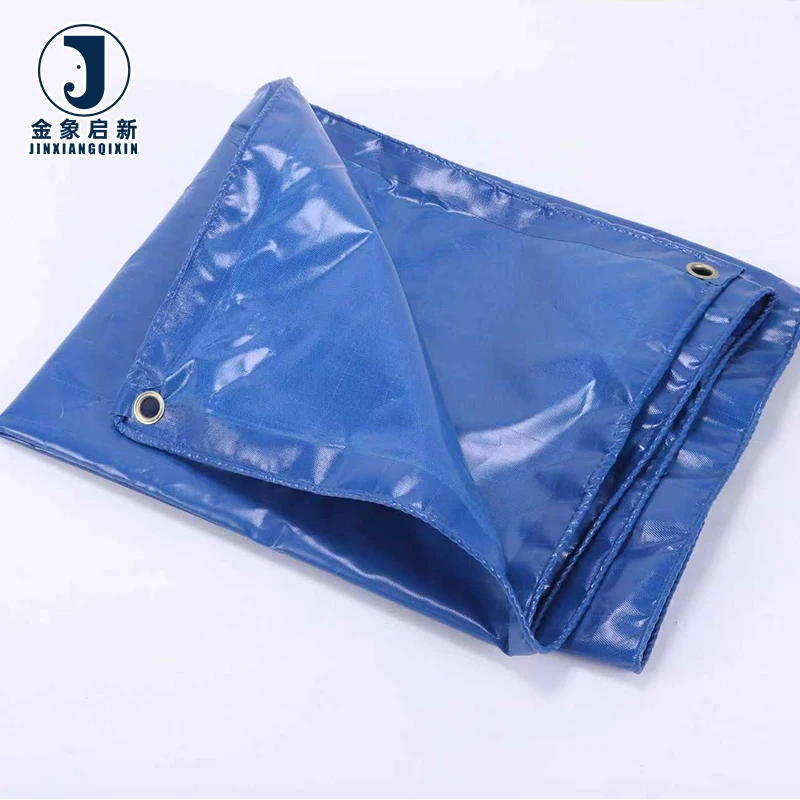
Coated Fabric Process Control — Every roll of PVC coated tarpaulin we dispatch is checked against the material specification sheet for coating weight, adhesion and surface finish before it leaves the factory.
Technical Specifications
| Parameter | Value |
|---|---|
| Product Type | PVC Coated Tarpaulin |
| Base Fabric | 500D×500D Polyester |
| Coating Material | PVC (double-sided) |
| Weight Range | 450–900 g/m² |
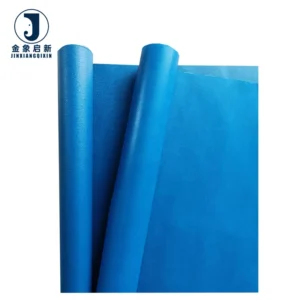
| Surface Finish | Smooth, soft with leather-like texture |
| Water Resistance | Fully waterproof coated construction |
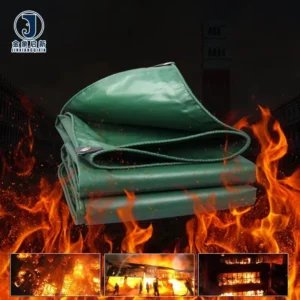
| Flame Retardancy | Available in flame-retardant grades — confirm the grade required for your market |
| UV Resistance | Anti-UV treatment available — test basis to be confirmed per order |
| Abrasion Resistance | High |
| Repairability | Hot air weldable |
| Packaging Options | Roll packing, bale packing, carton |
Application Suitability
| Application | Exposure & Requirement |
|---|---|
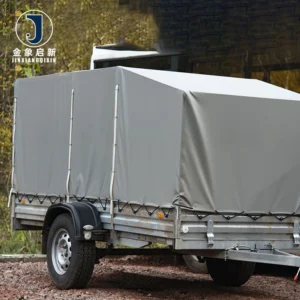
| Truck and trailer side curtains | Constant flexing at load points, road debris abrasion, prolonged UV exposure |
| Machine and equipment covers | Outdoor weathering, dust ingress prevention, repeated fitting and removal |
| Awning and tent fabric | Tensile load under wind, welded seam integrity, colour consistency across panels |
| Wood and construction stock covers | Long-term water contact, puncture from stacked material, site UV degradation |
| Car and vehicle protective covers | Surface abrasion from fitting, UV and rain exposure during outdoor parking |
Why "GSM on Paper" Fails When the Roll Arrives
Coating weight must be verified at every production stage, not just written on the quotation.
A recurring frustration among PVC coated polyester fabric manufacturer buyers is opening a container only to find the material feels lighter and thinner than the sample approved weeks earlier. The quoted GSM and the delivered GSM diverge because coating thickness was not controlled during production, or because a lighter base fabric was substituted to hold the headline weight. [NEED_CITE: tensile and tear test methods for coated fabrics per ISO 1421]. When this happens, the entire downstream fabrication plan — cutting layout, seam allowance, weld temperature — shifts against the fabricator’s expectations. Technical buyers specifying material properties need a PVC coated polyester fabric manufacturer that treats GSM as a production control parameter, not a marketing number.
Base Fabric as the Structural Backbone
The 500D×500D polyester base fabric is what gives this PVC coated tarpaulin its dimensional stability and resistance to tear propagation. Denier determines how much load each yarn can carry before breaking, and a balanced warp-and-weft construction means the fabric behaves predictably under biaxial tension — critical when a truck side curtain is pulled taut or an awning panel is tensioned across a frame. For technical buyers evaluating PVC coated polyester fabric for structural applications, the base weave is where performance starts.
Coating Adhesion and Weld Behaviour
Double-sided PVC coating, applied with controlled weight across the stated 450–900 g/m² range, creates a continuous waterproof barrier and a surface that responds predictably to hot air welding. [NEED_CITE: hot air welding parameters for PVC coated polyester substrates]. When coating adhesion to the base fabric is strong, welded seams fail at a higher load than the fabric itself — meaning the join outlasts the panel. This is the opposite of what happens when coating delaminates at the weld line, leaving the seam as the weakest point in the assembled cover. Fabricators producing awnings and tent structures from PVC coated polyester fabric depend on this consistency roll after roll.
Reading the Specification Sheet Beyond GSM
GSM alone does not define how the material will perform under load. A 650 g/m² fabric woven from 500D yarn with high thread count will resist tear propagation differently from one using heavier yarn at lower density, even though both read the same on the scale. Coating method matters equally: knife-over-roll application builds coating weight in controlled layers that bond tightly to the substrate, while simpler methods may achieve the target weight but with weaker adhesion and inconsistent surface finish. The smooth, leather-like surface of this PVC coated tarpaulin is a direct result of the coating process — it affects how the material handles dirt accumulation, how printed graphics adhere, and how easily the surface can be cleaned in service. Buyers should request the material specification sheet and compare base fabric denier, coating method, and stated adhesion values alongside the GSM figure.
The Hidden Cost of Wrong Specification Selection
Selecting PVC coated tarpaulin on weight alone creates downstream failures that only appear after installation. Rolls that arrive below the agreed GSM may pass initial visual inspection but tear at the tie-down points within the first season of use. [NEED_CITE: field failure patterns in PVC coated fabric at stress concentration points]. Fabricators who assume a flame-retardant grade meets their local fire code — without verifying the classification — face rejected installations and costly material replacement. Colour variation between rolls in a single order becomes visible the moment two panels hang side by side on a truck curtain or awning frame, forcing the buyer to sort, return, or accept an inconsistent appearance. These problems trace back to specification gaps at the enquiry stage, not to the material itself.
Why Fabricators Source This PVC Coated Polyester Fabric Here
- Coating weight control across the production run — in-process QA checks coating thickness at intervals, so the roll you receive matches the specification sheet, not just the first sample.
- Dedicated pre-shipment inspection — every roll is checked against the order specification before packing, with a documented inspection record accompanying the shipment.
- R&D-supported customisation — width, colour, surface finish and printing are handled by a ten-person technical team that develops samples within days for evaluation.
- Hot air welding support — the team can advise on weld temperature and speed for the specific GSM and coating formulation you order, reducing trial-and-error on your production floor.
- Complete documentation per shipment — material specification sheets, test reports for claimed treatments, and packing lists are prepared as standard, not as afterthoughts.
Documentation & Verification
- Material specification sheet confirming GSM, base fabric denier, and coating type for each roll
- UV and flame-retardant test reports supplied where applicable to the ordered grade
- Pre-shipment inspection record with individual roll weight verification
- ISO and CE certificates available with dispatch documentation
- Certificate of origin and customs support for international shipment
Fabrication, Handling & Storage
- Hot air welding suits this PVC coated tarpaulin; confirm temperature settings for the specific GSM ordered
- Store rolls vertically on end caps to prevent permanent creasing across the 500D polyester base
- Avoid folding the smooth PVC surface sharply, as crease marks may remain visible after unfolding
- Use PVC-compatible cleaners to preserve the leather-like surface finish and coating integrity
- Allow cold-stored rolls to reach ambient temperature before unrolling to prevent coating cracking
- Plan cutting layout to minimise transverse welds, which concentrate stress in high-flex applications
What to Include in Your Enquiry
To help us match the right PVC coated polyester fabric specification to your application, provide the end-use environment and exposure conditions, the target market fire safety classification if flame retardancy is required, and the roll width and annual volume you work with. Let us know whether you need raw roll stock for your own fabrication line or finished cut-to-size panels, and whether colour matching or printed branding is part of the order. Sample rolls can be developed for your evaluation before bulk production begins.
Frequently Asked Questions
Q: How is the stated GSM verified before the rolls leave the factory?
A: Coating weight is checked at intervals during production, and each roll is weighed and measured against the material specification sheet before packing. A pre-shipment inspection record documents these readings and accompanies the dispatch, so you can cross-reference the delivered material with the original specification rather than relying on the quotation alone.
Q: What test reports are provided for flame-retardant or anti-UV grades?
A: Where flame-retardant or anti-UV treatment is specified, the applicable test report is included with the shipment documentation. The exact classification depends on the grade ordered and the standard your market requires, so confirm the target standard at enquiry stage to ensure the correct grade is produced and tested.
Q: Can roll width, colour and printing be customised within a single order?
A: Yes. Custom widths, colours and printed branding are handled by our R&D team, and samples are developed for approval before bulk production runs. Colour consistency across rolls in the same batch is controlled through in-process coating checks, reducing visible panel-to-panel variation once the material is installed.
Q: How does GSM relate to tensile and tear strength in this fabric?
A: GSM reflects total weight of base fabric and coating combined, but tensile and tear performance depend on base yarn denier and weave density as much as on coating weight. A 500D×500D polyester base provides structural strength that coating alone cannot substitute for, so both parameters must be evaluated together when selecting PVC coated tarpaulin for load-bearing applications.
Q: Why choose hot air welding over sewing for seam construction?
A: Sewing punctures the PVC coating and base fabric, creating water ingress paths and stress concentration points along the stitch line. Hot air welding fuses the PVC coating layers across the seam without needle holes, producing a continuous waterproof join that, when correctly executed, outlasts the surrounding fabric panel in service.