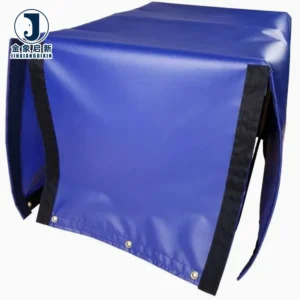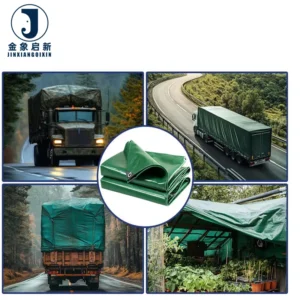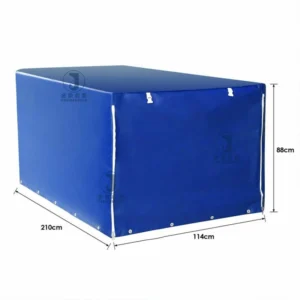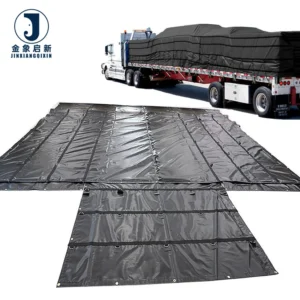
Deep Coating Process Control — Consistent GSM and adhesion verified at every production stage across hot melt and lamination coating routes for PVC coated tarpaulin roll stock.
Technical Specifications
| Parameter | Value |
|---|---|
| Product Type | PVC Coated Tarpaulin Roll |
| Coating Material | PVC |
| Base Fabric | 100% high toughness polyester yarn |
| Base Fabric Denier | 500D (medium) / 1000D (heavy-duty) / 500D–2000D (super heavy) |
| Coating Method | Lamination technology and hot melt coating technology |
| Weight (GSM) | 400–500 g/m² (medium) / 700–1000 g/m² (heavy-duty) / 1100–1500 g/m² (super heavy) |
| Total Thickness | 0.35–0.45 mm (medium) / 0.70–1.0 mm (heavy-duty) / 1.2–1.5 mm (super heavy) |
| Tensile Strength (Warp/Weft) | 1500–2000 / 1200–1800 N/5cm (medium); 2000–2500 / 1800–2200 N/5cm (heavy-duty); 2500–3000 / 2200–2800 N/5cm (super heavy) |
| Welding Tear Strength | Excellent |
| Color Fastness | Best grade |
| UV Treatment | Available — confirm the grade required for your market |
| Flame Retardant | Available — confirm the grade required for your market |
| Anti-Static | Available — confirm the grade required for your market |
| Cold Resistant Cracking | Claimed |
| Mold Proof | Claimed |
| Waterproof | Claimed |
| Outdoor Weather Resistance | 3–5 years |
| Color Options | Blue, Blue/Orange, Green, Grey, Black, Clear, Grey/Green, Orange, or customized |
| Finish | Glossy or matte |
| Custom Width and Length | Available |
| Standards | ISO, CE |
Application Suitability
| Application | Exposure & Requirement |
|---|---|
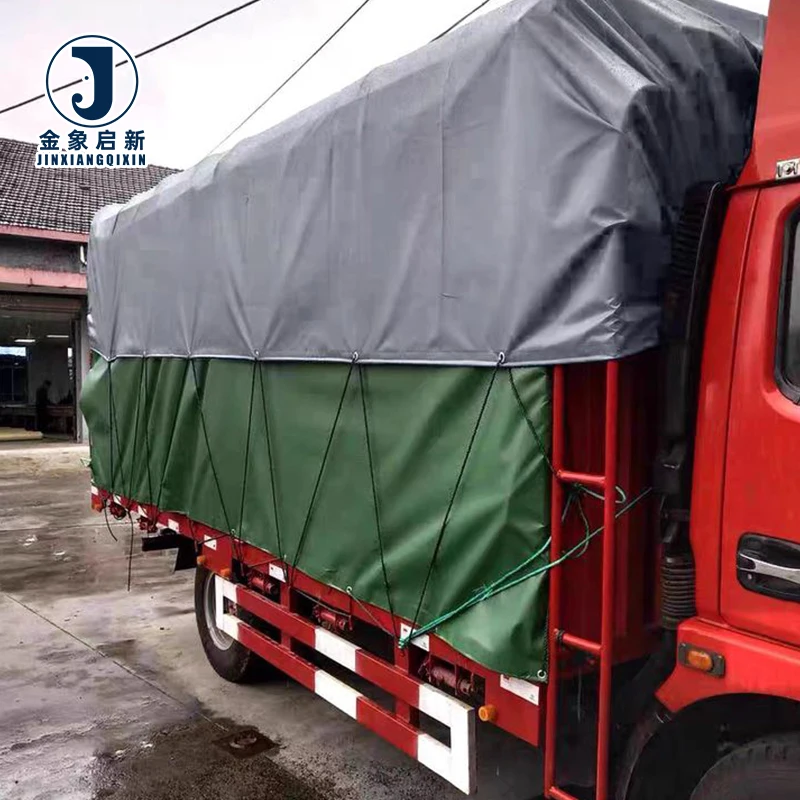
| Heavy truck side curtain | Constant flexing at load points, road debris abrasion, sustained UV and rain exposure |
| Flatbed trailer load cover | High wind load during transit, tie-down stress at hems, temperature cycling |
| Industrial pipe canopy | Long-term static tension, chemical-laden atmosphere, UV degradation risk |
| Tensioned membrane structure | Permanent structural loading, weld seam integrity under wind uplift, fire code compliance |
| Construction site equipment cover | Puncture from sharp edges, pooling water, repeated fold-unfold cycles |
| Agricultural stockpile cover | Moisture ingress prevention, wind flap fatigue, seasonal UV exposure |
Why GSM Without Tensile Data Leaves You Guessing
GSM tells you how much material is on the roll, not how that material will behave under load.
I have seen technical buyers approve a PVC coated tarpaulin based solely on a 900 GSM quotation, only to find the fabric tears at the hem eyelets during the first tie-down. The weight was there, but the base fabric denier and weave density were not matched to the tensile requirement. A heavier coat can mask a lighter base yarn, and without verified warp and weft tensile figures alongside the GSM figure, the specification is incomplete. [NEED_CITE: tensile and tear test methods for coated fabrics per ISO 1421]
How Coating Method Shapes Fabric Performance
Lamination and hot melt coating represent two distinct routes to bonding PVC to a polyester base. In lamination, a pre-formed PVC film is thermally fused to the woven scrim, yielding a uniform coating weight across the roll width. Hot melt coating applies liquid plastisol directly onto the base fabric, allowing the PVC to penetrate the weave interstices for stronger mechanical adhesion. For PVC coated tarpaulin destined for heat-welded fabrication, the coating method influences the temperature window and dwell time needed for a reliable seam.
What Denier Selection Means for Tear Propagation
The base fabric denier directly governs how a puncture or cut propagates through the material. A 500D yarn in the medium grade provides adequate tear resistance for short-term construction covers and light equipment wrapping. Moving to 1000D in the heavy-duty grade increases the individual yarn cross-section, meaning a tear must break substantially more fibre before it spreads. In super heavy applications using up to 2000D yarn, the weave density works with yarn thickness to arrest tear growth at structural stress points — critical for tensioned membranes and permanent truck curtain installations. [NEED_CITE: relationship between yarn denier and tear propagation in woven coated fabrics]
Reading the Specification Sheet Beyond Weight
GSM, base fabric denier, and coating weight are interdependent, and treating any one of them in isolation leads to specification errors. A 900 g/m² fabric built on a 1000D base with hot melt coating will deliver different tensile and tear behaviour than a 900 g/m² fabric where extra PVC fill compensates for a lighter 500D scrim. The coating method also affects weld behaviour: hot melt coatings tend to flow more readily under a hot wedge or high-frequency welder, producing wider seam contact areas, while laminated films may require precise temperature control to avoid delamination at the bond line. Thickness figures — ranging from 0.35 mm in the medium grade to 1.5 mm in the super heavy grade — correlate with both puncture resistance and fabric stiffness, which in turn determines how the material handles during fabrication and installation on a trailer frame.
The Hidden Cost of a Specification Mismatch
When the base fabric denier is too low for the intended load, the first failure rarely appears in the field of the fabric — it shows up at the welded seam or the hem eyelet, where stress concentrates. A flame retardant claim without a supporting test report means the material may pass a visual inspection but fail a site audit, leaving the contractor unable to obtain occupancy sign-off. Colour variation between rolls in the same shipment becomes visible once panels are installed side by side on a trailer or canopy, forcing selective panel replacement and schedule delay. [NEED_CITE: common failure modes in coated fabric installations linked to specification gaps]
Why Technical Buyers Source This PVC Coated Tarpaulin Here
Three full production lines and 36 sets of professional equipment allow this PVC coated tarpaulin to be manufactured with consistent coating weight control across the entire roll width. The 10-person R&D team develops custom formulations and sample rolls within days, so buyers can evaluate actual material behaviour before committing to a production run. Dedicated quality checks occur at every stage — from base fabric inspection through coating application to final winding — with 100% pre-shipment inspection covering GSM verification, colour consistency, and surface defect screening. Hot melt and lamination coating capabilities mean the supplier can recommend the bonding method best suited to the buyer’s fabrication process, whether that involves high-frequency welding, hot wedge seaming, or sewn construction.
Documentation & Verification
- Material specification sheet listing base fabric denier, coating method, and measured GSM per roll
- UV and flame retardant test reports matched to production batch where treatments are specified
- Pre-shipment inspection record confirming colour consistency and surface quality across all rolls
- Roll packing list with individual roll weights and dimensions for receiving verification
- Certificate of origin and customs documentation for international shipment clearance
- ISO and CE certification documents available for compliance review
Fabrication, Handling & Storage
- Hot wedge welding temperature must be calibrated to the specific coating method — hot melt and laminated grades respond differently to heat input
- Eyelet spacing and hem reinforcement should match the tensile grade of the selected GSM range to prevent pull-through under tie-down load
- Store rolls upright on a flat surface to prevent permanent creasing in heavier 1100–1500 g/m² grades
- Allow cold-stored rolls to reach ambient temperature before unrolling to avoid cracking in cold resistant grades
- Use mild detergent for cleaning; solvent-based cleaners may degrade the PVC coating surface on both glossy and matte finishes
- Plan panel layout to minimise cross-width seams, particularly in super heavy grades where weld stiffness affects drape
Preparing Your Enquiry
To receive an accurate material recommendation, share the end-use application and the environmental exposure conditions the fabric will face — including wind load, chemical contact, and fire code requirements in your target market. Specify whether you need roll stock in standard widths or custom cut-to-size panels, along with annual volume estimates. If colour matching or flame retardant certification is required, include the specific grade or colour reference so that sample development can begin immediately.
Frequently Asked Questions
Q: How is GSM verified on arrival and what documentation supports it?"
A: Each roll ships with a packing list stating measured weight. On receipt, cut a 100 mm × 100 mm sample from the roll edge, weigh it on a calibrated scale, and multiply by 100 to obtain GSM. The material specification sheet included in the shipment documents the target GSM and the allowable tolerance range for the specified grade.
Q: Can flame retardant treatment be certified to a specific grade?
A: Flame retardant grades are available for this PVC coated tarpaulin range. The specific grade — such as B1, M2, or NFPA 701 — must be confirmed at enquiry stage so the correct formulation is applied and a matching third-party test report is included with shipment documentation.
Q: What causes colour variation between rolls and how is it controlled?
A: Batch-to-batch pigment dispersion and coating temperature can shift shade across rolls. Production runs for a single order are scheduled consecutively on the same line with identical pigment batches. Pre-shipment inspection includes side-by-side colour comparison of rolls before packing to flag any visible deviation.
Q: How do hot melt and lamination coatings differ for welding?
A: Hot melt coatings penetrate the base weave, producing strong mechanical adhesion and a wider welding temperature window. Laminated films sit on the fabric surface and may require more precise heat control. Request a welding parameter guide matched to your chosen coating method and GSM grade before fabrication.