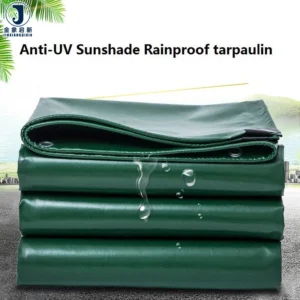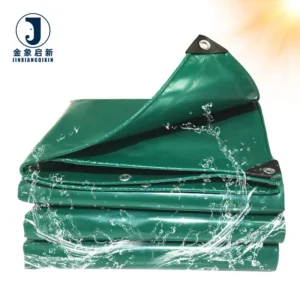
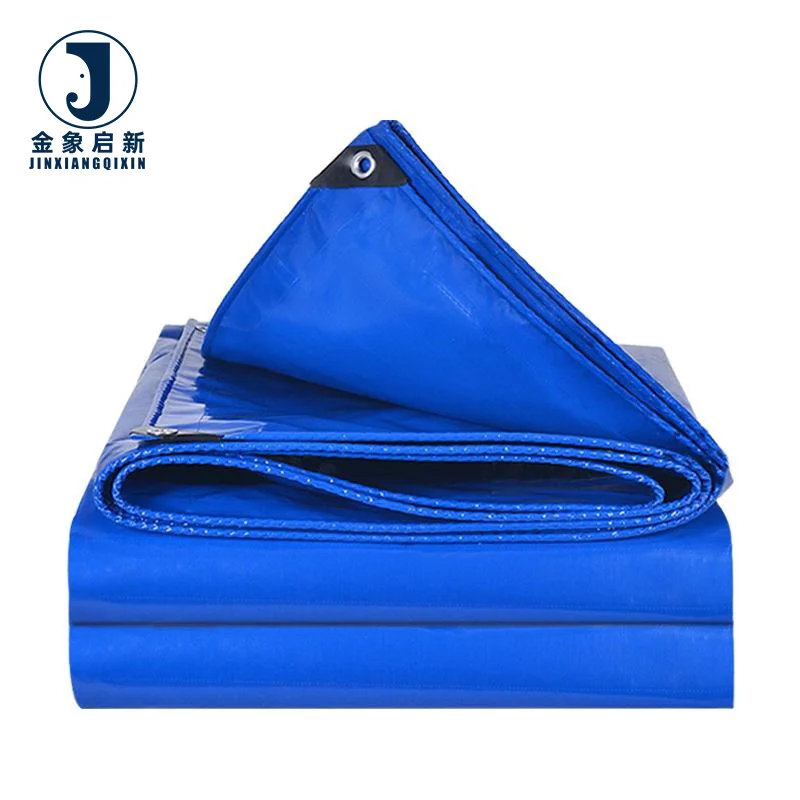
Deep process control — coating weight and base fabric adhesion verified per roll before dispatch, built on decades of PVC coated tarpaulin material GSM coating weight production experience.
Technical Specifications
| Parameter | Value |
|---|---|
| Product Type | PVC Coated Tarpaulin |
| Material | PVC + high-strength polyester mesh fabric |
| Coating Method | Laminated technology & hot-melt coating technology |
| Weight (GSM) | 350gsm / 420gsm / 500gsm / 550gsm / 600gsm / 750gsm |
| Total Thickness | 0.32mm / 0.35mm / 0.4mm / 0.45mm / 0.5mm / 0.65mm |
| Roll Size | 2m × 75m / 2.1m × 50m |
| Surface Finish | Glossy or matt |
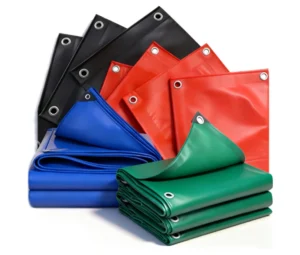
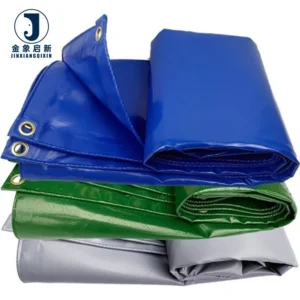
| Colour Options | Blue, red, yellow, light blue, grey (custom colours available) |
| Waterproof | Double-sided 100% waterproof |
| Key Features | Cold crack resistance, anti-mildew, anti-static treatment (grade to confirm), high tensile and tear strength |
Application Suitability
| Application | Exposure & Requirement |
|---|---|
| Poultry curtain for chicken coop | Temperature fluctuation, humidity, ammonia atmosphere, frequent rolling and unrolling |
| Truck awning and side curtain | Constant flexing, road abrasion, UV exposure, wind load at high speed |
| Tent cover and temporary shelter | Rain, sun, repeated assembly and teardown, packing fold stress |
| Construction and scaffolding enclosure | Dust, debris impact, wind, seasonal weather cycling |
| Agricultural and aquaculture cover | Permanent moisture contact, organic chemical exposure, puncture risk from tools |
| Inflatable and membrane structure | Sustained air pressure, seam integrity under tension, UV degradation over time |
Why Quoted PVC Coated Tarpaulin Material GSM Coating Weight Often Fails Verification on Arrival
GSM on paper means nothing without a weight certificate per roll and a documented coating method that ties the number to measurable tensile performance.
Technical buyers routinely receive rolls that feel lighter than the grade they paid for. A PVC coated tarpaulin material GSM coating weight claim of 550gsm may arrive closer to 500gsm when the coating is applied unevenly or the base fabric denier is lower than specified. The shortfall does not show up until the fabric is welded, loaded, or exposed to its first season — by which point the order is already cut and installed. [NEED_CITE: ISO 1421 tensile and tear test methods for coated fabrics]
Coating Method Determines What the GSM Number Actually Delivers
Laminated technology bonds a pre-formed PVC film to the polyester mesh under heat and pressure, producing a uniform coating layer with consistent PVC coated tarpaulin material GSM coating weight across the entire roll width. Hot-melt coating applies liquid PVC directly into the mesh, allowing deeper penetration between yarns. Both methods are available for this product family, and the choice affects peel strength, weld behaviour, and surface smoothness — factors that matter when fabricators run the material through high-frequency welding equipment.
How Base Fabric Denier Interacts with Coating Weight
The polyester mesh carries the mechanical load; the PVC coating protects it and provides the waterproof barrier. A heavier coating on a low-denier base fabric may register a high GSM but still tear easily along the warp or weft. Conversely, a high-tenacity yarn with a moderate coating weight can outperform a heavier, loosely woven alternative. This is why specifying PVC coated tarpaulin material GSM coating weight alone is incomplete without the base fabric construction data. [NEED_CITE: relationship between denier, weave density and tear propagation in coated textiles]
Reading the Thickness-to-GSM Relationship
Total thickness ranges from 0.32mm at 350gsm to 0.65mm at 750gsm. Thickness alone does not predict strength — a 0.45mm fabric with a tight weave and hot-melt coating can resist puncture better than a 0.5mm loosely coated alternative. For poultry curtains that roll and unroll daily, a mid-range grade with strong yarn-to-coating adhesion resists delamination at the fold line longer than a thicker, stiffer material. Technical buyers selecting membrane or inflatable structure fabric should match thickness to the sustained air pressure and seam tension their design imposes, not simply choose the heaviest option available.
Surface Finish and Its Effect on Fabrication and Service Life
Glossy surfaces shed dirt and water more readily, making them practical for poultry curtains exposed to ammonia-rich humidity and frequent washdown. Matt surfaces provide better ink adhesion for custom printing and reduce glare in tent and awning applications. Both finishes are available across the GSM range. The choice also affects high-frequency welding: glossy PVC tends to flow more evenly under the electrode, while matt surfaces may require adjusted power settings to achieve a consistent weld bead. [NEED_CITE: high-frequency welding parameters for PVC coated polyester fabrics]
The Cost of Choosing the Wrong Grade or Finish
A poultry curtain specified at 350gsm to save cost may develop fold-line cracks within the first winter cycle, forcing a full replacement before the second season. A truck awning fabricator who selects a matt finish without adjusting weld parameters risks seam failure at the flex point — the weld line breaks before the fabric does. Batch-to-batch colour drift across rolls in the same order becomes visible once installed side by side on a building enclosure, triggering rejection and rework. Each of these failures traces back to a specification decision made at the inquiry stage, where PVC coated tarpaulin material GSM coating weight was treated as a single number rather than part of a system of material properties. [NEED_CITE: common failure modes in PVC coated fabric installations]
Why Fabricators and Technical Buyers Source This Material Here
Three full production lines and 36 sets of professional equipment support bulk roll output with consistent coating weight across the production run. A 10-person R&D team handles material selection, custom colour matching, and sample development, returning samples within days for evaluation before the main order. Every roll undergoes in-process QA with 100% pre-shipment inspection, including GSM verification against the quoted grade. The laminated and hot-melt coating processes are controlled at each stage to ensure adhesion meets the tensile and tear demands of the specified application. Roll-to-roll colour consistency is checked under controlled lighting before dispatch, reducing the risk of visible variation on site.
Documentation & Verification
- Material specification sheet stating exact GSM, base fabric construction, coating method and surface finish per grade
- Pre-shipment inspection record with actual roll weight measured against the quoted GSM
- Test reports for UV and flame-retardant grades where applicable, referencing the standard used
- Roll packing list with colour batch reference for cross-roll consistency tracking
- ISO and CE certificates, certificate of origin and full customs documentation
Fabrication, Handling & Storage
- High-frequency weld power should be calibrated to the selected glossy or matt surface before production runs begin
- Store rolls upright on pallets in a dry, shaded area to prevent flat-spot deformation on the coating layer
- Unroll cold-stored material gradually at ambient temperature to avoid cracking the PVC surface at the fold
- Use a neutral pH cleaner on glossy surfaces to maintain water shedding without degrading the coating
- Allow minimum 50mm overlap at welded seams on 750gsm grades to distribute load across the joint
- Plan cutting layout to minimise off-cuts, accounting for the 2m or 2.1m roll width against panel dimensions
Specifying the Right Grade for Your Application
To receive an accurate material recommendation, share your end-use application, the environmental conditions the fabric will face, and any fire-retardant or anti-static compliance requirements for your target market. Confirm whether you need roll stock or finished cut-to-size panels, the required roll width and annual volume, and whether custom colour matching or printing is part of the project scope. If weld strength is critical to your design, specify the welding method you use so the coating formulation can be matched accordingly.
Frequently Asked Questions
Q: How is GSM verified before shipment and can I get a weight report per roll?
A: Each roll is weighed during pre-shipment inspection and compared against the quoted GSM grade. A weight verification record is included in the dispatch documentation. Buyers can recheck on arrival using a calibrated scale and a measured sample cut from the roll edge. Discrepancies are addressed before the container is sealed.
Q: What is the relationship between GSM, thickness and tensile or tear strength?
A: GSM reflects total weight per square metre including base fabric and coating, while thickness measures the cross-section. Neither alone predicts strength. Tensile and tear performance depend on the polyester yarn denier, weave density, and how well the coating bonds to the mesh. Request the full specification sheet to evaluate all three factors together.
Q: Laminated vs hot-melt coating — which method suits my fabrication process?
A: Laminated coating gives a smooth, uniform surface ideal for high-frequency welding and printing. Hot-melt coating penetrates deeper into the mesh, improving peel strength and tear resistance at the yarn level. The right choice depends on your welding method, seam design, and whether the finished product requires printed graphics.
Q: How is batch colour consistency controlled across multiple rolls in one order?
A: Colour is matched against a reference standard at the coating stage, and every roll in the order is checked under controlled lighting before packing. A colour batch reference is recorded on the packing list so you can trace any roll back to its production run. Request a physical sample before confirming bulk if exact shade is critical.
Q: What test standards apply to UV treatment and flame retardancy for my target market?
A: UV and flame-retardant treatments are available in multiple grades. The applicable standard depends on your end-use market — building codes, transport regulations, and mining safety requirements each reference different test methods. Confirm the grade and standard required for your application at the inquiry stage so the correct formulation and test report are supplied.