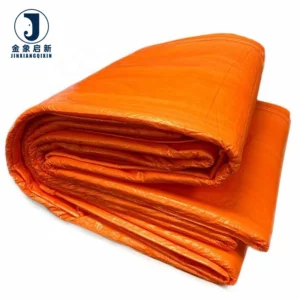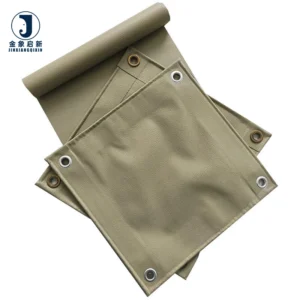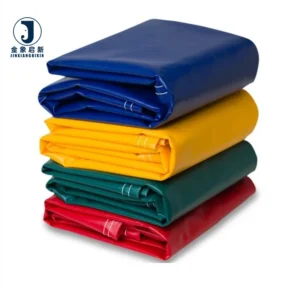
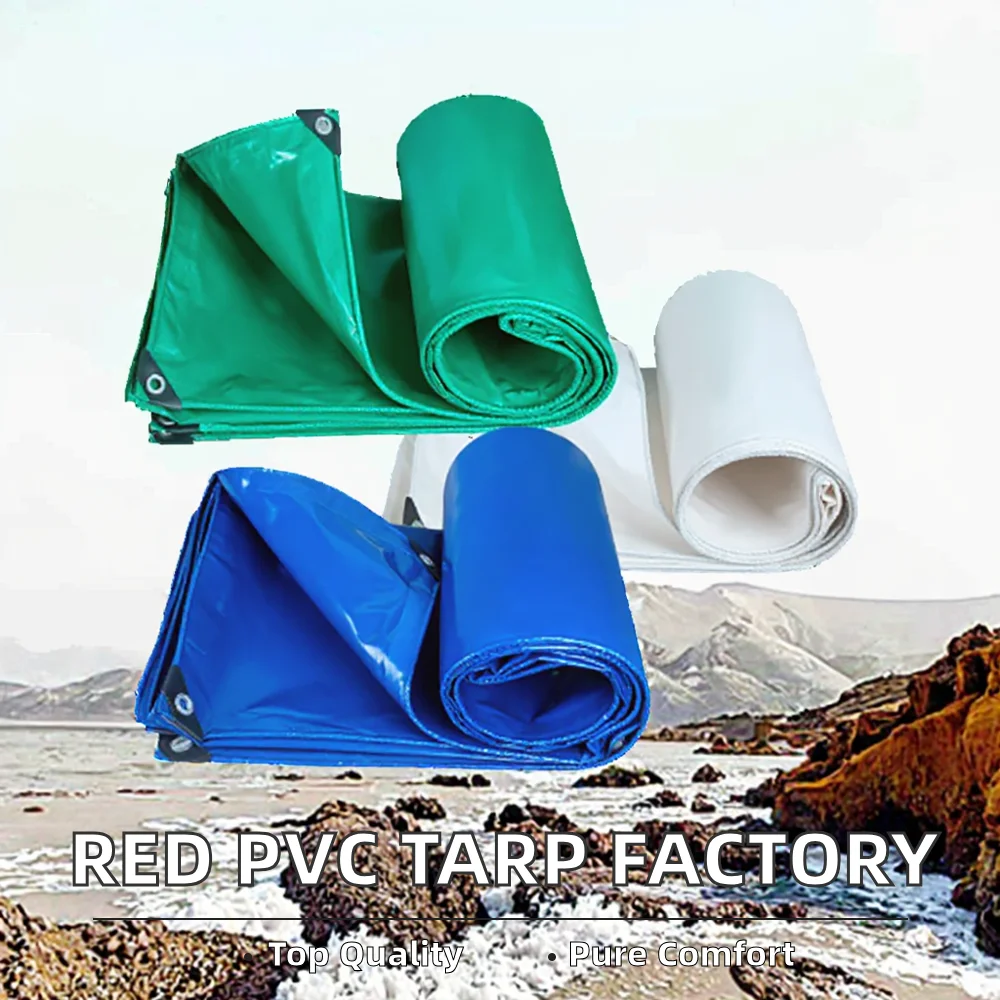
Process-Controlled Coating — Every roll of PVC coated tarpaulin fabric undergoes knife coating with verified adhesion between base fabric and PVC layers, ensuring consistent performance across the batch.
Technical Specifications
| Parameter | Value |
|---|---|
| Product Type | PVC Coated Tarpaulin Fabric |
| Material | PVC coated polyester fabric |
| Coating Method | Knife coated |
| Base Fabric Denier | 1000×1000 |
| Coating Material | PVC |
| Weight (GSM) | 420 g |
| Flame Retardant | Available — confirm grade required for your market (grade not stated) |
| Anti-Static | Available — confirm standard required (standard not stated) |
| Anti-UV | Treatment available — request test basis for your exposure requirements |
| Anti-Cold | Treatment available |
| Anti-Mildew | Treatment available |
| Waterproof | Fully waterproof coated construction |
| Custom Size | Available |
Application Suitability
| Application | Exposure & Requirement |
|---|---|
| Truck cover fabric | Constant road vibration, UV exposure, flexing at tie-down points, abrasion from cargo movement |
| Outdoor tent | Sustained weather exposure, wind loading on seams, UV degradation, periodic wet-dry cycles |
| Car cover | Direct sunlight, temperature fluctuation, dust and moisture ingress, repeated folding and unfolding |
| Banner | Outdoor UV exposure, wind tear risk, print surface adhesion, long-term colour retention |
| General outdoor waterproof cover | Standing water, ground contact, puncture from debris, mildew in humid storage |
Why Declared GSM Does Not Guarantee Coating Integrity
A stated GSM is only meaningful when paired with verified base fabric denier and coating weight data.
Material arrives on site and the roll feels lighter than expected. The quotation states 420 g, but the actual weight per square metre is lower — and without a breakdown of base fabric weight versus coating weight, there is no way to determine where the shortfall occurred. Technical buyers and fabricators need more than a single number; they need documentation that traces GSM back to its components. [NEED_CITE: ISO 1421 test methods for tensile properties of rubber or plastic coated fabrics]
When PVC coated tarpaulin roll base fabric denier coating weight GSM data is absent from the specification sheet, downstream fabrication decisions — heat welding temperature, seam allowance, eyelet spacing — are made on guesswork. This is where early failures begin.
Knife Coating and Adhesion Performance
The knife coating process applies PVC directly onto the 1000×1000 polyester base fabric under controlled tension. Unlike laminated constructions where a pre-formed film is bonded to the substrate, knife coating forces the PVC compound into the interstices of the weave. This produces a mechanical lock between coating and yarn, which directly affects peel strength at welded seams. For fabricators joining panels by hot-air or wedge welding, consistent coating adhesion across the roll width determines whether the weld holds or the coating delaminates under flex load.
Weave Density and Tear Propagation
The 1000×1000 denier construction provides a balanced warp-and-weft density that resists tear propagation in both machine and cross directions. When a puncture or cut occurs in service — common at truck tie-down points or tent corner gussets — the tear tends to follow the yarn path. A tighter, higher-denier weave forces the tear to break more yarns per centimetre of travel, slowing the spread. PVC coated tarpaulin fabric with this denier range suits applications where localised damage must not become catastrophic failure.
How Coating Weight, Base Fabric, and GSM Interact
The declared 420 g GSM is the combined weight of the polyester base fabric and the applied PVC coating layers. Understanding this split matters for specification: a heavier base fabric with lighter coating yields high tensile strength but reduced surface abrasion resistance, while a lighter base with thicker coating offers good waterproofing but may lack structural rigidity. The 1000×1000 denier base at this weight class positions the material for medium-duty applications where balanced tensile and surface performance is required. [NEED_CITE: relationship between base fabric construction and coated fabric tensile performance]
Knife coating also influences the surface finish. The coating compound is metered across the fabric by a precision blade, producing uniform thickness. This consistency supports predictable heat welding parameters — when coating thickness varies across the roll, weld temperature must be adjusted zone by zone, increasing scrap rates during fabrication.
The Hidden Cost of Undocumented Specifications
Rolls arrive from different production batches with visible colour variation once installed side by side on a truck curtain or tent structure. Flame retardant is claimed on the quotation but no test report accompanies the shipment, and the site safety officer rejects the material at inspection. Anti-UV treatment is specified but without documented test exposure duration, making it impossible to predict when chalking or embrittlement will begin. These are not rare events — they represent recurring procurement friction when specification documentation is incomplete. [NEED_CITE: DIN 4102 fire classification for building materials and textile structures]
Why Source This PVC Coated Tarpaulin Fabric Here
Three full production lines and 36 sets of professional equipment maintain output consistency across large-volume roll orders, reducing the risk of batch-to-batch variation that disrupts fabrication schedules.
A dedicated 10-person R&D team handles material selection and sample development, producing test rolls within days when custom width, colour, or treatment combinations are required for evaluation.
Every production stage includes QA/QC checkpoints, with 100% pre-shipment inspection confirming roll weight, colour, and surface quality before dispatch — not a sampling protocol, but full inspection.
Deep process control over coating weight and adhesion, built through nearly 30 years of focused coated fabric production, translates to reliable weld behaviour and predictable fabrication outcomes.
ISO and CE certified manufacturing supports buyers who must submit compliance documentation with their finished products or structures to end clients.
Documentation & Verification
- Material specification sheet detailing 420 g GSM, 1000×1000 denier base, and knife coating method
- Test reports for UV resistance and flame retardant grades where applicable to your market
- Pre-shipment inspection record confirming roll-to-roll weight and colour consistency
- ISO and CE certificates available to support your downstream compliance submissions
- Roll packing list with batch traceability for each roll in the shipment
Fabrication, Handling & Storage
- Heat welding at parameters suited to knife-coated PVC layers — test peel strength on scrap from the same 420 g roll before production runs
- Store rolls upright on end caps to prevent flat-spotting and permanent creasing of the PVC coated surface
- Allow cold-stored rolls to reach ambient temperature before unrolling to avoid cracking the anti-cold treated coating
- Cut patterns accounting for the 1000×1000 denier weave direction to optimise tear resistance at stress points
- Use PVC-compatible cleaners only; solvent-based products may degrade the anti-mildew surface treatment
What to Include in Your Enquiry
Provide the specific exposure conditions your finished product will face — continuous UV, chemical contact, flexing frequency — so that the correct treatment package can be confirmed. Specify the flame retardant grade or fire safety regulation your target market requires, along with any anti-static standards. State your required roll widths, colour references, and whether you need sample rolls before committing to production volume.
Frequently Asked Questions
Q: How can I verify the 420 g GSM on arrival matches the quotation?
A: Request a pre-shipment inspection record that documents actual weight per square metre for each roll in your order. On receipt, use a calibrated scale and a measured sample cut to confirm GSM. The specification sheet should state both the base fabric weight and the coating weight separately, so you can identify where any discrepancy originates.
Q: Which flame retardant grade should I specify for my market?
A: Fire safety regulations vary by region and application — building structures, transport covers, and temporary tents each carry different classification requirements. State the regulation your end client requires, such as DIN 4102, NFPA 701, or local building code references, and request a test report matching that specific grade before production begins.
Q: How does the 1000×1000 denier base fabric affect weld and seam strength?
A: The balanced denier construction provides uniform yarn density in both warp and weft, which supports consistent heat penetration during hot-air or wedge welding. This reduces the risk of partial adhesion or coating delamination at the seam. Always run weld tests on scrap from your actual production roll to confirm parameters.
Q: What test basis should I require for anti-UV treatment claims?
A: Request a test report that documents the exposure method — such as xenon arc or QUV accelerated weathering — and the duration in hours or equivalent exposure period. Without a documented test basis, UV treatment claims cannot be verified against the actual service life your application demands.
Q: Is knife coated PVC fabric better for welding than laminated fabric?
A: Knife coating forces PVC into the base fabric weave, producing strong mechanical adhesion between layers. This generally supports reliable weld behaviour because the coating does not separate from the substrate under heat. Laminated fabrics may show different peel characteristics. Evaluate both with weld tests on actual production material before specifying.