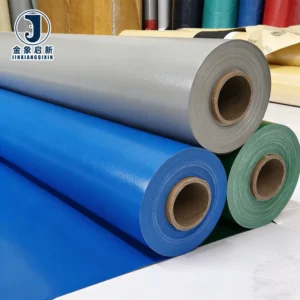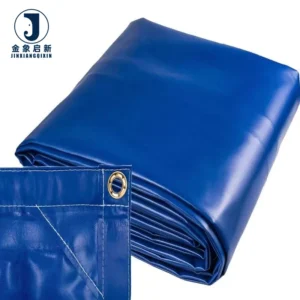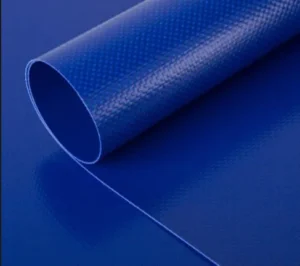
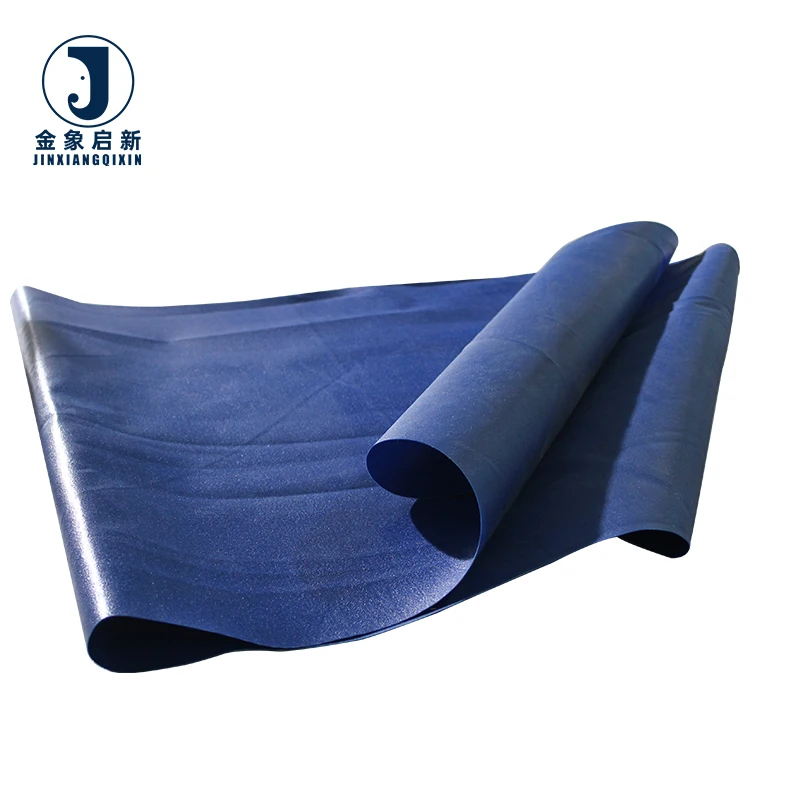
Process-Controlled Coating Weight — Every roll of 550g 600g 650g 900 GSM PVC Coated Fabric Tarpaulin ships with a material specification sheet confirming the stated GSM, base fabric construction and coating adhesion, verified through dedicated QA/QC at every production stage.
Technical Specifications
| Parameter | Value |
|---|---|
| Product Type | PVC Coated Tarpaulin Roll |
| Weight (GSM) | 550g, 600g, 650g, 900g per m² |
| Coating Material | PVC |
| Thickness | 0.2 mm – 0.4 mm (8 mil – 16 mil) / Custom |
| Key Features | Waterproof, tear resistant, washable, mildew proof, anti-aging |
| UV Treatment | Available — test basis not stated in source; confirm grade required for your market |
| Flame Retardant | Available in flame retardant grades — confirm the grade required for your market |
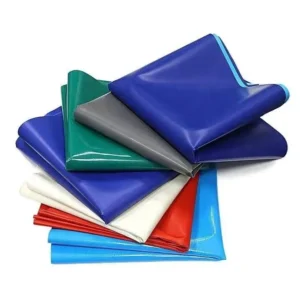
| Colour Options | Blue, Blue/Orange, Green, Grey, Black, Clear, Grey/Green, Orange, or custom |
| Certification | ISO and CE (company level) |
Application Suitability
| Application | Exposure & Requirement |
|---|---|
| Truck and trailer side curtains | Constant flexing at tie-down points, road abrasion, UV exposure, high-frequency welding along seams |
| Tent, awning and membrane structures | Extended outdoor weathering, wind load on welded seams, colour consistency across panels |
| Transport and storage protective covers | Water ingress prevention, puncture risk from sharp cargo edges, repeated handling and folding |
| Roof tent and general outdoor covering | Direct sunlight, rain exposure, mildew risk in humid storage conditions |
Why Stated GSM Does Not Always Match What Arrives on the Dock
Coating weight must be measured and documented per roll, not assumed from a catalogue range.
When a PVC coated tarpaulin roll lands lighter than the quotation promised, the shortfall shows up first at the weld line and then at high-stress flex points. Technical buyers who specify material for truck side curtains or membrane structures know that a 550g 600g 650g 900 GSM PVC Coated Fabric Tarpaulin performs only as well as its verified coating weight and base fabric denier allow. A generic weight range on a product page is not a substitute for a batch-specific material specification sheet [NEED_CITE: tensile and tear test methods for coated fabrics per ISO 1421].
Coating Weight and GSM Relationship
PVC coated tarpaulin roll performance hinges on how coating mass is distributed between the two fabric faces. Higher GSM grades in the 650g to 900g range carry proportionally more PVC on the surface, which improves abrasion resistance and heat-weldability but also increases roll weight and handling effort. The relationship between stated GSM and actual tensile or tear strength is not linear — base fabric denier and weave density act as the structural backbone, while coating weight governs surface durability and seam integrity during fabrication.
Base Fabric Construction and Tear Propagation
The polyester base fabric underneath the PVC coating determines how a puncture or cut propagates under load. A tighter weave with higher denier yarns resists tear spread more effectively than a loosely woven base, even when the total PVC coated tarpaulin GSM is identical [NEED_CITE: DIN 4102 fire classification for building materials]. Technical buyers specifying fabric for side curtains that flex thousands of times during transit should evaluate both the coating weight and the base fabric mesh count together, rather than relying on GSM alone as the sole strength indicator.
How Coating Method Influences Weld Strength and Durability
The method used to apply PVC to the base fabric — whether knife-over-roll coating, lamination, or calendering — directly affects peel strength between the coating layers and the polyester substrate. Knife-coated fabrics typically deliver higher inter-layer adhesion, which translates to stronger heat-welded seams that resist delamination at flex points. For fabricators running high-frequency or hot-air welding on PVC coated tarpaulin roll stock, consistent coating composition across every metre of the roll is critical to maintaining uniform weld parameters and avoiding seam failures in finished products.
Specification Mismatch and Its Downstream Costs
When roll stock arrives with inconsistent coating weight, fabricators face weld parameter adjustments mid-production, leading to scrapped panels and delayed shipment schedules. Colour variation between rolls in the same container becomes visible once panels are installed side by side on a trailer or awning frame, triggering costly replacement orders. Flame retardant claims unsupported by a batch-specific test report can result in failed site inspections, forcing the contractor to source compliant material at short notice and absorb the schedule penalty [NEED_CITE: NFPA 701 flame propagation testing for textile materials].
Why Technical Buyers Source This PVC Coated Tarpaulin Here
Deep process control over PVC coating weight and adhesion has been refined across nearly 30 years of focused coated-fabric production, ensuring the stated GSM on the quotation matches what arrives on the dock. Three full production lines and 36 sets of professional equipment support bulk roll orders with consistent lead times across the 550g to 900g range. A 10-person R&D team handles material selection, custom width requests and sample development, providing technical fabricators with confirmed swatches before committing to container volumes. Dedicated QA/QC at every production stage, with 100% pre-shipment inspection, catches coating weight deviations and colour inconsistencies before rolls are packed. ISO and CE certified facility standards underpin documentation that satisfies import compliance and site audit requirements.
Documentation & Verification
- Material specification sheet per order confirming GSM, base fabric denier, coating type and colour reference
- Test reports for UV resistance and flame retardant grades supplied with applicable batches
- Pre-shipment inspection record covering coating weight verification and colour consistency across rolls
- Roll packing list with certificate of origin and customs documentation for import clearance
- ISO and CE certificates available for compliance and site audit submission
Fabrication, Handling & Storage
- Hot-air or high-frequency welding parameters should be set per the confirmed GSM grade to achieve full seam fusion
- Store PVC coated tarpaulin rolls upright on pallets to prevent flat-spot deformation on the coating surface
- Unroll in temperatures above freezing to avoid low-temperature coating stiffness and micro-cracking
- Cut panels with a clean blade to maintain base fabric yarn integrity and prevent fraying at welded edges
- Clean with mild detergent; avoid solvent-based cleaners that may soften the PVC coating layer
- Allow roll stock to acclimatise to workshop temperature before welding to ensure consistent seam strength
Request a Specification Match for Your Project
Share the application environment, required GSM grade, target width and annual roll volume so we can recommend the appropriate PVC coated tarpaulin construction. If your market mandates a specific flame retardant or UV test standard, include the regulation reference for a confirmed test report. Colour matching, custom width and sample development are available before you commit to a production order.
Frequently Asked Questions
Q: How is GSM verified on each roll before shipment?
A: Every PVC coated tarpaulin roll is weighed and measured during the pre-shipment inspection stage. A material specification sheet is generated for the order, stating the confirmed GSM, base fabric denier and coating weight. This document travels with the consignment so you can cross-check on arrival against the original quotation.
Q: What test standards apply to the flame retardant grades available?
A: Flame retardant treatment is available across the 550g to 900g GSM range. The specific grade and test standard depend on your market requirements — such as DIN 4102, NFPA 701 or local building codes. Request the applicable test report with your inquiry so we match the correct formulation to your compliance needs.
Q: How do you maintain colour consistency across multiple rolls?
A: Colour reference standards are set during sample approval. During production, dedicated QA/QC checks compare each roll against the approved reference under controlled lighting. Any roll showing visible deviation is flagged before packing, ensuring panels cut from different rolls install without noticeable shade variation.
Q: What base fabric options exist for different GSM grades?
A: Base fabric denier and weave density are selected to match the coating weight and end-use requirement. Higher GSM grades such as 650g and 900g typically use heavier denier yarns for added tear resistance. Submit your tensile and tear requirements so we can recommend the appropriate base fabric construction for your application.
Q: What documentation accompanies a roll shipment?
A: Each consignment ships with a material specification sheet, pre-shipment inspection record, roll packing list, certificate of origin and customs documentation. UV and flame retardant test reports are included where applicable. ISO and CE certificates are available for buyers who need them for compliance or site audit purposes.