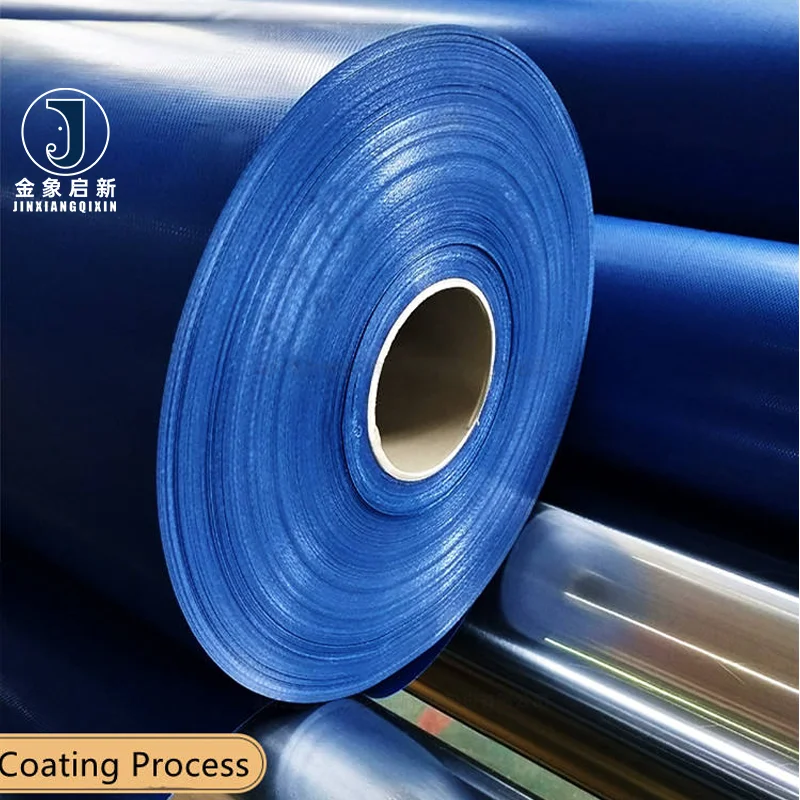
Coating Weight Control — Three full production lines with in-process GSM monitoring ensure the 650 Gsm stated on the quotation is the 650 Gsm verified on the incoming inspection bench.
Technical Specifications
| Parameter | Value |
|---|---|
| Specification | PVC Coated Tarpaulin Roll 650 Gsm |
| Product Type | PVC Coated Tarpaulin Roll |
| Base Fabric Denier Options | 200D×300D / 500D×500D / 840D×840D / 1000D×1000D |
| Coating Material | PVC |
| Weight | 650 Gsm |
| Surface Finish | Glossy or matte |
| Temperature Range | -15ºC to 70ºC |
| Treatment Options | Waterproof, UV, flame retardant and anti-fungal (grades available on request — confirm the standard required for your market) |
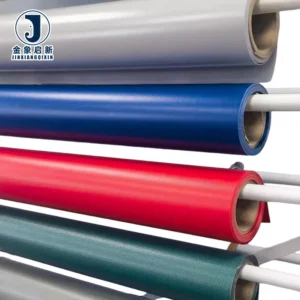
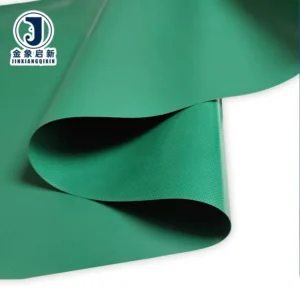
| Colour Options | Blue, Yellow, Black, Green, White, etc. |
| Standard Cut Sizes | 3x4m, 6x8m, 8x10m, 10x12m or custom made |
| Working Life | Suited to extended outdoor exposure depending on environment |
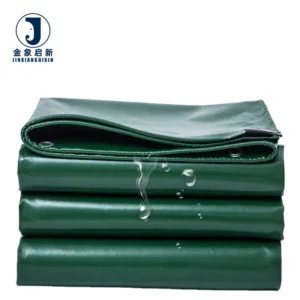
| Key Features | Water-proof, rain-resistant, tear-resistant, durable, good flexibility, good adhesion strength, good abrasion resistance |
| OEM/ODM | Warmly welcomed |
Application Suitability
| Application | Exposure & Requirement |
|---|---|
| Truck side curtains and trailer covers | Constant flexing at tie-down points, road spray abrasion, UV exposure — requires strong weld seams and flexible PVC coating |
| Tent and awning fabrication | Cut-and-sew production demanding consistent coating adhesion, uniform colour across rolls, and reliable heat weld performance |
| Roof and temporary structure covers | Wind load, thermal cycling between -15ºC and 70ºC, prolonged weathering — requires base fabric tensile strength matched to span |
| Outdoor equipment and construction site covers | Puncture risk from sharp edges, dust and moisture ingress, frequent handling and repositioning |
Why a 650 Gsm Quotation Is Only Half the Material Story
A PVC coated tarpaulin 650 gsm roll performs only as well as the base fabric denier and coating adhesion behind that weight number.
Technical buyers who specify coated fabric know the frustration: the quotation states a target GSM, but the roll that arrives feels lighter, and no test data accompanies the shipment to confirm or deny it. The total weight of a PVC coated tarpaulin 650 gsm roll is the sum of its base fabric and its PVC coating layers. Two rolls can share the same GSM yet behave very differently on the fabrication bench — one may tear cleanly along the weld seam while the other holds firm, purely because of the base fabric denier chosen. [NEED_CITE: tensile and tear test methods for coated fabrics per ISO 1421]
Base Fabric Denier Determines What the Coating Cannot
The PVC coating provides waterproofing and surface protection, but tensile and tear resistance originate in the base fabric. A 200D×300D polyester base at 650 Gsm produces a lighter, more flexible roll suited to applications where drape and handling matter — such as temporary event covers or light-duty equipment wraps. Moving to 840D×840D or 1000D×1000D at the same 650 Gsm shifts the weight distribution toward the yarn and away from the coating, yielding substantially higher tear resistance for truck side curtains that flex thousands of times in service. Selecting the correct denier is a fabrication decision, not a generic product choice.
Coating Adhesion and Weld Seam Integrity
Heat welding joins PVC coated tarpaulin panels by melting the coating layers together under pressure and temperature. If the coating adhesion to the base fabric is weak, the weld seam will peel apart before the fabric itself reaches its breaking point — a failure mode that shows up at flex zones and tie-down attachment areas. This product’s PVC coating is applied with process control over coating weight and adhesion, supporting consistent weld performance across the roll width. Fabricators should always run weld test strips from each new roll batch to confirm temperature and dwell time settings. [NEED_CITE: heat weld peel strength testing for PVC coated polyester fabrics]
Reading the Specification Sheet Beyond the GSM Number
Three parameters on the material specification sheet interact to define how this 650 Gsm roll will perform once fabricated and deployed. First, the base fabric denier and weave density govern how load distributes across the panel — a tighter weave with higher denier yarns resists tear propagation better than an open weave at the same weight. Second, the temperature range of -15ºC to 70ºC defines the operating boundary: below the lower limit, PVC stiffens and becomes prone to cracking under impact; above the upper limit, the coating softens and may deform under sustained tension. Third, the surface finish — glossy or matte — affects more than appearance. Glossy surfaces shed dirt and water more readily, while matte finishes reduce glare and can improve print adhesion for branded panels. The anti-fungal treatment option addresses storage and deployment in humid or tropical conditions where mould growth on the coating surface would otherwise degrade appearance and flexibility over time.
What Happens When the Specification Does Not Match the Application
Choosing a base fabric denier too low for the mechanical load results in premature tearing at stress concentration points — typically where eyelets, tie-downs or welded seams meet the fabric edge. Equally, specifying a glossy finish for a high-glare environment such as a construction site roof cover can create visibility hazards for workers and nearby traffic. Batches that vary in coating weight from roll to roll within the same shipment create visible inconsistency once panels are welded side by side and installed — a problem that often surfaces only after fabrication is complete, making rework costly. Requesting roll-by-roll weight verification and colour swatches from multiple production batches before committing to volume avoids these downstream failures. [NEED_CITE: batch colour consistency standards for coated textile procurement]
Why Fabricators Source This Grade Here
Deep process control over coating weight and adhesion across three full production lines means the 650 Gsm on the specification sheet is the 650 Gsm that ships — verified through in-process QA at every production stage. A 10-person R&D team handles material selection, custom sizing and sample development, delivering sample rolls within days when fabricators need to test weld parameters before committing to production volume. Dedicated QA/QC inspection covers every roll before dispatch, with a 100% pre-shipment inspection record accompanying the documentation package. The base fabric denier options from 200D×300D through 1000D×1000D at this weight allow technical buyers to match the roll to their specific tensile and tear requirements rather than accepting a one-size-fits-all product.
Documentation & Verification
- Material specification sheet stating 650 Gsm, base fabric denier and PVC coating method per roll
- Test reports for UV and flame retardant grades supplied where applicable — request before order confirmation
- Pre-shipment inspection record with roll-by-roll weight verification against stated 650 Gsm
- ISO and CE certificates included in dispatch documentation package
- Roll packing list with colour reference and batch traceability
Fabrication, Handling & Storage
- Set heat weld temperature and dwell time based on the glossy or matte finish — matte may require adjustment for consistent adhesion on this 650 Gsm coating
- Run weld test strips from each new roll batch to confirm peel strength at flex points before full panel fabrication
- Store rolls upright on pallets in a dry environment to prevent permanent creasing of the PVC coating surface
- Allow rolls to acclimatise before unrolling in temperatures near -15ºC to avoid cracking the stiffened coating
- Use compatible PVC-based repair adhesive matched to the 650 Gsm coating thickness for field patch repairs
- Plan cut patterns to maximise utilisation from the roll width and minimise welded seam count on large panels
What to Include with Your Enquiry
Provide the base fabric denier that matches your tensile and tear requirement from the available range, along with the surface finish preference for your fabrication method. Specify whether UV or flame retardant treatment is required and which standard your market or project demands. Include the roll width and colour you need, and whether you require roll stock or finished cut-to-size panels. Requesting a sample roll for weld parameter testing before production is recommended for first-time orders.
Frequently Asked Questions
Q: How do I verify the 650 Gsm weight when the roll arrives at my facility?
A: Cut a measured sample from the roll — typically a 100mm × 100mm square — and weigh it on a calibrated scale. Multiply to calculate grams per square metre. The material specification sheet supplied with each roll states the target GSM and acceptable tolerance. Any roll falling outside tolerance should be flagged before fabrication begins to avoid welding material that does not match the project specification.
Q: Which base fabric denier from 200D×300D to 1000D×1000D should I choose at this weight?
A: Lower denier such as 200D×300D gives more flexibility and is suited to applications where drape and handling ease matter. Higher denier such as 1000D×1000D provides greater tear resistance for mechanically stressed applications like truck side curtains. At 650 Gsm, the weight split between yarn and coating shifts with denier choice — your R&D or testing team should evaluate tensile and tear data for the specific denier under consideration.
Q: Does glossy or matte finish weld better on a 650 Gsm PVC coated tarpaulin?
A: Both finishes can be heat welded successfully, but they may require different temperature and pressure settings. Glossy PVC typically melts more uniformly under standard hot wedge or hot air welding, while matte surfaces sometimes need slightly higher temperature or longer dwell time. Always run test welds from a sample piece to confirm parameters before committing to full panel production.
Q: What UV or flame retardant test data is available for this grade?
A: UV and flame retardant treatments are available in various grades depending on the target market and application standard. Request the specific test report — such as a UV exposure test result or a flame retardant classification certificate — before confirming your order. This ensures the treatment supplied matches the compliance requirement for your project or end-market regulation.
Q: Why do welded seams sometimes fail before the 650 Gsm fabric itself does?
A: Weld seam failure typically occurs when the coating adhesion to the base fabric is insufficient for the mechanical load at the joint, or when weld temperature and pressure were not optimised for the specific coating formulation. Seams at flex points — such as truck curtain attachment zones — experience repeated stress that tests the bond between coating layers. Requesting weld peel strength data and running in-house test strips helps prevent this failure mode.