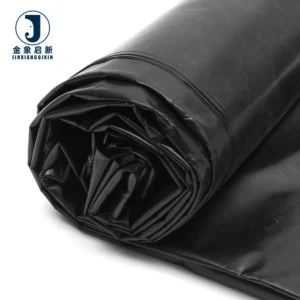
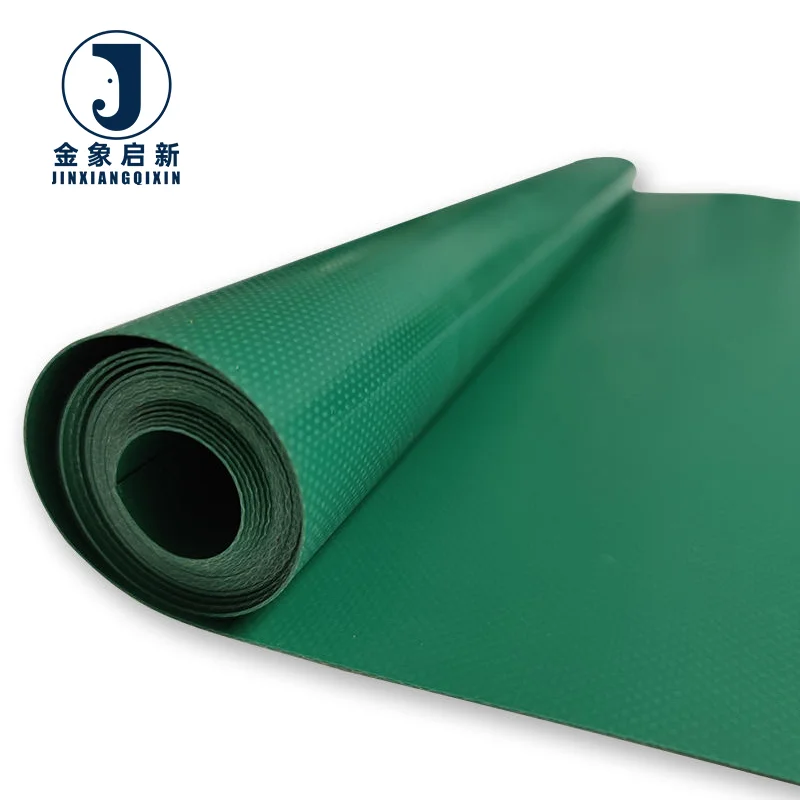
Deep Process Control Over Coating Weight — Every roll of this PVC coated tarpaulin is verified against stated GSM at the QA stage, ensuring base fabric denier, mesh count, and coating adhesion match the specification sheet before dispatch.
Technical Specifications
| Parameter | Value |
|---|---|
| Product Type | PVC Coated Tarpaulin Roll |
| Base Fabric | Polyester, Double-Sided PVC Coating |
| Yarn Count Options | 500D×840D / 500D×1000D / 1000D×1000D / 1000D×1300D / 1300D×1300D / 1000D×2000D |
| Mesh Count | 30×19 / 20×20 / 30×15 |
| GSM Range | 350 / 400 / 420 / 500 / 600 / 650 / 750 / 900 |
| Total Thickness | 0.29 mm – 0.65 mm |
| Warp Tensile Strength | 1650 N – 3900 N (test standard not stated) |
| Weft Tensile Strength | 1600 N – 3500 N (test standard not stated) |
| PVC Density | 1.15 – 2.00 g/cm³ |
| PVC Tensile Strength | 50 – 80 MPa (test standard not stated) |
| Brittle Temperature | ≤ -50 to -60 °C |
| Softening Temperature | ≥ 80 °C |
| Melting Point | 212 °C |
| Flame Retardant | Available in flame retardant grades — confirm the grade required for your market |
| UV Treatment | Available with UV stabilisation — confirm test basis for your application |
| Waterproof | Fully waterproof coated construction |
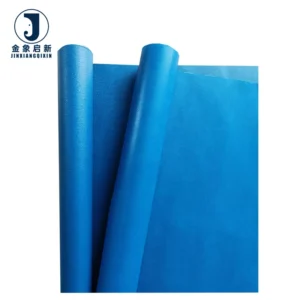
| Finish | Leather-like texture, smooth surface |
| Width Options | Up to 2.1 m |
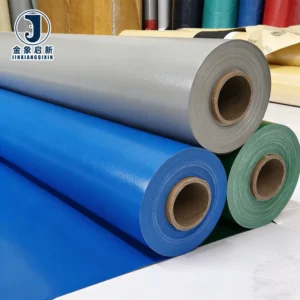
| Colour | Customisable |
Application Suitability
| Application | Exposure & Requirement |
|---|---|
| Industrial shelter covers | Prolonged UV exposure, wind-driven rain, thermal cycling across seasons |
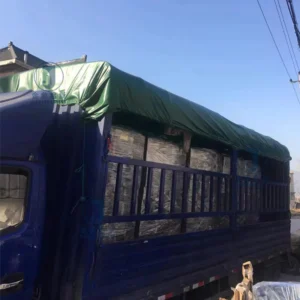
| Truck and trailer side curtains | Constant flexing at folds, road debris abrasion, tie-down stress at eyelets |
| Awning and tent structures | High tension on welded seams, pooling water load, repeated deployment |
| Machine and equipment covers | Oily contact, chemical splash, frequent removal and refitting |
| Balcony and terrace enclosures | Wind uplift on fixed edges, direct rain, aesthetic finish requirement |
| Construction site protection | Puncture from sharp materials, UV degradation, temporary installation cycles |
Why GSM Alone Does Not Define PVC Coated Tarpaulin Material Properties
Tensile strength and tear propagation resistance depend on base fabric denier and weave density, not just the coating weight printed on the label.
Two rolls can both carry the same GSM on the quotation yet perform very differently in the field. One uses a dense 1000D×1000D base at 20×20 mesh, distributing load across more yarns per square inch. The other reaches the same weight through heavier coating on a sparser weave, which adds stiffness without proportional strength. [NEED_CITE: tensile and tear test methods for coated fabrics per ISO 1421] When a fabricator specifies PVC coated tarpaulin material properties gsm tensile strength coating technology for a truck side curtain that flexes hundreds of times per trip, the base yarn count matters as much as the gram weight. Without verified denier and mesh data, you are buying blind.
Base Fabric Architecture and Load Distribution
The yarn count range from 500D×840D to 1000D×2000D defines how tensile load is carried through the PVC coated tarpaulin structure. Higher denier yarns resist breaking under point loads — such as tie-down straps pulling at eyelets — while denser mesh counts slow tear propagation by forcing a rip to cross more intersection points before advancing.
Coating Adhesion and Delamination Resistance
Double-sided PVC coating on a polyester base must bond fully to the yarn surface. Inconsistent coating penetration leaves air pockets that become delamination starting points when the fabric is folded, welded, or subjected to temperature swings between the brittle threshold of -50 °C and softening above 80 °C. [NEED_CITE: coating adhesion test methods for PVC coated polyester fabrics]
Thickness-to-Weight Relationship Across Grades
Moving from 350 GSM at 0.29 mm to 900 GSM at 0.65 mm adds both coating mass and base fabric substance. The thickness increase is not linear with weight — a 600 GSM grade may use a heavier base fabric with thinner coating than a 650 GSM grade that relies on thicker PVC layers over a lighter weave. Understanding which component contributes to the weight determines whether the roll will handle abrasion or flex fatigue better.
Temperature Envelope for Climate Specification
The stated brittle temperature of ≤ -50 to -60 °C and softening point at ≥ 80 °C define the service envelope. In cold storage or winter construction applications, the fabric must remain pliable below freezing without cracking at fold lines. In hot climates, the coating must resist softening and tackiness under direct sun exposure where surface temperatures exceed ambient significantly.
The Hidden Cost of Unverified Specifications
A batch arrives with GSM that reads correct on a small swatch, but the base fabric is one denier grade lighter than quoted. The extra weight came from thicker coating, which makes the material stiffer but not stronger. Within months, flex points on truck curtains crack at the weld line because the lighter base yarns cannot absorb cyclic loading. [NEED_CITE: weld seam failure modes in PVC coated fabrics under cyclic stress] Similarly, flame retardant claims without a documented test standard lead to rejected shipments at port inspection when the destination market requires a specific fire classification. Colour variation between rolls in the same container forces fabricators to reject panels that would be visible side by side on an installed awning.
Why Source This PVC Coated Tarpaulin Here
Three full production lines and 36 sets of professional equipment support consistent output across PVC coated tarpaulin grades, from 350 GSM lightweight rolls to 900 GSM heavy-duty stock. A 10-person R&D team handles material selection and sample development, producing custom samples within days for specific denier, mesh count, or colour requirements.
Dedicated QA/QC at every production stage includes weight verification per roll, ensuring the GSM on the material specification sheet matches the delivered product. With experience exporting to over 20 countries, the production team understands documentation requirements — ISO and CE certificates accompany each shipment, along with pre-shipment inspection records and roll packing lists for full traceability.
Documentation & Verification
- Material specification sheet listing exact GSM, base fabric denier, mesh count, and colour reference per roll
- Test report for UV stabilisation and flame retardant grades where applicable to your market
- Pre-shipment inspection record confirming weight and thickness against quoted values
- ISO and CE certificates covering production system compliance
- Roll packing list with individual roll identification for batch traceability
- Certificate of origin and customs documentation for international shipments
Fabrication, Handling & Storage
- Hot air welding at 400–600 °C suits the double-sided PVC coating — test seam peel strength before bulk production on any GSM grade
- High-temperature heat-sealed seamless edge wrapping prevents fraying at cut edges during fabrication and field use
- Store rolls horizontally on pallets in shaded, ventilated areas to avoid flat spots and surface marking on the smooth leather-like finish
- Avoid folding the fabric below 0 °C — the brittle threshold of -50 to -60 °C allows cold storage, but sharp folds at low temperature risk micro-cracking in the coating
- Use mild detergent and soft cloth for cleaning — abrasive scrubbing damages the PVC surface and accelerates UV degradation
Specifying the Right Roll for Your Project
Share your application type and the environmental exposure conditions — including temperature range, chemical contact, and mechanical stress such as flexing or abrasion. Indicate the target market fire classification or UV stability requirement if applicable. Provide your required width, colour reference, and whether you need raw roll stock or finished cut sizes with eyelets and reinforced hems. Requesting a sample roll first allows your fabrication team to confirm welding parameters, seam strength, and colour match before committing to production volume.
Frequently Asked Questions
Q: How is GSM verified per roll and what tolerance applies across a batch?
A: Each roll is weighed and measured during pre-shipment inspection, with results recorded against the stated GSM on the material specification sheet. Our QA protocol checks coating weight and base fabric contribution separately, so you can verify that the weight comes from the correct combination of denier, mesh, and PVC thickness rather than excess coating alone.
Q: What is the relationship between base fabric denier, mesh count and tensile strength?
A: Higher denier yarns such as 1000D or 1300D carry greater individual thread load, while denser mesh counts like 30×19 distribute force across more intersections. Together they determine warp and weft tensile values — a 1000D×1000D at 20×20 mesh behaves differently from a 500D×1000D at 30×19, even at similar GSM.
Q: What flame retardant grades are available and how do I confirm compliance?
A: PVC coated tarpaulin rolls are available in flame retardant grades, but the specific classification depends on your destination market requirements. Request the test report and confirm whether your project needs DIN 4102, NFPA 701, or a local building code standard before production begins.
Q: How does double-sided PVC coating compare to PE laminated tarpaulin?
A: Double-sided PVC coating on a polyester base provides superior abrasion resistance, hot air weldability, and long-term coating adhesion compared to PE lamination. The coating bonds to the yarn surface rather than sitting as a separate film, reducing delamination risk under cyclic flexing and temperature variation.
Q: Can I get consistent colour across multiple rolls in one order?
A: Colour is matched against a signed reference swatch before production. Every roll in the batch is checked during pre-shipment inspection for shade consistency, which matters when panels are installed side by side on awnings, tent structures, or truck side curtains where visible mismatch is unacceptable.