Deep Process Control — coating weight and adhesion verified at every production stage across three full lines, ensuring this PVC Coated Tarpaulin base fabric coating technology gsm meets the exact specification on your material sheet.
Technical Specifications
| Parameter | Value |
|---|---|
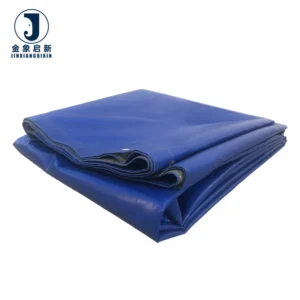
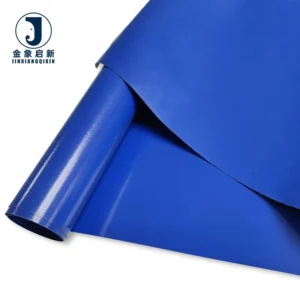
| Product Type | PVC Coated Tarpaulin Roll |
| Weight (GSM) | 500 to 800 g/m² (confirm the grade for this item) |
| Coating Material | PVC |
| Coating Method | Heat combined with high-frequency |
| Waterproof Rating | Anti-permeable ≥20KPa |
| Flame Retardant Grade | ≤10 seconds (grade not stated — confirm the standard required for your market) |
| Low-Temperature Flexibility | Will not fracture at -30°C |
| Anti-Mildew | Mildew proofing properties stated |
| Chemical Resistance | Acid, alkali and brine corrosion resistant |
| Water Absorption | Almost no absorbable of water, drying quickly after rain |
| Seam Construction | High-frequency heat welding |
| Key Features | Flame retardant grades available, anti-UV treatment available, custom width and length, glossy or matte finish options |
Application Suitability
| Application | Exposure & Requirement |
|---|---|
| Truck side curtains and trailer covers | Constant flexing at load points, road abrasion, weather exposure, high-frequency welded seams must hold under repeated stress |
| Tent, awning and inflatable structure roll stock | Consistent coating adhesion across the full roll, weld integrity for fabricated seams, colour uniformity across multiple rolls |
| Industrial chemical-exposed covers | Contact with acid, alkali and brine environments, corrosion resistance required over extended deployment |
| Outdoor open-air storage and equipment covers | UV exposure, rain ingress prevention, mildew resistance in humid conditions |
Why Coating Weight and Base Fabric Denier Determine Real-World Performance More Than GSM Alone
GSM tells you the total mass per square metre, but it does not reveal how that mass is distributed between base fabric and coating — and that distribution controls tensile behaviour, tear propagation and weld integrity.
When technical buyers specify PVC coated tarpaulin base fabric coating technology gsm, the quotation often states a single weight figure. Yet two rolls at the same GSM can perform very differently if one carries a heavier coating on a lighter base yarn while the other uses a denser weave with a thinner coat. The first will feel stiff and may crack at the weld line under flex load; the second will drape better and hold a high-frequency weld through repeated stress cycles. Without a material specification sheet that breaks down base fabric denier, weave count and coating weight separately, you cannot predict which failure mode you are buying. [NEED_CITE: tensile and tear test methods for coated fabrics per ISO 1421]
How Knife Coating and High-Frequency Bonding Shape the Final Fabric
The coating method applied to this PVC coated tarpaulin roll directly influences how well the PVC penetrates the base fabric and how firmly it adheres. Heat combined with high-frequency processing drives the coating into the yarn interstices rather than sitting on the surface, which improves peel strength and allows clean high-frequency welding downstream. When fabricators weld seams on truck side curtains or inflatable structures, the bond must match or exceed the fabric’s own tear strength — otherwise the seam fails at the point the load flexes most.
What the Waterproof and Chemical Resistance Ratings Mean in Practice
An anti-permeable rating of ≥20KPa indicates the coating resists water penetration under measurable hydrostatic pressure, not merely surface splash. For industrial covers exposed to acid, alkali or brine environments, this PVC coated tarpaulin roll resists chemical attack that would degrade uncoated or lightly coated fabrics. The mildew-proofing treatment further supports deployment in humid agricultural or marine storage settings where biological growth compromises untreated textiles over time. [NEED_CITE: chemical resistance test protocols for PVC coated industrial fabrics]
Reading the Specification Sheet: Weight, Coating and Strength Together
GSM between 500 and 800 g/m² spans a wide performance range, and selecting the right point within it depends on your fabrication process and end-use stress profile. A heavier grade does not automatically mean better — a 500 g/m² fabric with a tight base weave and well-bonded coating may outperform a loosely woven 800 g/m² grade in tear resistance. The coating method using heat combined with high-frequency energy ensures that whatever grade you select, the PVC-to-yarn adhesion supports consistent welding behaviour across the roll. Low-temperature flexibility to -30°C without fracture means the material remains workable in cold-climate transport and outdoor storage applications where brittle failure at fold lines is a common complaint. The relationship between base fabric denier, weave density and coating weight is documented on the material specification sheet shipped with every order, so your incoming inspection team can verify what was quoted against what arrived.
The Hidden Cost of Specifying on Price Per Kilogram Rather Than Performance Data
When procurement teams evaluate PVC coated tarpaulin roll suppliers primarily on cost per kilogram, the supplier has an incentive to reduce coating weight while maintaining the stated GSM through a heavier but lower-grade base yarn. The result is a fabric that passes the scale test but fails at the weld seam after weeks of flex cycling. Colour can also drift between rolls when coating batches are blended from different pigment lots to cut expense — visible only once the material is installed side by side on a trailer or structure. Fire-retardant treatment applied without a verified test basis creates compliance risk at the project inspection stage, where the site auditor asks for documentation you do not have. [NEED_CITE: fire classification standards for coated fabrics in transport and construction applications]
Why Technical Buyers Source This PVC Coated Tarpaulin Roll Here
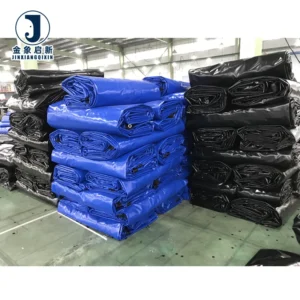
Three full production lines and 36 sets of professional equipment support bulk roll orders with consistent coating weight and on-time delivery schedules. The 10-person R&D team handles material selection and sample development, producing samples within days when you need to verify weld behaviour or colour before committing to a full container. Dedicated QA/QC runs at every production stage with 100% pre-shipment inspection roll by roll — not a sampling protocol that lets marginal material through. Nearly 30 years of focused coated fabric production provides the process knowledge to control adhesion, coating distribution and batch consistency across long production runs. Every roll ships with a full documentation package so your receiving team and compliance officer have what they need without follow-up requests.
Documentation & Verification
- Material specification sheet stating exact GSM, base fabric denier and coating weight for independent verification
- UV and flame retardant test reports matching the grade ordered, available per batch
- ISO and CE certificates included with shipment documentation for customs clearance
- Pre-shipment inspection record covering roll-by-roll weight and visual consistency check
- Roll packing list with individual roll identifiers for traceability through fabrication
Fabrication, Handling & Storage
- High-frequency welding parameters must match the specific PVC coating thickness — request weld settings guidance with your sample
- Store rolls vertically on end caps to prevent flat-spot creasing that weakens the coating at fold lines
- Allow cold-stored rolls to acclimatise before unrolling to avoid coating micro-cracking below -30°C transition
- Cut patterns should account for the roll width to minimise offcut waste and reduce the number of welded seams
- Use PVC-compatible cleaners only; solvent-based agents can soften the coating and compromise weld integrity
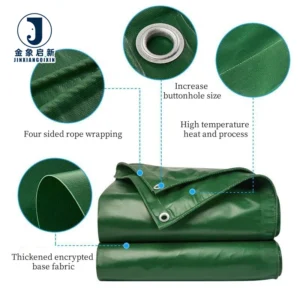
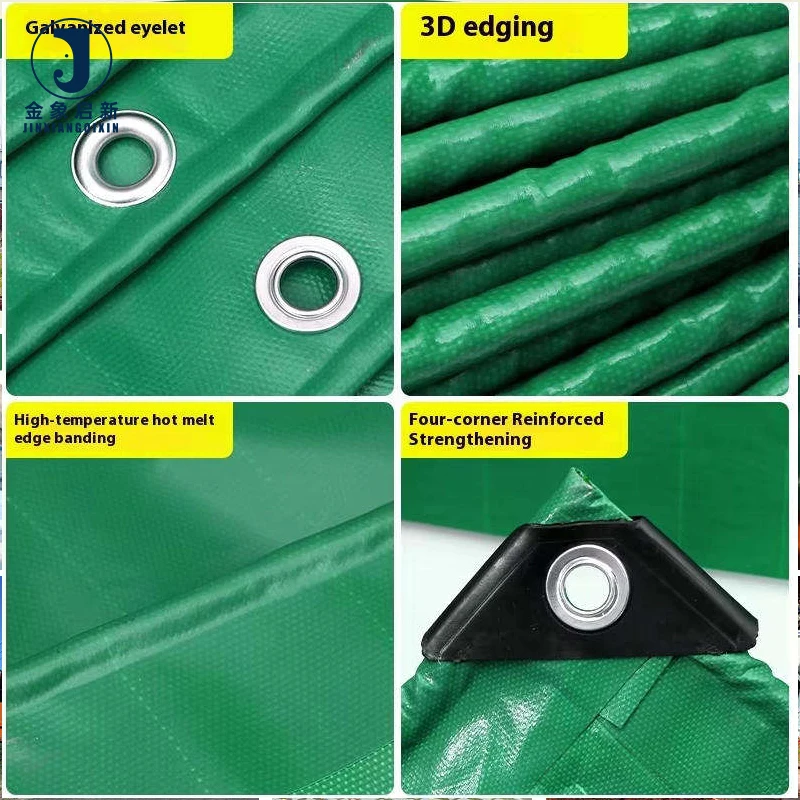
- Reinforce eyelet and tie-down zones with additional PVC patches bonded by high-frequency welding, not mechanical rivets
What to Include in Your Technical Enquiry
Provide the specific exposure conditions your fabricated product will face — including temperature range, chemical contact, UV duration and flex frequency — so the correct grade within the 500 to 800 g/m² range can be recommended. State your target market’s fire safety or compliance requirements so that the appropriate flame retardant grade and test basis are confirmed before production. Indicate whether you require roll stock in standard widths or custom dimensions, and whether sample approval is needed before the bulk order runs.
Frequently Asked Questions
Q: How can I verify the GSM of each roll when it arrives at my facility?
A: Every shipment includes a material specification sheet stating the exact GSM, base fabric and coating weight for each roll. You can conduct an independent weight-per-area test by cutting a measured sample and comparing against the documented figure. This allows your incoming QC team to confirm the PVC coated tarpaulin base fabric coating technology gsm matches what was quoted before fabrication begins.
Q: What flame retardant grade should I specify for my market?
A: Flame retardant performance is stated at ≤10 seconds, but the applicable test standard depends on your end-use market and regulatory framework. Request the specific test basis — such as DIN 4102, NFPA 701 or a local building code — during enquiry so the correct treatment grade is applied and documented. Test reports are issued per batch to support compliance submissions.
Q: Will the colour remain consistent across all rolls in my container?
A: Roll-to-roll colour consistency is checked during the 100% pre-shipment inspection across all three production lines. Coating batches are matched to your approved colour reference before the production run begins. If your project requires material from a single coating batch for absolute uniformity, state this requirement at order confirmation so production can be planned accordingly.
Q: How does high-frequency welding compare to stitching for this PVC coated tarpaulin?
A: High-frequency heat welding creates a bond that fuses the PVC coating layers together, producing a seam that flexes with the fabric rather than creating perforation points as stitching does. For truck side curtains and inflatable structures where the load flexes repeatedly, welded seams hold at the stress points where stitched needle holes would initiate tearing. Request weld parameter guidance with your sample to optimise your fabrication setup.
Q: What is the minimum order for custom width or colour on this PVC coated tarpaulin roll?
A: Custom width and colour requirements are supported by the R&D team with samples developed within days for your approval before bulk production runs. Minimum order quantities depend on the specific width, colour and treatment grade combination requested. Confirm your required dimensions and annual volume during the enquiry to receive exact minimum and lead time details.