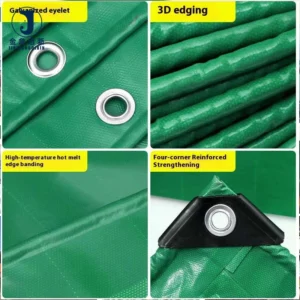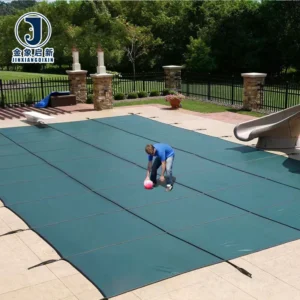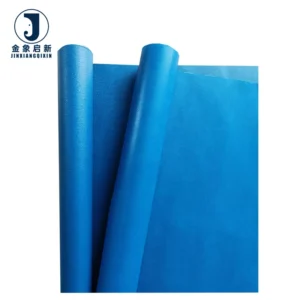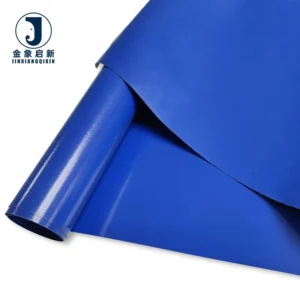
Process Transparency — coating weight, base fabric denier and PVC adhesion mapped at every production stage, giving technical buyers verifiable data from raw yarn to finished roll.
Technical Specifications
| Parameter | Value |
|---|---|
| Product Type | PVC Coated Tarpaulin Roll |
| Material | PVC coated polyester fabric |
| Weight Range | 500 to 800 grammas per square meter (grade to be confirmed per order) |
| Coating Method | Heat combined with high-frequency |
| Waterproof Rating | Anti-permeable ≥20KPa |
| Flame Retardant Grade | ≤10 seconds (test standard not stated — confirm required grade for your market) |
| Low-Temperature Flexibility | Not fractured by pliers at -30℃ |
| Chemical Resistance | Acid, alkali and brine corrosion resistant |
| Mildew Resistance | Mildew proofing properties claimed (test basis not stated) |
| Seaming Method | High-frequency heat welded |
Application Suitability
| Application | Exposure & Requirement |
|---|---|
| Truck side curtains | Constant flexing at load points, road debris abrasion, sustained UV exposure |
| Construction site enclosures | Wind loading, prolonged rain contact, chemical splash from site materials |
| Tent and awning panels | Tension across frame joints, seasonal UV cycles, repeated fold and unfold |
| Pond and reservoir liners | Permanent water immersion, soil acidity, puncture from substrate |
| Inflatable and membrane structures | Biaxial tension, internal air pressure, welded seam integrity under stress |
Why Stated GSM Does Not Guarantee the Tensile Strength You Expect
GSM measures total weight, not the structural contribution of base fabric versus coating.
Technical buyers frequently receive PVC coated tarpaulin rolls that match the quoted weight but underperform on tensile and tear tests. The reason is straightforward: a heavier coating layer inflates the GSM figure without adding meaningful strength. The base fabric denier, yarn count and weave density are what resist load, while the PVC coating primarily provides waterproofing and chemical barrier. When the PVC coated tarpaulin base fabric specification is unclear, you are purchasing weight rather than engineered performance [NEED_CITE: tensile and tear test methods for coated fabrics per ISO 1421].
Coating Method and Its Influence on Adhesion
Heat combined with high-frequency processing bonds the PVC coating to the polyester substrate under controlled temperature and pressure. This method produces a continuous coating film that penetrates the base fabric weave, creating mechanical interlock rather than surface-only adhesion. For fabricators who convert roll stock into finished covers, the coating-to-substrate bond strength determines whether a welded seam holds or delaminates under load. A poorly bonded coating peels away at the weld zone, exposing raw base fabric to moisture and accelerating failure at the most stressed junction.
Low-Temperature Behaviour of the PVC Formulation
PVC relies on plasticisers to maintain flexibility, and the formulation directly affects cold-climate performance. This material does not fracture under plier pressure at -30℃, indicating plasticiser retention adequate for sustained winter exposure. When plasticisers migrate or evaporate over time, the coating becomes brittle and cracks propagate from fold lines or eyelet zones. Technical buyers sourcing for cold-region applications should confirm the low-temperature flexibility test basis and request accelerated ageing data where the end use demands multi-season reliability.
Reading the Specification Sheet Beyond the GSM Number
A material specification sheet should separate base fabric weight from coating weight, because the two contribute differently to field performance. The denier of the yarn and the warp-weft density govern tensile strength and tear propagation resistance. The PVC coating thickness governs waterproofing, UV barrier and chemical resistance. Anti-permeable rating at ≥20KPa confirms hydrostatic resistance under sustained water contact, which matters for pond liners and open-air covers. Flame retardant grade at ≤10 seconds is stated without a referenced standard — buyers in regulated markets should request DIN 4102, NFPA 701 or the equivalent classification required locally [NEED_CITE: DIN 4102 fire classification for building materials]. Chemical resistance to acid, alkali and brine makes this PVC coated tarpaulin suitable for aquaculture and industrial environments where pH extremes degrade lesser coatings.
The Hidden Cost of Specifying on Price Per Kilogram
When procurement decisions reduce PVC coated tarpaulin to cost per kilogram, the consequences appear months after installation. A roll that is lighter in base fabric but heavier in cheap coating compound meets the weight target on the invoice but tears at the first high-wind event. Flame retardant treatments without a cited test standard lead to failed site inspections and rejected shipments. Colour inconsistency between rolls in the same order becomes visible only when panels are installed side by side on a truck trailer or tent structure, forcing replacement and project delay [NEED_CITE: batch colour consistency verification methods for coated fabrics].
Why Technical Buyers Source This Material Here
Deep process control over coating weight and adhesion means the PVC formulation, application temperature and curing parameters are managed at every stage, not adjusted after the fact. Three full production lines with 36 sets of equipment support consistent roll output without the quality drift that occurs when capacity is overloaded. A 10-person R&D team handles material selection and sample development, allowing technical buyers to confirm GSM, colour and treatment before committing to bulk volume. Dedicated QA/QC inspection at every production stage catches coating weight deviation and colour shift before rolls are packed. Pre-shipment inspection covers 100% of the order, with a retained sample per roll for arrival cross-check.
Documentation & Verification
- Material specification sheet stating base fabric denier, weave count, coating method and verified GSM per roll
- Flame retardant and UV test reports matching the grade required by your destination market regulations
- ISO and CE certificates covering the production facility and quality management system
- Pre-shipment inspection record confirming GSM consistency and colour match across the full order
- Roll packing list with net weight per roll for arrival weight verification against stated GSM
- Certificate of origin and customs documentation for international shipment clearance
Fabrication, Handling & Storage
- High-frequency welding suits this PVC coating formulation — confirm power and dwell time for the specific GSM grade
- Allow welded seams to cool fully under pressure before folding, ensuring bond strength reaches full value
- Store rolls vertically on end caps to prevent flat-spot deformation on the coating surface
- Avoid storing PVC coated tarpaulin rolls in direct sunlight before fabrication to prevent premature UV exposure on unprotected surfaces
- Use PVC-compatible cleaning solvents; hydrocarbon-based products may soften or dissolve the coating layer
- Unroll and acclimatise material at ambient temperature before cutting in cold conditions to prevent brittle edge fracture
What to Provide With Your Inquiry
Specify the end-use application and the environmental exposure conditions the finished product will face, including temperature range and chemical contact. State the fire classification or anti-static standard required by your local regulations so the correct treatment grade is quoted. Confirm whether you need roll stock in standard width or custom dimensions, and whether sample development in your target GSM and colour is required before bulk production.
Frequently Asked Questions
Q: How do I verify the GSM matches what was quoted when the roll arrives?
A: Cut a measured sample from the roll edge, weigh it on a calibrated scale and calculate grams per square metre. Compare against the material specification sheet shipped with the order. Each roll retains a GSM verification sample for cross-check.
Q: What test reports are available for flame retardant grades?
A: Flame retardant grade is stated at ≤10 seconds. The specific test standard depends on your market — request DIN 4102, NFPA 701, M2 or B1 classification as required. Confirm the applicable standard before order placement.
Q: How does coating weight relate to tensile and tear strength?
A: Tensile and tear strength come primarily from the base fabric denier and weave density, not the PVC coating weight. A heavier coating adds waterproofing and UV barrier but does not increase structural strength. Request the base fabric specification alongside GSM.
Q: Can I receive samples in my target GSM and colour before bulk production?
A: Sample development is available for custom GSM, colour and treatment requirements. Approve the physical sample before confirming bulk production to verify coating hand, colour accuracy and weld behaviour on your equipment.
Q: What documentation accompanies each shipment?
A: Each order ships with a material specification sheet, pre-shipment inspection record, roll packing list with net weights, certificate of origin and ISO/CE certificates. Flame retardant and UV test reports are included where applicable to the specified grade.