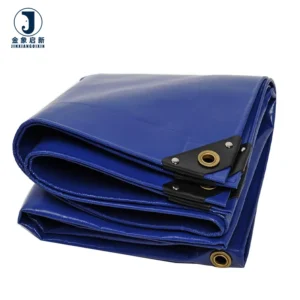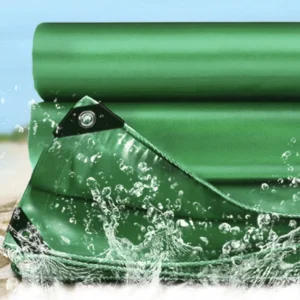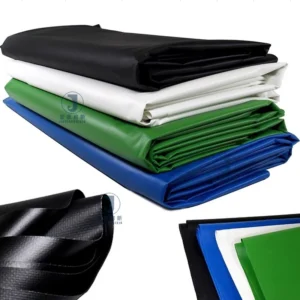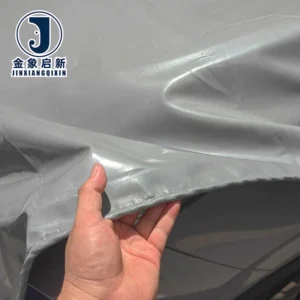
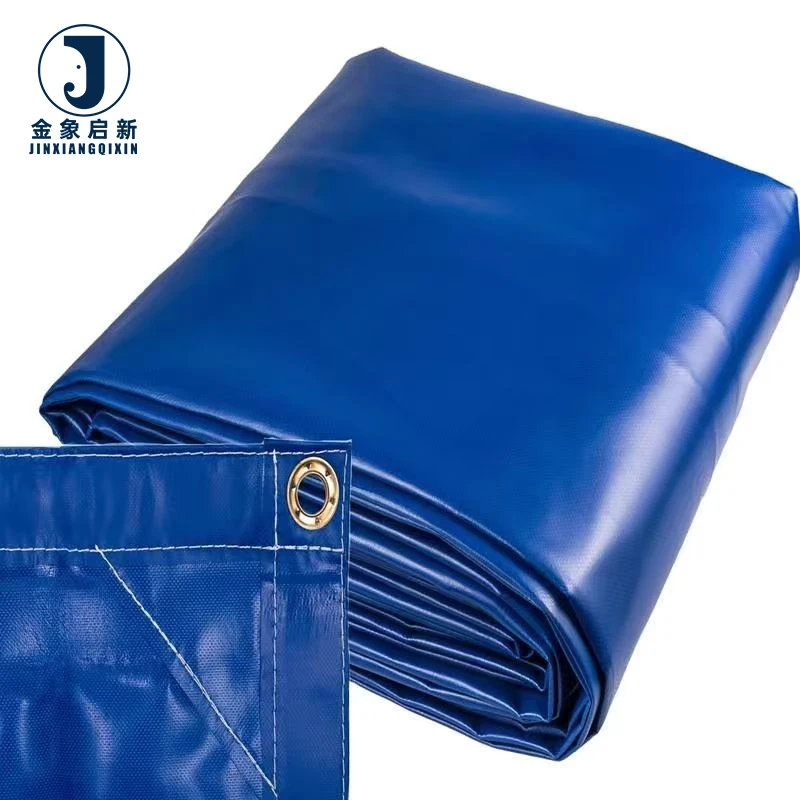
Coating Weight Control — Every roll of PVC coated tarpaulin base fabric denier coating technology is verified against the stated gram weight before it leaves the production floor, eliminating the gap between quotation and receiving dock.
Technical Specifications
| Parameter | Value |
|---|---|
| Product Type | PVC Tarpaulin Roll |
| Coating Material | PVC (vinyl coated) |
| Base Fabric | Polyester |
| Coating Method | Heat combined with high-frequency |
| Weight | 500 to 800 g/m² (confirm specific grade for your application) |
| Waterproof Rating | Anti-permeable ≥20KPa |
| Flame Retardancy | ≤10 seconds (grade not stated in source — confirm certification required for your market) |
| Low Temperature Flexibility | -30°C (no fracture) |
| Corrosion Resistance | Acid, alkali and brine |
| Anti-Mildew | Mildew proofing treatment (test basis not stated) |
| Water Absorption | Negligible |
| Tensile Strength | High tensile (test standard not stated — request report per ISO 1421 or equivalent) |
Application Suitability
| Application | Exposure & Requirement |
|---|---|
| Truck side curtains and trailer covers | Constant flexing at load points, road debris abrasion, sustained UV and rain exposure, requirement for watertight heat-welded seams |
| Outdoor industrial equipment covering | Long-term weathering, chemical-adjacent environments, resistance to acid and alkali splash or residue |
| Marine and coastal load protection | Salt spray and brine exposure, high humidity, mildew risk in stored rolls |
| Open-air stockpile and pallet covers | Direct rainfall, pooling water, wind-driven uplift stress on eyelets and hems |
Why Coating Weight Alone Cannot Predict Fabric Behaviour
GSM tells you what the fabric weighs, not how the coating bonds to the base yarn or how the seams will hold under repeated flexing.
Technical buyers often receive a PVC coated tarpaulin base fabric denier coating technology quotation that states a target GSM, only to find the delivered rolls lighter than agreed or the coating peeling at the weld line within months. The failure is rarely the weight itself — it is the absence of verified adhesion data, unspecified base fabric construction, and missing test standards for tensile and tear [NEED_CITE: tensile and tear test methods for coated fabrics per ISO 1421]. Without these data points, a procurement decision rests on a single number that does not capture how the material will perform once fabricated into a truck cover or industrial enclosure.
How Base Fabric Construction Drives Tensile Performance
The denier of the polyester yarn and the weave density of the base fabric determine how load distributes across the material when a truck side curtain flexes in highway wind. A higher denier yarn resists breakage at the thread level, while tighter weave density prevents tear propagation from a puncture or cut edge. The PVC coating adds waterproofing and surface durability, but the mechanical strength originates in the woven substrate beneath it. Specifying PVC coated tarpaulin base fabric denier coating technology without requesting the denier and thread count leaves a critical variable uncontrolled.
Coating Adhesion and Seam Integrity Under Load
The heat combined with high-frequency coating method used for this PVC coated polyester range creates a bond between the vinyl layer and the base fabric that resists delamination at the seam. When a fabricated truck cover flexes at the tie-down point, the weld line experiences concentrated stress. If the coating adhesion is weak, the seam separates before the fabric itself fails — a failure mode that appears as peeling along the weld rather than tearing of the material [NEED_CITE: heat-frequency welding adhesion standards for PVC coated fabrics]. Requesting a peel strength test result alongside the GSM verification gives fabricators confidence that the material will hold through repeated load cycles.
Reading the Specification Sheet Against Your Operating Environment
The anti-permeable rating of ≥20KPa confirms that water will not penetrate the coating under hydrostatic pressure, making the material suitable for applications where pooling or driving rain is expected. Low-temperature flexibility verified to -30°C means the PVC compound remains pliable in cold-climate transport without cracking at fold lines or eyelet reinforcements. The acid, alkali and brine corrosion resistance extends the material’s service scope to marine logistics and chemical-adjacent storage environments. When evaluating PVC coated tarpaulin base fabric denier coating technology against a specific operating condition, cross-reference these rated properties rather than relying on general waterproof or durable claims.
The Hidden Cost of Unspecified Material Grades
A roll that arrives below the quoted GSM means less coating material per square meter, which can reduce waterproof performance and shorten the interval before UV degradation becomes visible. A flame retardant claim without a cited standard may fail inspection at a construction site or logistics terminal that requires a specific certification such as B1 per DIN 4102 or NFPA 701 [NEED_CITE: DIN 4102 fire classification for building materials]. Batch-to-batch colour variation across rolls in the same shipment forces fabricators to reject panels or accept visible mismatches on installed covers. These consequences are preventable when the purchase order specifies not only GSM but also coating adhesion minimum, colour reference code, and the exact test standard for any treatment claimed.
What This Supplier Brings to Roll Stock Procurement
Three full production lines and 36 sets of professional equipment support consistent output across bulk roll orders, reducing the risk of capacity-driven delays on custom widths or colours. A 10-person R&D team handles material selection and sample development, producing validation rolls within days so you can test heat-weld behaviour and coating adhesion before committing to a container load. Dedicated QA/QC runs at every production stage with 100% inspection before shipment, meaning each roll is weighed and measured against the purchase specification rather than sampled at random. ISO and CE certified processes underpin the documentation package, and the team has nearly 30 years of process control experience specific to coated fabric manufacturing. Pre-shipment inspection records are provided per roll, not per batch.
Documentation & Verification
- Material specification sheet listing GSM, base fabric denier, and coating type for each roll ordered
- Test report for flame retardant grades citing the specific standard applicable to your destination market
- Pre-shipment inspection record with individual roll weight and width measurements against the purchase order
- Certificate of origin and customs documentation prepared per destination country requirements
- Colour reference confirmation ensuring batch-to-batch consistency across the full shipment
Fabrication, Handling & Storage
- Set high-frequency welder temperature and dwell time to match the 500 to 800 g/m² coating weight range for consistent seam adhesion
- Reinforce eyelet and tie-down zones with additional fabric layers to distribute load across the polyester base weave
- Store rolls upright on pallets in a covered area to prevent flattening and permanent crease marks on the PVC surface
- Allow rolls to acclimatise before unrolling in cold conditions, as the -30°C flexibility rating applies to the coated fabric in service, not during handling at lower ambient temperatures
- Use mild detergent and soft brush for cleaning; avoid solvent-based agents that may compromise the vinyl coating surface
Specifying Your Roll Requirements
To receive an accurate quotation and sample, provide your target application and the environmental conditions the fabricated covers will face, including temperature range and chemical exposure. Confirm the flame retardant or anti-UV grade required by your destination market regulations so the correct treatment is applied and documented. Specify the roll width, colour reference, and annual volume to determine production scheduling and bulk pricing tiers. If you require fabricated panels rather than raw roll stock, share the cut dimensions and seam configuration so the material can be evaluated for fabrication compatibility.
Frequently Asked Questions
Q: How should I verify GSM when the rolls arrive at my warehouse?
A: Cut a measured sample from each roll, weigh it on a calibrated scale, and compare the result to the GSM stated on the material specification sheet. Acceptable tolerance varies by coating method, so confirm the tolerance band with the supplier before ordering. Request the pre-shipment inspection record to cross-reference the factory’s own roll-by-roll weight data.
Q: What does the flame retardant claim of ≤10 seconds mean for my market compliance?
A: The ≤10 seconds figure indicates a burn time result, but without a cited standard such as DIN 4102 B1 or NFPA 701, it may not satisfy your local fire safety authority. Request a test report that names the standard and testing laboratory, and confirm with your compliance team that the cited standard is accepted in your destination market before placing a bulk order.
Q: Why does high-frequency heat bonding outperform sewing for truck cover seams?
A: Sewing creates needle holes that penetrate the waterproof coating, allowing moisture ingress at every stitch point. High-frequency heat bonding fuses the PVC layers without perforation, producing a continuous watertight seal that flexes with the fabric. This method is particularly important at tie-down and load-bearing zones where seam stress concentrates.
Q: How do I ensure colour consistency when ordering multiple rolls for a single project?
A: Specify a colour reference code on your purchase order and request that all rolls for the order be produced in a single coating run. Ask for a colour confirmation sample before full production begins, and verify received rolls side by side under consistent lighting against the approved reference panel before cutting.