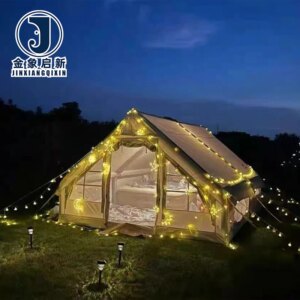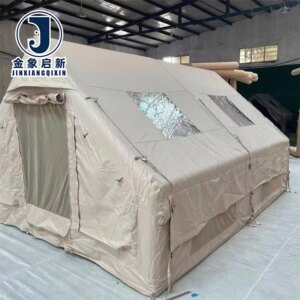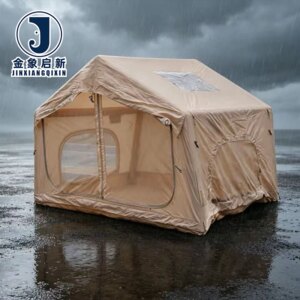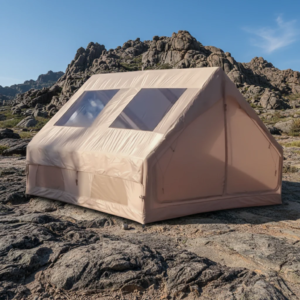
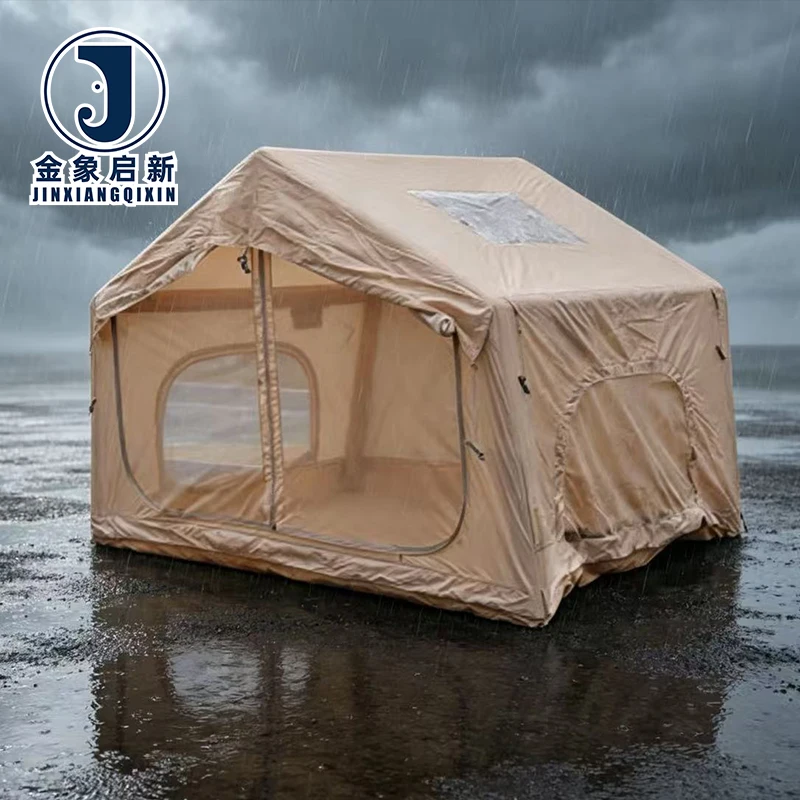
Deep Process Control — Every roll of Inflatable Tent Fabric we produce undergoes full-process QA/QC inspection with dedicated staff at every coating and finishing stage to ensure batch consistency.
Technical Specifications
| Parameter | Value |
|---|---|
| Product Type | Inflatable Tent Fabric |
| Core Material | PVC tarpaulin |
| Waterproof | Fully waterproof coated construction |
| UV Treatment | Anti-UV treatment (grade not stated — confirm requirement for your market) |
| Flame Retardant | Flame retardant (grade not stated — specify the standard required for your application) |
| Anti-Static | Anti-static treatment (standard not stated — verify site compliance needs) |
| Tear Resistance | Tear-resistant construction (test standard available on request) |
| Customization | OEM & ODM including sample development, pattern printing, material selection, and product design |
| Certifications | ISO 9001, ISO 14001, ISO 45001, CE |
Application Suitability
| Application | Exposure & Requirement |
|---|---|
| Inflatable event tents | Rapid inflation cycles, repeated folding, UV exposure during outdoor deployment |
| Construction site shelters | Abrasion from site equipment, dust ingress, wind loading on inflated structure |
| Agricultural mobile storage | Prolonged sun exposure, humidity, contact with stored materials, remote deployment |
Why Batch Colour Consistency Matters More Than You Think
Colour drift between rolls turns a professional installation into a patchwork problem.
Inflatable tent fabric orders often span multiple rolls to cover large structures. When those rolls carry even slight hue variation, the seams where panels meet become visible lines that buyers notice immediately after inflation [NEED_CITE: colour tolerance standards for coated architectural fabrics]. Sourcing an Inflatable Tent Fabric manufacturer that controls pigment dispersion at the compounding stage — not just at the mixing bowl — eliminates this failure mode before the coating head ever sees the material.
Coating Adhesion That Survives Inflation Cycles
Inflatable Tent Fabric must withstand repeated pressurisation and deflation without delamination. The bond between the PVC coating and the base fabric determines whether the material holds air pressure cycle after cycle or begins to blister at stress points. Our three full production lines use controlled coating application methods that ensure uniform adhesion across the entire roll width, reducing the risk of layer separation during field use.
Pattern Printing That Stays Registered
Custom Inflatable Tent Fabric with printed branding or pattern work demands precise registration across long runs. Misaligned prints waste material at the cutting table and create visible defects on finished tent panels. Our 10-person R&D team handles pattern layout and print sampling before full production begins, allowing you to approve colour and registration on a physical swatch before your roll order enters the coating line. [NEED_CITE: print registration tolerance for PVC tarpaulin roll stock]
Understanding How Base Fabric Construction Affects Tear Behaviour
The base fabric denier and weave density work together with the PVC coating weight to determine how a tear propagates once initiated. A heavier coating alone does not guarantee better tear performance if the underlying yarn structure allows tears to run along the warp or weft direction unchecked. When specifying Inflatable Tent Fabric, the relationship between base fabric construction and coating thickness should be evaluated as a system rather than isolated numbers on a data sheet.
The Hidden Cost of Specifying on Price Per Square Metre Alone
When sourcing Inflatable Tent Fabric for commercial tent manufacturing, buyers who select purely on quoted price often discover the cost difference was achieved through reduced coating weight or a lighter base fabric. The resulting material may pass initial inspection but fails prematurely at welded seams or flex points once the inflatable structure undergoes repeated deployment cycles. [NEED_CITE: relationship between coating weight variance and welded seam longevity in PVC tarpaulins] This pattern surfaces months after delivery, when warranty claims and replacement orders erase any initial saving.
Why Technical Buyers Source From This Facility
Our 9,180 m² production facility dedicates three full lines to coated fabric output, giving you reliable lead times on roll orders without queue conflicts from unrelated product categories. The 36 sets of professional processing equipment include specialised coating and finishing machinery that maintains consistent GSM control across long production runs.
Every roll of Inflatable Tent Fabric receives 100% pre-shipment inspection by dedicated QA/QC staff — not a statistical sample, but a full visual and dimensional check against your specification sheet. Samples are developed within days for custom requirements, so you can validate material behaviour with your own welding equipment before committing to a production batch.
The 10-person R&D team supports your project from material selection through pattern printing and product design, providing technical guidance specific to inflatable structure applications rather than generic tarpaulin advice.
Documentation & Verification
- Material specification sheet stating PVC coating type, base fabric construction, and colour reference per roll
- Test reports for flame retardant and UV grades matched to your batch number
- ISO and CE certificates included with every shipment documentation package
- Pre-shipment inspection record confirming dimensional accuracy before dispatch
- Roll packing list detailing roll count, dimensions, and weight per container load
Fabrication, Handling & Storage
- Weld temperature and dwell time must be calibrated to the PVC coating formulation before seam production
- Store rolls upright in original packaging to prevent permanent creasing of the coated surface
- Avoid dragging PVC tarpaulin rolls on unprotected floors to prevent coating abrasion damage
- Allow cold-stored rolls to reach ambient temperature before unrolling to prevent coating cracking
- Use compatible PVC adhesives for field repairs on inflatable tent panel seams
Before You Request a Quote
Provide the target market and any fire safety or building code requirements your inflatable tents must meet, along with the panel widths and annual roll volume you anticipate. If pattern printing or custom colour matching is involved, share the Pantone references and print repeat dimensions so our R&D team can prepare a physical sample for your approval before production scheduling.
Frequently Asked Questions
Q: How is batch-to-batch colour consistency controlled across rolls?
A: Pigment compounds are prepared per batch formula and verified against a master colour standard before coating begins. Each roll is compared under controlled lighting during pre-shipment inspection. If your Inflatable Tent Fabric order spans multiple rolls, we provide a colour consistency check record showing all rolls fall within the agreed tolerance band.
Q: What flame-retardant grades are available for inflatable tent fabric?
A: Flame retardant grades are available upon request, and the specific standard depends on your target market regulations. Confirm whether your application requires certification to a particular standard such as DIN 4102 or NFPA 701, and we will match the treatment and provide the corresponding test report with your shipment.
Q: What is the process for custom pattern printing and colour matching?
A: Share your artwork files and Pantone references, and our 10-person R&D team prepares a printed sample on the specified PVC tarpaulin base. You review registration, colour accuracy, and surface finish on the physical swatch. Once approved, the print parameters are locked for the full production run to ensure consistency.
Q: What are the customization options for width, length, and minimum order?
A: Roll width and length are configurable based on your cutting table requirements and container loading efficiency. Minimum order quantities vary by colour and specification complexity. Contact our sales team with your target dimensions and annual volume to receive a tailored production plan and lead time estimate.
Q: How is welded seam strength verified before shipment?
A: During production, seam samples are pulled from the line at regular intervals and tested for peel strength and weld integrity. Results are recorded and traceable to the specific roll. If your inflatable tent design requires a minimum weld strength, share that value during the specification stage so we can calibrate the welding parameters accordingly.