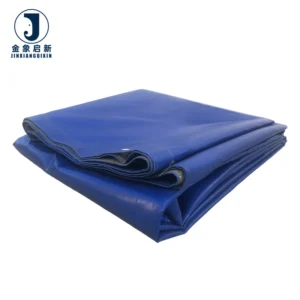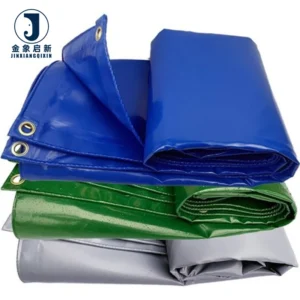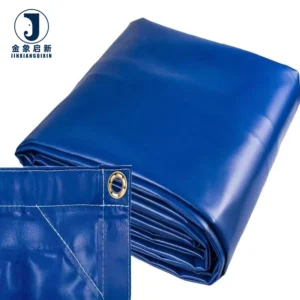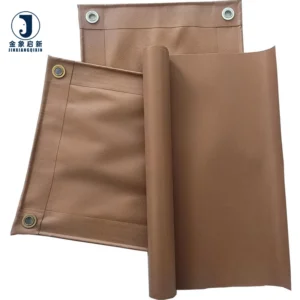
Coating process mastery — Nearly three decades focused on PVC vinyl formulation and adhesion control, with every roll verified against its stated GSM before dispatch.
Technical Specifications
| Parameter | Value |
|---|---|
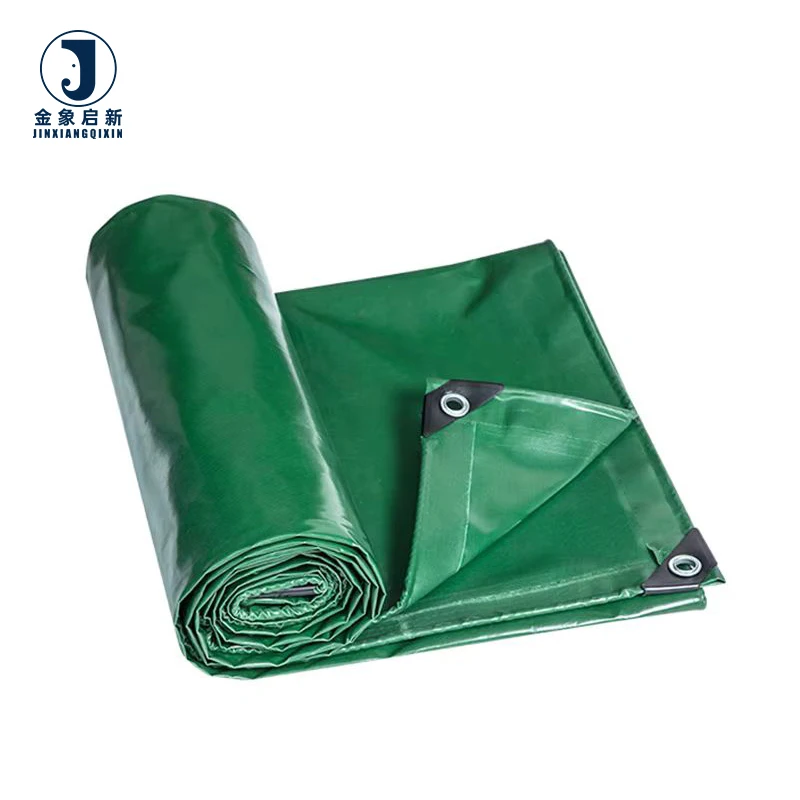
| Product Type | PVC Coated Fabric |
| Base Material | PVC Vinyl |
| Weight | At least 450 GSM |
| Fabric Structure | Woven |
| Waterproof Rating | Waterproof |
| Surface Treatment | PVC Coated |
| Flame Retardant | Available in flame retardant grades — confirm the grade required for your market |
| UV Treatment | Available with UV stabilisation — request test report for specific standard |
Application Suitability
| Application | Exposure & Requirement |
|---|---|
| Industrial equipment covers | Outdoor weathering, mechanical abrasion, UV exposure |
| Logistics and vehicle tarps | Road debris impact, constant flexing at tie-down points |
| Structural and site enclosures | Wind load tension, temporary weather protection, puncture risk |
Why GSM Verification is Critical for PVC Coated Fabric Specifiers
GSM must be verified on each roll, not just stated on the quotation.
When a technical buyer specifies PVC coated fabric gsm coating technology, they are expecting the physical weight to match the data sheet. Material arriving lighter than agreed compromises tensile strength and accelerates wear at stress points [NEED_CITE: tensile and tear test methods for coated fabrics per ISO 1421]. We have seen rolls fail prematurely because the coating weight was inconsistent, leading to seam failure before the fabric itself wore out.
Woven Base Construction and Tear Resistance
The woven base fabric provides the structural skeleton for this PVC coated fabric. The interlacing of yarns determines how a tear propagates once the surface is punctured. A tighter weave pattern restricts tear spread, which is essential for vehicle covers and structural enclosures that experience dynamic loading.
PVC Coating Adhesion and Seam Integrity
The PVC vinyl coating must bond securely to the woven substrate. When the adhesion is weak, welded seams can delaminate under load flexing. This PVC coated fabric is produced with process controls that maintain consistent coating penetration, ensuring that the join does not fail before the material [NEED_CITE: DIN 4102 fire classification for building materials].
Understanding Coating Weight and Material Density
The stated weight of at least 450 GSM reflects the combined mass of the base fabric and the PVC vinyl coating. However, a heavy coating on a low-density base may offer waterproofing but lack tear strength. Conversely, a dense base with a thin coat might resist tearing but fail to seal against prolonged water exposure. Evaluating PVC coated fabric gsm coating technology requires looking at both the weave density and the coating thickness to predict performance in industrial environments.
The Cost of Inconsistent Material Weight
Receiving a batch where the actual weight drifts below the agreed GSM leads to immediate project delays and rejections. Fabricators who cut and weld based on expected strength values find that seams separate under tension. For procurement teams, this means the entire shipment may be non-compliant with the material specification sheet, forcing costly returns and production halts [NEED_CITE: ISO standards for coated fabric verification].
Why Source This PVC Coated Fabric Here
- Process Control: Three full production lines maintain strict oversight of coating weight and adhesion, ensuring the PVC vinyl bonds correctly to the woven base.
- QA/QC Verification: Dedicated inspection at every stage includes 100% pre-shipment checks to verify that the 450 GSM minimum is met on every roll.
- Custom Capability: A 10-person R&D team handles specific requirements, from pattern printing to custom widths, supporting full fabrication needs.
- Documentation: Material specification sheets are provided stating exact GSM and base fabric construction, matching the physical product delivered.
Documentation & Verification
- Material specification sheet stating exact GSM and base fabric construction.
- Test reports for UV resistance and flame retardant grades where applicable.
- 100% pre-shipment inspection record verifying weight per roll.
- ISO and CE certificates accompanying commercial shipments.
- Certificate of origin and customs support for international freight.
Fabrication, Handling & Storage
- Hot air welding parameters must be adjusted for the PVC vinyl coating thickness to ensure bond strength.
- Store rolls vertically in a cool, dry place to prevent permanent creasing of the woven base.
- Use sharp blades for cutting to avoid fraying the woven fabric structure at the edges.
- Clean surfaces with mild detergents to preserve the PVC coating integrity and waterproof rating.
- Reinforce eyelet areas with extra patches if the woven base is subject to high tie-down tension.
Inquiry Guidance
To provide an accurate quotation for this PVC coated fabric, please specify the required width, roll length, and any specific treatment grades needed for your market. Confirm whether you require UV stabilisation or flame retardant certification, and indicate if the material is for automated fabrication or manual assembly.
Frequently Asked Questions
Q: How is the actual GSM verified before shipment?
A: Every roll undergoes a 100% pre-shipment inspection where the weight is physically measured against the stated minimum of 450 GSM. A detailed inspection record is included with the shipping documentation to prove compliance with your material specification sheet.
Q: Can I get a test report for UV or flame-retardant treatment?
A: Yes, test reports are provided for specific grades when requested during the inquiry stage. We supply data citing the relevant standards for your region, ensuring the PVC coated fabric meets local fire safety or weathering requirements.
Q: What is the minimum order for a custom colour or width?
A: Custom runs are supported by our in-house R&D and production lines. While minimums vary by specific colour and width requirements, we develop samples for approval before bulk production to ensure the PVC vinyl coating matches your exact specifications.
Q: How does the woven base affect the welding process?
A: The woven structure requires specific heat and pressure settings to achieve a strong seam without delaminating the PVC vinyl. We recommend testing weld parameters on a sample piece to ensure the join matches the tear strength of the main fabric body.