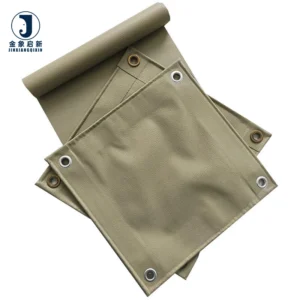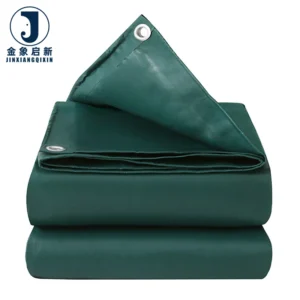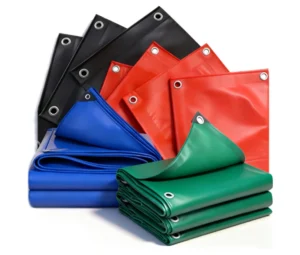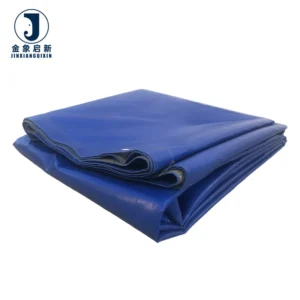
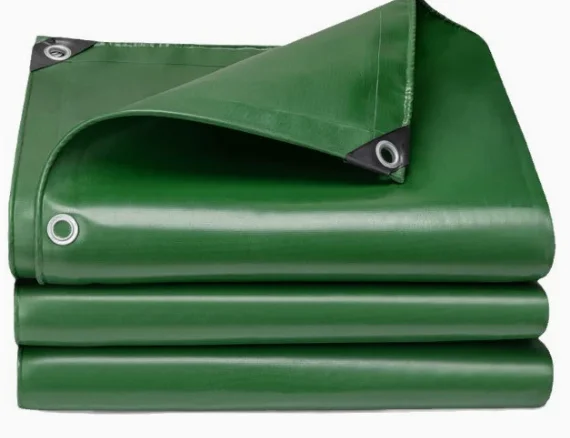
Process-Controlled Coating — Deep control over PVC adhesion and coating weight across every roll, verified at the mill before dispatch.
Technical Specifications
| Parameter | Value |
|---|---|
| Product Type | PVC Coated Fabric |
| Coating Material | PVC (Vinyl) |
| Weight | At least 450 gsm |
| Base Fabric | Woven Fabric |
| Waterproof | Yes |
| Flame Retardant | Available in flame retardant grades — confirm the grade required for your market |
| UV Treatment | Available with UV stabilisation — request test report for your climate zone |
| Anti-Static | Available for specialist applications — specify the standard required |
| Standards | ISO, CE certified production |
Application Suitability
| Application | Exposure & Requirement |
|---|---|
| Industrial equipment covers | Outdoor storage, rain and snow contact, UV exposure, mechanical abrasion from handling |
| Vehicle and truck covers | Road debris impact, wind flap fatigue, constant flexing at tie-down points |
| Construction site sheeting | Dust and moisture containment, scaffold draping, temporary weather enclosure |
| Outdoor structure wraps | Permanent weather exposure, thermal cycling, tension stress at fixing points |
Why a Coating Weight Claim Without a Spec Sheet Is a Procurement Risk
A stated GSM means nothing without a material specification sheet that breaks down base fabric weight versus coating weight.
Quotation documents frequently list a single GSM figure that rolls together the woven substrate and the PVC coating into one number. When the roll arrives lighter than expected, there is no baseline document to determine whether the coating was under-applied or the base fabric was substituted with a lower-denier yarn. Technical buyers who accept a quotation without requesting the full material breakdown absorb that verification gap themselves. [NEED_CITE: material specification practices for PVC coated woven fabrics]
For PVC coated fabric procurement, the responsible approach is to require a specification sheet that separates base fabric construction from coating weight, supported by a pre-shipment inspection record that confirms both values against the stated grade.
Coating Adhesion and Its Role in Fabricated Cover Performance
The bond between the PVC coating and the woven base fabric determines whether a fabricated cover delaminates under field stress. When coating adhesion is insufficient, the PVC layer separates from the substrate at fold lines, eyelet zones and welded seams — long before the base fabric itself reaches its tensile limit. This PVC coated fabric 450 gsm waterproof woven construction relies on controlled coating penetration into the weave structure to create a mechanical lock that resists peel forces during fabrication and service.
Weld Compatibility Across High-Frequency and Hot-Air Methods
Fabricators joining panels into truck covers, tents or inflatable structures depend on the coating formulation to produce consistent weld strength. The PVC layer must soften at predictable temperatures and fuse across the joint without blistering or starving the seam. Coating weight and plasticiser balance directly affect the thermal window available for welding — too narrow a window forces fabricators to choose between incomplete fusion and fabric damage. This PVC coated fabric supports both high-frequency and hot-air welding when process parameters are matched to the coating formulation. [NEED_CITE: welding method compatibility for PVC coated technical textiles]
How Base Fabric Construction Governs Tear Propagation
The woven base fabric carries the structural load in any PVC coated fabric system. Tensile strength derives primarily from yarn denier and warp-weft density, not from the coating itself. A heavier coating adds weather protection and abrasion resistance but contributes minimally to load-bearing capacity. The woven substrate in this material provides the tear resistance needed when covers are tensioned over frames or subjected to wind loading on exposed structures. Understanding the ratio of coating weight to base fabric weight allows specifiers to predict how the material will behave under mechanical stress versus environmental exposure.
The coating method also influences performance. Knife coating forces PVC paste directly into the weave, producing higher adhesion and better peel strength compared to simple lamination. This affects how the fabric responds to repeated folding, how well welded seams hold under flex fatigue, and whether the coating migrates or cracks in cold conditions. Specifiers comparing quotations should verify which coating method is used, as two fabrics with identical GSM can perform very differently in service depending on how the coating was applied.
What Happens When Roll-to-Roll Consistency Breaks Down
Colour variation between rolls in a single order becomes visible the moment panels are installed side by side on a truck curtain or structure wrap. Weight inconsistency across rolls means some panels meet the specified GSM while others fall below it, creating weak points that fail first under load. Welded seams are particularly vulnerable — if the coating formulation drifts between batches, weld parameters that worked on one roll may produce cold joints or blistered seams on the next. [NEED_CITE: batch consistency requirements for coated fabric in fleet and structure applications] These defects are not apparent at the point of purchase and typically surface only after fabrication and installation, when remediation costs are highest.
Why Fabricators and Technical Buyers Source This Material Here
Three full production lines with dedicated coating stations allow this PVC coated fabric to be produced in volume without sacrificing coating uniformity across the roll width. A 10-person R&D team handles custom colour matching, surface finish selection and sample development, returning samples within days rather than weeks. Every roll passes through QA checkpoints that verify coating weight, base fabric integrity and colour consistency before it leaves the production floor. The result is a material supply that fabricators can plan around — consistent enough to set weld parameters once and run an entire order without adjustment. [NEED_CITE: quality control standards for coated technical fabrics per ISO systems]
Documentation & Verification
- Material specification sheet stating GSM breakdown between base fabric and PVC coating for this woven grade
- Test reports for UV and flame retardant grades matched to the batch being shipped
- Pre-shipment inspection record confirming weight, width and colour per roll
- ISO and CE certificates provided for compliance and customs documentation
- Certificate of origin included for cross-border procurement and duty classification
Fabrication, Handling & Storage
- Match hot-air weld temperature to the 450 gsm coating weight to avoid blistering or cold joints
- Store rolls upright on pallets to prevent permanent creasing in the woven base fabric
- Allow material to acclimatise before unrolling in cold conditions to prevent coating micro-cracking
- Use PVC-compatible cleaners only — solvent-based products can soften the coating surface
- Plan panel layout to minimise cross-grain cuts that reduce tear resistance in the woven substrate
Requesting a Specification-Matched Quotation
Provide the exposure conditions your covers will face — continuous outdoor weather, chemical contact, temperature extremes — along with the target market’s fire classification or compliance requirements. Specify the roll width, colour reference and annual volume so the quotation reflects production-run pricing and lead time. If you require finished panels rather than roll stock, include cutting dimensions and seam construction details. Sample development is available for colour, finish and weld compatibility confirmation before committing to a production order.
Frequently Asked Questions
Q: How is the 450 gsm weight verified and what tolerance applies on arrival?
A: Each roll is weighed during pre-shipment inspection against the stated minimum 450 gsm. The inspection record documents actual measured values per roll. The specification sheet breaks down how much of that weight is PVC coating versus woven base fabric, so buyers can verify the construction matches the quotation rather than relying on a single combined figure.
Q: What base fabric denier and weave construction underlies this PVC coated fabric?
A: The base fabric is a woven construction selected for tear resistance and dimensional stability under tension. The specific denier and thread count are documented on the material specification sheet provided with each order. Request the spec sheet for your required width and weight grade to confirm the base fabric parameters match your fabrication requirements.
Q: Is a test report available for UV resistance or flame retardant treatment?
A: Test reports are available for UV stabilisation and flame retardant grades when these treatments are specified at the inquiry stage. Reports reference the applicable test standard and are matched to the production batch. Confirm the fire classification or UV exposure standard required in your target market so the correct treatment and documentation are prepared.
Q: What welding methods are compatible with this PVC coating formulation?
A: This material supports both high-frequency and hot-air welding. The coating formulation and weight influence the thermal window for consistent seam fusion. Fabricators should request weld parameter guidance matched to the specific coating grade and conduct test welds on sample material before running production panels.
Q: Can custom width, colour and roll length be specified with supporting documentation?
A: Custom width, colour and roll length are available. The R&D team develops samples for colour matching and finish confirmation before production. Every custom order ships with a specification sheet, colour reference document and pre-shipment inspection record verifying that the produced rolls match the approved sample.