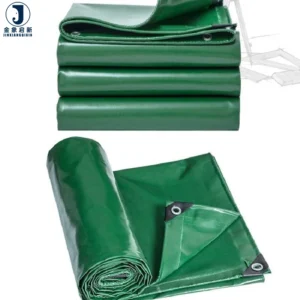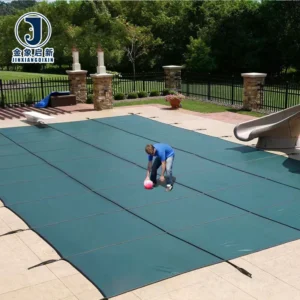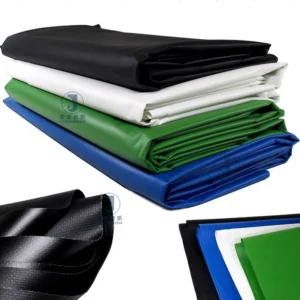
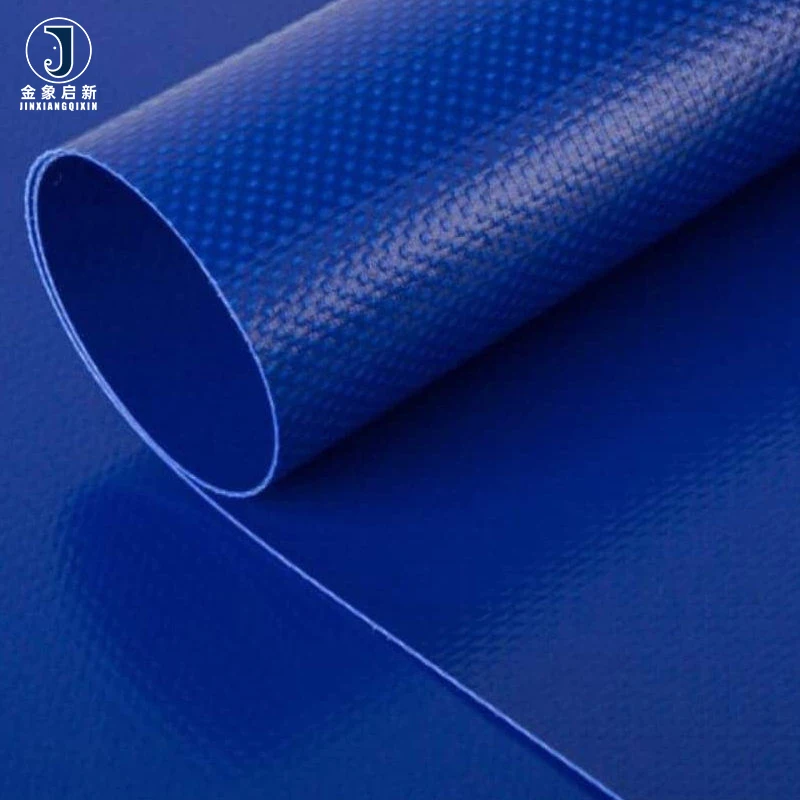
Coating Weight Consistency — Every roll is verified against its stated GSM before dispatch, ensuring the PVC coated tarpaulin base fabric denier coating method GSM you specify is what arrives on your dock.
Technical Specifications
| Parameter | Value |
|---|---|
| Product Type | PVC Coated Tarpaulin Roll |
| Base Fabric | Polyester woven fabric |
| Coating Material | Double-sided PVC coating |
| Weight Range | 500gsm–1000gsm (range covers product family — confirm the grade for this item) |
| Tensile Strength | 50–80 MPa (test standard not stated in source) |
| Brittle Temperature | ≤ -50 to -60 ℃ |
| Softening Temperature | ≥ 80 ℃ |
| Melting Point | 212 ℃ |
| Density | 1.15–2.00 g/cm³ |
| Joining Methods | High frequency hot melt, Hot air welding, Sewing |
| Surface | Smooth, leather-like texture |
| Flame Retardancy | Flame-retardant grades available — confirm the grade required for your market |
| UV Resistance | Anti UV treatment available — confirm the test basis and duration for your application |
| Key Features | Waterproof, Heavy metal free, Anti mildew, Flexible, Self clean |
| Printing | Printable, Customized |
| Standards | ISO, CE |
Application Suitability
| Application | Exposure & Requirement |
|---|---|
| Truck side curtain | Constant flexing at fold lines, road debris abrasion, prolonged UV exposure |
| Trailer top roof cover | Permanent weather exposure, pooling water load, wind uplift tension |
| Outdoor event tent | Direct sun and rain, repeated setup and teardown handling |
| Construction site cover | Abrasive contact with scaffolding and materials, wind tension on grommets |
| Inflatable structure fabric | Internal air pressure stress, continuous flex under load |
| Container roof | Standing water, thermal cycling, UV degradation on horizontal plane |
Why PVC Coated Tarpaulin Base Fabric Denier Coating Method GSM Matters More Than Weight Alone
A heavy roll does not guarantee a strong seam, and a light roll does not mean it will fail.
When you request a specific PVC coated tarpaulin base fabric denier coating method GSM, you expect the fabric to perform as a system — base fabric carrying the tensile load, coating sealing the surface and locking the weave. But a roll that meets GSM on the scale can still underperform if the coating weight is unevenly distributed or the base fabric denier is too low for the application. I have seen heavy-grade coated rolls fail at the weld line while lighter rolls held firm, because the base construction was specified correctly for the stress pattern [NEED_CITE: tensile and tear test methods for coated fabrics per ISO 1421].
The relationship between base fabric density, coating adhesion and finished weight determines whether the fabric holds under tension or splits at the first flex cycle. Specifying on GSM alone without understanding the coating method and base weave leaves your most critical performance variable — seam integrity — to chance.
How Coating Method Governs Adhesion and Seam Behaviour
Knife coating applies liquid PVC directly onto the polyester base fabric under controlled tension, forcing the coating into the weave structure. This produces a bond where the PVC and base fabric behave as a single unit during welding and under load. When the PVC coated tarpaulin base fabric denier coating method GSM is achieved through knife coating, the resulting roll withstands hot air and high frequency welding without delamination at the weld zone.
Lamination-based coating, by contrast, bonds a pre-formed PVC film to the base fabric with an adhesive layer. This adhesive interface can separate under repeated flexing or when the weld temperature exceeds the adhesive’s softening point — a common failure mode in side curtain applications where the fabric folds and unfolds hundreds of times per journey.
Base Fabric Construction and Its Role in Tear Propagation
The polyester base fabric’s denier and weave count govern how a puncture or cut propagates through the material. Higher denier yarns resist tear initiation, while tighter weave counts slow tear propagation once started. When selecting a PVC coated tarpaulin base fabric denier coating method GSM, the base construction must match the application’s stress profile: high-tension structural covers need denser weaves to resist bias-direction loading, while flexible side curtains prioritise low-temperature pliability over maximum tear resistance [NEED_CITE: tear propagation behaviour in woven coated fabrics].
The coating weight adds stiffness and waterproofing but contributes less to tear resistance than the base fabric itself. This is why two rolls at the same GSM can show very different tear behaviour — the heavier base fabric version outperforms one that reaches the target GSM through thicker coating on a lighter base.
Decoding the Specification Sheet for Technical Buyers
The tensile strength range of 50–80 MPa, as stated in the source data, spans a wide band that corresponds to different base fabric constructions within the product family. A technical buyer must match the specific grade to the application’s peak load, not rely on the upper bound of a range. The brittle temperature of ≤ -50 to -60 ℃ and softening temperature of ≥ 80 ℃ define the operational envelope: the fabric remains flexible in arctic transport conditions but must not be installed where sustained surface temperatures approach the softening threshold.
The double-sided PVC coating provides waterproofing and UV shielding on both faces, which matters for applications like inflatable structures where the inner surface faces abrasion from internal components. The self-clean surface characteristic reduces maintenance frequency on horizontal installations such as container roofs and event tent canopies. Welding compatibility across high frequency, hot air and sewing gives fabricators flexibility in joining method selection, though each method places different demands on the coating’s adhesion to the base fabric.
The Hidden Cost of Specifying on Price Instead of Performance
When a roll arrives at a weight lighter than the quoted GSM, the coating is thinner than specified and the base fabric carries a higher proportion of the total weight. This shifts the failure point from the fabric body to the weld zone, where thinner coating produces weaker weld seams. The seam fails before the fabric does — at the exact point where the load flexes most during transit or under wind load.
Flame-retardant grades claimed without a test report matching the production batch create compliance risk at the installation site. If the local authority requests documentation and the certificate is generic rather than batch-specific, the entire installation may be rejected regardless of the fabric’s actual performance [NEED_CITE: fire classification documentation requirements for temporary structures]. Colour variation between rolls in the same order becomes visible once panels are installed side by side, forcing costly panel replacement or project-wide repainting.
Why Technical Buyers Source This Coated Fabric Here
Three full production lines with 36 sets of professional equipment maintain coating weight consistency across the full roll width — the gauge that controls knife-to-fabric distance is calibrated per production run, not set once and left. The 10-person R&D team develops custom GSM grades, widths and treatments from base fabric selection through to final coating, rather than offering a fixed catalog with limited options.
Dedicated QA/QC inspects every roll at each production stage, with 100% pre-shipment inspection covering weight verification, visual defects and weld test samples. ISO and CE certification underpins the production system, and export documentation — including certificate of origin and customs support — is prepared for over 20 destination markets. Samples for custom specifications are developed within days, allowing fabricators to run in-house weld trials before committing to container-quantity orders.
Documentation & Verification
- Material specification sheet stating base fabric denier, coating weight and colour reference per roll
- Flame-retardant test report matched to the specific production batch where applicable
- Anti-UV treatment verification with test basis documented on request
- Pre-shipment inspection record confirming 100% roll inspection before container loading
- Roll packing list with individual roll weights and dimensions
- ISO and CE certificates included with export documentation package
Fabrication, Handling & Storage
- Hot air welding parameters must be adjusted per GSM grade — heavier rolls require higher temperature and slower travel speed
- High frequency welding suits the double-sided PVC coating structure and produces clean edges for visible seam applications
- Store rolls upright on pallets to prevent flat-spotting and permanent creasing in the polyester base fabric
- Allow cold rolls to reach ambient temperature before unrolling to avoid coating crack at low-temperature flex points
- Use mild detergent on the self-clean surface — solvents may degrade the PVC coating and compromise weld readiness
- Cut pattern layout should account for the roll width to minimise transverse seams in high-tension zones
What to Include in Your Technical Enquiry
Specify the application environment and the mechanical loads the fabric will face — side curtain flexing, structural wind tension, or static covering. State your target market’s fire safety and compliance requirements so the correct flame-retardant grade and test standard can be matched to your project. Provide the required roll width, GSM preference and annual volume to receive a specification recommendation and sample for weld compatibility testing.
Frequently Asked Questions
Q: How is GSM verified before shipment and what tolerance applies?
A: Each roll is weighed and measured to calculate actual GSM against the quoted specification. The pre-shipment inspection record documents individual roll weights. Confirm the acceptable tolerance band for your application when placing the order, as tighter tolerances may require dedicated production runs rather than standard batch output.
Q: Can I receive a flame-retardant test report matching my batch?
A: Flame-retardant grades are available with test reports matched to the production batch. Specify the required grade — such as B1 per DIN 4102, M2, or NFPA 701 — at enquiry stage so the correct treatment formulation is applied and the corresponding test documentation is prepared alongside your export certificates.
Q: Which joining method suits high-flex applications like truck side curtains?
A: High frequency hot melt welding is typically recommended for side curtain applications because it produces a homogeneous weld that flexes with the fabric. Hot air welding is suitable for structural seams. Sewing with welded seam tape backup is used where mechanical fastening is required alongside waterproofing.
Q: How is roll-to-roll colour consistency controlled across a container order?
A: Colour consistency is managed through controlled pigment dosing and verified during the 100% pre-shipment inspection. Request a colour reference sample with your specification sheet and confirm that all rolls in the order share the same production batch number for maximum colour uniformity across installed panels.
Q: Do you provide sample rolls for in-house weld testing?
A: Samples are developed within days for custom specifications. Request a sample roll at your target GSM and treatment grade, then run weld trials on your own equipment to confirm temperature settings, travel speed and seam strength before committing to a full container order.