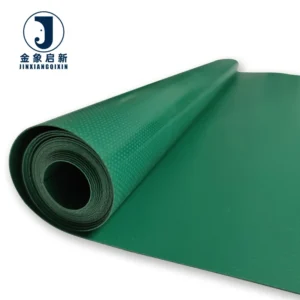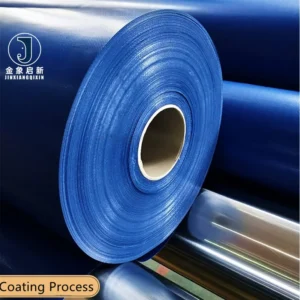
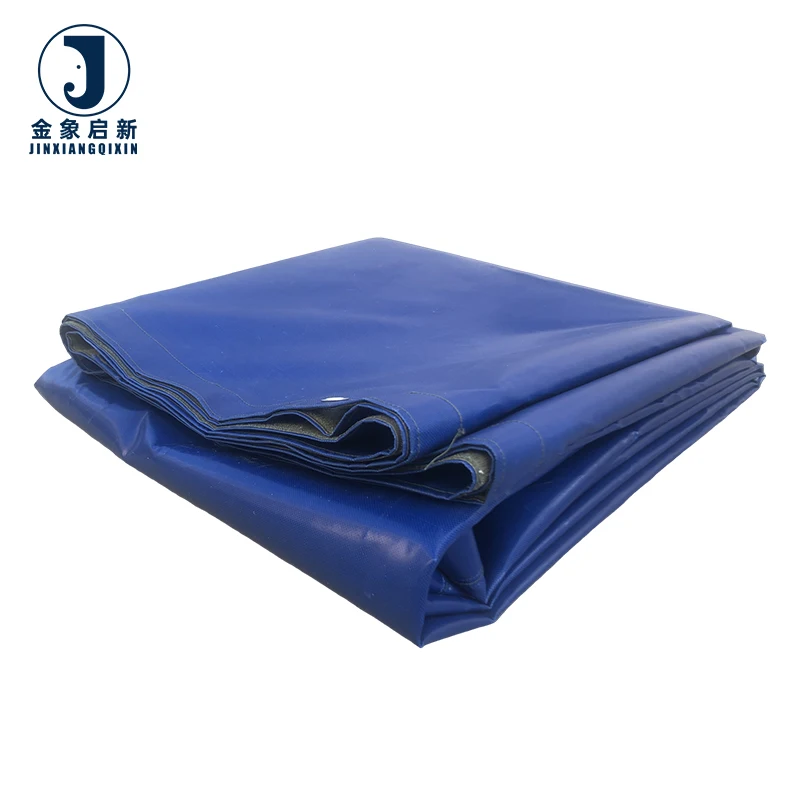
Coating weight control — Every roll of 500gsm PVC laminated tarpaulin undergoes in-process GSM verification to ensure the quoted weight matches the delivered fabric, supported by pre-shipment inspection records.
Technical Specifications
| Parameter | Value |
|---|---|
| Product Type | PVC Coated Tarpaulin Roll |
| Weight | 500gsm |
| Base Fabric Denier | 1000D |
| Coating Method | Laminated |
| Coating Material | PVC |
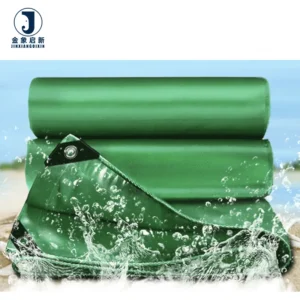
| Waterproof Rating | anti-permeable ≥20KPa |
| Flame Retardant Grade | flame retardant ≤10 seconds (grade not stated in source) |
| Low-Temperature Flexibility | not fractured by pliers at -30℃ |
| Mildew Resistance | mildew proofing properties stated (test basis not stated in source) |
| Corrosion Resistance | acid, alkali and brine corrosion |
| Seaming Method | Heat combined with high-frequency |
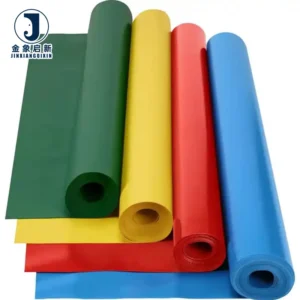
| Colour | Grey (custom colours available) |
| Finish | Glossy or matte finish available |
Application Suitability
| Application | Exposure & Requirement |
|---|---|
| Large camping tarp and outdoor tent fabric | Sustained UV exposure, repeated folding and unfolding, wind loading on tensioned panels, requirement for reliable heat-welded seams at panel joins |
| Truck, trailer and boat cover | Road abrasion, constant flexing at load points, high-speed wind flap, tie-down stress at reinforcement zones, saltwater contact for marine use |
| Awning and carport cover | Permanent outdoor installation, thermal cycling between sun and shade, pooling water on horizontal spans, requirement for clean surface finish |
| Roof cover | Continuous weather exposure, thermal expansion and contraction of substrate, chemical contact from industrial atmosphere, standing water resistance |
| Shipping and transport load cover | Forklift contact, load shifting friction, stacking pressure during transit, requirement for corrosion resistance in port environments |
Why GSM Verification Matters More Than the Quoted Number for PVC Coated Tarpaulin 500gsm Laminated
The specification sheet must state the exact coating weight, base fabric denier and lamination method — not just a nominal GSM figure.
A quoted 500gsm that arrives at 440gsm changes the fabric from a medium-duty tarpaulin to a light-duty one. The base fabric carries the tensile load while the PVC coating provides waterproofing and abrasion resistance. When coating weight is reduced to cut cost, the material loses the very properties the buyer specified for. Technical buyers ordering PVC coated tarpaulin 500gsm laminated roll stock need the delivered fabric to match the performance data they designed around. [NEED_CITE: tensile and tear test methods for coated fabrics per ISO 1421]
How Lamination Defines the Performance Envelope of This Fabric
Laminated PVC construction bonds the coating to the 1000D base fabric through heat and pressure rather than applying it as a liquid layer. This method produces a tighter bond at the coating-to-yarn interface, which directly affects how the material behaves during high-frequency welding. For fabricators cutting and joining panels from PVC coated tarpaulin 500gsm laminated stock, the lamination method determines the welding temperature window and the peel strength achievable at the seam line. A laminated structure also retains flexibility across a wider temperature band compared to knife-coated alternatives at equivalent weight.
The Relationship Between Base Fabric and Coating at 500gsm
The 1000D base fabric provides the structural backbone, while the 500gsm total weight indicates the combined mass of yarn and PVC coating per square metre. At this weight class, the balance between base fabric density and coating thickness determines whether the material performs closer to a structural membrane or a flexible cover. Fabricators evaluating PVC coated tarpaulin 500gsm laminated rolls should request the base fabric denier and weave density alongside the GSM to assess tear propagation resistance. [NEED_CITE: relationship between denier count and tear strength in woven coated textiles]
Reading the Specification Sheet for What It Actually Covers
Low-temperature flexibility rated at -30℃ without fracture means the PVC compound retains plasticiser stability well below freezing, which is relevant for outdoor deployment in continental and northern climates. The anti-permeable rating of ≥20KPa confirms waterproof integrity under hydrostatic pressure, suitable for applications where water pooling occurs on horizontal spans. The stated corrosion resistance against acid, alkali and brine indicates suitability for industrial and marine environments where chemical contact is expected. The heat combined with high-frequency seaming method ensures that welded joints maintain water tightness at the points where the fabric flexes most under load.
What Happens When Roll-to-Roll Consistency Breaks Down
Colour variation between rolls in the same order becomes visible the moment panels are installed side by side on a truck curtain or awning frame. Inconsistent coating weight across a batch means some panels weld cleanly while others delaminate at the same machine settings, forcing fabricators to recalibrate between rolls. For buyers ordering grey PVC coated tarpaulin 500gsm laminated rolls in volume, batch consistency is not a quality preference — it is a production requirement. [NEED_CITE: colour measurement standards for coated fabric batches per ISO 105 series]
Why Technical Buyers Source This Grade Through a Controlled Production Process
Deep process control over coating weight and adhesion ensures that every roll of PVC coated tarpaulin 500gsm laminated fabric meets the stated GSM without relying on post-production sorting. Three full production lines with 36 sets of professional equipment support bulk volume with consistent output quality across the order. The 10-person R&D team handles material selection and sample development so that custom width, colour and treatment requirements are confirmed before production begins. Dedicated QA/QC at every stage with 100% pre-shipment inspection catches coating weight deviation and colour shift before rolls are packed. Samples are developed within days for custom requirements, allowing fabricators to test weld parameters and eyelet pull-out strength before committing to bulk quantities.
Documentation & Verification
- Material specification sheet stating 500gsm weight, 1000D base fabric and laminated PVC coating method
- Test report for flame-retardant grade where applicable — confirm the standard required for your market before ordering
- Pre-shipment inspection record with 100% roll-by-roll weight and colour check before dispatch
- ISO and CE certificates included with shipment documentation
- Roll packing list with individual roll weight and dimensions for inventory reconciliation
Fabrication, Handling & Storage
- Set high-frequency welder parameters to match laminated PVC at 500gsm — test peel strength on sample before full production run
- Allow 1000D base fabric rolls to acclimatise to workshop temperature before unrolling to prevent condensation under the coating
- Store rolls vertically on end caps to prevent flat-spot creasing that transfers to finished panels
- Use compatible PVC adhesive for field repairs on 500gsm laminated surfaces — solvent-based cements may soften the coating bond
- Plan cutting layout to minimise cross-grain seams on 1000D fabric where tear resistance is direction-dependent
- Specify glossy or matte finish based on cleaning frequency requirements — matte surfaces hide abrasion marks better on transport covers
What to Specify When Requesting a Quotation
Provide your end-use application and the environmental conditions the fabric will face — chemical exposure, temperature range, UV intensity and expected flex cycles. State whether you need roll stock in standard widths or custom widths to minimise offcut waste in your cutting plan. Confirm the fire classification or regulatory standard your target market requires so the correct treatment grade can be quoted with supporting test documentation.
Frequently Asked Questions
Q: How do I verify the 500gsm weight on arrival matches the quotation?
A: Each shipment includes a pre-shipment inspection record documenting roll-by-roll weight verification. You can independently confirm by cutting a measured sample from the roll and weighing it on a calibrated scale. If the delivered weight deviates from the specification sheet, the inspection record provides the baseline for reconciliation.
Q: What flame-retardant standard applies, and how do I obtain a test report?
A: Flame-retardant grades are available for this material — confirm the specific standard required for your market, such as B1, M2 or NFPA 701, when placing your inquiry. A test report referencing the applicable standard is supplied with the shipment documentation where the grade has been specified and tested.
Q: What high-frequency welding parameters work for laminated PVC at this weight?
A: Welding temperature, pressure and dwell time depend on your specific machine and electrode configuration. Request a sample roll to conduct peel-strength tests at your workshop settings. The laminated coating method provides a defined melting window at 500gsm that supports consistent seam integrity once parameters are calibrated.
Q: Will colour vary between rolls when ordering in bulk?
A: Roll-to-roll colour consistency is controlled through in-process QC checks and verified during 100% pre-shipment inspection. If your application places panels side by side where colour shift would be visible, specify this requirement at inquiry stage so production scheduling groups your rolls from the same coating batch.
Q: What roll widths and lengths are available for my cutting plan?
A: Standard and custom widths are available — state your required width and roll length when requesting a quotation. Custom widths are produced to minimise waste in your panel cutting layout, and lead times for non-standard dimensions will be confirmed with the quotation.