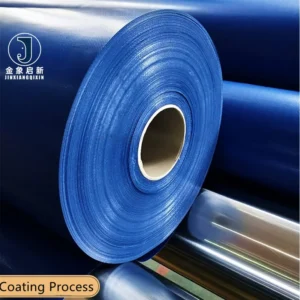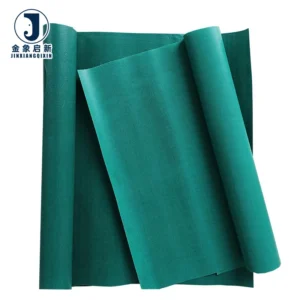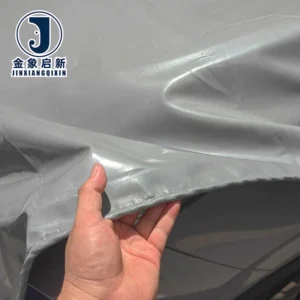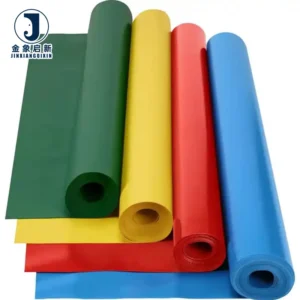
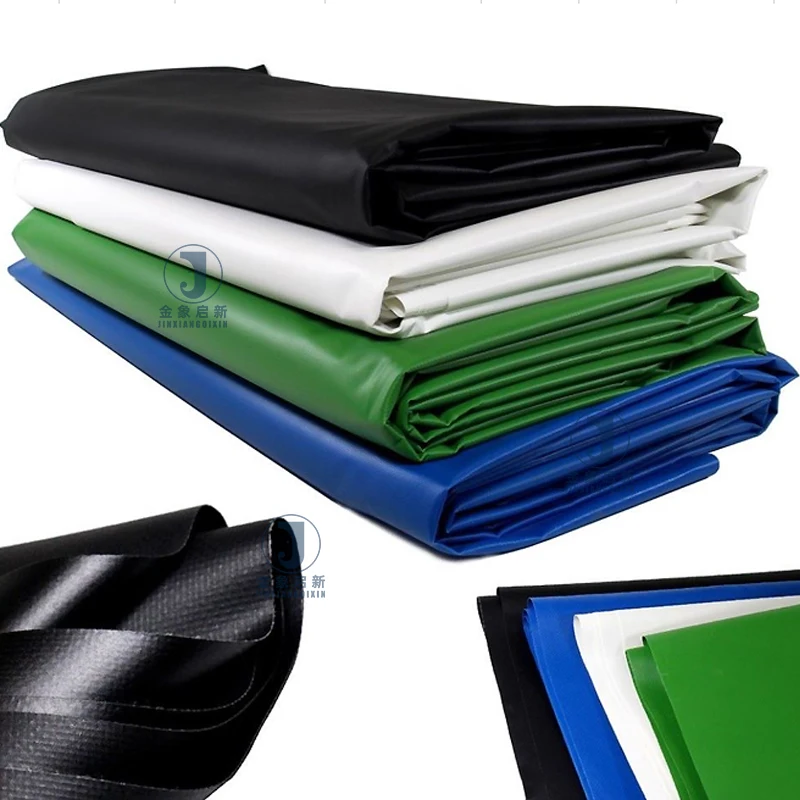
Coating Adhesion Control — Hot-melt lamination process bonds PVC to a 100% high tenacity polyester base, maintaining consistent layer integrity across the full roll length for fabricators who weld seams under tension.
Technical Specifications
| Parameter | Value |
|---|---|
| Product Type | PVC Tarpaulin Roll |
| Specification | 650gsm |
| Base Fabric | 100% high tenacity polyester yarns |
| Coating Material | PVC |
| Coating Method | Laminated technology & Hot-melt Coating technology |
| Weight (GSM) | 650gsm |
| Waterproof | Yes |
| Cold Crack Resistance | Yes |
| Anti-Mildew | Yes |
| Anti-Static | Treatment available (standard not stated in source) |
| Flame Retardant | Treatment available (grade not stated in source) |
| UV Treatment | Special treatment available (test basis not stated in source) |
| Anti-Cold | Yes |
| Color Fastness | Best color fastness (test basis not stated in source) |
| Outdoor Life | 3-5 years (source value — verify against manufacturer catalog) |
| Printing Option | Digital printing compatible |
| Key Features | Fully waterproof, cold crack resistant, anti-mildew treated, digital print compatible surface |
Application Suitability
| Application | Exposure & Requirement |
|---|---|
| Truck and trailer side curtains | Constant flexing at fold points, road spray abrasion, sustained wind load, UV exposure on south-facing routes |
| Tent and awning fabric | Long-term outdoor tension, rain pooling on horizontal panels, repeated assembly and disassembly stress |
| Pick-up truck bed covers | Direct sunlight on flat surfaces, cargo friction, tailgate hinge folding wear |
| Advertising banner and print media | Ink adhesion on coated surface, outdoor display wind load, colour fidelity under UV |
| Inflatable and membrane structures | Continuous internal air pressure, seam weld load, UV degradation on exposed membrane faces |
| Caravan and recreational awnings | Compact folding storage, repeated deployment, exposure to coastal salt air and humidity |
Why Coating Adhesion Matters More Than GSM Alone for Welded Seams
A 650gsm PVC coated tarpaulin is only as strong as the bond between its coating and base fabric.
Fabricators who weld seams on PVC coated tarpaulin rolls discover quickly that the weld line is the first point of failure — not the fabric body. When a truck side curtain flexes at every corner, or a tensioned tent panel catches a gust, the stress concentrates at the welded seam. If the coating has not bonded fully into the polyester yarn interstices, the PVC layer peels away from the base fabric under load, and the weld separates [NEED_CITE: tensile and tear test methods for coated fabrics per ISO 1421]. Laminated and hot-melt coating technology addresses this by forcing molten PVC into the base weave under heat and pressure, producing adhesion that survives repeated flex cycles without delamination.
Hot-Melt Lamination and Its Effect on Weld Integrity
When fabricators specify a PVC Coated Tarpaulin 650gsm roll, the coating method determines how well high-frequency or hot-air welds hold under dynamic load. Hot-melt coating drives PVC into the polyester yarn structure while molten, creating a mechanical interlock rather than a surface bond. This means the weld zone fuses through both the coating and the embedded PVC within the yarn matrix, producing a joint that tears the base fabric before the weld fails.
Base Fabric Construction and Dimensional Stability
The 100% high tenacity polyester yarn base provides the structural backbone of this PVC Coated Tarpaulin 650gsm material. High tenacity yarns resist elongation under sustained tension — critical for side curtains that hang vertically under their own weight and for tent panels stretched across frame members. When the base fabric resists stretch, the PVC coating does not crack or micro-fracture at stress points, preserving waterproof integrity across the full service life [NEED_CITE: ISO 1421 tensile testing of coated fabrics].
Reading the Specification Sheet Beyond the GSM Number
GSM tells you the total weight per square metre but not how that weight is distributed between base fabric and coating. A roll with a heavy coating over a light base may meet the 650gsm target while offering less tensile strength than a roll with a balanced construction. Hot-melt laminated PVC Coated Tarpaulin 650gsm rolls use a proportioned base fabric denier and weave density matched to the coating weight, ensuring that tensile and tear performance scales with the stated GSM rather than being inflated by excess coating on a weak base. The coating method also determines surface finish — laminated rolls typically produce a smoother, more uniform face that accepts digital printing inks evenly across the full roll width.
What Specification Gaps Cost at the Fabrication Stage
When a coated fabric arrives with lower actual GSM than quoted, the fabricator cuts and welds panels expecting a certain strength, and the finished product fails under load. Batch-to-batch colour drift across rolls in the same shipment forces re-sorting or rejection when panels are installed side by side. Flame retardant or anti-static treatments claimed without a supporting test report delay site acceptance — inspectors reject the installation because the documentation does not match the stated compliance requirement [NEED_CITE: DIN 4102 fire classification for building materials]. These are not material defects; they are specification and verification gaps that surface only after fabrication is complete.
How Production Control Translates to Roll Consistency
Deep process control over coating weight and adhesion means every roll of 650gsm PVC tarpaulin leaves the line with verified GSM and consistent coating-to-fabric bond strength. Three full production lines with 36 sets of professional equipment support bulk volume without sacrificing per-roll inspection — dedicated QA/QC checks at every production stage catch colour drift, coating thickness variation, and adhesion weakness before a roll is packed. The 10-person R&D team develops custom samples within days, allowing fabricators to test weld parameters and print compatibility on the actual material before committing to a production run.
Documentation & Verification
- Material specification sheet confirming 650gsm weight, base fabric construction, and hot-melt coating method per order
- Test report for flame retardant or anti-static grades tied to the specific roll batch where applicable
- Pre-shipment inspection record verifying actual GSM, colour reference, and roll count against the packing list
- ISO and CE certificates available for compliance documentation and site acceptance
- UV treatment test data supplied with the roll when special treatment is specified at inquiry stage
Fabrication, Handling & Storage
- Set hot-air weld temperature to match the PVC coating thickness of this 650gsm material to avoid scorching or incomplete fusion
- Allow cold-stored rolls to reach ambient temperature before unrolling to prevent coating micro-cracking on the polyester base
- Store rolls upright on end cores to avoid flat-spotting the laminated PVC coating surface under sustained horizontal weight
- Use compatible PVC-based adhesive for patch repairs on the hot-melt coated surface to maintain bond integrity
- Plan panel layout across roll width to minimise offcuts and reduce the number of welded seams on high-stress panels
What to Include With Your Enquiry
To match the right roll specification to your fabrication requirements, share the end-use application and the environmental exposure the finished product will face — sustained UV, chemical contact, or temperature extremes. If your market requires a specific flame retardant or anti-static grade for site compliance, state the standard your customer or inspector will check against. Specify the roll width you need and whether you require plain stock or digital printing compatible surface finish, along with the estimated annual volume so production can be scheduled efficiently.
Frequently Asked Questions
Q: How is the 650gsm weight verified on each roll before shipment?
A: Each roll undergoes a weight check during the 100% pre-shipment inspection process. The actual GSM is measured and recorded against the material specification sheet that accompanies the order, so you can verify the coating and base fabric weight match the quotation when the roll arrives at your facility.
Q: Which flame retardant grades are available and how do I confirm the right one?
A: Flame retardant treatment is available as a special option on this PVC coated tarpaulin roll. The applicable grade depends on your target market — confirm whether your project requires M2, B1 per DIN 4102, NFPA 701, or another standard, and the matching test report will be supplied with the roll batch.
Q: How do you maintain colour consistency when I order multiple rolls?
A: Colour consistency across rolls in the same order is controlled through dedicated QA/QC checks at each production stage. The colour reference is verified before packing, and the pre-shipment inspection record documents the result so panels cut from different rolls install without visible variation.
Q: What is the difference between hot-melt coating and knife coating for weld performance?
A: Hot-melt lamination forces PVC into the polyester base yarn under heat and pressure, creating a mechanical bond through the fabric structure. This produces stronger weld integrity at seam points compared to surface-applied knife coating, where the PVC layer can separate from the base fabric under repeated flex stress.
Q: Can I request a sample before placing a bulk roll order?
A: Yes, samples are developed within days for custom width, colour, or treatment requirements. Testing the sample on your own welding equipment and with your chosen printing method lets you confirm adhesion strength, surface finish, and fabrication compatibility before committing to the full production run.