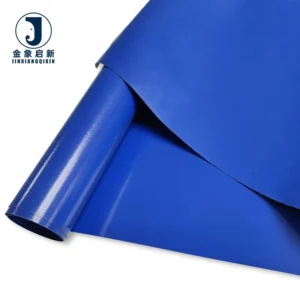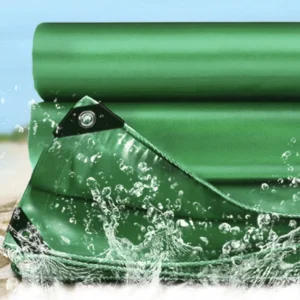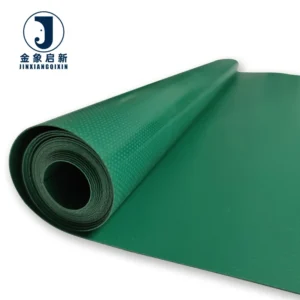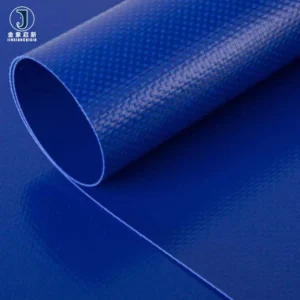
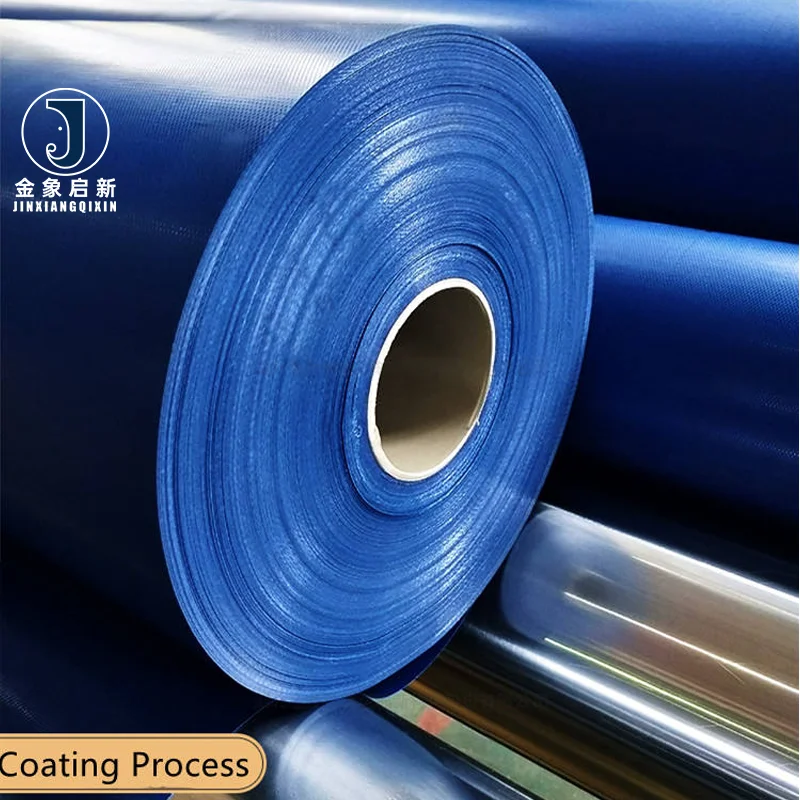
Deep Process Control Over Coating Weight — Every 650 gsm PVC coated tarpaulin roll undergoes in-process QA at the coating head, with weight verified against the stated specification before it leaves the line.
Technical Specifications
| Parameter | Value |
|---|---|
| Product Type | PVC Coated Tarpaulin Roll |
| Total Weight | 650 GSM |
| Base Fabric Denier | 1000D × 1300D |
| Mesh Count | 20 × 20 |
| Coating Material | PVC & polyester |
| Total Thickness | 0.46 mm |
| Tensile Strength (Warp) | 2550 N |
| Tensile Strength (Weft) | 2250 N |
| Key Features | Water Resistant, Flame Retardant (grade not stated in source — confirm the grade required for your market), Anti-UV (test basis not stated in source — confirm the UV test standard applicable to your region) |
| Surface Finish | Smooth, leather-like texture |
| Repairability | Hot air weldable |
| Certification | ISO, CE |
Application Suitability
| Application | Exposure & Requirement |
|---|---|
| Truck and trailer covers | Constant road vibration, flexing at tie-down points, weather exposure, abrasion from load shift |
| Side curtains for transport fleets | Repeated rolling and tensioning, UV exposure, weld seam integrity under dynamic load |
| Machinery and equipment covers | Outdoor weathering, dust and moisture ingress, handling abrasion during removal and replacement |
| Awnings and tents | Prolonged UV exposure, wind load on seams, welded joint performance, colour consistency across panels |
| Wood and stockpile covers | Moisture barrier performance, puncture resistance from stacked material edges, long-term UV degradation |
Why the GSM Figure on Your Quotation Needs More Than a Trust-Based Acceptance
The weight printed on a specification sheet only matters if you can verify it against the roll that arrives on your dock.
A 650 gsm PVC coated tarpaulin roll sounds definitive until you consider what that number actually includes. Total weight encompasses base fabric, coating compound, plasticiser and surface finish. Some quotations list a total GSM that reflects the heavier end of a production tolerance band, while the roll you receive sits at the lower boundary. Technical buyers who inspect incoming material against a documented specification sheet — not a marketing brochure — close that gap before the fabric enters fabrication. [NEED_CITE: ISO 1421 tensile and tear test methods for coated fabrics]
When the actual coating weight falls short of what was quoted, the consequences surface at the most vulnerable points: welded seams on truck side curtains, flex zones on trailer covers, and high-wind stress lines on tent panels. The fabric itself may look and feel acceptable on first handling, but the tensile and tear figures that protect your end product depend on every gram of coating being present and properly bonded to the base fabric.
How the Base Fabric Architecture Determines Load-Bearing Behaviour
The 1000D × 1300D polyester base fabric in this 650 gsm PVC coated tarpaulin roll uses a 20 × 20 mesh count to distribute stress across both yarn directions. The higher denier in the weft direction provides additional resistance where transverse loads concentrate — typically at the points where a truck cover flexes over an uneven load or where an awning panel catches crosswind. This woven structure is what the PVC coating locks onto, and without sufficient yarn density, even a heavy coating compound cannot prevent tear propagation once the base fabric yields.
What PVC Double-Side Coating Delivers That Lamination Cannot
PVC coating applied to both faces of the polyester base creates a bonded, monolithic structure rather than a layered sandwich. The coating penetrates the weave during the coating process, filling the interstices between yarns and forming a mechanical lock. This is fundamentally different from laminated PE constructions where film layers are bonded to a scrim under heat and pressure. For technical buyers evaluating roll stock, the distinction matters at the fabrication stage: hot air welding on PVC-coated fabric fuses the coating layers themselves, producing a seam that can approach the strength of the parent material — provided the coating weight and adhesion are consistent across the roll width.
Reading the Specification Sheet: What the Numbers Actually Govern
The relationship between 650 GSM total weight, 0.46 mm thickness and the stated 2550 N / 2250 N tensile figures is not coincidental. Total weight reflects how much PVC compound sits on and within the base fabric; thickness reflects how that compound is distributed. A thicker coating does not automatically mean a stronger fabric — it can mean a softer, more flexible material if the plasticiser ratio is high. Conversely, a thinner coating on a denser base fabric may yield higher tensile values but sacrifice abrasion resistance at contact points. The 1000D × 1300D denier combination and 20 × 20 mesh count provide the structural backbone; the coating protects that backbone from UV degradation, moisture ingress and mechanical wear. [NEED_CITE: relationship between coating weight and tensile performance in PVC-coated polyester fabrics] Understanding how these parameters interact lets you compare competing roll suppliers on engineering merit rather than price per kilogram alone.
The Hidden Cost of Specifying on Price Per Kilogram Alone
When a 650 gsm PVC coated tarpaulin roll is sourced on cost rather than documented coating weight and base fabric denier, the shortfall rarely appears in the first few weeks of use. It emerges at the flex points of a truck cover after months of road vibration, at the weld seams of an awning after a season of wind loading, or across the face of a tent panel where UV degradation accelerates on under-coated yarns. Batch-to-batch inconsistency compounds the problem: one roll performs adequately while the next — nominally the same specification — fails at the seam. The rework cost, the replacement shipment and the credibility loss with your own customer all trace back to a specification sheet that lacked enough detail to verify on arrival. [NEED_CITE: weld seam failure rates in coated fabric structures under dynamic loading]
Why Technical Buyers Source This Roll Stock Through Jinxiang PVC
Three full production lines and 36 sets of professional equipment support bulk capacity with reliable on-time delivery for coated fabric orders. A 10-person R&D team handles material selection, custom sizing and sample development, with samples produced within days so you can verify weight, hand feel and colour before committing to production volume. Dedicated QA/QC runs at every production stage, with 100% pre-shipment inspection and an inspection record provided per order. The material specification sheet issued with each shipment states exact GSM, base fabric denier, mesh count and coating method — not a product family range. Test reports for UV and flame-retardant grades are supplied where applicable, matching claims to documented test standards rather than generic assurances. Deep process control over coating weight and adhesion, built across nearly 30 years of focused coated fabric production, ensures the roll you receive matches the roll you specified.
Documentation & Verification
- Material specification sheet stating 650 GSM, 1000D × 1300D denier and coating method per order
- Test reports for UV stability and flame-retardant grades supplied with documented test basis
- Pre-shipment inspection record confirming weight, thickness and surface quality before dispatch
- ISO and CE certificates accompanying each commercial shipment
- Roll packing list with individual roll identification for traceability
Fabrication, Handling & Storage
- Hot air weld at temperatures suited to 0.46 mm PVC coating thickness; verify peel strength on a test piece before running full panels
- Store rolls horizontally on a flat, shaded surface to prevent permanent creasing of the 650 GSM coated fabric
- Allow cold-weather rolls to reach ambient temperature before unrolling to avoid cracking the PVC coating
- Use PVC-compatible cleaners only; solvent-based products may soften the coating surface and reduce abrasion resistance
- Plan cutting layouts to minimise off-cuts from the roll width and reduce the number of welded seams in the finished product
What We Need to Move Your Enquiry Forward
Provide the end-use application and the environmental conditions the fabric will face — UV exposure duration, temperature range, and whether flame-retardant certification is required for your market. Confirm the roll width, colour preference and whether you need the 650 gsm PVC coated tarpaulin roll supplied as raw stock or pre-cut to panel dimensions. If batch colour consistency across multiple rolls is critical for your assembly line, note this at enquiry stage so production can be scheduled from a single coating run.
Frequently Asked Questions
Q: How is the 650 GSM figure verified — is it coating weight or total weight, and how do I check it on arrival?
A: The 650 GSM refers to total weight including base fabric and PVC coating combined. On arrival, cut a measured sample from the roll, weigh it on a calibrated scale, and compare against the stated specification. A material specification sheet accompanies each shipment documenting the exact GSM, denier and coating method for traceability.
Q: What flame-retardant grades are available for this construction, and what test reports come with the roll?
A: This 650 gsm PVC coated tarpaulin roll is available in flame retardant grades — confirm the grade required for your market, such as B1 per DIN 4102, M2, or NFPA 701. Where a flame-retardant grade is specified, the corresponding test report is supplied with the shipment so your compliance documentation is complete.
Q: How do the warp and weft tensile figures relate to welded seam performance in the field?
A: The 2550 N warp and 2250 N weft values reflect the base fabric strength under controlled test conditions. In fabrication, hot air weld strength depends on coating adhesion and welding parameters. A seam that approaches parent material strength requires consistent coating weight across the weld zone — which is why incoming GSM verification matters before fabrication begins.
Q: How is batch-to-batch colour consistency controlled when ordering multiple rolls of the same specification?
A: Production is scheduled from a single coating run wherever possible to minimise variation. Dedicated QA/QC checks colour across rolls before dispatch, and a pre-shipment inspection record confirms consistency. For applications where panels are installed side by side, note this requirement at enquiry stage.
Q: What UV test data can be supplied with the roll, and what is the basis of the anti-UV claim?
A: This roll is available with anti-UV treatment — confirm the UV test standard applicable to your region. Where a specific UV test basis is required, the corresponding test report can be supplied with the shipment so you have documented evidence for your end customer or project specification.