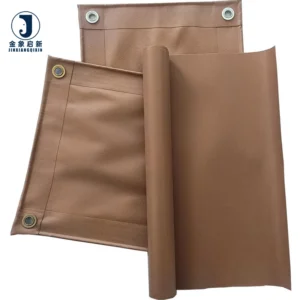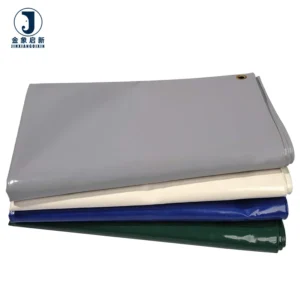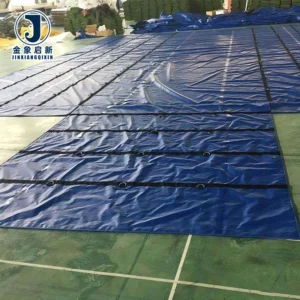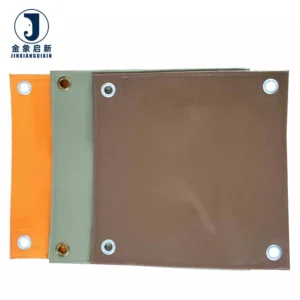
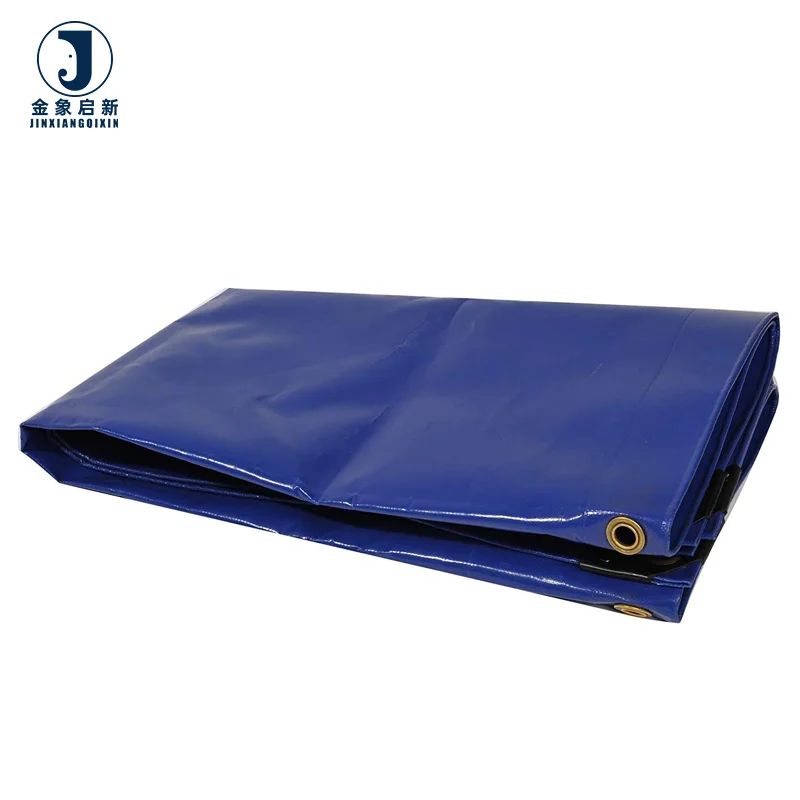
Proven Coating Consistency — Every roll of this PVC coated tarpaulin undergoes stage-by-stage QA with coating weight held to specification, addressing the common risk of receiving fabric lighter than the quoted GSM for transport and lorry curtain applications.
Technical Specifications
| Parameter | Value |
|---|---|
| Product Type | PVC Coated Tarpaulin |
| Coating Material | PVC |
| Surface Finish | Available in glossy or matte finish |
| Base Fabric Denier Options | 200D×300D, 500D×500D, 840D×840D, 1000D×1000D |
| Service Temperature Range | -15°C to 70°C |
| UV Treatment | Customized (test basis to be confirmed per order) |
| Flame Retardant | FR treated (grade to be confirmed per market requirement) |
| Anti-Fungal | Treated |
| Waterproof | Yes |
| Key Features | Rain-resistant, tear-resistant, good flexibility, adhesion strength, abrasion resistance |
Application Suitability
| Application | Exposure & Requirement |
|---|---|
| Lorry Side Curtains | Constant flexing at tie-down points, road debris abrasion, and prolonged UV exposure |
| Flatbed Trailer Covers | High-tension load securing, wind flapping, and extreme weather shielding |
| Heavy Equipment Wraps | Puncture resistance from sharp corners, long-term outdoor storage, and chemical drip exposure |
| Transport Fleet Replacements | Requirement for batch-to-batch colour consistency across multiple vehicle units |
When the Spec Sheet Promises More Than the Roll Delivers
A quoted GSM is only valuable if the manufacturing process can maintain that coating weight across every linear meter.
The PVC Coated Tarpaulin 900GSM market is frequently compromised by rolls that arrive underweight or with treatments that lack verifiable test data. When a technical buyer specifies a heavy-duty fabric for a lorry curtain, the entire safety and compliance profile of the transport load depends on that material meeting its declared properties. If the PVC coating weight varies by even a small margin across the width of the roll, the resulting weakness will eventually show at the stress points where the curtain flexes. Technical fabricators cannot afford to gamble on marketing claims when the physical integrity of the cargo is at stake [NEED_CITE: industry standards for verifying PVC coating weight consistency per roll].
Coating Technology and Weight Control
The production of a high-grade PVC coated lorry curtain fabric relies on the controlled application of the polymer layer onto the base mesh. This process determines the fabric’s overall mass, its waterproofing integrity, and its resistance to mechanical wear. Deep process control over coating weight and adhesion ensures that the material behaves predictably during fabrication and throughout its service life. Without this control, the bond between the PVC and the base yarn can weaken, leading to delamination under the repeated stress of loading and unloading.
Base Fabric Density and Tensile Performance
The structural foundation of the PVC Coated Tarpaulin 900GSM is the woven polyester base fabric, available in various denier options. The choice of denier and weave structure dictates the material’s tensile strength and its resistance to tear propagation. A higher denier yarn in a dense weave provides the mechanical backbone needed for heavy-duty transport covers, while the coating adds environmental protection. Balancing these two elements is critical for specifying a material that meets the physical demands of fleet operations [NEED_CITE: tensile and tear test methods for coated fabrics per ISO 1421].
Thermal Range and Fabrication Behaviour
The service temperature range of -15°C to 70°C defines the operational boundaries for this PVC coated fabric. Within this range, the material must maintain its dimensional stability, avoiding excessive stiffness in cold weather or softening and stretching in high heat. For fabricators, the gloss or matte finish also plays a role in heat-welding behaviour, influencing the temperature and dwell time required to achieve a seam that is as strong as the parent material.
The Cost of Inconsistent Material Properties
Specifying a lorry curtain fabric without demanding verified batch consistency leads to operational failures. Rolls with inconsistent coating weights result in curtains that wear out prematurely at high-stress folds. Colour variation between rolls delivered in the same batch forces fabricators to reject entire shipments, causing significant production delays and rework costs for transport fleets. These issues are rarely the result of bad luck, but rather a lack of rigorous pre-shipment inspection and quality assurance at the manufacturing source.
Manufacturing Integrity and Documentation
The specification of the PVC Coated Tarpaulin 900GSM is supported by a dedicated QA/QC process that includes inspection at every production stage. This ensures that the material shipped matches the technical requirements agreed upon at the inquiry stage. Buyers receive comprehensive documentation, including material specification sheets and pre-shipment inspection records, rather than relying on verbal assurances. The production facility utilizes multiple lines and professional equipment to support bulk capacity while maintaining the reliability of on-time delivery for critical fleet schedules.
Documentation & Verification
- Material specification sheet confirming exact GSM and base fabric denier for every roll.
- Pre-shipment inspection records verifying coating weight against the quoted technical requirements.
- Test reports for UV and flame-retardant grades where applicable, traceable to the production batch.
- ISO and CE certificates supplied to support compliance documentation for your market.
Fabrication, Handling & Storage
- Heat-weld seam strength depends on the selected glossy or matte PVC finish and the denier of the base mesh.
- Store rolls upright in a controlled environment to prevent permanent creasing in the heavy-grade PVC coating.
- Clean surfaces with mild detergents; harsh solvents may compromise the anti-fungal treatment and coating adhesion.
- Allow cold-stored rolls to reach ambient temperature before unrolling to avoid stress fractures in the PVC layer.
- Use reinforced webbing straps at high-tension eyelet points to distribute load across the base fabric weave.
Inquiry Requirements for Technical Buyers
To facilitate an accurate technical recommendation for your lorry curtain or transport cover application, please provide the required base fabric denier and your target market’s specific fire safety or UV compliance needs. Specify the necessary roll width and the preferred surface finish (glossy or matte) for your fabrication process. If you require custom colours or pattern printing for fleet branding, indicate your annual volume and any specific fastness requirements.
Frequently Asked Questions
Q: How can I verify the PVC coating weight and GSM upon delivery?
A: The manufacturer provides a pre-shipment inspection record that documents the coating weight of the specific batch. Upon arrival, technical buyers can perform a standard gravimetric test by cutting a measured sample of the PVC coated fabric and weighing it to confirm it meets the declared specification before fabrication begins.
Q: Which base fabric denier is most suitable for lorry side curtains?
A: The choice depends on the mechanical load at the curtain’s flex points. A 1000D×1000D base provides maximum tear resistance for heavy-duty side curtains that undergo constant tension, while a lighter denier may be suitable for less demanding top covers. We recommend confirming the tensile requirements of your specific trailer model.
Q: What documentation supports the UV and flame-retardant claims?
A: Where these treatments are specified, the manufacturer supplies test reports from recognized laboratories. These reports confirm the grade of treatment applied to the PVC coated tarpaulin batch, allowing you to verify compliance with the safety or environmental standards required by your local transport authorities.
Q: Does the glossy or matte finish affect the heat-welding process?
A: Yes, the surface finish influences the thermal conductivity and the dwell time required during high-frequency or hot wedge welding. Fabricators should run test welds on a sample of the specific finish to establish the optimal temperature and pressure settings for achieving maximum seam strength.
Q: What is the tolerance for colour consistency across multiple rolls?
A: The production process includes dedicated quality control to ensure batch-to-batch colour matching. For fleet operators ordering multiple rolls for a single fitment, it is essential to specify that all rolls must be from the same production dye lot to prevent visible variation once installed side by side.