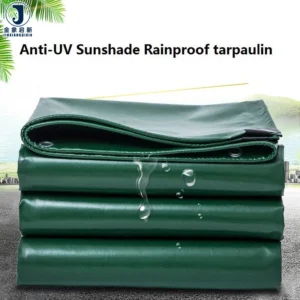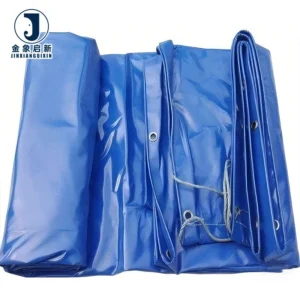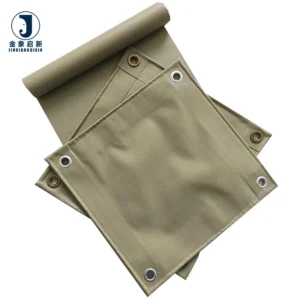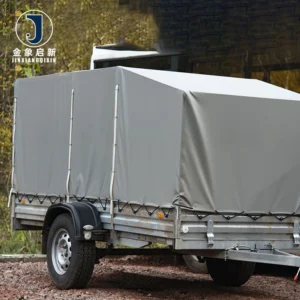
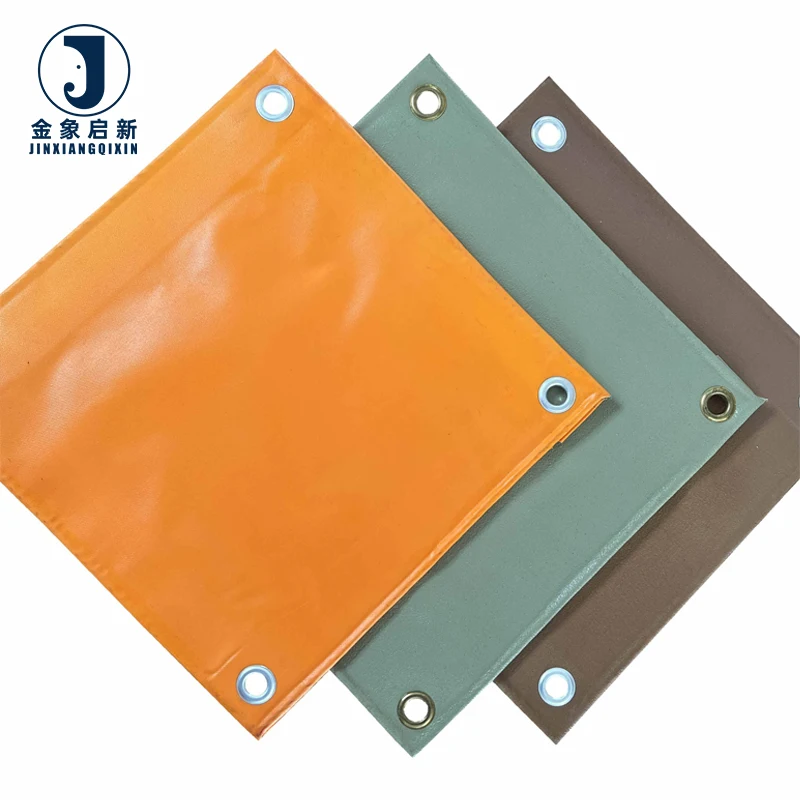
Material integrity verified at every stage — Each roll undergoes strict in-process QA covering coating adhesion, weight consistency, and surface resistivity before leaving the production line.
Technical Specifications
| Parameter | Value |
|---|---|
| Product Type | PVC Coated Tarpaulin |
| Material Base | 100% high toughness polyester yarn |
| Coating Technology | Lamination and hot melt coating |
| Weight Range | 400-1500 GSM (confirm specific grade) |
| Thickness | 0.35-1.5 mm |
| Base Fabric Denier | 500D-2000D |
| Tensile Strength (Warp) | 1500-3000 N/5cm (grade dependent) |
| Tensile Strength (Weft) | 1200-2800 N/5cm (grade dependent) |
| Cold Crack Resistance | -30°C |
| Key Features | Waterproof, mold proof, printable surface, anti-static treatment applied, flame retardant treatment available (grade not stated) |
Application Suitability
| Application | Exposure & Requirement |
|---|---|
| Exhibition booth and event backdrop | Indoor or semi-outdoor lighting rigs, high foot traffic, requires printable and anti-static surface for graphic clarity and dust rejection |
| Tensioned membrane and inflatable structures | Permanent wind load, structural stress at attachment points, demands high denier base and strong coating adhesion for weld integrity |
| Industrial pipe canopy and engineering covers | Constant UV exposure, moisture contact, requires waterproof and mold-proof coating with long-term weather resistance |
Why Coating Weight Alone Fails to Predict Performance
Specifying a PVC coated tarpaulin by GSM alone often leads to material failure because thickness and weight do not confirm the bond between the polyester base and the PVC layer.
Buyers frequently find that a heavier fabric fails at the heat-welded seam long before the main panel tears. This happens when the coating adhesion is weak or the base fabric denier is insufficient for the mechanical load. [NEED_CITE: coating adhesion test methods per ISO 2411] When the material flexes under tension, a poorly bonded coating delaminates, leaving the structural yarns exposed to abrasion and moisture. This is particularly critical for tensioned structures and heavy-duty transport covers where the seams carry the highest stress.
The Role of Base Fabric Density in Tensile Behaviour
The tensile strength of this PVC coated tarpaulin is driven by the interplay between the polyester yarn denier and the knitting density. A 1000D yarn in a tight weave provides a higher baseline for warp and weft strength than a lighter denier in a loose construction. The hot melt coating technology penetrates the weave, locking the yarns in place and preventing them from shifting under point loads. This is essential when the fabric is used for exhibition structures or industrial canopies where localised stress occurs at fixing points.
Coating Methods and Their Effect on Weld Integrity
Lamination and hot melt technologies offer different outcomes for fabrication. Hot melt coating typically forces the PVC compound into the interstices of the polyester weave, creating a mechanical bond that improves peel strength. [NEED_CITE: peel strength requirements for heat-welded coated fabrics] Lamination technology bonds pre-formed PVC films to the base, which can yield a smoother surface suitable for high-resolution printing. For applications requiring extensive heat welding, the coating method directly influences the temperature window and dwell time needed to achieve a seam that matches the parent material strength.
Decoding the Specification Sheet
GSM and thickness provide a starting point, but the denier of the base fabric (500D to 2000D) determines how the material resists tear propagation. A high-GSM fabric with a low-denier base may puncture easily, while a lower-GSM fabric with a high-denier base offers better tear resistance. The stated cold crack resistance of -30°C defines the lower operational boundary; below this, the PVC matrix becomes brittle and may fracture under impact or folding. The anti-static treatment is applied during the coating process, which is critical for exhibition environments where dust attraction ruins graphic displays. However, buyers must confirm the specific surface resistivity standard required by their venue or local safety code, as treatment levels vary. [NEED_CITE: electrostatic discharge standards for indoor exhibition materials] The weather resistance is stated for extended outdoor exposure, but the actual service life depends on installation tension, UV intensity, and maintenance frequency.
The Hidden Cost of Incorrect Grade Selection
Selecting a medium-grade fabric for a heavy-duty structural application often results in premature failure at the seams or fixing points. If the anti-static treatment is not verified by a test report, the fabric may attract dust and debris, compromising the visual quality of a printed exhibition backdrop. Conversely, specifying a super-heavy grade for a temporary event structure adds unnecessary weight, increasing transport costs and making on-site handling difficult. Mismatches between the stated flame retardant treatment and local fire codes can lead to failed safety inspections and project delays.
Process Control That Supports Your Specification
Our production lines maintain strict control over coating weight and adhesion, verified through in-process testing. The R&D team develops custom formulations, including specific anti-static and printable grades, to meet exact application needs. A dedicated QA/QC protocol checks every roll for weight consistency, coating bond strength, and surface quality before it is packed. Samples are developed quickly to confirm that the material meets your fabrication and performance requirements before bulk production begins. This approach minimizes the risk of receiving fabric that deviates from the agreed specification.
Documentation & Verification
- Material spec sheet detailing exact GSM, denier, and coating technology for the ordered grade.
- Test report for anti-static surface resistivity upon request.
- Pre-shipment inspection record showing measured coating weight and adhesion values.
- Roll packing list with individual roll weights and dimensions.
- Certificate of origin and customs documentation for export shipments.
Fabrication, Handling & Storage
- Use heat welding parameters matched to the specific coating technology and GSM grade.
- Store rolls horizontally in a cool, dry place to prevent permanent creasing or coating deformation.
- Allow cold rolls to acclimatise to room temperature before unrolling to avoid cracking the PVC layer.
- Clean printed surfaces with mild, non-abrasive detergents to preserve the anti-static treatment.
- Plan cutting layouts to minimise waste, accounting for the specific roll width of the selected grade.
Requesting the Right Material for Your Project
To specify the correct grade, please provide details of the end application, including expected mechanical loads and environmental exposure. Specify any mandatory fire safety or anti-static standards required by your local venue or building code. Confirm the required roll width, colour, and whether you need the material supplied in roll form or pre-cut to specific dimensions. This information allows us to recommend the precise formulation and provide a material sample for your approval.
Frequently Asked Questions
Q: How is the GSM verified before shipment and what tolerance applies?
A: Every roll is weighed and measured during our pre-shipment inspection. We verify that the actual weight aligns with the quoted GSM for the specific grade ordered. The inspection record, included with your shipping documentation, provides the measured values, giving you confidence that the material matches the specification.
Q: What test standard confirms the anti-static treatment on this fabric?
A: The anti-static treatment is applied to reduce surface resistivity, which is essential for exhibition and event applications where dust attraction is a concern. We can provide a test report detailing the surface resistivity upon request. Please specify the standard required by your venue or local safety authority so we can ensure compliance.
Q: Which coating method provides better results for heat-welded seams?
A: Both lamination and hot melt technologies can produce strong welds, but hot melt coating often yields higher peel strength because the PVC penetrates the polyester weave. The optimal welding temperature and speed depend on the specific GSM and coating formulation. We recommend requesting a sample to test your fabrication equipment settings.
Q: Can flame retardant and anti-static treatments be combined?
A: Yes, it is possible to combine flame retardant and anti-static treatments on the same PVC coated tarpaulin. However, adding multiple treatments can influence the surface finish and flexibility. Please confirm the specific fire classification and anti-static standard you require so we can formulate the material to meet both demands.