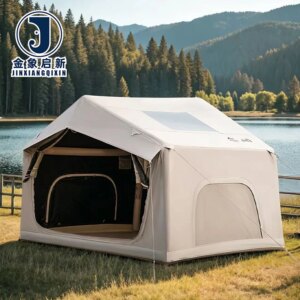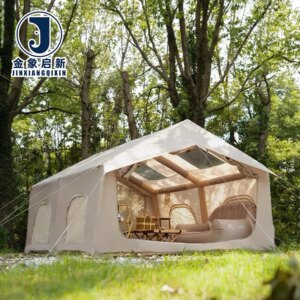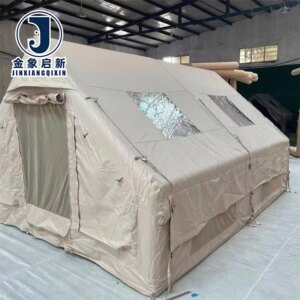
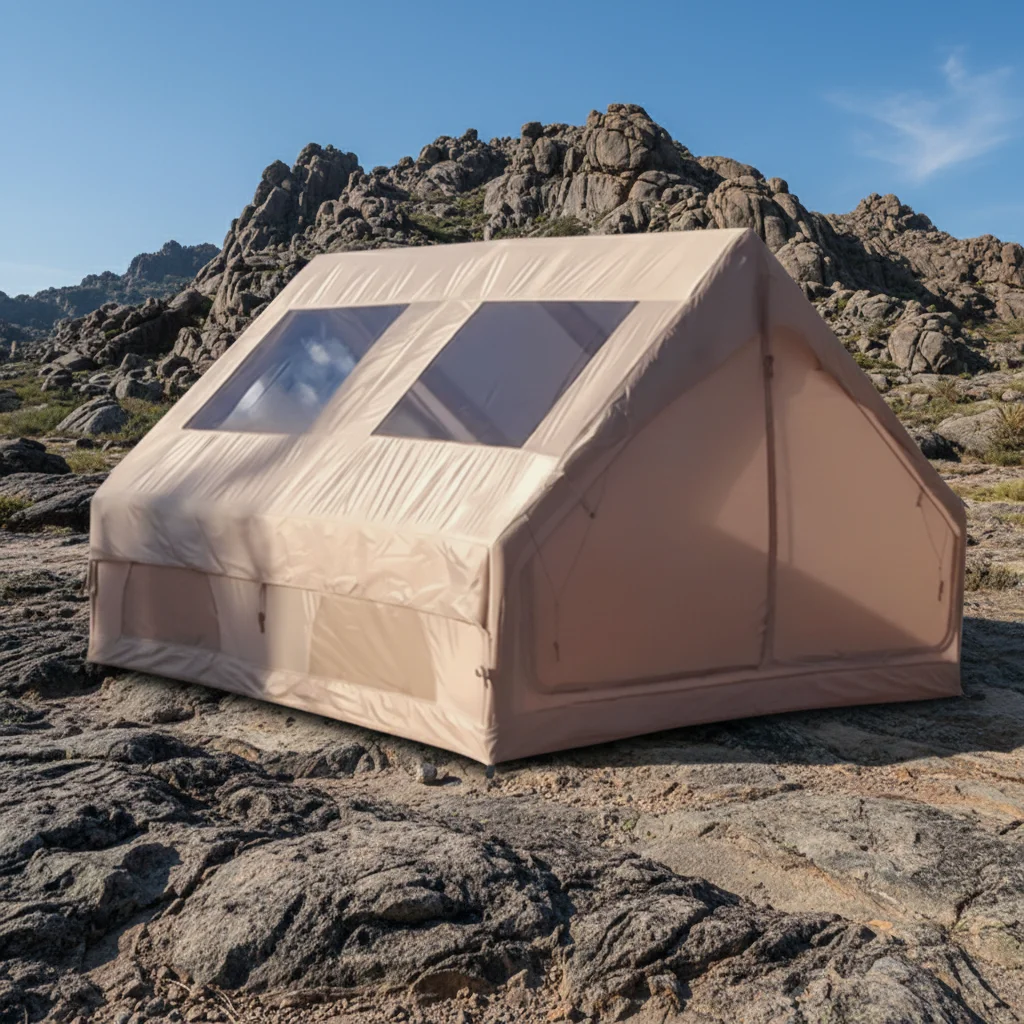
Coating Process Mastery — Every roll of inflatable tent fabric leaves our facility with verified GSM, confirmed adhesion strength, and documented treatment performance tied to your batch number.
Technical Specifications
| Parameter | Value |
|---|---|
| Product Type | Inflatable Tent |
| Core Material | PVC Tarpaulin |
| Waterproof | Confirmed (grade available on request) |
| UV Resistance | Available in UV-treated grades — confirm the grade required for your market |
| Tear Resistance | Confirmed (test standard available on request) |
| Flame Retardant | Available in flame retardant grades — confirm the grade required for your market |
| Anti-Static | Available in anti-static grades — confirm surface resistance requirement |
| Structure Type | Inflatable with quick automatic opening mechanism |
| Customization | OEM & ODM — material selection, sizing, pattern printing, product design |
| Quality System | ISO 9001, ISO 14001, ISO 45001, CE |
| Production Capacity | 3 full production lines, 36 sets of professional equipment |
| R&D Support | 10 technicians for sample development and engineering |
Application Suitability
| Application | Exposure & Requirement |
|---|---|
| Expedition inflatable tents | High-altitude UV exposure, sustained wind load, rapid temperature cycling, repeated inflation cycles |
| Emergency relief shelters | Rapid deployment demand, all-weather waterproofing, field durability across multiple relocation cycles |
| Remote industrial field camps | Abrasion from ground contact, dust ingress, long-term outdoor UV exposure, equipment protection |
| Outdoor event inflatable structures | Public safety fire-retardant compliance, high-visibility branding, repeated assembly and teardown |
| Logistical staging tents | Forklift and foot traffic abrasion, wind uplift on large-span inflatable frames, weather sealing |
Why Coated Fabric Specs Alone Cannot Guarantee Inflatable Shelter Performance
Airtight seam integrity depends on the relationship between coating adhesion, base fabric stability, and the heat welding parameters your production line actually uses.
When sourcing PVC inflatable tent fabric, buyers often focus on a single number — weight per square metre — and assume it covers everything. The problem surfaces later, on the production floor or in the field. A heavy-grade coated fabric that delaminates at the weld line is no better than a light one. When the inflatable rib flexes under wind load, the stress concentrates exactly where the seam joins two panels. If the PVC inflatable tent fabric coating was applied without controlled adhesion to the base weave, that flex point becomes the first failure. [NEED_CITE: tensile and tear test methods for coated fabrics per ISO 1421]
We have observed fabric lots where the coating weight was consistent roll to roll, yet seam peel strength varied because the base fabric tension during coating was not held within tolerance. For inflatable structures, that variation translates directly into inconsistent air-holding performance across tents produced from the same order.
How Coating Adhesion Affects Inflatable Rib Durability
In an inflatable tent, the air-filled ribs carry the entire structural load. Unlike pole-supported shelters, there is no separate frame to absorb stress — the PVC inflatable tent fabric itself must hold shape under internal pressure and resist puncture from ground contact and debris. The coating must bond to the base fabric with enough peel strength to survive repeated inflation and deflation cycles without separating at the seam overlap.
Our production process controls the coating application temperature and the dwell time to ensure that the PVC layer penetrates the base weave rather than sitting on the surface. This matters most at the welded seams, where two coated faces are fused together under heat and pressure.
What Quick-Deploy Demands Mean for Material Selection
Emergency relief organizations and expedition outfitters need inflatable shelters that deploy in minutes, not hours. The quick automatic opening mechanism relies on the fabric’s flexibility at the inflation valves and rib junctions. A coating that is too stiff in cold conditions will resist the unfolding motion and may crack at the fold lines during rapid deployment. [NEED_CITE: low-temperature flexibility testing for PVC coated fabrics]
We offer material grades formulated to remain flexible across a wide temperature range, ensuring that the inflatable structure performs whether it is pitched in a cold mountain base camp or a humid tropical relief site. The material selection is matched to the deployment environment through our OEM and ODM engineering process.
Reading the Specification Sheet Beyond the Weight Number
GSM tells you how much material is present, but not how that material is distributed between base fabric and coating. A PVC tarpaulin with a dense, high-denier base fabric and a thinner coating layer will resist tearing differently from one with a lighter base and heavier coating, even if both carry the same stated weight. For inflatable tent ribs, tear resistance is critical because a small puncture under internal pressure can propagate rapidly along the weave direction.
The base fabric denier and weave density determine how the material handles point loads — a rock under a groundsheet, a sharp edge near a valve mounting plate. The coating type and thickness govern waterproofing, UV screening, and weldability. Surface finish options, including glossy or matte, affect how well printed branding adheres and how easily field dirt can be cleaned off. Available in flame retardant grades — confirm the grade required for your target market’s fire safety regulations before specifying.
The Hidden Cost of Overlooking Batch Consistency
When inflatable tent fabric arrives with colour variation between rolls, the problem is not cosmetic alone — it signals inconsistency in the coating batch that can extend to weight, adhesion, and treatment performance. A production run of inflatable camping tents made from mismatched rolls will show visible panel differences once assembled side by side, leading to rejection by brand clients or end users.
Beyond appearance, batch variation in flame retardant loading or anti-static treatment can mean that some tents in a shipment pass compliance testing while others fail. This creates liability exposure for manufacturers supplying emergency relief contracts where every unit must meet documented standards. [NEED_CITE: batch-to-batch consistency requirements for coated technical textiles]
Weld strength inconsistency is harder to spot visually but more dangerous in service. If the coating thickness varies across the roll width, the heat welding temperature that produces a strong seam on one panel may under-weld or over-weld the next, creating hidden weak points that only reveal themselves under field load.
Why Procurement Teams Choose This Supply Partner
Our R&D team of 10 technicians works directly with inflatable tent manufacturers on material selection, structural design adjustments, and pattern printing specifications — not as a separate sampling department, but integrated into the quoting and production process.
Three full production lines with 36 sets of professional processing equipment support volume orders with maintained batch consistency, which matters when your inflatable tent product line requires identical material across hundreds of units per season.
Every roll undergoes 100% pre-shipment inspection with weight verification against the stated specification, coating adhesion checks, and visual review for surface defects — documented in inspection records tied to your order number.
We develop custom samples within days, allowing you to validate seam welding parameters, inflation behaviour, and surface finish on your production equipment before committing to a full order.
OEM and ODM capability covers the full development chain from material formulation through pattern printing and finished panel sizing, reducing the number of suppliers in your inflatable tent component chain.
Documentation & Verification
- Material specification sheet stating GSM, base fabric denier, and coating type for each roll batch
- Test reports for UV resistance and flame retardant grades provided with applicable order documentation
- 100% pre-shipment inspection record with batch traceability by order number
- ISO 9001, ISO 14001, ISO 45001, and CE certificates supporting regulatory compliance files
- Pre-production sample approval report confirming seam strength and inflation test results
Fabrication, Handling & Storage
- Heat welding parameters must be matched to the PVC coating thickness — confirm settings with sample testing before full production runs
- Store rolls upright on cores to prevent flat-spot deformation that affects inflation panel geometry
- Avoid folding PVC inflatable tent fabric at sharp angles during transport to prevent coating crack lines
- Clean printed surfaces with neutral pH detergents only — solvent-based cleaners may degrade the coating finish
- Field repairs to inflatable ribs require compatible PVC patch material and hot-air welding at matched temperature
Preparing Your Material Inquiry
To provide an accurate specification for your inflatable tent application, we need your target deployment environment, required fire safety or anti-static compliance standards, and estimated annual volume by size range.
Include your preferred surface finish, colour references or print requirements, and whether you need roll stock or pre-cut panels with valve reinforcement zones. If your production line uses specific heat welding equipment, share the make and model so we can tailor coating adhesion to your process parameters.
We will respond with a material recommendation, sample development timeline, and production lead time based on your specifications.
Frequently Asked Questions
Q: What fire-retardant and anti-static test reports are provided with shipment?
A: We supply test reports corresponding to the flame retardant and anti-static grades specified in your order. Available grades vary by market requirement, so confirm the standard applicable to your deployment region — such as European, North American, or Australian fire safety codes — before finalizing the material specification. Reports are included with shipment documentation for each batch produced.
Q: Can the inflatable tent be customized in size, colour and branding for our product line?
A: Yes. Our OEM and ODM service covers custom sizing, colour matching, and pattern printing to your brand specifications. The 10-person R&D team develops pre-production samples so you can verify colour consistency, print adhesion, and structural fit before bulk production begins. Minimum quantities and lead times depend on the complexity of the custom specification.
Q: What is the sample development lead time for custom inflatable structures?
A: Sample development typically takes several working days from specification confirmation, depending on whether new colour matching or pattern printing setup is required. Samples are produced on the same production lines as bulk orders to ensure that your validation tests reflect actual manufacturing conditions, including seam weld strength and coating behaviour under inflation.
Q: How is airtight seam integrity verified during production quality inspection?
A: Our QA and QC team conducts in-process checks at the welding stage, verifying peel strength and seam continuity against documented parameters for your specific material grade. Pre-shipment inspection records include seam test results tied to each roll batch. This ensures that every inflatable rib panel meets the airtight performance standard before leaving the facility.
Q: What documentation accompanies each batch for regulatory compliance?
A: Each shipment includes a material specification sheet, applicable test reports for UV and flame retardant performance, a pre-shipment inspection record with batch traceability, roll packing list, and certificate of origin. ISO 9001, ISO 14001, ISO 45001, and CE certificates are available to support your compliance documentation and buyer audit requirements.