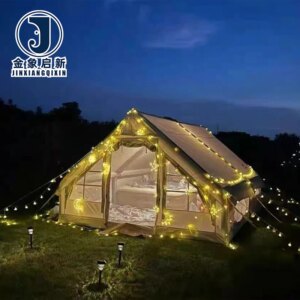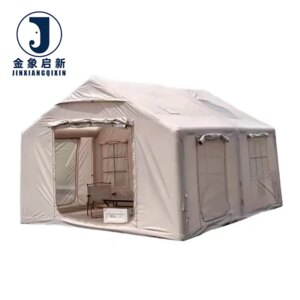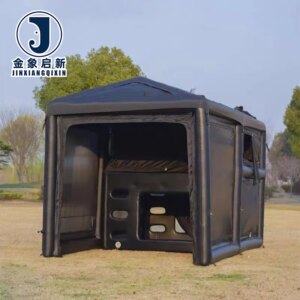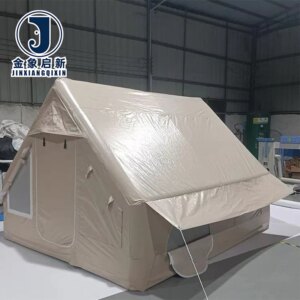
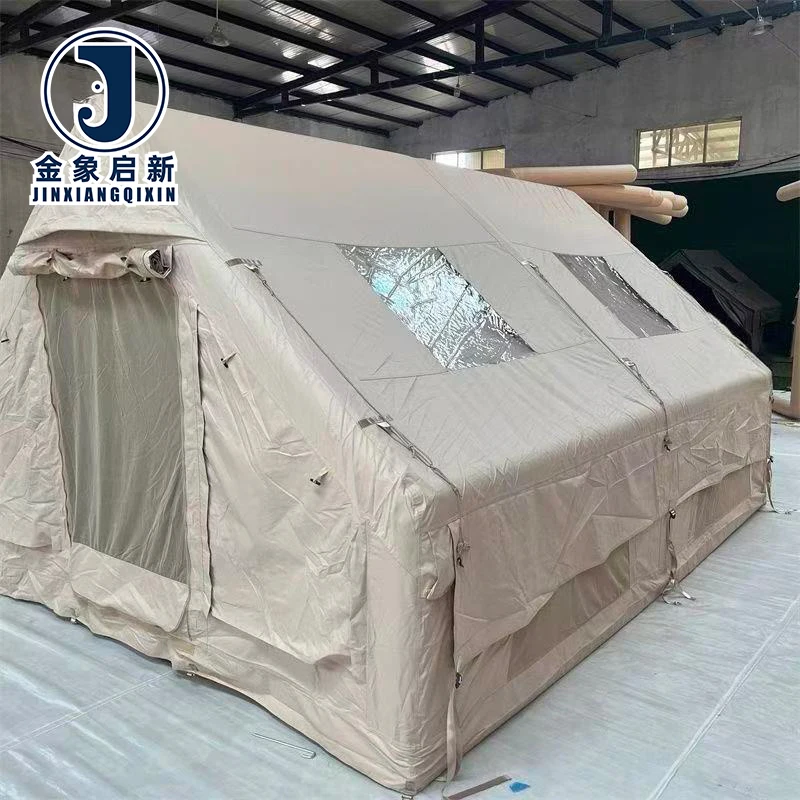
Coating Weight Control — Every roll of PVC inflatable tent fabric undergoes in-process coating weight checks to match the agreed specification before leaving the line.
Technical Specifications
| Parameter | Value |
|---|---|
| Product Type | PVC Tent |
| Core Material | PVC Tarpaulin |
| Key Performance | Waterproof, UV-resistant (test basis not stated in source), Tear-resistant |
| Capacity | 6-8 Person |
| Season Rating | 4 Season |
| Opening Mechanism | Automatic Opening |
| Customization | OEM & ODM (sample customization, pattern printing) |
| Standards | ISO9001, ISO14001, ISO45001, CE |
Application Suitability
| Application | Exposure & Requirement |
|---|---|
| Commercial outdoor events | Prolonged sun and rain exposure, frequent inflation-deflation cycles, crowd safety compliance |
| Construction site temporary shelters | Dust, wind-driven rain, UV degradation risk, rapid deployment demands |
| Industrial camping operations | Extended seasonal use across temperature swings, ground moisture, structural load from inflation pressure |
| Recreational facilities | Constant UV exposure, repeated guest handling, cleaning chemical contact |
| Outdoor gear manufacturing | Batch-to-batch colour and weight consistency for branded inflatable product lines |
What Happens When Inflatable Tent Fabric Fails at the Weld Line
Seam integrity depends more on coating adhesion and fabric stability than on tensile strength alone.
When an inflatable tent panel separates at a welded seam, the cause is rarely the base fabric tearing. Instead, the coating detaches from the weave or the weld itself cracks under repeated inflation stress. I have reviewed failed panels where the fabric body remained intact but the heat-welded joints delaminated after weeks of use. The issue typically traces back to coating formulation or surface preparation rather than the stated GSM [NEED_CITE: peel strength and weld compatibility testing methods for PVC coated fabrics per ISO 2411]. Manufacturers sourcing PVC inflatable tent fabric material and coating technology must verify that the coating formulation supports reliable thermal welding, not just the base fabric weight.
Coating Adhesion and Its Role in Inflatable Structures
Inflatable tent panels experience internal air pressure that pushes outward across every seam. The PVC inflatable tent fabric material and coating technology determines how well the coating bonds to the base polyester weave under this constant load. Poor adhesion leads to coating creep at stress points, particularly where panels join. Coating weight must be balanced with base fabric porosity to achieve full penetration without excess surface buildup that interferes with welding.
Base Fabric Construction and Inflation Stress Response
The denier and weave density of the base fabric dictate how the material behaves when pressurised. A loosely woven base allows the coating to flex independently, creating micro-cracks at the weld zone over repeated inflation cycles. Tighter weaves distribute the internal pressure more evenly across the panel surface. For inflatable tent manufacturers, requesting the base fabric specification alongside the total GSM is essential to predict how the finished structure will handle cyclic loading [NEED_CITE: tensile and tear test methods for coated fabrics per ISO 1421].
Reading the Specification Sheet Beyond Total Weight
Total GSM combines base fabric weight and coating weight into a single number, but these two components behave very differently during fabrication and use. A heavy coating on a light base fabric may resist water penetration yet tear easily along the warp. Conversely, a heavy base with thin coating offers structural strength but may allow moisture ingress at needle holes or cut edges. When evaluating PVC inflatable tent fabric material and coating technology, request the breakdown between base fabric GSM and coating GSM separately. This separation reveals whether the manufacturer has optimised for tensile strength, tear resistance, or waterproofing — and whether that balance suits inflatable tent panel construction. Surface finish options, available in glossy or matte, also affect how the material feeds through welding equipment and how printed branding adheres over time.
The Cost of Batch Inconsistency Across Rolls
Colour variation between rolls in the same shipment becomes immediately visible once inflatable tent panels are seamed together on site. A panel cut from one roll may appear slightly warmer or cooler than its neighbour, creating a patchwork effect on a structure that should look uniform. This issue compounds when replacement panels are fabricated months later from a different production batch. Beyond aesthetics, batch-to-batch variation in coating weight can alter weld parameters, forcing fabricators to recalibrate equipment between rolls [NEED_CITE: colour tolerance standards for coated technical textiles]. For inflatable tent manufacturers producing branded structures, inconsistent material undermines the visual identity their clients expect.
Why This Fabric Source Supports Inflatable Tent Production
Three full production lines and 36 sets of processing equipment allow bulk orders of PVC inflatable tent fabric to move through coating, curing, and inspection without bottlenecks that delay downstream fabrication. The 10-person R&D team handles material selection and sample development, enabling custom width and colour matching before a production run is committed. Dedicated QA/QC at every production stage catches coating weight deviation and colour drift before rolls reach the packing area. ISO and CE certification provides the documentation framework that import compliance and commercial procurement demand. Pre-shipment inspection records accompany each dispatch, giving fabricators a traceable quality baseline for every roll received.
Documentation & Verification
- Material specification sheet stating GSM breakdown, base fabric denier, and coating weight per roll
- UV test report documentation where UV-resistant treatment is specified for the order
- ISO9001, ISO14001, ISO45001, and CE certificates for regulatory and import compliance
- Pre-shipment inspection record with coating weight and colour verification per roll
- Roll packing list with batch number traceability for warranty and reorder matching
Fabrication, Handling & Storage
- Hot wedge welding temperature and speed must be calibrated to the specific PVC coating weight of this inflatable tent fabric
- Store rolls upright on cores to prevent flat-spot creasing that shows through on inflated tent panels
- Clean welded seams with PVC-compatible solvent to maintain coating adhesion at stress points
- Allow material to acclimatise before unrolling in cold conditions to avoid coating micro-cracking
- Use rotary cutters on this PVC tarpaulin to avoid fraying the base fabric at panel edges
- Plan panel nesting layout to minimise off-cuts given the ordered roll width and length
Starting Your Inflatable Tent Fabric Enquiry
Provide the target deployment climate and expected inflation cycle frequency so the correct coating formulation and base fabric weight can be recommended. Specify whether you require rolls in standard width or custom dimensions, and confirm the colour reference system your production line uses. If your market mandates fire classification or UV performance documentation, state the required standard at the enquiry stage so test reports are prepared alongside production.
Frequently Asked Questions
Q: How do I verify the coating weight and total GSM on receipt?
A: Request the pre-shipment inspection record that documents coating weight per roll. On receipt, cut a measured sample from each roll and weigh it to confirm total GSM matches the specification sheet. Compare the base fabric GSM and coating GSM breakdown against your purchase order. Any deviation beyond the agreed tolerance should be flagged before fabrication begins.
Q: What test basis supports the UV-resistant claim for this fabric?
A: UV-resistant treatment is available for this PVC inflatable tent fabric. Confirm the specific test standard required for your market, such as ISO 4892 or equivalent xenon arc exposure protocols. Request the test report that documents the exposure duration and retained tensile strength percentage after testing. This documentation should be secured before committing to a full production run.
Q: How is colour consistency maintained across rolls in one order?
A: Colour matching is controlled during the coating stage using reference standards agreed at sample approval. Each roll undergoes visual and instrumental colour verification during pre-shipment inspection. Batch numbers are recorded on the packing list for traceability. If you require multiple rolls for a single inflatable tent structure, specify that they must come from the same coating batch.
Q: What welding techniques work best with this PVC inflatable tent fabric?
A: Hot wedge and hot air welding are both suitable, with temperature and speed settings determined by the coating weight and surface finish. Request weld parameter recommendations from the technical team based on your specific equipment. Always run test welds on off-cuts before committing to production panels, and verify peel strength on the test samples to confirm coating adhesion at the seam.
Q: What custom dimensions and printing options are available?
A: Custom width and length are available subject to production line capacity and minimum order requirements. Pattern printing and branding can be applied during the coating or finishing stage. Provide your artwork files and colour references at the enquiry stage so sample development can proceed. Lead times vary depending on customisation complexity and order volume.