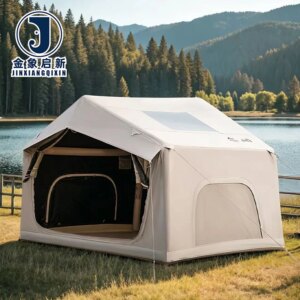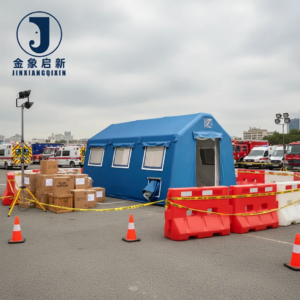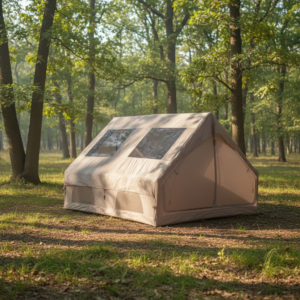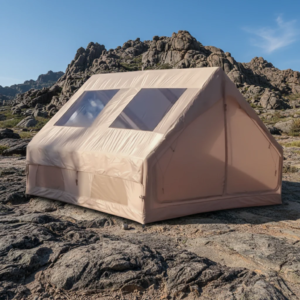
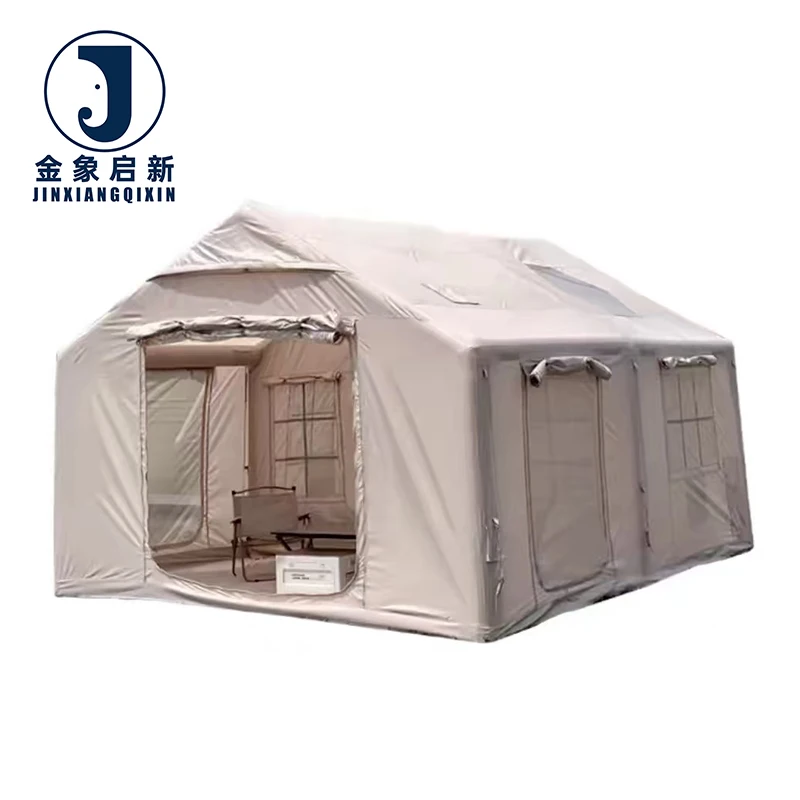
Coating Expertise — Nearly three decades of PVC knife-coated fabric process control applied to inflatable emergency shelter production, from base fabric weaving through coating and finished tent assembly under one roof.
Technical Specifications
| Parameter | Value |
|---|---|
| Product Type | Inflatable Tent |
| Core Material | PVC tarpaulin (PVC knife-coated fabric) |
| Capacity | 3-5 person |
| Design Configuration | Four-Season Use, Single Layer Construction, Extended Type |
| Key Performance | Waterproof, UV-resistant (test basis not stated in source), tear-resistant, quick automatic opening |
| Flame Retardant | Grade not stated in source — available in flame retardant grades, confirm the grade required for your market |
| Customization Service | OEM & ODM support |
| Quality Control System | Full-process quality inspection with dedicated QA&QC staff |
| Certifications | ISO9001, ISO14001, ISO45001, CE |
Application Suitability
| Application | Exposure & Requirement |
|---|---|
| Emergency command centers for large-scale industrial facilities | Continuous outdoor deployment, structural stability under wind load, rapid inflation and deflation cycles |
| Temporary site offices during infrastructure recovery | Prolonged sunlight exposure, rain and moisture ingress prevention, frequent relocation between sites |
| Equipment storage shelters in post-disaster operations | Abrasion from stored machinery, UV degradation resistance, waterproof integrity over extended staging periods |
| Material staging and operational coordination hubs | High foot traffic wear on flooring contact points, repeated setup and teardown by rotating crews |
Why UV Resistance Claims Fail Without Test Data Behind Them
A UV-resistant coating claim means nothing unless backed by a documented test method and exposure duration.
Procurement teams regularly receive inflatable emergency shelters that degrade after a single season of field deployment. The PVC surface chalks, the coating becomes brittle, and the air beams lose structural rigidity exactly when disaster response operations demand peak reliability. When the supplier cannot produce a test report showing the specific UV stabilizer package and the hours of accelerated weathering completed, the buyer absorbs the replacement cost and the operational downtime [NEED_CITE: accelerated weathering test methods for PVC coated fabrics per ISO 4892]. An inflatable tent PVC coated fabric manufacturer that documents UV performance per recognized standards eliminates this procurement risk entirely.
Coating Adhesion and Air Beam Integrity
The knife-coating process forces PVC compound directly into the interstices of the base fabric under controlled blade pressure, creating a mechanical bond that resists delamination under repeated inflation cycles. For an inflatable tent PVC coated fabric manufacturer, maintaining consistent coating weight across the full width of the material is essential because air beams concentrate stress at bend points and valve attachment zones. Any thin spot in the coating layer becomes the origin point for air leakage or fabric separation during pressurization.
Single Layer Construction and Deployment Speed
A single layer PVC design eliminates the weight and bulk of a separate rain fly while relying on the coated fabric itself to provide waterproofing and structural containment. This configuration suits emergency response scenarios where every kilogram of transport weight matters and setup time must be measured in minutes rather than hours. The automatic inflation mechanism paired with single layer construction means the shelter reaches full operational capacity without manual pole assembly or guy line tensioning [NEED_CITE: rapid deployment shelter standards for emergency response operations].
Interpreting Material Specifications for Inflatable Applications
PVC knife-coated fabric derives its tensile and tear performance from the combination of base fabric denier, weave density, and coating weight rather than from any single parameter in isolation. A heavier coating does not automatically deliver higher tear resistance if the base fabric uses a low-denier yarn with loose weave construction. The knife-coating method produces superior peel strength compared to lamination, which matters for inflatable air beams that flex constantly under internal pressure and external wind loads. Glossy surface finishes shed water and dirt more readily during extended field deployment, while matte finishes reduce glare in command center environments where screen visibility matters. The four-season designation indicates the material maintains flexibility across a broader temperature range without becoming brittle in cold conditions or excessively soft in direct summer heat, though specific temperature boundaries should be confirmed with the PVC inflatable tent aftermarket supplier before specifying for extreme climate zones.
The Hidden Cost of Under-Specifying Inflatable Shelter Material
When buyers focus solely on unit price and accept undocumented material specifications, the failures surface during actual emergency deployment rather than during warehouse inspection. Air beams that lose pressure within hours because the coating adhesion was insufficient for the inflation cycle count. Fabric that cracks at fold lines after cold storage transport because the PVC compound lacked adequate low-temperature plasticizer content. Batch-to-batch color variation that becomes visible only when multiple shelters are erected side by side at a disaster response staging area, creating an unprofessional appearance for the coordinating organization [NEED_CITE: batch consistency requirements for coated fabric procurement]. These field failures generate costs far exceeding the original material savings.
Why Procurement Teams Source From This Facility
Three full production lines and 36 sets of professional equipment provide the capacity to fulfill bulk inflatable tent orders without sacrificing coating consistency across rolls. The 10-person R&D team handles material selection, pattern development, and custom sizing, enabling OEM and ODM configurations that match site-specific deployment requirements. Every production stage includes dedicated QA and QC inspection, with 100 percent inflation testing and structural integrity verification completed before any unit is packed for dispatch. Material specification sheets accompany each shipment, stating the exact GSM, base fabric construction, and coating parameters rather than generic product family ranges. Sample development is completed within days for custom requirements, allowing procurement teams to verify material performance before committing to full-scale production.
Documentation & Verification
- Material specification sheet stating GSM, base fabric denier, and coating weight per roll
- Batch-specific quality inspection report with performance test results for the shipped lot
- ISO9001, ISO14001, ISO45001, and CE certificates included in every shipment package
- Pre-shipment inflation test records confirming structural integrity before dispatch
- UV and flame retardant test reports provided where the specified grade requires documented evidence
Fabrication, Handling & Storage
- Hot air welding parameters must match the PVC knife-coated fabric thickness to achieve full seam penetration
- Store rolls upright on end caps to prevent permanent creasing in the PVC coating layer
- Allow cold-stored inflatable tents to reach ambient temperature before inflation to avoid coating crack damage
- Use PVC-compatible cleaners only; solvent-based products degrade the knife-coated surface finish
- Inspect air beam valve attachment zones for coating adhesion before each deployment cycle
- Repair minor punctures with PVC-coated fabric patches bonded using compatible adhesive or heat welding
What to Include in Your Inquiry
Provide your intended deployment environment, expected duration of continuous outdoor exposure, and any fire classification requirements mandated by your operating jurisdiction. Specify the quantity range and whether you require finished tents with automatic inflation systems or roll stock for your own fabrication. Confirm whether custom dimensions, color matching, or printed identification markings are needed so the PVC inflatable tent aftermarket supplier can prepare accurate samples and production timelines.
Frequently Asked Questions
Q: What customization options are available for dimensions, material thickness, and colour?
A: OEM and ODM configurations are supported across dimensions, PVC knife-coated fabric thickness, and colour selection. The 10-person R&D team develops pre-production samples for buyer approval before full-scale manufacturing begins. Confirm your specific size requirements, colour references, and any performance treatment needs so the sample accurately reflects your bulk order specifications.
Q: Which certifications are included with the shipment documentation?
A: Every shipment includes ISO9001, ISO14001, ISO45001, and CE certificates alongside the batch-specific quality inspection report. Material specification sheets document the GSM, base fabric construction, and coating parameters for the exact lot shipped. Request flame retardant or UV test reports separately if your market regulations require documented evidence of specific performance grades.
Q: How is batch-to-batch material consistency ensured across large orders?
A: Full-process quality inspection with dedicated QA and QC staff monitors coating weight, colour consistency, and fabric adhesion at every production stage. The 100 percent pre-shipment inspection protocol includes inflation testing and structural integrity checks for each unit. Batch-specific inspection reports accompany the shipment, providing traceability from raw material through finished product.
Q: What is the sample development and approval process before full-scale production?
A: The R&D team produces samples within days based on your dimension, material, and performance specifications. You review the sample for construction quality, inflation behaviour, and material feel before providing written approval. Production only commences after sample sign-off, ensuring the bulk order matches the confirmed specification without deviation.
Q: What storage and handling guidelines apply to PVC inflatable tents in inventory?
A: Store inflated or folded units in cool, dry conditions away from direct sunlight and chemical vapour sources. Avoid stacking heavy items on packed tents to prevent permanent creasing in the PVC knife-coated fabric. Before deployment from cold storage, allow the material to reach ambient temperature to maintain coating flexibility during inflation.