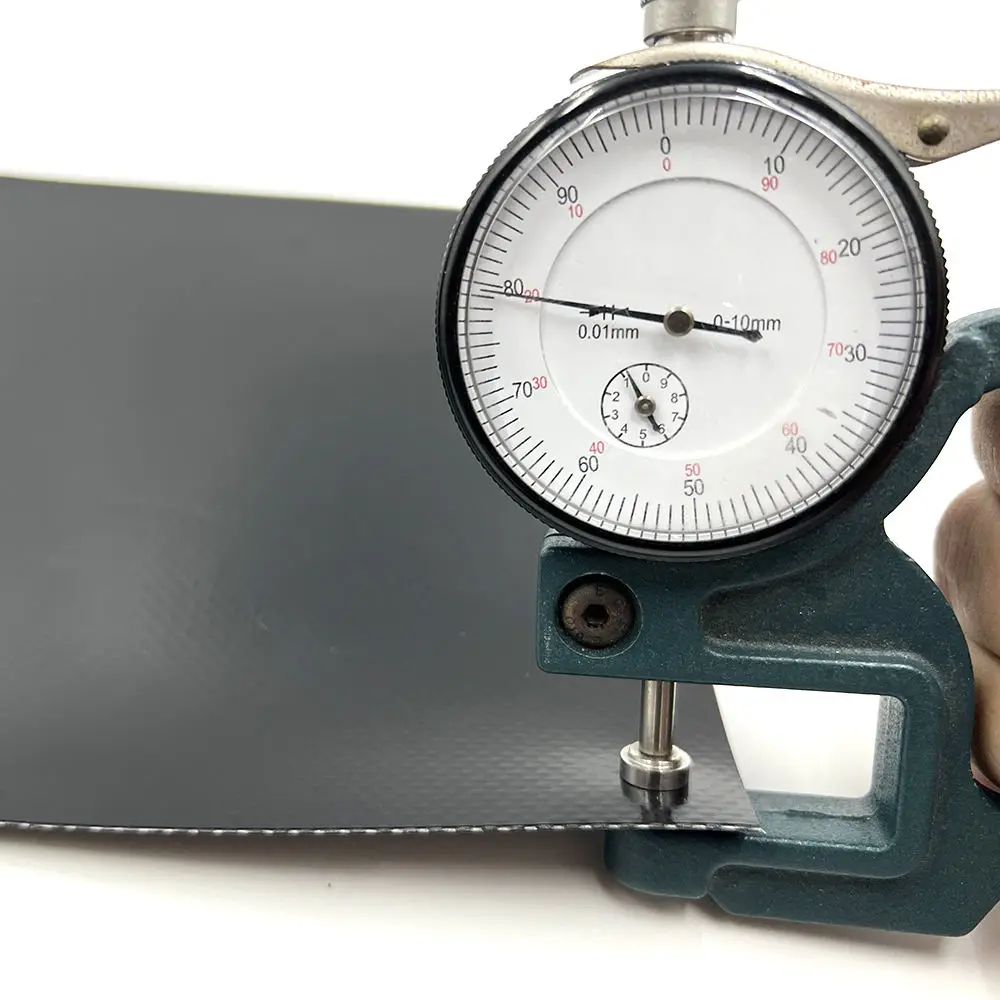
Precision-Coated Fabric Supply — every roll of this PVC Knife Coated Tarpaulin leaves our line with a documented GSM, verified coating weight and pre-shipment inspection record, so technical buyers can specify tensile and membrane grades with data instead of assumption.
Technical Specifications
| Parameter | Value |
|---|---|
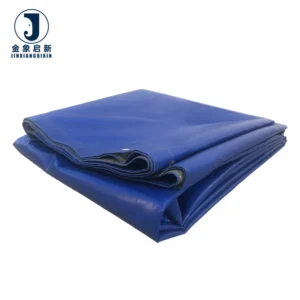
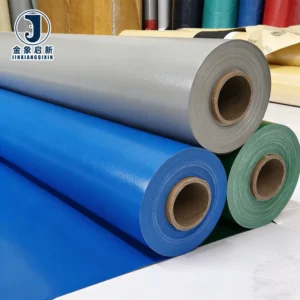
| Product Type | PVC Knife Coated Tarpaulin Roll |
| Coating Method | Knife coated |
| Coating Material | PVC |
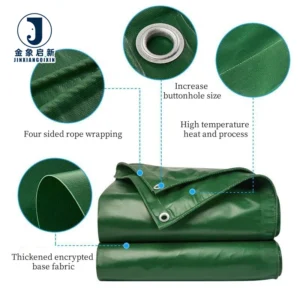
| Base Fabric | High-tenacity polyester weave (denier and mesh count confirmed per roll grade) |
| Color | Gray |
| Welding Options | High Frequency (HF), Hot Air, Sewing |
| Anti-Mildew | Antibacterial and mildew proof treatment applied |
| Surface Property | Self-cleaning |
| Fire Retardant | Available in flame retardant grades — confirm the grade required for your market |
| UV Resistance | UV stabilised — test basis and service rating confirmed on specification sheet |
| Temperature Behaviour | High temperature and cold resistance (operating range confirmed per grade) |
| Waterproof Rating | Fully waterproof coated construction |
Application Suitability
| Application | Exposure & Requirement |
|---|---|
| Tensile and membrane structures | Sustained tensile load, wind uplift, solar UV, weld seam integrity under flex |
| Stadium and airport hangar roofs | Fire code compliance, large-span weld seams, long-term weather exposure |
| Portable storage structures | Wind load, snow load, puncture from contact with stored goods |
| Shade systems and shadings | Continuous UV exposure, colour consistency across adjacent panels |
| Heavy-duty truck covers | Constant flexing at load points, road abrasion, UV and rain exposure |
Why Coating Weight Matters More Than Stated GSM for PVC Knife Coated Tarpaulin
A stated GSM that lumps base fabric and coating together hides where the strength actually comes from.
Technical buyers who quote on total GSM alone often receive rolls where the coating is lighter than agreed and the base fabric carries most of the weight. The result is a fabric that meets the number on the invoice but delivers weaker tensile performance and poorer weld adhesion at the seam — the exact point where a truck cover or membrane structure fails first. When coating weight is not broken out separately from base fabric weight, there is no way to verify that the PVC layer is thick enough to protect the yarns from UV degradation or to bond properly during high-frequency welding [NEED_CITE: relationship between coating weight and weld peel strength in PVC coated polyester per ISO 1421 test methods].
Knife Coating Process and Adhesion Performance
This PVC Knife Coated Tarpaulin is produced using a direct knife-over-roll coating method, where liquid PVC is applied under controlled tension to the polyester base fabric and then cured in a multi-zone oven. The blade gap and web tension determine the coating thickness on each side. Knife coating forces the PVC compound into the interstices of the weave, creating a mechanical bond that resists delamination under flexing and heat welding — a critical property when the fabric is used for tensile structures where seam peel strength governs structural calculations.
Fire Retardant Grades and Building Code Alignment
Architectural membranes installed in airports, stadiums and public shade structures must meet the fire classification required by local building codes. This PVC Knife Coated Tarpaulin is available in flame retardant grades, but the specific classification — whether M2, B1 per DIN 4102, NFPA 701 or another standard — depends on the compound formulation selected for your roll batch [NEED_CITE: fire classification requirements for tensile membrane structures in public assembly buildings]. Always request the test report matched to the standard your project specifies before confirming the order, rather than relying on a general flame retardant claim.
Decoding the Specification Sheet for Fabricators
Three variables govern how this fabric performs under load: the denier of the polyester yarns, the mesh count (ends per centimetre in warp and weft), and the total coating weight. Denier determines individual yarn strength; mesh count determines how many yarns share the load across a tear line; coating weight determines both environmental protection of the yarns and weld seam integrity. A heavier coating improves peel strength at a high-frequency weld but adds GSM without adding tensile capacity, which is why a high GSM alone is a poor predictor of structural performance. The self-cleaning surface treatment reduces dirt accumulation on shade and membrane installations, while the antibacterial and mildew proof finish prevents biological staining in humid climates. Full welding compatibility — HF, hot air and sewing — gives fabricators flexibility in choosing the joining method that suits their equipment and seam geometry.
The Hidden Cost of Underspecifying Coated Fabric
A membrane structure that fails at the weld line within the first season of service rarely failed because of the fabric itself — it failed because the coating weight was insufficient for the welding method used, or because the base fabric denier was too low for the applied tension. Batch-to-batch colour variation is another source of project rejection: when two rolls installed side by side on a shade canopy show a visible shade difference, the entire panel may need replacement. These outcomes are preventable when the specification sheet states exact denier, mesh count and coating weight, and when pre-shipment inspection verifies that every roll in the order matches those values [NEED_CITE: common failure modes in PVC coated architectural membrane installations].
Why Technical Buyers Source This Grade From Jinxiang
Nearly 30 years of focused production in PVC coated fabric means our process control over coating weight and base fabric adhesion is built into every production stage. Three full production lines and 36 sets of professional equipment give us the capacity to deliver large-volume roll orders on schedule without cutting corners on cure time. Our 10-person R&D team works directly with fabricators to develop samples that match a project’s specific denier, coating weight and fire retardant grade requirement before bulk production begins. Dedicated quality control at every stage — from incoming yarn inspection to final roll winding — is backed by 100% pre-shipment inspection, so you receive documentation that the roll you ordered is the roll that ships.
Documentation & Verification
- Material data sheet stating exact GSM, base fabric denier, mesh count and coating weight per roll grade
- Fire retardant test report citing the specific standard and grade applicable to the supplied batch
- UV resistance test report with stated test basis and exposure duration rating
- Pre-shipment inspection record confirming GSM and coating weight within tolerance for every roll
- Roll packing list with individual roll numbers, weights and dimensions for receiving verification
- Certificate of origin and customs documentation for international shipment clearance
Fabrication, Handling & Storage
- HF welding parameters should be calibrated to the specific coating weight of this roll grade to avoid scorching
- Hot air welding requires surface speed and temperature matched to PVC coating thickness for full peel strength
- Sewn seams should use UV-stabilised thread and sealed stitch holes to maintain waterproof integrity
- Store rolls upright on their cores in a shaded, ventilated area to prevent flat-spot deformation of the coating
- Unroll at ambient temperature above 5°C to avoid creasing or cracking the PVC coating in cold conditions
- Clean with mild detergent and soft brush — avoid solvent-based cleaners that attack the PVC surface layer
What to Include in Your Enquiry
To specify the right PVC Knife Coated Tarpaulin for your project, we need your target application and the environmental loads the fabric will carry — tensile forces, wind uplift, UV exposure level and required fire classification for your market. Please confirm the roll width, colour and annual volume you require, along with whether you need full rolls or cut-to-size panels with welded hems. If your project demands roll-to-roll colour consistency across multiple rolls installed side by side, state this explicitly so we can schedule a single-batch production run.
Frequently Asked Questions
Q: How do you verify the GSM on each roll before shipment?
A: We measure total fabric weight per square metre and separately record coating weight during our 100% pre-shipment inspection. Both values are documented on the inspection record that accompanies your order, so you can confirm the roll matches the specification sheet before installation begins.
Q: Which fire retardant standard does this fabric carry?
A: This PVC Knife Coated Tarpaulin is available in multiple flame retardant grades. The applicable standard — such as B1 per DIN 4102, M2 or NFPA 701 — depends on the compound selected for your batch. Request the test report for your required standard before order confirmation.
Q: What UV test basis supports the outdoor service claim?
A: UV stabilisation is applied during compounding. The test method and rated exposure duration vary by grade. We supply a UV test report with the stated standard and result when you confirm the outdoor service expectation for your market and application.
Q: Which welding method gives the strongest seam for membrane structures?
A: High-frequency welding typically delivers the highest peel strength on knife coated PVC because the electromagnetic field fuses the coating through its full thickness. Hot air welding is effective for curved or field seams, while sewing suits applications requiring mechanical redundancy.
Q: How do you control colour consistency across multiple rolls?
A: Colour is matched against a reference standard at the coating stage. For projects where adjacent rolls must show no visible shade difference, we schedule all rolls in a single production batch and verify colour under controlled lighting during pre-shipment inspection.