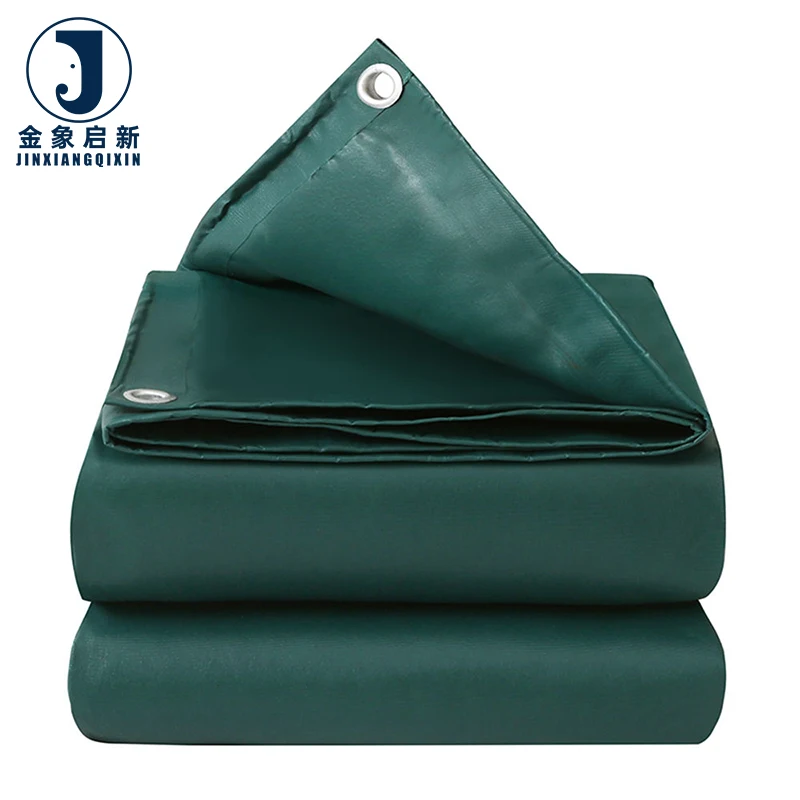
Process Control — every roll of PVC coated fabric ships with a documented coating weight and base fabric construction, verified against the quoted GSM before dispatch.
Technical Specifications
| Parameter | Value |
|---|---|
| Product Type | PVC Coated Tarpaulin Fabric |
| Base Fabric | High-strength polyester mesh fabric |
| Coating Method | Laminated technology & hot-melt coating technology |
| Weight (GSM) | 350gsm / 420gsm / 500gsm / 550gsm / 600gsm / 750gsm |
| Total Thickness | 0.32mm / 0.35mm / 0.4mm / 0.45mm / 0.5mm / 0.65mm |
| Roll Width | 2m / 2.1m |
| Roll Length | 75m (for 2m width) / 50m (for 2.1m width) |
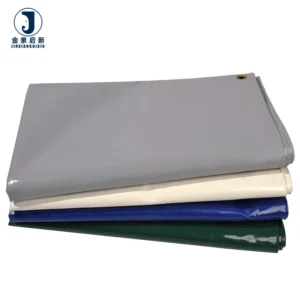
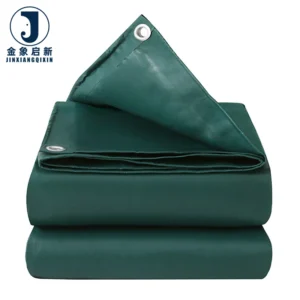
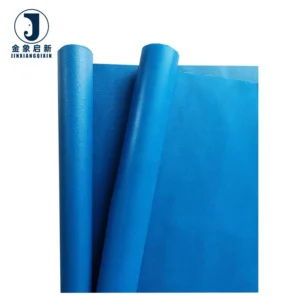
| Color Options | Blue / Red / Yellow / Light blue / Grey / Green (customized) |
| Finish | Blackout |
| Key Features | Waterproof, anti-mildew, cold crack resistance, anti-static (standard not stated), flame retardant (grade not stated) |
| Standards | ISO, CE |
Application Suitability
| Application | Exposure & Requirement |
|---|---|
| Tent cover | Full weather exposure, light-blocking for blackout function, structural tension at welded seams |
| Scaffolding or building enclosure | UV and wind load, blackout for dust and light containment, flame retardant compliance on site |
| Temporary industrial tarp covers | Abrasion from equipment contact, moisture ingress, repeated folding and redeployment |
| Equipment covers | Standing water, dust infiltration, UV degradation over extended outdoor storage |
| Truck awning | Constant flexing at folds, road spray, UV and thermal cycling |
| Plant & refinery maintenance | Chemical splash exposure, hot work proximity requiring flame retardant verification |
| Cargo ship | Salt spray, heavy wind load, mechanical abrasion from shifting cargo |
| Agricultural covers | Continuous moisture, biological growth risk, prolonged sun exposure |
| Fish tank / pool | Permanent water contact, material leaching concerns, seam integrity under hydrostatic pressure |
| Marine & offshore maintenance | Salt water immersion, UV, mechanical wear from rigging contact |
What Separates a Verified PVC Coated Tarpaulin from a Quotation Promise
Every roll ships with a material specification sheet stating exact GSM, base fabric, and coating weight for independent verification.
Generic PVC coated tarpaulin often arrives lighter than the quotation stated. The roll label reads the agreed weight, but the actual coating thickness and base fabric density fall short once measured on site. This gap between specification and delivered material is a recurring cause of premature failure in welded seams and flex zones. Buyers who specify by GSM alone, without demanding verified coating weight documentation, frequently discover the shortfall only after the fabric has been cut, welded, and installed. [NEED_CITE: tensile and tear test methods for coated fabrics per ISO 1421]
How Coating Adhesion Determines Weld Performance
The base fabric construction of this PVC coated tarpaulin uses a high-strength polyester mesh fabric, and the coating is applied through laminated technology or hot-melt coating technology. Both methods produce a bonded structure, but the adhesion behaviour at the weld line differs. When a heat-welded seam is stressed — at a truck awning fold point, for instance — the failure mode depends on whether the PVC layers separate from the mesh before the fabric itself tears. Hot-melt coating generally penetrates the mesh more deeply, which supports stronger weld adhesion under repeated flex.
Blackout Construction and Light Transmission Control
The blackout finish blocks light transmission through the fabric, which matters for tent covers, building enclosures, and any application where light sensitivity or visual screening is required. In scaffolding wrap, blackout PVC coated tarpaulin contains dust and debris visually while also meeting site requirements for opaque barriers. The construction achieves this without relying on a separate lining layer, so the fabric remains a single laminated or hot-melt coated unit that can be welded directly at the seams. [NEED_CITE: light transmission test methods for blackout coated fabrics]
Reading GSM, Thickness, and Base Fabric Together
GSM alone does not define the mechanical behaviour of PVC coated tarpaulin. The 350gsm through 750gsm grades listed here correspond to total thickness values from 0.32mm to 0.65mm, but the actual tensile and tear performance depends on the base fabric denier and weave density beneath the coating. A 500gsm fabric with a dense, high-tenacity mesh may outperform a heavier-grade material built on a looser base fabric. Coating weight contributes to surface durability and weld adhesion, while the polyester mesh determines how the fabric resists tearing under load. Selecting the right grade requires knowing both the coating contribution and the base fabric construction — which is why the material specification sheet documents each layer separately.
The Cost of Specifying Coated Fabric on Price Per Roll Alone
When a buyer selects PVC coated tarpaulin primarily on unit cost, the delivered material often sits at the low end of the stated GSM range. A roll quoted at 550gsm may arrive measuring closer to the 500gsm threshold, with thinner coating and a lighter base fabric. This shortfall shows up first at welded seams and high-stress folds, where the coating separates or the mesh tears before the expected service period. On building enclosure projects, a flame retardant claim without a verified grade can halt site approval entirely, leaving the contractor to replace material already cut and installed. [NEED_CITE: fire classification standards for temporary building enclosures]
Why Fabricators Source This Material Here
Process control over PVC coating weight and adhesion is maintained across all six GSM grades, with each roll inspected against the quoted specification before packing. The material specification sheet provided with every shipment documents base fabric construction, coating type, and weight — not just a single GSM figure. A 10-person R&D team handles material selection, sample development, and custom sizing, which means technical buyers can request verification of specific properties before committing to bulk. Hot-melt and laminated coating options are available depending on the welding method and adhesion requirement of the fabrication. Dedicated QA/QC runs at every production stage, and pre-shipment inspection covers the full order before dispatch.
Documentation & Verification
- Material specification sheet per roll stating GSM, base fabric, and coating weight for independent verification
- Test reports issued for flame retardant grades and anti-UV treatment where applicable and requested
- ISO and CE certificates included with customs documentation and certificate of origin
- Pre-shipment inspection record confirming weight, colour, and coating adhesion against quoted specification
- Roll packing list with individual roll identification matching the material specification sheet
Fabrication, Handling & Storage
- Heat-weld temperature settings should be adjusted to the coating method — laminated and hot-melt coatings respond differently to thermal input
- Roll stock in 2m or 2.1m widths should be stored upright on end cores to prevent flat-spot creasing across the polyester mesh
- Blackout PVC coated tarpaulin rolls should be kept in dry, ventilated storage to prevent moisture trapping between layers
- Cold crack resistance supports handling in lower temperatures, but rolls should be acclimatized before unfolding to avoid coating stress
- Cut edges on heavier grades (600gsm, 750gsm) require clean weld sealing to prevent moisture ingress into the base fabric mesh
What to Include in Your Material Inquiry
Provide the application type, exposure conditions, and any flame retardant or anti-static grade required by your local regulations or site specification. Specify the GSM range, colour, and whether you need roll stock or finished cut-to-model fabrication. Include the target roll width and estimated annual volume so the quotation reflects the correct coating method and production scheduling. If batch colour consistency is critical for your project, request a sample roll for approval before bulk production begins.
Frequently Asked Questions
Q: How do I verify the GSM of delivered PVC coated tarpaulin matches the quotation?
A: Each order ships with a material specification sheet stating the exact GSM, base fabric, and coating weight. You can weigh a cut sample on arrival and compare it to the documented value. We also conduct pre-shipment inspection on every roll before dispatch to confirm the actual weight falls within the agreed tolerance.
Q: Are flame retardant grades certified to specific test standards?
A: Flame retardant treatment is available in multiple grades, and the applicable test standard depends on your market — B1 per DIN 4102, M2, NFPA 701, or others. Confirm the grade required for your project at inquiry stage, and we will issue the corresponding certified test report with your shipment documentation.
Q: Which coating method is better for welded seam fabrication?
A: Hot-melt coating penetrates the polyester mesh more deeply, which generally supports stronger weld adhesion under flex stress. Laminated coating provides consistent surface coverage and is suited to applications where weld strength requirements are moderate. The right choice depends on your fabrication method and the mechanical demands at the seam.
Q: How is colour consistency maintained across multiple rolls in one order?
A: Rolls within a single production run are matched to the confirmed colour reference. We document the colour reference on the material specification sheet and inspect each roll during pre-shipment QA/QC. For projects requiring strict batch matching, request a sample for approval before the full order enters production.