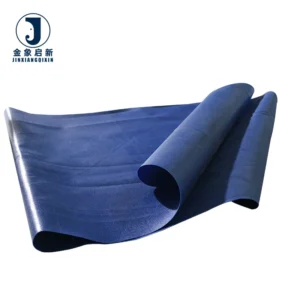
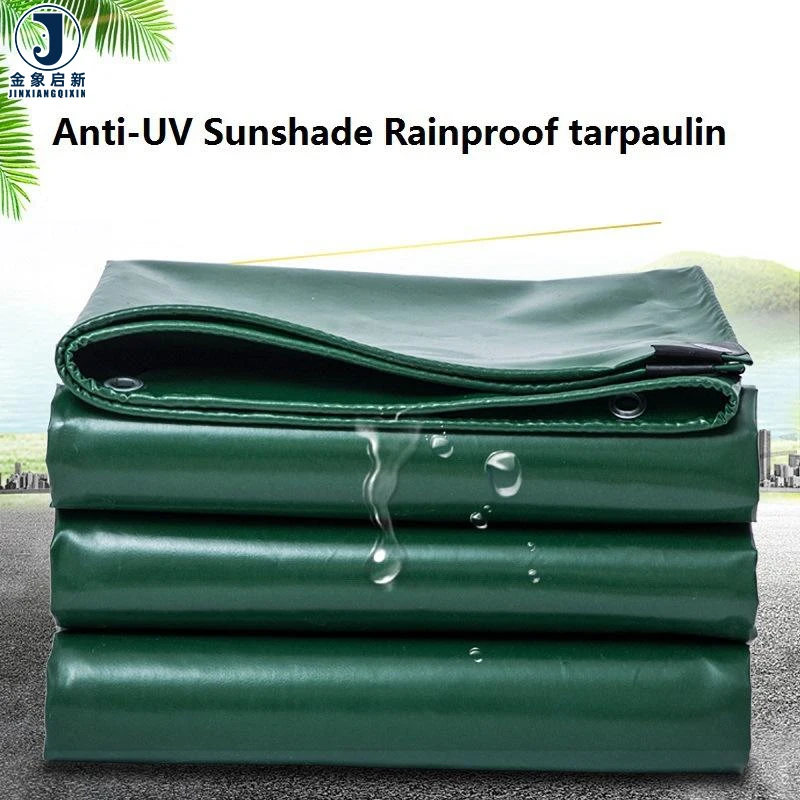
Coating Adhesion Control — Hot-melt and laminated coating processes deliver consistent PVC-to-polyester bonding across the full weight range, verified per roll before dispatch.
Technical Specifications
| Parameter | Value |
|---|---|
| Product Type | PVC Coated Tarpaulin Roll |
| Material | PVC + High-strength polyester mesh fabric |
| Coating Technology | Laminated technology & Hot-melt coating technology |
| Weight Grades Available | 350gsm / 420gsm / 500gsm / 550gsm / 600gsm / 750gsm |
| Total Thickness Range | 0.32mm / 0.35mm / 0.40mm / 0.45mm / 0.50mm / 0.65mm |
| Width Options | 2m / 2.1m |
| Roll Length | 75m (for 2m width) / 50m (for 2.1m width) |
| Surface Finish | Glossy or matte (customizable) |
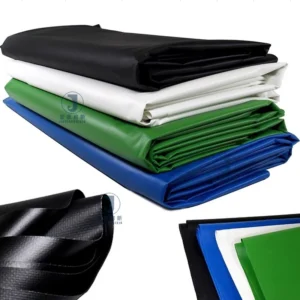
| Color Options | Blue / Red / Yellow / Light Blue / Grey (customizable) |
| Treatment Options | Flame retardant / Anti-static / Anti-cold / Anti-mildew / Anti-UV / 3P (confirm grade required for your market) |
| Key Features | Cold crack resistance, waterproof, sunproof, good color fastness, outstanding tearing strength for welding |
| Standards | ISO, CE |
Application Suitability
| Application | Exposure & Requirement |
|---|---|
| Tent and awning manufacturing | Roll-fed fabrication requiring consistent GSM, weld seam strength and color uniformity across multiple rolls |
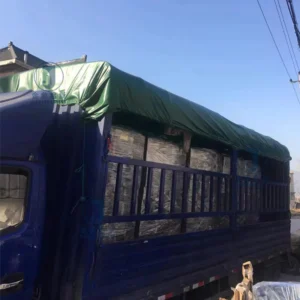
| Truck awning and side curtain | Constant flexing, road debris abrasion, UV exposure — demands high tear resistance at weld points |
| Construction and scaffolding enclosure | Prolonged weather exposure, wind loading, mechanical contact with scaffolding tubes and clamps |
| Membrane and inflatable structures | Air-tight seam integrity, repeated inflation cycles, material must tolerate heat-welded joins without delamination |
| Industrial equipment covers | Abrasion from contact with machinery surfaces, moisture ingress prevention, frequent removal and reinstallation |
Why GSM Without Coating Data Leaves You Guessing
Weight alone tells you nothing about how the layers bond or how the fabric behaves under heat welding.
When a PVC coated tarpaulin roll arrives lighter than the quotation stated, the problem is rarely a simple scale error. The base fabric denier, the coating method and the adhesion between layers all determine whether the material performs as specified. Technical buyers who rely on GSM as the sole selection criterion often discover that two rolls at the same weight behave very differently at the weld line or under sustained load. Specifying PVC coated fabric material properties means looking at the full construction — yarn count, weave density, coating weight and the technology used to bond them. [NEED_CITE:]
The Role of Base Fabric in Tensile Performance
The high-tenacity polyester mesh at the core of this PVC coated tarpaulin roll range carries the structural load. The PVC coating protects the yarns and provides waterproofing, but it is the base fabric that resists tensile and tearing forces. Selecting a heavier PVC coated tarpaulin roll GSM specification does not automatically mean better performance if the base fabric weave density is not matched to the end-use stress profile.
Coating Technology and Weld Integrity
Hot-melt coating penetrates the mesh structure and bonds with individual yarns, producing a material where the coating and substrate act as a single unit during heat welding. Laminated technology applies a PVC film to the fabric surface, which can deliver a smoother finish but requires careful heat-weld parameter control to avoid delamination at the seam. Both methods are available across this range, and the choice affects how fabricators set weld temperature, pressure and dwell time. [NEED_CITE:]
Reading GSM and Thickness Together
Each weight grade in this range corresponds to a specific thickness — 350gsm maps to 0.32mm, while 750gsm reaches 0.65mm. This GSM-to-thickness correlation gives technical buyers a predictable starting point. However, thickness also reflects the combined contribution of base fabric mass and coating weight. A roll at 550gsm with a heavier base fabric will show different tear propagation resistance than one at the same weight with more coating and lighter yarns. The specification sheet should break down coating weight separately from total GSM so you can confirm the construction matches your application.
What Happens When Specification Gaps Reach Production
Receiving rolls where GSM is within tolerance but the coating feels thin or the weld seam peels under minimal force points to a specification that did not capture enough detail. Fabricators who cut and weld an entire production run before discovering inconsistent adhesion face material waste, missed delivery schedules and rework costs that far exceed the roll price. Batch-to-batch color variation across rolls in the same order creates visible panel mismatches once the finished covers are installed side by side. These failures trace back to incomplete specification at the inquiry stage rather than random manufacturing error. [NEED_CITE:]
Why Fabricators Source This PVC Coated Fabric Range
Three full production lines with 36 sets of professional equipment maintain output consistency across bulk orders, reducing the risk of roll-to-roll variation that disrupts fabrication schedules.
A 10-person R&D team develops material samples matched to your exact GSM, color and treatment requirements within days, allowing specification lock before production begins.
Dedicated QA/QC at every production stage with 100% pre-shipment inspection catches GSM deviation, color shift and coating adhesion issues before rolls leave the facility.
Hot-melt and laminated coating technologies are both available on the same base fabric platform, giving fabricators the flexibility to match coating method to their weld process and end-use environment.
ISO and CE certification underpins the production system, with fire-retardant and anti-static grades available subject to confirmation of the specific standard required by your market.
Documentation & Verification
- Material specification sheet stating exact GSM, base fabric denier, coating method and total weight per roll
- Test report for UV resistance and flame retardant grades provided where applicable to the order
- Pre-shipment inspection record confirming GSM, thickness and color consistency roll by roll
- ISO and CE certificates supplied with each shipment
- Packing list with roll count, individual roll dimensions and net weight for customs clearance
- Certificate of origin and customs documentation for international dispatch
Fabrication, Handling & Storage
- Set heat-weld temperature based on coating technology — hot-melt coated rolls tolerate higher weld temperatures than laminated grades without delamination
- Store rolls upright on pallets to prevent flat-spot compression marks on the PVC surface
- Allow cold-stored rolls to acclimatize before unrolling to avoid cracking in low-temperature transit conditions
- Cut panels from the same production batch to minimize visible color variation across joined sections
- Use matte-finish rolls for applications requiring printed branding, as the surface accepts ink adhesion more reliably than glossy finish
Requesting a Specification-Matched Quote
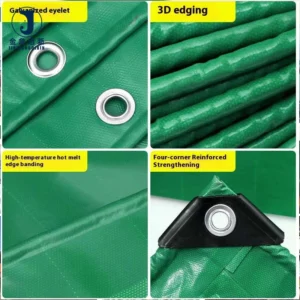
Provide the target GSM, required width, coating technology preference and end-use environment so we can recommend the correct construction from this range. If your project requires flame retardant or anti-static certification, specify the standard your site or market mandates. Indicate whether you need roll stock only or finished panels with custom sizing, eyelets and reinforced hems.
Frequently Asked Questions
Q: How do I verify the GSM of PVC coated tarpaulin rolls when they arrive?
A: Cut a measured sample from each roll and weigh it on a calibrated scale to calculate grams per square meter. Request the pre-shipment inspection record from the supplier, which documents roll-by-roll GSM verification before dispatch. Compare your arrival readings against both the quotation and the inspection record to identify any deviation.
Q: Which flame retardant grades are available for this PVC coated fabric?
A: Flame retardant treatment is available across the weight range, but the specific grade depends on your market requirements — standards such as M2, B1, NFPA 701 and DIN 4102 each have different test criteria. Confirm the exact standard before ordering so the correct formulation is applied and the matching test report is included with your shipment.
Q: What is the difference between hot-melt and laminated coating for weld strength?
A: Hot-melt coating penetrates the polyester mesh, creating a unified structure that generally delivers strong weld seams with less risk of layer separation. Laminated coating applies a PVC film to the surface and may require adjusted weld parameters to prevent delamination. Your fabricator should test both options on sample pieces before committing to production.
Q: Can rolls from the same order show color variation?
A: Batch consistency is controlled through standardized pigment dosing and in-process inspection, but slight shade variation between production runs is possible. Always specify your color reference at the inquiry stage and request rolls from the same batch. Inspect panels side by side before fabrication to catch any visible mismatch early.
Q: How does PVC coated tarpaulin compare to PE tarpaulin for technical applications?
A: PVC coated polyester delivers substantially higher tear resistance, better weld seam integrity and longer service life under continuous outdoor exposure compared to PE film-based tarpaulins. PVC fabric also accepts heat welding for strong structural joins, while PE typically requires stitching or adhesive bonding. Technical specifiers choose PVC coated fabric material properties when mechanical performance and durability are primary requirements.