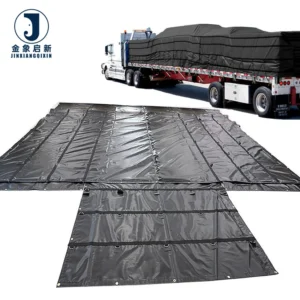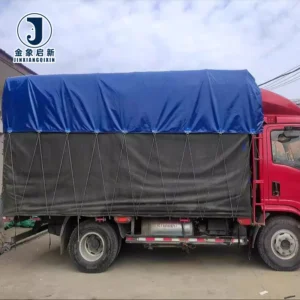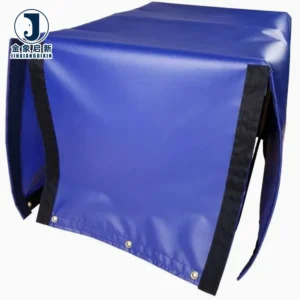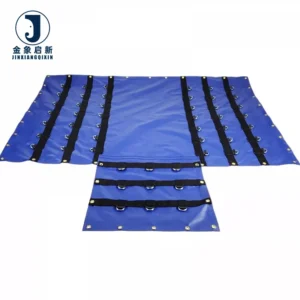
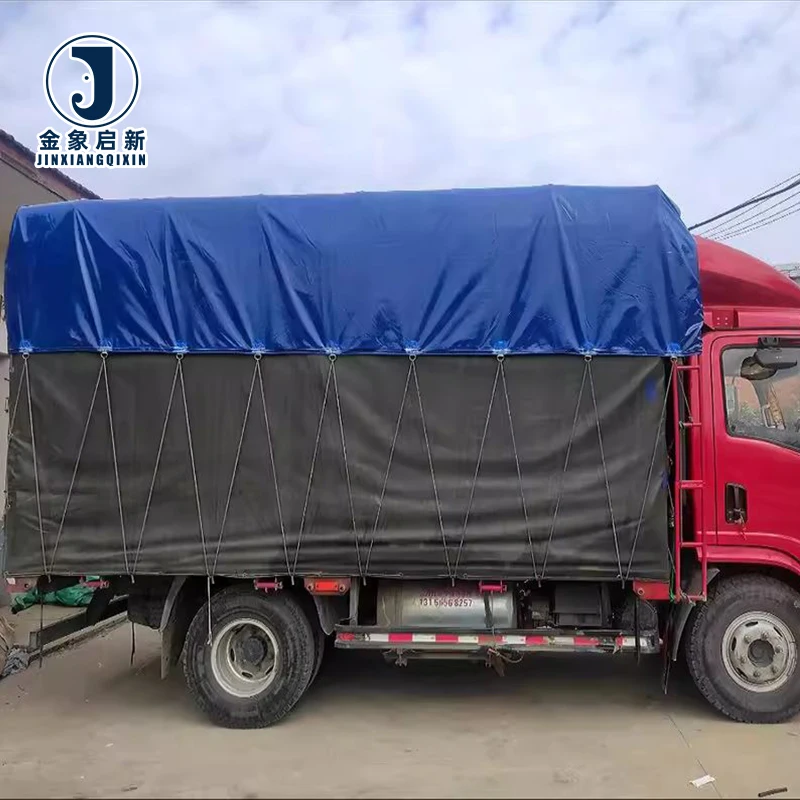
Coating Adhesion Control — Our three full production lines maintain strict process parameters over knife-coating and lamination, ensuring the PVC layer bonds to the base fabric without delamination under field stress.
Technical Specifications
| Parameter | Value |
|---|---|
| Product Type | PVC Truck Cover |
| Coating Material | PVC Coated / Laminated |
| Water Resistance | Water resistant |
| Anti-UV Treatment | Anti-UV (test basis not stated in source) |
| Flame Retardant Grade | Flame retardant (grade not stated in source) |
| Construction | Double-Faced |
| Color Options | Multiple colors available |
| Machine Fitment | Truck / Trailer |
Application Suitability
| Application | Exposure & Requirement |
|---|---|
| Truck and trailer top roof cover | Direct UV exposure, rain, wind uplift, mechanical abrasion from load shifting |
| Side curtain fabric for trailers | Constant flexing at fold points, road debris impact, repeated tie-down tension |
| Pallet and equipment covers | Outdoor storage, moisture ingress prevention, handling abrasion |
| Outdoor event tents (block-out) | Sun exposure, rain load, structural tension, light exclusion requirement |
| Waterproof construction tents | Weather exposure, site dust, repeated assembly and teardown |
| Architecture membrane structures | Long-term UV exposure, wind load, structural tension, aesthetic consistency |
Why Material Data Sheets Matter More Than Quoted GSM for PVC Truck Cover Fabric
A quoted GSM figure without a verified test report leaves buyers exposed to material that fails before the vehicle does.
When sourcing a PVC coated tarpaulin manufacturer custom fabricators and fleet operators frequently encounter a gap between the specification on paper and the material that arrives at the dock. A truck cover that arrives lighter than agreed will show reduced tear resistance at the hem line and flex points [NEED_CITE: tensile and tear test methods for coated fabrics per ISO 1421]. The result is premature failure at the exact locations where load movement generates the highest stress. Without documentation tying GSM to base fabric denier and coating weight, the buyer has no basis for a quality claim.
Base Fabric Construction and Load-Bearing Behaviour
The base fabric weave and denier determine how a PVC truck cover aftermarket supplier product handles point loads and sustained tension. A higher denier yarn in the warp direction resists the longitudinal pull experienced when a side curtain is tensioned across a trailer bed. The weft density controls how the fabric behaves when folded and re-folded daily. Together these parameters define the structural backbone that the PVC coating then protects and seals.
Coating Method and Its Effect on Weld Integrity
The choice between knife-over-roll coating and lamination directly affects how the fabric performs at welded seams. Knife-coated PVC penetrates the base fabric weave, creating a mechanical bond that supports strong heat-welded joints. Laminated construction bonds a PVC film to the fabric surface, which can behave differently under thermal welding. For side curtain applications where seams carry dynamic loads, specifying the PVC coated tarpaulin manufacturer custom welding parameters must align with the coating method used [NEED_CITE: welding compatibility for PVC coated and laminated fabrics].
Understanding Specification Trade-Offs in Coated Truck Fabric
GSM alone does not define performance. A heavier coating weight increases water resistance and abrasion protection but adds roll weight and stiffness, which complicates handling during installation on a trailer frame. The base fabric denier and weave density carry the tensile and tear loads; the coating provides environmental protection and surface durability. A balanced specification matches base fabric strength to the mechanical demands of the application, then applies sufficient coating weight to seal and protect without over-engineering the total GSM. Double-faced construction ensures uniform performance regardless of which surface faces the load or the weather. The available flame retardant grades and anti-UV treatments should be confirmed against the specific regulatory and environmental requirements of the target market — request the test basis before committing to a production run.
The Hidden Cost of Incorrect Specification Selection
Ordering PVC truck cover fabric without verifying the coating method against the intended joining technique leads to weld failures that appear weeks after installation. A laminated fabric specified for a high-flex side curtain application may delaminate at fold points if the coating adhesion does not match the bending radius [NEED_CITE: delamination failure modes in PVC coated fabrics under cyclic flexing]. Colour inconsistency between rolls in a single shipment becomes visible only when panels are installed side by side on adjacent trailers, forcing a full replacement to maintain fleet appearance.
Why Procurement Teams Specify This Range
Dedicated QA and QC inspection at every production stage means each roll of PVC truck cover fabric is checked against the material specification sheet before dispatch, not sampled from a batch. The ten-person R&D team develops custom samples within days, allowing buyers to verify hand feel, weld behaviour, and colour match before authorising full production. Three production lines with professional equipment support volume orders while maintaining the coating weight consistency that automated processes demand. Pre-shipment inspection records accompany every consignment, providing the traceability that fleet operators and distributors require for their own quality systems.
Documentation & Verification
- Material specification sheet stating GSM, base fabric denier, and coating type for each roll
- Test reports for UV resistance and flame retardant grades applicable to your market
- Pre-shipment inspection record with weight and colour verification per roll
- Roll packing list with batch reference for traceability across the shipment
- Certificate of origin and customs documentation for cross-border logistics
Fabrication, Handling & Storage
- Heat-weld parameters must match the PVC coating method — test on a sample offcut before production runs
- Reinforce hem and eyelet zones with additional PVC strip layers to distribute tie-down point loads
- Store rolls upright on pallets in a shaded area to prevent flat-spotting and surface adhesion between layers
- Allow cold-stored PVC truck cover rolls to acclimate before unrolling to avoid coating crack at low temperature
- Clean surfaces with mild detergent only — solvents degrade the PVC plasticiser and compromise water resistance
Preparing Your Enquiry for PVC Truck Cover Fabric
Provide the specific truck or trailer model, the panel dimensions, and whether the cover will be a fixed top roof or a tensioned side curtain. State the regulatory environment for flame retardant and UV requirements in the destination market. Confirm whether you need roll stock in standard widths or finished covers with hems and eyelets, and indicate the annual volume to support production planning.
Frequently Asked Questions
Q: How is GSM verified before the PVC truck cover fabric ships?
A: Every roll is weighed and measured during our pre-shipment inspection process. The actual GSM is recorded and compared against the material specification sheet. Rolls that fall outside the agreed tolerance are held and replaced before dispatch. The inspection record travels with the shipment so the buyer can verify on arrival.
Q: What test standards apply to the anti-UV and flame retardant treatments?
A: Available treatments can be tested to standards required by your destination market. Because regulatory requirements vary by region, we recommend specifying the exact standard your project demands. Our R&D team will then confirm the applicable test basis and provide the corresponding report with your sample for approval.
Q: Can colour be matched across multiple rolls in a single order?
A: Colour consistency is controlled through our in-process QA checks during coating. Each roll in a batch is compared against the approved colour reference under controlled lighting. Rolls that show visible deviation are rejected before packing. We recommend requesting a production sample from the actual batch before authorising the full run.
Q: What welding methods are compatible with this PVC coated and laminated fabric?
A: Both hot-air welding and high-frequency welding are compatible, though the optimal parameters differ between coated and laminated construction. We supply sample offcuts so fabricators can establish the correct temperature, speed, and pressure settings. Our technical team can advise on parameter ranges based on the specific coating method used in your order.