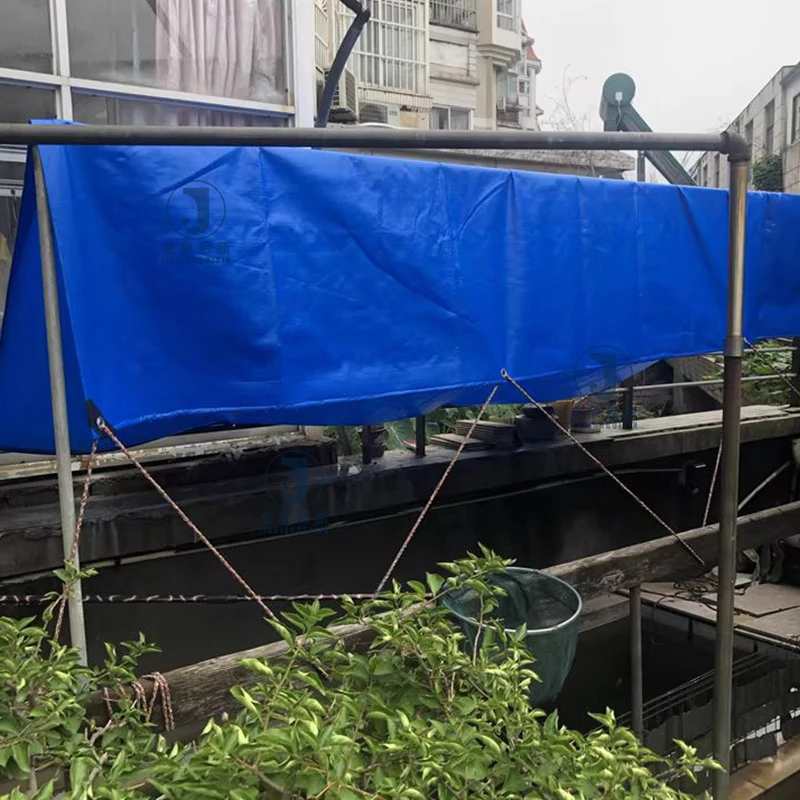
Coating adhesion control — every roll of this laminated PE tarpaulin undergoes coating weight verification against the quoted GSM before leaving the production line, ensuring the material you receive matches the specification you approved.
Technical Specifications
| Parameter | Value |
|---|---|
| Product Type | PE Tarpaulin |
| Coating Material | HDPE weaving with LDPE lamination on both sides |
| Weight (GSM) | 50gr/m2 ~ 220gr/m2 available (confirm the grade for this item) |
| Total Thickness | 0.2-0.4mm / 8 mil-16 mil (confirm the grade for this item) |
| Color | Blue, Blue/Orange, Green, Grey, Black, Clear, Grey/Green, Orange, or custom |
| Roll Width | 6ft, 8ft, 10ft, 12ft, 2m, 4m, 6m |
| Roll Length | 100 yards, 100 meters, or custom |
| Finished Sizes | 2x2m through 8x10m and custom cut |
| Edge Reinforcement | PP rope in hem on all four edges |
| Eyelet Options | Galvanized eyelets every 3ft or 1 meter interval |
| Corner Reinforcement | Reinforced plastic corners |
| Knitting Density (Lightweight) | 8×8 mesh |
| Knitting Density (Medium) | 10×10 mesh |
| Knitting Density (Heavy-duty) | 12×12 mesh |
| Tensile Strength (Lightweight) | Meridian 300-500 / Latitude 250-450 N/5cm |
| Tensile Strength (Medium) | Meridian 500-800 / Latitude 400-700 N/5cm |
| Tensile Strength (Heavy-duty) | Meridian 900-1200 / Latitude 700-1000 N/5cm |
| UV Treatment | Available (test basis not stated in source) |
| Key Features | Waterproof, anti-mildew, washable, tear resistant, weather proof, anti-aging |
| Certifications | ISO, CE |
Application Suitability
| Application | Exposure & Requirement |
|---|---|
| Agricultural sunshade and poultry farm blackout | Constant UV exposure, humidity, need for light control and mildew resistance |
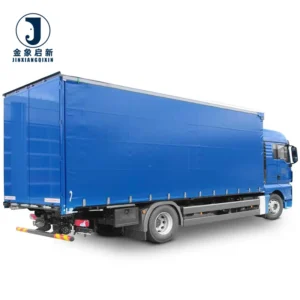
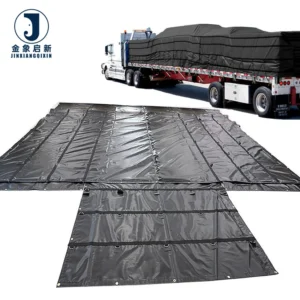
| Truck and trailer tarpaulin | Road abrasion, wind flexing, weather and water exposure |
| Warehouse and equipment covers | Dust and moisture ingress, puncture from sharp edges, long-term static load |
| Pond and reservoir liner | Permanent water contact, soil chemistry, UV from reflected sunlight |
| Awning and canopy fabric | Repeated folding, UV exposure, colour consistency across installed panels |
Why the PE Tarpaulin Material Coating Weight GSM You Quote Is Not What Arrives
The number on the quotation sheet is only meaningful when it can be verified roll by roll at the loading dock.
Buyers across agricultural and transport sectors report that the PE tarpaulin material coating weight GSM stated on the purchase order frequently does not match what is weighed on receipt. A fabric quoted at a medium grade arrives closer to a lightweight construction, and the shortfall shows up as premature tearing at the hem or failure at the eyelet under load. This is not a margin-of-error problem — it is a gap between what the coating line deposits and what the invoice claims. Technical buyers need a specification sheet that names the exact GSM, knitting density and tensile values for the roll they are buying, not a range that covers the entire product family [NEED_CITE: tensile and tear test methods for coated fabrics per ISO 1421].
How Dual-Side LDPE Lamination Builds the Fabric From the Yarn Up
The base fabric here is an HDPE weave, providing the structural skeleton that carries tensile and tear loads. Both sides of this woven scrim receive an LDPE lamination layer, which bonds to the yarn intersections and seals the fabric against water ingress. The PE tarpaulin material coating weight GSM is a direct function of the yarn denier, the mesh count and the thickness of each lamination pass. A tighter weave at 12×12 mesh captures more coating material and yields a heavier, stiffer fabric, while a looser 8×8 mesh produces a lighter, more flexible sheet suited to temporary covers. This relationship is why GSM alone cannot define the material — two fabrics at the same weight can behave very differently if their base construction diverges.
Knitting Density, Tensile Strength and What the Numbers Mean in Practice
The three density tiers — 8×8, 10×10 and 12×12 — represent the number of warp and weft yarns per unit area, and each tier maps to a defined tensile strength band in both the meridian and latitude directions. At the lightweight end, meridian tensile runs 300-500 N/5cm, suited to shade cloth and short-term agricultural covers where wind load is moderate. The medium tier at 500-800 N/5cm meridian addresses truck tarpaulins and warehouse covers that see daily handling and mechanical stress. Heavy-duty at 900-1200 N/5cm meridian serves industrial applications where the fabric must resist puncture and sustained tension over long spans. Selecting the correct tier requires matching the expected load and exposure, not simply choosing the heaviest option available [NEED_CITE: mesh count and tensile correlation in woven polyethylene fabrics].
Reading the Specification Sheet — Beyond a Single Weight Number
Four parameters interact to define how this laminated PE tarpaulin performs in the field, and any one of them taken in isolation gives an incomplete picture. First, knitting density determines how many load-bearing yarns cross each square centimetre of fabric, directly influencing both tensile capacity and tear propagation resistance. Second, total thickness — ranging from 0.2mm to 0.4mm — reflects the combined HDPE weave and LDPE lamination build-up and affects stiffness, foldability and abrasion tolerance. Third, the balance between meridian and latitude tensile strength indicates whether the fabric is engineered for unidirectional loads, such as truck side curtains under tie-down tension, or for multi-directional stress as seen in pond liners under soil pressure. Fourth, surface finish — matte in this range — reduces glare for agricultural sunshade installations and affects how readily dust and debris adhere to the panel during service.
The Cost of Specifying on Price Per Kilo Instead of Grade Performance
When a buyer selects material on cost per kilogramme rather than verified GSM and knitting density, the downstream consequences are predictable. A tarpaulin that is lighter than specified will show thinning at fold lines after repeated use, and the eyelets will pull through the fabric under loads the reinforced hem was supposed to carry. In agricultural sunshade applications, an underweight grade degrades faster under UV exposure because the LDPE lamination layer is thinner than required to protect the HDPE yarns from photo-degradation. For truck covers, insufficient knitting density means the fabric tears at the first point of contact with a sharp pallet edge, and the repair cost on a moving fleet exceeds the saving on the original material purchase many times over [NEED_CITE: common failure modes in under-specified PE tarpaulin applications].
What This Production Line Delivers on Every Roll
Coating weight consistency is maintained through calibrated lamination across all three production lines, so the PE tarpaulin material coating weight GSM you approve on the sample is the weight that ships in the container. Roll-to-roll colour matching is controlled at the compounding stage, preventing the visible banding that occurs when panels from different batches are installed side by side. The ten-person R&D team develops custom widths, colours and sample panels within days, letting you validate material behaviour before committing to a full production run. Every roll passes through dedicated QA/QC inspection at each stage, with 100% pre-shipment verification covering weight, width and visual defects. The HDPE/LDPE construction supports both heat welding and sewing, giving fabricators flexibility in how they produce finished covers, liners and awning panels.
Documentation & Verification
- Material specification sheet stating exact GSM, base fabric mesh count and LDPE coating weight for the selected grade
- UV treatment test report supplied where the selected grade includes UV stabiliser
- Pre-shipment inspection record with per-roll weight verification against the quoted specification
- ISO and CE certificates included in the dispatch documentation package
- Roll packing list with net weight, dimensions and batch reference for each roll shipped
Fabrication, Handling & Storage
- Heat welding suits the LDPE lamination surfaces — confirm temperature settings match the selected GSM grade before production
- PP rope hem reinforcement on all four edges distributes tie-down load and prevents eyelet pull-through under tension
- Store rolls upright on a flat surface to avoid permanent creasing in the heavier 220gr/m2 grades
- Galvanized eyelets at 1-meter intervals require matching grommet press tooling for field repair and replacement
- Matte surface finish resists dust adhesion and cleans with mild detergent — avoid solvent-based cleaners on the LDPE coating
- Unroll and allow the fabric to relax at ambient temperature before cutting, particularly in cold-weather handling
What to Include in Your Enquiry
Tell us the end-use application and the environmental exposure the fabric will face — UV load, moisture, mechanical abrasion or chemical contact. Specify the GSM grade, knitting density tier and any UV treatment requirement so we can match the correct roll construction. Confirm whether you need stock widths or a custom roll width, and whether finished cut sizes or full roll stock suits your production line. If colour matching across multiple rolls is required for side-by-side installation, provide your reference colour and we will develop a sample for approval before bulk production.
Frequently Asked Questions
Q: How is GSM verified per roll and what does the pre-shipment inspection cover?
A: Each roll is weighed and measured against the stated GSM, width and thickness before dispatch. The pre-shipment inspection record documents these values roll by roll, along with a visual check for coating defects, colour consistency and edge alignment. This record ships with the packing list so you can reconcile on receipt.
Q: What is the relationship between mesh count, GSM and tensile strength across grades?
A: Higher mesh count means more HDPE yarns per unit area, which increases both the base fabric weight and the LDPE lamination the weave can carry. This produces a higher GSM and a corresponding step up in tensile strength in both warp and weft directions. The three tiers — 8×8, 10×10 and 12×12 — each map to defined tensile bands.
Q: What UV treatment test basis is available for the selected grade?
A: UV treatment is available across the range, though the test basis is not stated in the standard product documentation. When UV stabilisation is required for your market, specify the grade and request the corresponding test report with your sample so the treatment level can be confirmed before bulk order.
Q: How does HDPE/LDPE lamination compare to PVC coating for weld and seam behaviour?
A: LDPE lamination responds to heat welding at lower temperatures than PVC coating, and the weld zone retains flexibility without the plasticiser migration that can stiffen PVC seams over time. However, PVC coating generally delivers higher peel strength at the weld line, making it preferable for high-stress structural seams.
Q: What custom width, colour and roll length options are available and what are the minimums?
A: Stock widths run from 6ft to 6m, with custom widths available on request. Colours include eight standard options plus custom matching against a Pantone or RAL reference. Roll lengths are available at 100 yards or 100 metres, with custom lengths subject to production minimums confirmed at quotation stage.