Precision-Coated Fabric — Every roll of this PVC coated polyester fabric ships with a material specification sheet documenting exact GSM, base fabric denier, and coating weight, verified at the production line before dispatch.
Technical Specifications
| Parameter | Value |
|---|---|
| Product Type | PVC Coated Polyester Fabric |
| Base Fabric | 500D-500D polyester |
| Coating Material | PVC, double-sided knife coated |
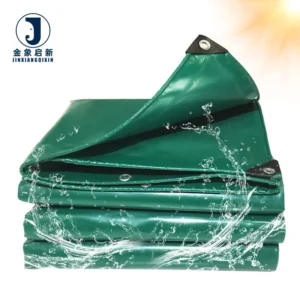
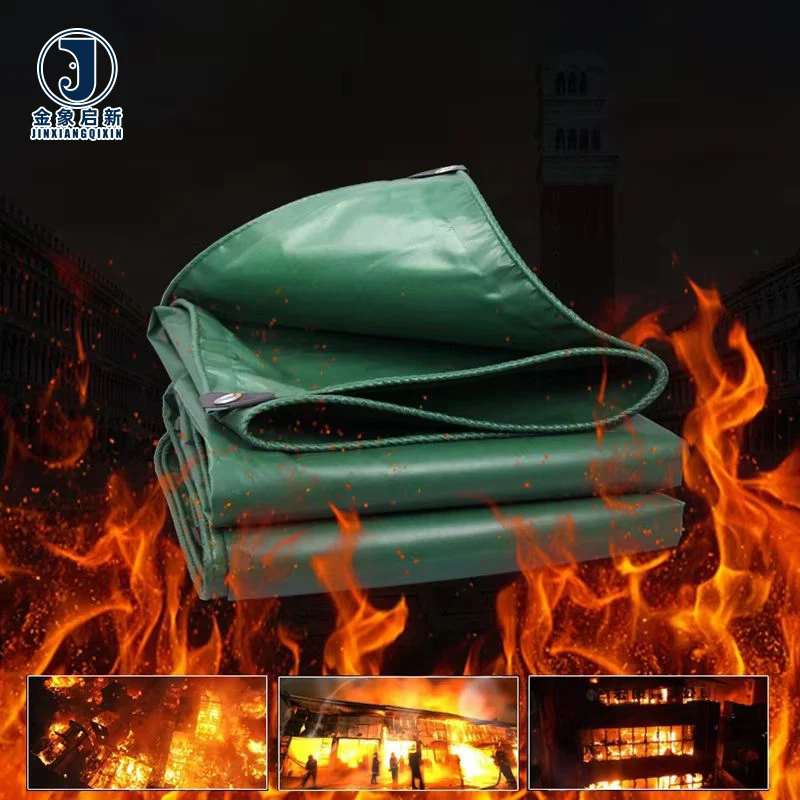
| Key Features | Water resistant, flame retardant (grade not stated — confirm grade required for your market), waterproof, anti-UV (test basis not stated — request test report for specified grade) |
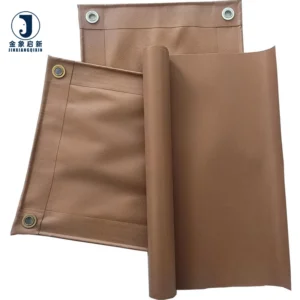
| Surface Finish | Smooth, soft with leather-like texture |
| Fabrication Method | Hot air weldable |
| Packaging | Roll packing, bale packing, carton |
| Certification | ISO, CE |
Application Suitability
| Application | Exposure & Requirement |
|---|---|
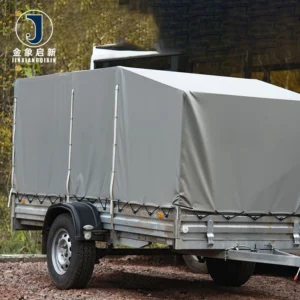
| Truck and trailer covers | Constant flexing at load points, road abrasion, weather and UV exposure, need for welded seams that match fabric strength |
| Machine and equipment covers | Dust and moisture ingress, outdoor storage, repeated removal and refitting, abrasion against sharp edges |
| Awning and tent structures | Tensile loading under wind, prolonged sun exposure, flame retardant compliance for public assembly, hot air welded panel joins |
| Car covers | Paint surface protection, UV degradation prevention, water pooling resistance, soft inner face to prevent scratching |
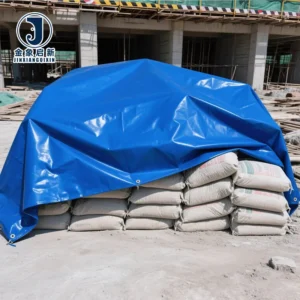
| Wood and timber covers | Moisture ingress prevention, wind uplift resistance, long-term outdoor stacking exposure |
Why PVC Coated Tarpaulin Fabric Specifications Get Misquoted and What to Demand
GSM on paper means nothing without a test method and a batch record behind it.
Technical buyers frequently receive PVC coated fabric where the quoted weight does not match what arrives at the loading dock. The coating thickness varies across the roll width, and the base fabric denier may differ from what was specified. When this PVC coated polyester fabric is destined for truck covers or tensioned awning structures, even a small deviation in coating weight alters how the material behaves at welded seams. [NEED_CITE: ISO 1421 tensile and tear test methods for coated fabrics] Without a pre-shipment inspection record tied to the specific batch, the receiving warehouse has no baseline to verify against.
Coating Method and Base Fabric Construction
The 500D-500D polyester base fabric in this PVC coated polyester tarpaulin provides a balanced warp and weft construction that distributes tensile load evenly in both directions. Knife coating applies PVC to both faces of the woven substrate, creating a mechanical and chemical bond that prevents moisture ingress between coating and yarn. This double-sided coating method produces the smooth, leather-like surface texture that distinguishes PVC coated fabric from the stiff woven feel of PE alternatives.
Welded Seam Performance at Flex Points
When fabricators hot air weld this PVC coated fabric, the coating layers on both sides fuse together at the seam, creating a join that can approach the strength of the parent material. This matters most in truck and trailer covers where the fabric flexes repeatedly under wind load and road vibration. A seam that fails before the fabric does is typically the result of welding temperature or speed mismatched to the coating formulation. [NEED_CITE: hot air welding parameters for PVC coated polyester substrates] Requesting the manufacturer’s recommended welding parameters for this specific coating weight prevents field failures that no amount of fabric strength can compensate for.
How Base Fabric Denier and Coating Weight Interact
The 500D-500D yarn count in the base fabric determines how much tensile force individual yarns can carry before breaking, while the PVC coating weight on each face controls abrasion resistance, waterproof sealing, and the surface texture. Coating weight alone does not define strength — a heavier coating on a lighter base fabric produces a stiff material that cracks at fold points, while a lighter coating on a 500D substrate preserves drape and flexibility without sacrificing tear resistance. [NEED_CITE: relationship between denier, coating weight and tear propagation in coated fabrics] The double-sided knife coating process ensures that PVC penetrates the woven structure rather than sitting only on the surface, which is critical for peel strength when the fabric is welded or mechanically fastened. Surface finish — smooth and leather-like in this case — affects how dirt and moisture release during cleaning, and how well printed branding or pattern coatings adhere during secondary finishing.
The Hidden Cost of Specifying PVC Coated Fabric on Price Per Kilogram Alone
When procurement decisions focus on unit price without locking coating weight, base fabric denier, and treatment grades to a test standard, the consequences surface after the container arrives. Rolls that are lighter than quoted GSM produce covers that puncture at tie-down points and split at welded seams within the first season of use. Flame retardant claims unsupported by a grade-specific test report lead to rejected inspections on construction sites and public event venues. Colour variation between rolls in the same order becomes visible the moment panels are installed side by side on an awning or truck curtain. [NEED_CITE: coating adhesion and peel strength test methods for PVC tarpaulin] These failures trace back to specifications that left critical parameters open to interpretation.
Why Source This PVC Coated Polyester Fabric Here
Three full production lines with 36 sets of professional coating equipment support consistent output across multiple roll orders, so batch-to-batch coating weight and colour remain within tolerance. A 10-person R&D team develops samples within days when custom widths, colours, or treatment grades are required, rather than forcing buyers into stock specifications. Dedicated QA and QC at every production stage — including 100% inspection before shipment — means coating thickness, adhesion, and surface quality are verified on every roll, not sampled randomly. Nearly 30 years of focused production on PVC coated fabric has built deep process control over coating weight accuracy and base fabric adhesion. The material specification sheet accompanying each shipment documents GSM, base fabric construction, and coating method, giving receiving warehouses a verifiable baseline. [NEED_CITE: DIN 4102 fire classification for building materials and textile structures]
Documentation & Verification
- Material specification sheet stating GSM, 500D-500D base fabric denier, and double-sided coating weight for each roll batch
- Test report for flame retardant and anti-UV grades, available upon specification of required standard
- Pre-shipment inspection record documenting coating adhesion, thickness consistency, and surface quality
- ISO and CE certificates with batch traceability linked to the production run
- Roll packing list with individual roll weights and dimensions for warehouse receiving verification
Fabrication, Handling & Storage
- Hot air weld this 500D-500D PVC coated polyester fabric at temperatures matched to the coating formulation — request parameters before production
- Store rolls upright on end cores to prevent flat spots and permanent creasing on the smooth leather-like surface
- Allow cold-stored rolls to acclimatise before unrolling to prevent coating micro-cracking at low temperatures
- Use PVC-compatible cleaners only; solvent-based products may soften the double-sided coating and reduce surface integrity
- Plan cutting layouts to minimise off-cuts from roll width, and align welded seams away from maximum flex points
What We Need From Your Inquiry
To recommend the correct coating weight and treatment grade, share the end-use application, the environmental exposure conditions, and any fire safety or compliance standards your market requires. Specify whether you need roll stock by width and length, or finished cut-to-size covers with welded seams and edge reinforcement. Confirm the colour reference and whether multiple rolls must match for side-by-side installation.
Frequently Asked Questions
Q: How do I verify the GSM and coating weight of PVC coated fabric when the container arrives?
A: Each shipment includes a material specification sheet documenting the quoted GSM, 500D-500D base fabric construction, and coating weight. We recommend cutting a measured sample from each roll and weighing it on a calibrated scale to confirm it matches the specification before cutting or fabrication begins.
Q: Which flame retardant standard does this PVC coated polyester fabric meet?
A: Flame retardant treatment is available in multiple grades depending on your market requirements. Specify the standard applicable to your project — such as B1, M2, or NFPA 701 — and we will supply the corresponding test report with the batch documentation.
Q: When is 500D-500D base fabric sufficient versus a heavier denier?
A: The 500D-500D construction suits truck covers, awnings, and equipment covers where moderate tensile loading and regular flexing occur. Heavier base fabrics are specified when the application involves extreme wind loading, large unsupported spans, or high point-loads at tie-down fixings.
Q: What hot air welding parameters suit this double-sided PVC coated polyester fabric?
A: Welding temperature and speed depend on the specific coating weight and formulation. Request the recommended parameters for your batch before beginning production, and run a test weld on an off-cut to confirm seam peel strength matches the parent fabric.
Q: How do you ensure colour consistency across multiple rolls in a single order?
A: Every roll in a batch order is produced from the same coating mix and inspected under controlled lighting before packing. The pre-shipment inspection record documents colour consistency, and we can ship a reference sample ahead for your approval before container loading.