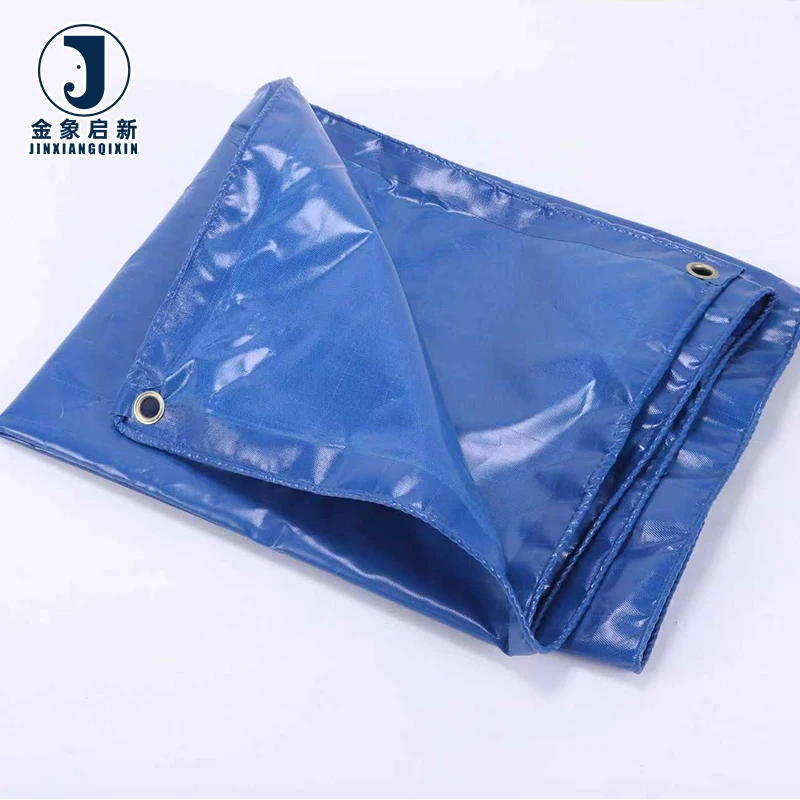
Process Control Depth — Nearly 30 years of coating formulation and adhesion monitoring ensures every roll of PVC coated tarpaulin leaves the line with verified GSM and consistent double-side coverage.
Technical Specifications
| Parameter | Value |
|---|---|
| Product Type | PVC Coated Tarpaulin |
| Base Fabric | Polyester |
| Yarn Count | 500D-500D |
| Coating Material | PVC (double-sided) |
| Thickness Measurement | 450-900 g/m² (confirm specific grade required) |
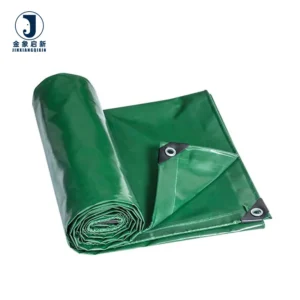
| Surface Characteristics | Smooth, soft, leather-like texture |
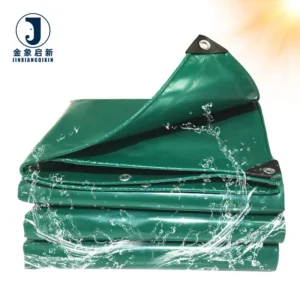
| Waterproof Performance | Fully coated, overall sealing |
| Abrasion Resistance | Very strong |
| UV Resistance | Anti-UV treatment available — confirm test basis for your market |
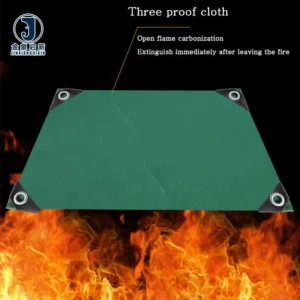
| Flame Retardancy | Flame-retardant grades customizable — confirm standard required (e.g., B1 / M2 / NFPA 701 / DIN 4102) |
| Repairability | Hot air weldable |
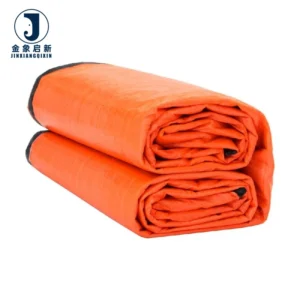
| Color | Customizable |
| Certifications | ISO, CE |
Application Suitability
| Application | Exposure & Requirement |
|---|---|
| Truck and trailer side curtains | Constant flexing at load points, road spray, UV exposure, abrasion from tie-down straps |
| Machine and equipment covers | Outdoor storage, dust ingress prevention, rain exposure, repeated removal and re-fitting |
| Wood pile and bulk stock covers | Prolonged water contact, UV degradation risk, wind-induced billowing and chafing |
| Awning and tent structures | Tensile load under wind, seam integrity at pole points, fire classification compliance for public spaces |
| Industrial load wrapping | Flex-point stress, forklift and edge abrasion, weather during yard staging |
Why Coating Adhesion Matters More Than GSM for PVC Coated Tarpaulin
A 650 GSM roll with poor adhesion will delaminate before a lighter roll with strong coating bond fails.
Technical buyers often specify PVC coated tarpaulin by weight alone, yet the bond between the PVC layer and the 500D-500D polyester base determines whether the fabric survives repeated flexing and field welding. When adhesion is inadequate, the coating peels at cut edges and weld seams under mechanical stress, leaving the base fabric exposed to moisture and UV [NEED_CITE: peel adhesion test methods for coated fabrics per ISO 2411]. This failure mode is invisible at the time of delivery and only appears after weeks of service, making incoming inspection of GSM alone an insufficient gate.
Base Fabric Denier and Its Role in Tear Propagation
The 500D-500D polyester yarn count defines the denier of both warp and weft threads in the base fabric. Higher denier means thicker individual yarns, which directly resist tear propagation when a puncture or cut occurs under load. For truck side curtains and trailer covers that experience constant flex-point stress, this base structure prevents a small abrasion from developing into a full panel split. The PVC coating adds surface protection, but the base fabric carries the structural load.
Coating Method and Waterproof Integrity
Double-sided PVC coating encapsulates the polyester base fabric completely, eliminating the uncoated surfaces where moisture can penetrate through capillary action. This overall coating sealing is what separates PVC coated tarpaulin from laminated constructions where edge exposure remains a vulnerability. The smooth leather-like surface finish also reduces dirt adhesion and simplifies field cleaning, which matters for fabric that remains installed on transport equipment or outdoor structures for extended periods [NEED_CITE: coating adhesion and waterproof integrity standards for technical textiles].
Reading the Specification Sheet Correctly
The 450-900 g/m² range covers multiple grades within this product family, and the correct grade depends on the mechanical load and exposure profile of the end application. GSM alone does not define strength — a fabric with 500D-500D denier and moderate coating weight can outperform a higher-GSM fabric built on a lighter base yarn. The relationship between base denier, coating thickness, and finished tensile performance is non-linear, which is why the material specification sheet should state all three values independently rather than relying on a single weight figure. Anti-UV and flame-retardant treatments are available across the range, but the specific grade and test standard must be confirmed before production, as requirements vary significantly between markets.
The Hidden Cost of Specifying on Price per Kilogram
When PVC coated polyester fabric is selected primarily on cost per roll, the typical outcome is a lighter coating applied to a lower-denier base that meets the quoted GSM on paper but fails at the weld seams within months. Welded joints concentrate stress at the point where the load flexes most, and if the coating bond or base fabric strength is marginal, the seam fails before the field fabric does [NEED_CITE: welded seam performance in heavy-duty tarpaulin applications]. Roll-to-roll colour inconsistency compounds the problem when panels from different production batches are installed side by side on the same truck or awning structure, forcing rework that costs more than the initial savings.
Why Source This PVC Coated Fabric Here
Deep process control over coating weight and adhesion has been refined across nearly 30 years of continuous production on coated fabric, giving consistent results across the full 450-900 g/m² range. Three full production lines and 36 sets of professional equipment support bulk roll output with reliable scheduling for fleet and contractor orders. A 10-person R&D team handles custom width, colour matching, and sample development, producing samples within days rather than weeks. Dedicated QA/QC at every production stage includes 100% pre-shipment inspection, so coating weight and adhesion consistency are verified before the roll leaves the facility. Material specifications are documented per order, not carried over from generic catalogues.
Documentation & Verification
- Material spec sheet stating confirmed GSM, 500D-500D base denier, and double-side PVC coating method
- UV and flame-retardant test reports referenced to the standard required by your target market
- Pre-shipment inspection record confirming coating weight, adhesion, and colour consistency per roll
- ISO and CE certificates matched to the specific product batch
- Certificate of origin and customs documentation for international shipment
Fabrication, Handling & Storage
- Hot air welding parameters should be tested on a sample piece of the selected GSM grade before full fabrication
- Smooth leather-like surface tolerates standard PVC-compatible cleaners; avoid solvent-based products that attack the coating
- Store rolls horizontally on racking to prevent permanent creasing in the 500D-500D polyester base
- Cold-weather handling requires gradual unrolling to prevent coating stiffness cracking at fold lines
- Custom width rolls reduce off-cut waste when fabricating fitted truck or trailer covers
What We Need to Quote Accurately
Provide the specific application and exposure conditions — truck side curtain, outdoor equipment cover, awning structure — along with the required GSM grade from the 450-900 g/m² range. Confirm the fire classification standard your market mandates so the correct flame-retardant treatment is specified. Let us know if you need rolls at custom widths or if finished cut-and-welded panels are required, and whether a pre-production sample is needed for approval before the full order runs.
Frequently Asked Questions
Q: How is the GSM of a 500D PVC coated tarpaulin verified on arrival — and what tolerance is acceptable?
A: Weigh a measured sample from each roll against the material specification sheet. Industry practice accepts minor variance, but the confirmed grade must fall within the agreed tolerance. Request the pre-shipment inspection record that documents per-roll weight verification before dispatch.
Q: Which flame-retardant standard applies to my market, and how do I request a test report?
A: Standards vary — B1 per DIN 4102, M2, NFPA 701, or others depending on your country and application. Specify the required standard at inquiry stage so the correct treatment is applied and a matching test report is issued with your shipment documentation.
Q: How does 500D base fabric denier relate to tensile and tear strength in finished coated fabric?
A: Denier defines individual yarn thickness. The 500D-500D count provides a base structure that resists tear propagation, while the PVC coating contributes surface protection. Both values together determine real-world strength, not GSM alone.
Q: How does double-sided PVC coating compare to single-side coating for weld seam strength?
A: Double-sided coating ensures both contact surfaces at a weld joint are PVC, producing a homogeneous bond during hot air welding. Single-side constructions leave base fabric exposed at the weld interface, reducing seam integrity under flex stress.
Q: What UV test basis should I request to validate anti-UV claims for outdoor tarpaulin?
A: Request a test report referencing a recognized standard such as ISO 4892 or equivalent, stating the exposure hours and retention of tensile properties. This confirms the anti-UV treatment is formulated for the service life expected in your application.