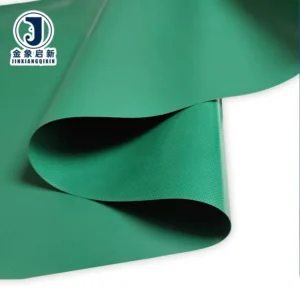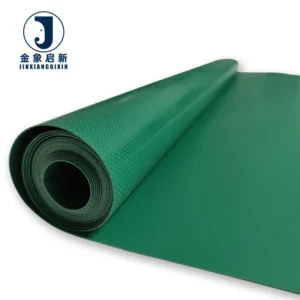
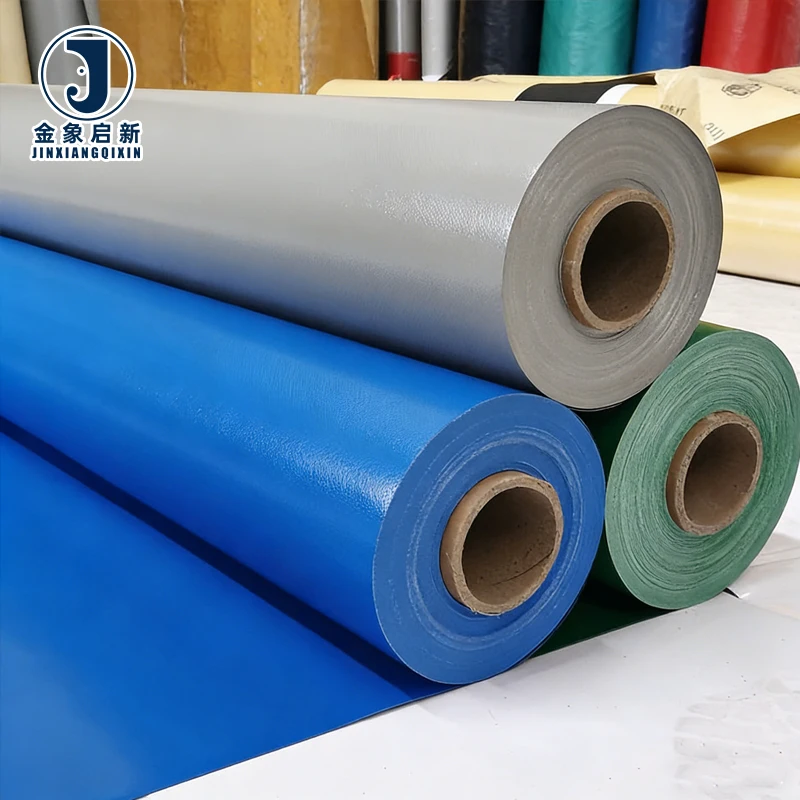
Coated Fabric Expertise — Deep process control over coating weight and adhesion ensures every PVC Coated Tarpaulin Roll leaves the line with verified GSM matching the specification sheet.
Technical Specifications
| Parameter | Value |
|---|---|
| Product Type | PVC Coated Tarpaulin Roll |
| Material | PVC + High-strength polyester mesh fabric |
| Coating Technology | Laminated technology & Hot-melt Coating technology |
| Weight (GSM) | 350gsm / 420gsm / 500gsm / 550gsm / 600gsm / 750gsm |
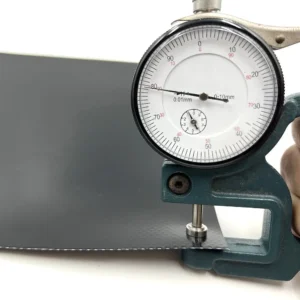
| Total Thickness | 0.32mm / 0.35mm / 0.4mm / 0.45mm / 0.5mm / 0.65mm |
| Roll Width | 2m / 2.1m |
| Roll Length | 75m (2m width) / 50m (2.1m width) |
| Color Options | Blue / Red / Yellow / Light Blue / Grey / Customized |
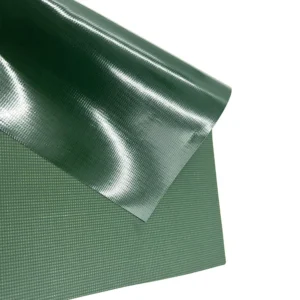
| Surface Finish | Glossy Surface or Matt Surface |
| Waterproof | Double-sided 100% waterproof coated construction |
| Key Features | Cold crack resistance, anti-mildew, anti-static treatment (grade not stated in source), high tenacity polyester yarns, good flexibility, outstanding tearing strength for welding |
| Flame Retardant | Available in flame retardant grades — confirm the grade required for your market |
| UV Stability | Sunproof treatment available — test basis to be confirmed per grade |
| Standards | ISO, CE |
Application Suitability
| Application | Exposure & Requirement |
|---|---|
| Truck awning and lorry tarpaulin | Constant flexing at load points, road abrasion, UV and weather exposure — requires reliable weld strength at seams |
| Tent cover and event structure | Wind loading, repeated assembly and teardown, crease resistance — demands high tear strength and flexible coating |
| Cargo ship cover | Salt spray, heavy moisture, prolonged sun exposure — requires fully waterproof coated construction with anti-mildew treatment |
| Fish tank and pool lining | Permanent water contact, hydrostatic pressure, puncture risk from substrate — needs consistent coating adhesion with no pinholes |
| Inflatable and membrane structure | Internal air pressure, repeated inflation cycles, UV exposure — demands high tensile baseline from polyester mesh base fabric |
Why Coating Weight and Base Fabric Denier Matter More Than GSM Alone
The number on the spec sheet only matters when the base fabric construction and coating method are defined alongside it.
Technical buyers often receive a PVC coated tarpaulin roll where the quoted GSM does not match the material on the scale. A 550gsm roll built on a low-denier mesh with heavy filler in the PVC compound will behave very differently from a 550gsm roll woven from high-tenacity polyester yarns with controlled coating weight. The tensile and tear performance diverge sharply even though the scale reads the same [NEED_CITE: tensile and tear test methods for coated fabrics per ISO 1421]. This is why every roll from this production line ships with documented base fabric construction, coating method, and measured GSM — not just a single weight figure.
Laminated Versus Hot-Melt Coating: How the Bond Is Built
The PVC coated tarpaulin roll range is produced using both laminated technology and hot-melt coating technology. Laminated coating bonds a pre-formed PVC film to the polyester mesh under heat and pressure, producing a uniform surface with consistent thickness across the roll width. Hot-melt coating applies liquid PVC compound directly into the* For fabricators who weld seams on truck awnings or inflatable structures, the coating method affects how the material responds to heat at the weld line and how the seam holds under flex load.
Colour and Finish Consistency Across the Production Batch
Glossy and matt surface options are available across the full GSM range. Batch-to-batch colour variation is a common source of rework when multiple rolls are installed side by side on a tent or truck curtain. The production process controls pigment dispersion and coating temperature to maintain colour reference consistency within the same order. Custom colours are developed with sample approval before the full run proceeds, so the approved swatch matches the delivered roll [NEED_CITE: colour fastness standards for coated technical textiles].
Reading the Specification Sheet: What Each Parameter Controls
GSM and thickness together define the material envelope, but the base fabric does the structural work. High-tenacity polyester yarns in the mesh determine the tensile baseline — the force the fabric withstands before breaking. The weft and warp density of the mesh controls how a tear propagates once initiated; a tighter weave arrests tear spread more effectively than an open mesh at the same GSM. Coating weight contributes abrasion resistance and waterproofing but cannot compensate for a weak base fabric. The two available roll widths — 2m and 2.1m — affect fabrication layout: a wider roll reduces the number of welded seams on large covers, cutting labour and potential failure points. Thickness correlates with stiffness, which influences how the material handles during cutting and folding on the shop floor.
What Happens When the Wrong Grade Reaches the Workshop
Selecting a lighter GSM than the application demands leads to early failure at stress points — the fabric tears where the load concentrates, often before the coating shows visible wear. A flame retardant grade claimed without a matching test report causes problems at the inspection stage when the site safety officer asks for documentation and none exists [NEED_CITE: fire classification standards for temporary structures and tensioned membranes]. Colour mismatch between rolls forces the fabricator to sort and reassign material, delaying the build. These are not theoretical risks; they appear repeatedly in post-delivery dispute records across the coated fabric supply chain.
Why Technical Buyers Source This PVC Coated Tarpaulin Roll Range Here
Three full production lines and 36 sets of professional equipment support bulk roll output with consistent coating weight control across the run. A 10-person R&D team handles material selection, custom colour matching, and sample development within days rather than weeks. Every roll passes through dedicated QA/QC with 100% inspection before dispatch — weight, thickness, and visual checks against the agreed specification. ISO and CE certification underpin the documentation package. Custom widths, colours, and finish product sizes are handled within the same production system, so lead times on non-standard orders remain predictable.
Documentation & Verification
- Material specification sheet stating exact GSM, base fabric construction, coating method, and colour reference per roll
- Test reports for UV stability and flame retardant grades provided where applicable with documented test basis
- Weight verification per roll against the stated GSM before dispatch
- Pre-shipment inspection record covering thickness, coating adhesion, and visual quality
- Roll packing list with batch traceability and certificate of origin for customs compliance
Fabrication, Handling & Storage
- Hot-melt coated grades respond well to high-frequency welding; adjust dwell time to coating thickness for clean seam peel strength
- Laminated grades require controlled heat input at the weld bar to avoid delamination between PVC film and polyester mesh
- Store rolls upright on pallets in dry conditions; horizontal stacking of heavy 750gsm rolls can cause permanent crease marks
- Allow cold-stored rolls to reach workshop temperature before unrolling to prevent coating crack at low-temperature flex points
- Glossy surface rolls should be handled with clean gloves to avoid fingerprint marks that affect print or adhesive bonding
- Cut patterns to maximise yield from 2m or 2.1m roll widths, placing weld seams away from high-flex zones on the finished cover
Moving Your Specification Forward
Share the end-use application, exposure conditions, and any fire safety or compliance requirements for your target market so the correct GSM grade and treatment can be confirmed. Specify whether you need roll stock or finished cut sizes, along with colour reference and surface finish preference. If your project requires welding or fabrication, indicate the joining method so the coating technology — laminated or hot-melt — can be matched accordingly. Sample development is available for approval before production begins.
Frequently Asked Questions
Q: How is GSM verified per roll and what tolerance applies on delivery?
A: Each roll is weighed and measured during the pre-shipment inspection process. The measured GSM is recorded against the specification sheet value. The inspection record accompanies the shipment so you can cross-reference the delivered material with the quoted grade. Any roll falling outside the agreed tolerance is flagged before dispatch rather than shipped and disputed later.
Q: What is the difference between laminated and hot-melt coating in terms of weld behaviour?
A: Laminated coating bonds a PVC film to the mesh surface, producing a smooth finish that welds cleanly with consistent heat settings. Hot-melt coating penetrates deeper into the mesh structure, creating stronger mechanical adhesion but requiring adjusted welding parameters. Your fabrication method determines which coating technology suits the project best.
Q: How do I match GSM and thickness to my tensile and tear strength requirement?
A: GSM alone does not predict strength — the base fabric denier and weave density carry the structural load. Share your application load case and the technical team will recommend a GSM grade and base fabric construction that meets the tensile and tear demand, backed by test data where available.
Q: What flame retardant grades are available, and are they certified for my target market?
A: Flame retardant treatment is available across the range, but the applicable grade depends on your local fire safety regulations and the end-use environment. Provide the standard or classification required for your market so the correct grade can be confirmed and supported with a test report.
Q: How is batch-to-batch colour consistency controlled across multiple rolls in one order?
A: Pigment formulation and coating temperature are controlled throughout the production run to maintain the approved colour reference. All rolls in a single order are produced from the same compound batch where possible. A colour check is performed during pre-shipment inspection to confirm visual consistency before the rolls are packed together.