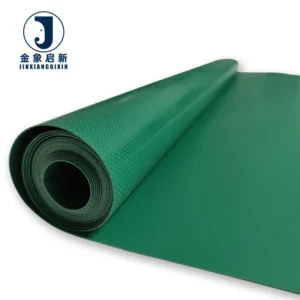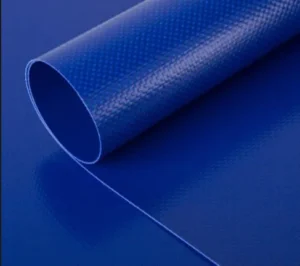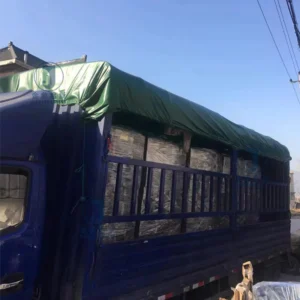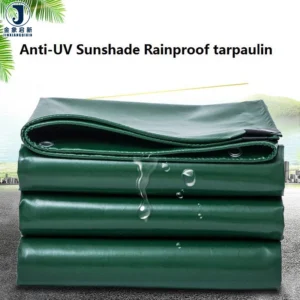
Coating Process Control — Nearly three decades of PVC coating experience applied to every roll of agricultural tarpaulin, with dedicated QA at each production stage ensuring the coating weight and base fabric adhesion meet specification before dispatch.
Technical Specifications
| Parameter | Value |
|---|---|
| Product Type | PVC Coated Tarpaulin Roll |
| Coating Material | PVC |
| Waterproof Construction | Yes |
| Base Fabric Style | Plain woven / warp knitted |
| Anti-Static Treatment | Available — surface resistance value and test standard to be confirmed per order |
| Tear Resistance | Claimed — test standard not stated, verify against specific grade |
| Color | Customizable colors available |
| Flame Retardant Grade | Not stated — confirm the grade required for your market |
| UV Treatment | Not stated — specify UV stabilisation level based on exposure duration |
| Weight (GSM) | Not stated — request exact GSM for the grade quoted |
| Base Fabric Denier | Not stated — request specification sheet for denier and mesh count |
| Width | Custom widths available — confirm maximum width per production line |
| Roll Length | Custom lengths available |
Application Suitability
| Application | Exposure & Requirement |
|---|---|
| Poultry broiler and chicken farm side-wall covers | Constant high humidity, ammonia vapour, repeated cleaning with water and chemicals, thermal cycling between day and night |
| Pig farm tent and enclosure structures | Direct animal contact causing abrasion and puncture load, moisture from washing, wind tension on frame-mounted panels |
| Sheep farm shelter roofing | Sustained UV exposure in open-field settings, rain and snow load, seasonal wind uplift on tensioned fabric |
| Agricultural waterproof shelters and storage covers | Standing water exposure, dust accumulation, mechanical stress from loading and unloading underneath |
Why Farm Tarpaulin Fails Before the Expected Service Life Ends
The failure almost always traces back to a specification that was never verified against a test report.
Buyers of agricultural covers frequently receive rolls that claim waterproof and anti-static performance but arrive without documentation to back those claims. When humidity inside a poultry house reaches saturation levels daily, a coating that is too thin or poorly bonded to the base fabric will delaminate within months. We have seen farm operators replace covers repeatedly because the original specification lacked the detail needed to ensure coating adhesion survived ammonia exposure and thermal cycling. [NEED_CITE: coating adhesion requirements for PVC tarpaulin in high-humidity agricultural environments]
How PVC Coating Weight Determines Waterproof Integrity in Livestock Housing
In a poultry or pig farm, the tarpaulin acts as the primary membrane separating the controlled internal environment from external weather. The PVC Coated Tarpaulin base fabric denier coating weight GSM relationship is critical here: a heavier coating fills the weave interstices more completely, leaving no capillary path for moisture to penetrate. For farm environments where the interior is washed down regularly with pressurised water, incomplete coating penetration at the weave level leads to water tracking along yarn paths. Requesting the exact coating weight per square metre, separate from the total GSM, allows you to verify that the barrier layer is sufficient for sustained moisture exposure.
What Anti-Static Claims Must Be Supported by in Farm Applications
Dust accumulation on interior surfaces of poultry houses and feed storage covers creates hygiene risk and can interfere with ventilation systems. Anti-static treatment reduces the electrostatic attraction that holds fine particulate to the tarpaulin surface. However, an anti-static claim without a surface resistance test value is meaningless for procurement. When specifying PVC Coated Tarpaulin for environments where dust control matters, require a surface resistance reading tested to a recognised standard before approving production. [NEED_CITE: surface resistance test methods for anti-static PVC coated fabrics]
Reading the Relationship Between Base Fabric Construction and Tear Performance
The base fabric is the structural skeleton of any coated tarpaulin. A warp knitted construction distributes tension across multiple yarn paths simultaneously, which limits tear propagation when a puncture occurs at a stress point. Plain woven fabrics, by contrast, rely on orthogonal yarn interlacing; when one yarn breaks under load, the tear tends to follow the weave line. For tensioned farm tent structures where wind uplift and animal contact generate point loads, the base fabric denier and mesh count directly influence whether a small nick grows into a structural failure. Both denier and coating weight must be evaluated together, as a heavy coating on a low-denier base will crack before the fabric tears, while a light coating on a high-denier base may leave the weave insufficiently protected.
The Hidden Cost of Undocumented Colour Variation Across Multiple Farm Structures
When a farm operation covers several buildings in the same season, the covers are often installed side by side and visible from the approach road. Colour variation between rolls produced in different batches creates an inconsistent appearance that undermines the professional presentation of the facility. Beyond aesthetics, colour inconsistency can signal variation in the coating formulation itself, which may correlate with differences in UV stabiliser loading or plasticiser content. Requiring a pre-shipment colour check against an approved reference swatch, roll by roll, catches this problem before the material leaves the factory. [NEED_CITE: batch-to-batch colour consistency standards for PVC coated tarpaulin]
Why Coated Fabric Sourced Here Meets Farm Cover Demands
Three full production lines running dedicated PVC coating processes support bulk roll volumes with consistent lead times for agricultural orders. Each roll undergoes inspection at every production stage, not only at final packing, so coating defects are caught before they ship. The R&D team develops custom colour samples within days when farm operators need to match existing structures or corporate branding. Pre-shipment inspection covers GSM verification and colour consistency on a roll-by-roll basis, addressing the two most common complaints from agricultural tarpaulin buyers. ISO and CE certified production systems apply to the manufacturing process behind every roll.
Documentation & Verification
- Material specification sheet listing exact GSM, base fabric denier, and mesh count for the quoted grade
- Pre-shipment inspection record with roll-by-roll GSM weigh-in and colour check
- Anti-static surface resistance test report when anti-static treatment is specified
- Flame retardant grade test certificate matching the grade required by the destination market
- Certificate of origin and customs documentation for cross-border agricultural supply
Fabrication, Handling & Storage
- Heat welding parameters must match the specific PVC coating thickness; request weld temperature guidance for the grade supplied
- Roll storage on flat pallets avoids permanent creasing that compromises coating integrity at fold lines
- Cut edges should be heat-sealed or hemmed to prevent moisture ingress into the base fabric weave
- Low-temperature transport requires careful unrolling; PVC becomes stiff and crack-prone in cold conditions
- Cleaning with mild detergent preserves the coating surface; avoid solvent-based agents that soften plasticiser content
What to Include in Your Enquiry
Provide the specific livestock or poultry application, including whether the cover will serve as a side-wall curtain, roof membrane, or full enclosure tent. State your target market so we can align flame retardant and anti-static grades with local regulatory requirements. Indicate the roll width and approximate annual volume, along with any colour matching or custom colour requirements for multi-structure consistency.
Frequently Asked Questions
Q: How do I verify the GSM and coating weight of farm tarpaulin rolls on delivery?
A: Cut a sample of known dimensions from each roll, weigh it on a calibrated scale, and calculate GSM from weight divided by area. Compare the result against the specification sheet provided with the shipment. Significant deviation from the stated value indicates the wrong grade was supplied or coating weight was reduced during production. Request a weigh-in inspection record before dispatch to catch this upstream.
Q: What anti-static test standard should poultry and livestock farm covers meet?
A: Surface resistance should be measured according to a recognised method such as EN 1149 or an equivalent standard. The reported value indicates how effectively static charge dissipates across the tarpaulin surface. Values in the dissipative range are typically specified for environments where dust control matters. Always require the test report before approving production of anti-static specified rolls.
Q: Which base fabric construction delivers better tear resistance for tensioned farm tents?
A: Warp knitted fabrics distribute stress across multiple yarn paths, limiting tear propagation from puncture points. Plain woven fabrics channel tears along the weave direction once a yarn breaks. For farm structures under wind uplift or animal contact stress, the knitted construction generally performs better. Confirm the mesh count and denier to validate that the base fabric can handle your specific tension loads.
Q: How should UV treatment be specified for agricultural tarpaulin in continuous sunlight?
A: Specify the UV stabiliser level based on the expected daily sun exposure hours at the installation site. Request a test report showing UV degradation resistance measured to a recognised standard. Without documented test data, a UV treatment claim provides no assurance that the coating will resist embrittlement and colour fading over sustained outdoor exposure in open-field farm conditions.
Q: How is colour consistency controlled across rolls covering multiple farm structures?
A: Each production batch is matched against an approved reference swatch under controlled lighting conditions. Pre-shipment inspection includes a roll-by-roll colour comparison to catch batch-to-batch variation before dispatch. For projects covering several buildings side by side, requesting all rolls from a single production run minimises the risk of visible colour differences once installed.