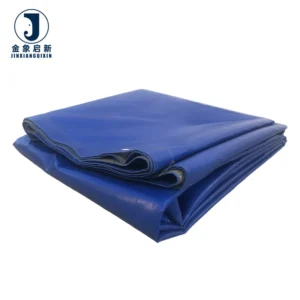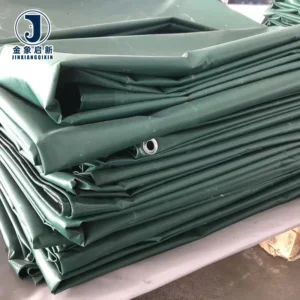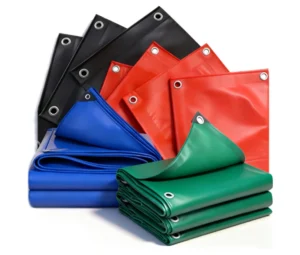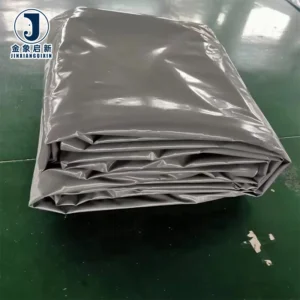
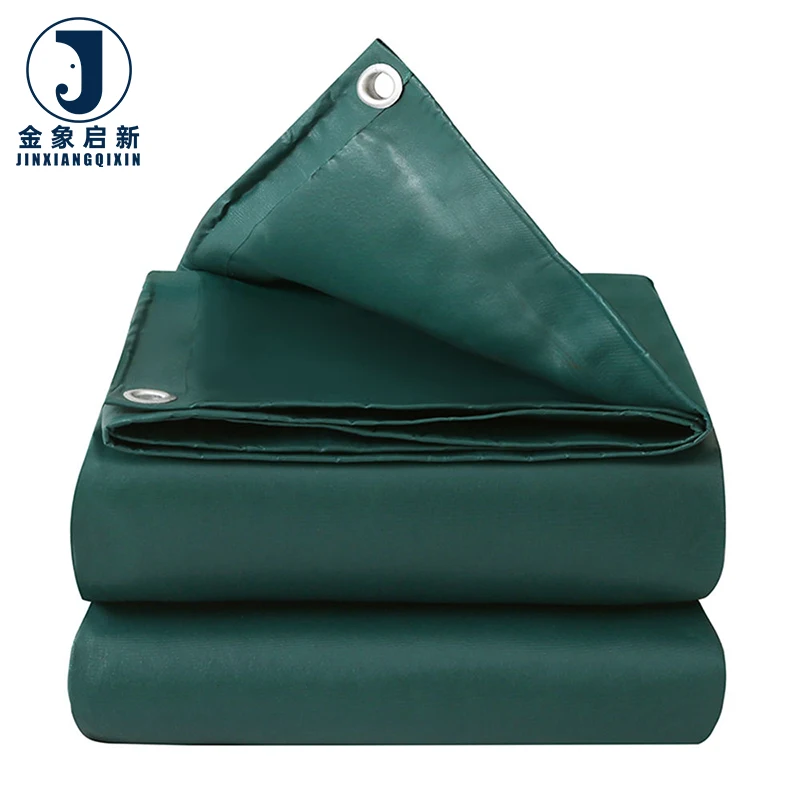
Coating Adhesion Control — Nearly 30 years of focused PVC coated fabric production ensures every roll of PVC coated tarpaulin is verified for weight, thickness, and coating adhesion before dispatch.
Technical Specifications
| Parameter | Value |
|---|---|
| Product Type | PVC Coated Tarpaulin |
| Base Material | High-strength polyester mesh fabric |
| Coating Method | Laminated technology & Hot-melt coating technology |
| Weight Options | 350gsm / 420gsm / 500gsm / 550gsm / 600gsm / 750gsm |
| Total Thickness Options | 0.32mm / 0.35mm / 0.4mm / 0.45mm / 0.5mm / 0.65mm |
| Roll Width | 2m / 2.1m |
| Roll Length | 75m (for 2m width) / 50m (for 2.1m width) |
| Standard Colors | Blue / Red / Yellow / Light blue / Grey (Customized) |
| Key Features | Waterproof, cold crack resistance, anti-mildew, color fastness, outstanding tearing strength for welding |
| Special Treatments | Flame retardant (grade not stated), anti-static (standard not stated), anti-cold, anti-mildew, 3P |
| Certifications | ISO, CE |
Application Suitability
| Application | Exposure & Requirement |
|---|---|
| Truck side curtains and trailer covers | Constant flexing, road abrasion, UV exposure, high tensile demand at tie-down points |
| Tent and awning membranes | Tensioned structure loading, prolonged weather exposure, welded seam integrity |
| Construction and scaffolding enclosure | Wind loading, debris impact, UV degradation, repeated installation and removal |
| Industrial equipment covers | Abrasion from machinery contact, waterproofing, chemical and mildew exposure |
| Marine and offshore maintenance covers | Saltwater exposure, high UV index, mechanical wear from vessel movement |
| Agricultural and aquaculture covers | Permanent moisture contact, biological growth, puncture risk from tools and stock |
Why GSM Alone Does Not Tell You the Full Story of PVC Coated Tarpaulin Strength
A quoted GSM is only meaningful when the base fabric denier, weave density and coating adhesion are specified and verified together.
Technical buyers often receive PVC coated tarpaulin that meets the stated weight on paper but fails prematurely under load. The reason is rarely the coating alone — it is the interaction between the polyester mesh structure and how the PVC bonds to it. A fabric with correct GSM but weak adhesion will delaminate at welded seams, while a lighter grade with superior hot-melt coating penetration can outperform a heavier laminated alternative in tear propagation tests. [NEED_CITE: tensile and tear test methods for coated fabrics per ISO 1421]
Hot-Melt versus Laminated Coating and Their Effect on Weld Integrity
Hot-melt coating technology forces liquid PVC into the polyester mesh under heat and pressure, creating a mechanical bond that penetrates the yarn structure. This produces PVC coated tarpaulin with higher adhesion strength at the coating-to-yarn interface, which directly improves welded seam performance. Laminated technology bonds a pre-formed PVC film to the mesh surface, offering consistent surface finish and faster production, though peel strength at the weld line depends heavily on the adhesive layer quality.
Coating Weight, Thickness and Their Relationship to Structural Performance
Total thickness in PVC coated fabric is a function of both the base fabric mass and the applied coating weight. A 750gsm grade at 0.65mm thickness carries substantially more PVC volume than a 350gsm grade at 0.32mm, which affects not only waterproofing durability but also resistance to puncture and abrasion over extended service cycles. The GSM-to-thickness mapping must be evaluated against the specific mechanical demands of the end application — higher GSM is not automatically the correct choice for every tensioned cover. [NEED_CITE: relationship between coating weight and mechanical performance in PVC coated polyester fabrics]
Base Fabric Construction and Its Role in Tear Propagation
The high-strength polyester mesh determines how a tear initiates and propagates once the coating is breached. Yarn denier and the warp-weft density together define the fabric’s resistance to tear spread. A tight weave with high-tenacity yarns arrests tear growth at the next yarn intersection, while a loose weave allows a puncture to extend rapidly across the panel. This is why two PVC coated tarpaulin rolls with identical GSM can show very different field performance when subjected to point loading or impact damage.
What Happens When the Wrong Grade Reaches the Production Floor
A fabric specified without matching GSM, coating method and treatment to the actual end use creates downstream failures that are expensive to trace. Flame retardant treatment claimed without a supporting test report can cause a tent or building enclosure to fail site inspection, halting an entire project. Colour variation between rolls in a single order becomes visible once panels are installed side by side, forcing the fabricator to reject the batch and reorder. [NEED_CITE: fire classification requirements for temporary structures and building enclosures]
Process Control That Protects Your Specification
Coating weight and adhesion are monitored at every stage of the production line, not only at final inspection. The R&D team supports material selection for specific applications, including pattern printing and custom sizing, ensuring the PVC coated tarpaulin you sample is the same material that ships in bulk. Roll-to-roll colour consistency is controlled through batch-level pigment dosing and inline coating thickness checks. Pre-shipment inspection covers 100% of rolls, recording verified GSM and thickness against your purchase specification.
Documentation & Verification
- Material specification sheet stating GSM, base fabric type, coating method and colour reference for every roll
- Weight verification per roll against the stated GSM before dispatch
- Test reports for UV resistance and flame retardant grades issued where applicable with each order
- ISO and CE certificates and certificate of origin supplied with dispatch documentation
- Pre-shipment inspection record documenting batch-to-batch consistency checks
Fabrication, Handling & Storage
- Hot-melt coated rolls tolerate higher heat-seal temperatures, improving weld speed on automated machines
- Store rolls upright on core to prevent edge creasing that affects lay-flat behaviour during cutting
- Allow cold-stored rolls to reach workshop temperature before unrolling to avoid coating micro-cracking
- Use high-frequency or hot-air welding at seams for maximum tear resistance on 600gsm and above grades
- Wipe PVC surface with mild detergent only — solvent cleaners can degrade the plasticiser in the coating layer
How to Specify This PVC Coated Tarpaulin for Your Application
To receive an accurate material recommendation, provide the end-use application and the mechanical or environmental loads the fabric will face. State any flame retardant, anti-static or UV treatment requirements along with the compliance standard your market demands. Confirm whether you need roll stock by the container load or finished cut sizes with edge reinforcement and eyelets, and indicate target colour references or Pantone codes for batch consistency.
Frequently Asked Questions
Q: How is GSM verified at each production stage and on pre-shipment inspection?
A: Coating weight is monitored inline during the hot-melt or laminated process, with sample cuts taken at set intervals for gravimetric verification. Every roll is weighed and measured before packing, and the pre-shipment inspection record confirms that each roll meets the quoted GSM and thickness. Discrepancies are flagged and corrected before dispatch.
Q: What flame retardant grades are available and which test reports accompany them?
A: Flame retardant treatment is available for this PVC coated tarpaulin range, though the specific grade depends on your market requirement. Test reports are issued with the order where applicable. Confirm whether your project requires compliance to DIN 4102 B1, NFPA 701, M2 or another standard, and the appropriate grade and documentation will be matched to your specification.
Q: How does hot-melt coating compare with laminated coating for weld and seam strength?
A: Hot-melt coating penetrates the polyester mesh structure, creating a mechanical bond that typically supports stronger welded seams under flexing loads. Laminated coating offers a consistent surface finish suited to applications where visual uniformity is critical. The choice depends on whether your priority is seam durability under tension or surface appearance on installed panels.
Q: How is batch-to-batch colour consistency controlled across rolls in the same order?
A: Pigment dosing is controlled at the batch level, and inline coating thickness monitoring ensures uniform colour density across the roll width. Rolls within a single order are produced from the same coating batch where possible, and colour comparison is included in the pre-shipment inspection. Request a colour swatch with your sample for sign-off before bulk production.