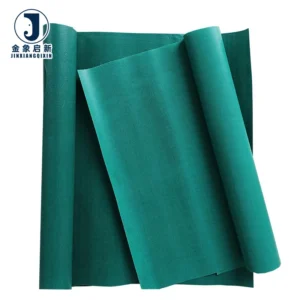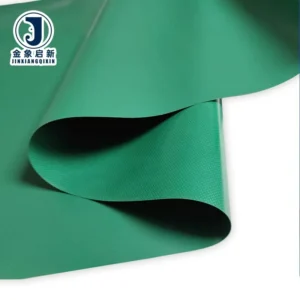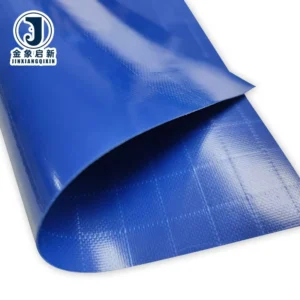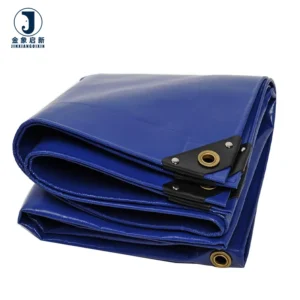
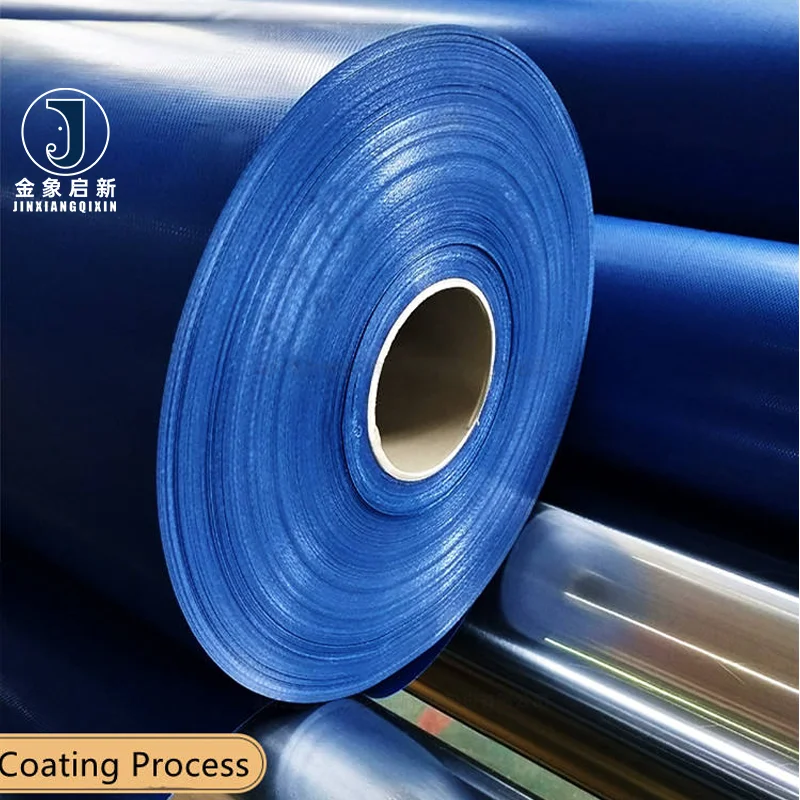
Coating Weight Control — 650 GSM verified per roll against the stated specification with in-process QA at every production stage, not just quoted on paper.
Technical Specifications
| Parameter | Value |
|---|---|
| Product Type | PVC Coated Tarpaulin Roll |
| Weight | 650 Gsm |
| Base Fabric Denier Options | 200DX300D / 500DX500D / 840DX840D / 1000DX1000D |
| Coating Material | PVC |
| Surface Finish | Available in glossy or matte |
| Temperature Range | -15°C to 70°C |
| UV Treatment | Available in UV stabilised grades — confirm the test basis required for your market |
| Flame Retardant Grade | Available in flame retardant grades — confirm the grade required for your market |
| Anti-Mildew | Anti fungal treated |
| Waterproof Construction | Fully waterproof coated fabric |
| Colour Options | Blue, yellow, black, green, white, and custom colours available |
| Printing | OEM/ODM printing available |
| Certifications | ISO and CE certified production |
Application Suitability
| Application | Exposure & Requirement |
|---|---|
| Truck and trailer side curtain | Constant flexing at load points, road debris abrasion, UV exposure from daily transit, weld seam integrity under tension |
| Tent and roof cover panels | Extended outdoor weathering, wind load tension on welded seams, rain and moisture ingress prevention |
| Outdoor structural covers | Sun exposure, temperature fluctuation across seasons, mechanical stress from wind uplift and snow load |
| General industrial tarpaulin | Multi-use handling, fold and drag abrasion, repeated deployment and storage cycles |
What "Flame Retardant" Means When the Test Report Is Missing
Every flame retardant and UV treatment claim must be backed by a named standard and a test report — not just a line on the quotation.
Technical buyers specifying PVC coated tarpaulin for structural or transport applications regularly encounter suppliers who state "FR treated" or "UV resistant" without referencing a single test method or classification grade. [NEED_CITE: flame retardant classification standards for coated fabrics including DIN 4102, M2, and NFPA 701] When the material arrives on site and the fire inspector asks for the certificate, a vague data sheet is not sufficient documentation. This is why confirming the specific grade — and receiving the corresponding test report before shipment — is a non-negotiable step in the procurement process for any PVC coated tarpaulin 650 gsm destined for regulated environments.
Base Fabric Denier and Its Role in Tensile Behaviour
The base fabric is the structural skeleton of any coated tarpaulin. This PVC coated tarpaulin 650 gsm grade is available in denier options from 200DX300D through 1000DX1000D, and the choice directly affects how the fabric behaves under load. A higher denier yarn in the warp and weft delivers greater resistance to tear propagation — critical when a puncture or cut must not spread across a tensioned panel. Fabricators welding side curtain panels or roof covers need to match denier selection to the mechanical demands of the end use, not simply default to the thickest option available.
Coating Adhesion and Weld Seam Performance
The PVC coating on this material must bond to the base fabric with sufficient adhesion strength to survive repeated flexing and thermal welding. [NEED_CITE: adhesion and peel strength test methods for PVC coated polyester fabrics] When a fabricator heat-welds two panels together, the seam is only as strong as the coating-to-yarn bond on either side of the weld line. Glossy and matte finish options are available, and the surface choice can influence weld parameter settings — matte surfaces may require adjusted temperature or dwell time compared to glossy finishes to achieve consistent seam integrity across long production runs.
Reading the Specification Beyond the GSM Number
A 650 Gsm weight tells you the mass per square metre, but it does not describe how that mass is distributed between base fabric and coating. Two rolls at the same GSM can perform very differently if one uses a heavier base fabric with a thinner coating, while the other relies on a thick coating layer over a lighter weave. The denier options available — 200DX300D, 500DX500D, 840DX840D, and 1000DX1000D — allow technical buyers to specify the structural balance they need. A higher base fabric proportion generally improves tear resistance and weld seam strength, while a heavier coating layer contributes to abrasion resistance and surface durability. The temperature operating range of -15°C to 70°C indicates the coating remains flexible in cold conditions and stable at elevated temperatures, but the actual low-temperature brittleness point and high-temperature softening behaviour depend on the specific plasticiser formulation used. [NEED_CITE: PVC coating formulation and low-temperature flexibility testing for industrial fabrics] Specifying by GSM alone without considering denier and coating ratio leaves critical performance variables to chance.
The Hidden Cost of Specifying on Price per Kilogram Alone
When buyers reduce material selection to cost per kilogram, the consequences surface after fabrication. A roll that arrives lighter than the quoted GSM may pass visual inspection but fail prematurely at stress points where the coating is too thin to protect the base fabric from moisture ingress. Colour variation between rolls in the same shipment becomes visible only after panels are installed side by side on a truck or structure, forcing costly rework. [NEED_CITE: batch colour consistency standards and delta-E measurement for coated textiles] Welded seams that fail before the fabric itself are almost always traceable to inconsistent coating weight at the weld zone — a defect that pre-shipment inspection with actual GSM measurement per roll is designed to catch before the material leaves the factory.
Why Source This Grade Through Jinan Jinxiang
Three full production lines and 36 sets of professional coating equipment provide the capacity to maintain consistent output across large-volume roll orders. A dedicated 10-person R&D team handles material selection, denier recommendation, and sample development for custom width or colour requirements — samples are typically developed within days rather than weeks. Quality control is applied at every production stage, with 100% inspection before shipment including actual GSM measurement and colour verification per roll. Nearly 30 years of focused experience in coated fabric production means the process control over coating weight and adhesion is built into the manufacturing routine, not added as an afterthought. ISO and CE certified production supports documentation requirements for export markets across North America, Europe, and Asia.
Documentation & Verification
- Material specification sheet confirming 650 Gsm, base fabric denier, and PVC coating type for each roll
- Test report for UV and flame retardant grades where applicable, referenced to the applicable standard
- Pre-shipment inspection record with actual GSM measurement verified per roll before dispatch
- Roll packing list with batch traceability linking each roll to its production run
- Certificate of origin and customs documentation prepared for international shipment
Fabrication, Handling & Storage
- Heat weld parameters should be adjusted for glossy or matte finish to maintain consistent seam adhesion across the 650 Gsm coating weight
- Store rolls upright on a flat surface to prevent edge deformation that affects unrolling and cutting accuracy
- Allow cold-stored rolls to reach ambient temperature before unrolling to avoid coating stiffness and cracking at -15°C threshold
- Clean welded seams with compatible PVC solvent to preserve coating integrity on the 650 Gsm surface
- Plan cutting layout around the available custom width to minimise offcut waste and reduce the number of welded joints in large panels
Specifying for Your Application
To move from inquiry to sample and quotation, provide the base fabric denier you require or describe the mechanical load your end product must withstand. Confirm whether your market demands a specific flame retardant classification or UV test basis so the correct treatment grade is applied. State the roll width, colour reference, and whether glossy or matte finish is needed for your fabrication process. Indicate your annual volume to align production scheduling and lead time expectations.
Frequently Asked Questions
Q: How is the 650 Gsm verified on arrival and what tolerance applies?
A: Every roll undergoes GSM measurement during pre-shipment inspection, and the recorded value is documented per roll. The inspection record travels with the shipment so you can cross-reference the actual weight against the specification. If your application requires a specific tolerance band beyond standard production variance, state this at inquiry stage so it can be confirmed before production begins.
Q: Which flame retardant standard does this grade meet?
A: This material is available in flame retardant treated grades, but the specific classification — such as M2, B1 per DIN 4102, or NFPA 701 — must be confirmed at inquiry based on your market requirements. The applicable test report is provided with shipment documentation once the grade is specified and production is completed.
Q: What is the UV test basis behind the treatment claim?
A: UV stabilised grades are available with treatment formulations designed for extended outdoor exposure. The specific test method and exposure duration must be confirmed at inquiry to match the climatic conditions and service life expectations of your end application. A test report referencing the agreed standard is supplied with the shipment.
Q: How does base fabric denier affect weld and seam strength at 650 Gsm?
A: Higher denier base fabric options such as 840DX840D or 1000DX1000D provide a stronger yarn structure for the weld zone, reducing the risk of seam failure under flexing loads. Lower denier options offer lighter weight and greater flexibility. Your fabrication method and end-use stress conditions determine which denier delivers the best balance.
Q: What roll width and length options are available for this grade?
A: Custom widths and roll lengths are available to match your cutting layout and fabrication requirements. Standard stock widths are held for common specifications, while non-standard widths may involve adjusted lead times. Provide your required width and metres per roll at inquiry stage for confirmation of availability and scheduling.