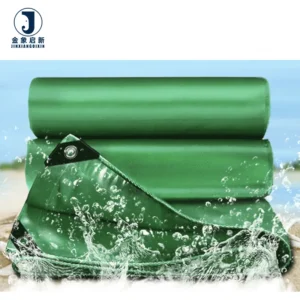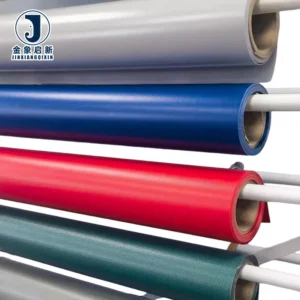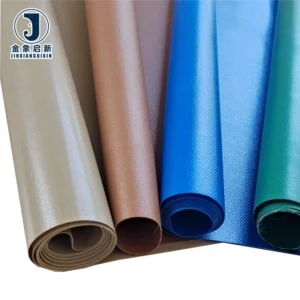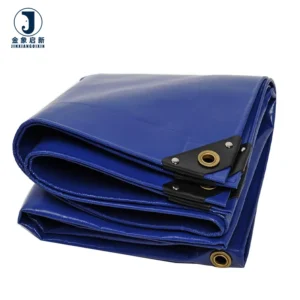
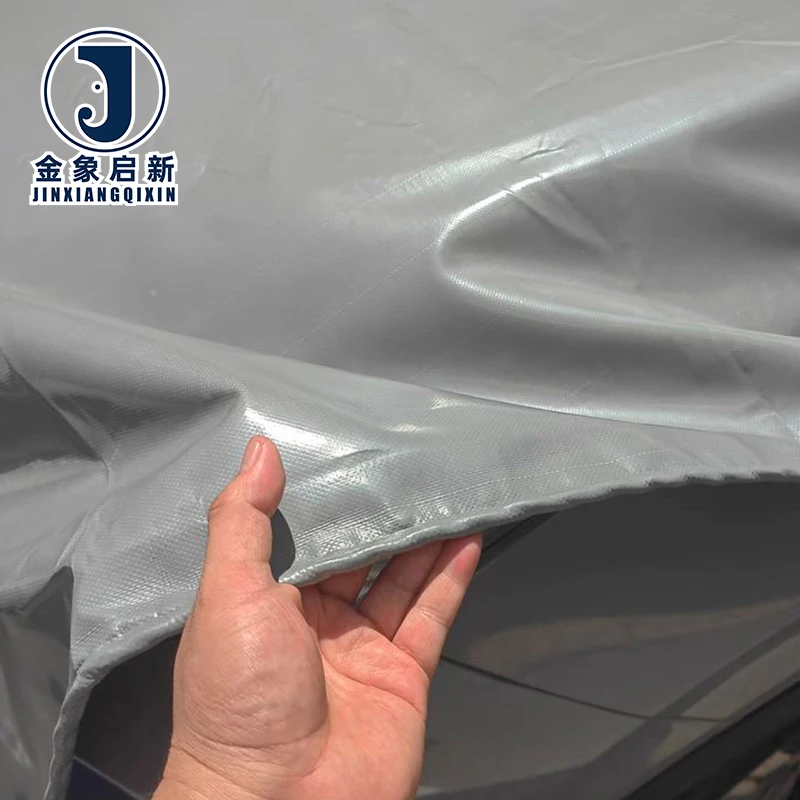
Deep Coating Adhesion Control — three full production lines maintain consistent PVC coating weight across every roll, verified against the material specification sheet before dispatch.
Technical Specifications
| Parameter | Value |
|---|---|
| Product Type | PVC Coated Tarpaulin Roll |
| Coating Material | PVC |
| Base Fabric Construction | Warp knitted woven plain |
| Waterproof | Yes |
| Anti-Static | Claimed (surface resistance or test standard not stated — verify against manufacturer catalog) |
| Tear Resistant | Yes |
| Color | Customizable colors |
| Style | Plain woven |
Application Suitability
| Application | Exposure & Requirement |
|---|---|
| Poultry and broiler farm side curtains | Ammonia-laden moisture, frequent washdown cycles, coating must resist delamination |
| Pig and sheep shelter covers | High abrasion from animal contact, strong base fabric and coating adhesion required |
| Agricultural tent and temporary structures | Repeated installation and takedown, flexibility under tension and wind load |
| Chicken farm waterproof enclosures | Continuous moisture exposure, waterproof barrier integrity across seams and welds |
Why Base Fabric Weave Matters More Than GSM for Farm Cover Durability
Tear propagation resistance in agricultural PVC tarpaulin depends on the warp knitted woven plain structure, not the coating weight alone.
When technical buyers specify PVC coated tarpaulin base fabric denier coating weight gsm for livestock enclosures, the conversation often stops at a single number. A heavy coating applied over a loosely constructed base fabric may feel substantial on arrival yet fail at the first flex point under wind load [NEED_CITE: tensile and tear test methods for coated fabrics per ISO 1421]. The warp knitted plain weave used in this PVC Coated Tarpaulin Roll distributes tension across interlocking loops rather than simple over-under yarn crossings, which changes how the material behaves when a puncture or cut begins to propagate. For poultry and pig farm operators who cannot afford mid-season cover failure, understanding the construction behind the coating is the difference between a shelter that lasts and one that needs emergency replacement.
How Warp Knitted Construction Controls Tear Behaviour
The warp knitted woven plain base fabric in this PVC coated tarpaulin roll creates a structure where yarns loop and interlock rather than simply crossing at right angles. When a tear initiates at a stress point — such as where a tie-down passes through the material or where livestock contact creates repeated abrasion — the interlocking loop structure forces the tear to change direction at each yarn intersection, absorbing energy and slowing propagation. This is why PVC Coated Tarpaulin base fabric denier coating weight gsm specifications must always be read alongside the weave type, because two rolls with identical GSM but different base constructions will perform very differently under the same farm conditions.
Coating Weight, Adhesion and the Waterproof Barrier
The PVC coating applied to the warp knitted base fabric serves as the primary waterproof barrier, and its effectiveness depends on both the coating weight and the adhesion to the base yarns. In poultry farm environments where ammonia-rich moisture and frequent washdown cycles are routine, a coating that separates from the base fabric at the weld line or flex point exposes the yarn structure to chemical degradation [NEED_CITE: coating adhesion test methods for PVC coated fabrics]. Anti-static treatment is claimed for this PVC coated tarpaulin roll — technical buyers should request the surface resistivity value and the test standard referenced, particularly for enclosed poultry environments where dust accumulation and static discharge affect bird health and ventilation system performance.
Reading the Specification Sheet Beyond the Headline Number
GSM tells you the total mass per square metre of the finished coated fabric, but it does not tell you how that mass is distributed between base fabric and coating. A PVC coated tarpaulin roll with a high GSM achieved through heavy coating on a light base fabric may show good initial hydrostatic resistance but poor tear strength once the coating is scratched or abraded. The warp knitted woven plain construction provides a balanced tensile profile in both warp and weft directions, which matters when farm covers are tensioned across frames that shift under wind load. Coating method — whether knife-over-roll, dip, or calender — influences peel strength and heat-weld behaviour [NEED_CITE: DIN 4102 fire classification for building materials and coating method effects on weld seam performance], and buyers specifying material for fabricated farm covers should confirm the method used and request weld strength data. Colour is customizable across orders, and pigment dispersion consistency directly affects batch-to-batch colour matching when multiple rolls are installed side by side on a single structure.
The Hidden Cost of Specifying on Price Per Kilogram Instead of Performance Data
When farm cover fabric is sourced on a cost-per-kilogram basis without verified material specification sheets, the typical result arrives in two stages. First, the roll feels lighter than expected and the GSM on the label does not match the GSM on the quotation — a discrepancy that only becomes visible when the material is weighed on arrival. Second, colour shifts between rolls become obvious once the covers are installed and viewed in natural light across the farm structure [NEED_CITE: batch colour consistency standards for PVC coated fabrics]. Weld seams may fail before the fabric body does if the coating formulation was adjusted to reduce cost without adjusting the heat-seal parameters at the fabrication stage. For livestock operators, a cover failure during cold or wet weather is not an inconvenience — it is an animal welfare and production loss event.
Why Technical Buyers Source This PVC Coated Tarpaulin Here
Deep process control over coating weight and adhesion is maintained across three full production lines with 36 sets of professional equipment, meaning the PVC coating on every roll of farm cover fabric is applied under consistent tension and temperature parameters. A 10-person R&D team handles material selection, custom colour matching, and sample development, delivering samples within days so buyers can verify base fabric hand-feel, coating surface, and weld compatibility before committing to bulk production. Dedicated QA/QC at every production stage includes 100% inspection before shipment, checking roll-to-roll GSM consistency, colour uniformity, and coating adhesion against the agreed specification. Custom widths, lengths, and colour options are available with defined lead times and minimums, so agricultural contractors and tarpaulin distributors can plan container loading around confirmed roll counts and weights rather than estimates.
Documentation & Verification
- Material specification sheet stating exact GSM, base fabric construction, coating weight, and colour reference for this PVC coated tarpaulin roll
- Test report documenting anti-static surface resistivity value and the standard referenced, provided where treatment is applied
- ISO and CE certificates confirming manufacturing quality system compliance for coated fabric production
- Pre-shipment inspection record verifying roll-to-roll coating weight consistency and colour uniformity before dispatch
- Certificate of origin and customs documentation package included with every export shipment
Fabrication, Handling & Storage
- Heat-weld parameters should be tested on a sample piece of the warp knitted PVC coating before full production to confirm seam strength
- Store rolls upright on end-caps in a dry, shaded area to prevent creasing and surface impression marks on the PVC coating
- When unrolling in cold conditions, allow the PVC coated tarpaulin roll to acclimatise before tensioning to avoid coating micro-cracking
- Use compatible PVC-based adhesives for field repairs to maintain waterproof integrity at patch edges
- Plan cut patterns across the full roll width to minimise offcut waste and reduce the number of fabricated weld seams
What to Include in Your Enquiry
To specify the correct PVC coated tarpaulin roll for your farm cover application, provide the exposure conditions your structure faces — including livestock type, washdown frequency, wind load, and any ammonia or chemical contact. Confirm whether your market requires anti-static treatment backed by a specific surface resistivity standard, and state the roll width, colour reference, and annual volume you need. If you require fabricated covers rather than roll stock, share the finished dimensions and seam configuration so the R&D team can advise on the appropriate base fabric construction and coating weight.
Frequently Asked Questions
Q: How is GSM verified on arrival and what tolerance is acceptable for PVC coated farm tarpaulin?
A: Weigh a cut sample of known area on a calibrated scale and compare the result to the material specification sheet provided with your shipment. The manufacturer runs 100% pre-shipment inspection on every roll, and the documented GSM should match the agreed specification. Acceptable tolerance depends on your application requirements — confirm this with the production team before order confirmation.
Q: What test standard supports the anti-static claim and is it suitable for enclosed poultry environments?
A: Anti-static treatment is claimed for this PVC coated tarpaulin roll, but the specific surface resistivity value and test standard must be confirmed against the manufacturer catalog before specifying for poultry housing. Request the test report during the enquiry stage so your technical team can evaluate suitability for environments where dust and static discharge are operational concerns.
Q: How does warp knitted base fabric differ from woven scrim in tear strength and coating adhesion behaviour?
A: Warp knitted woven plain construction uses interlocking loops that redirect tear propagation at each yarn intersection, offering different tear behaviour compared to a standard woven scrim. The loop structure also provides a textured surface for PVC coating adhesion. Technical buyers should request both tensile and tear test data to compare performance for their specific farm cover application.
Q: How is batch colour consistency controlled when ordering multiple rolls of custom-coloured PVC tarpaulin?
A: Pigment dosing is controlled during the coating stage and in-line QA checks monitor colour uniformity across the production run. A pre-shipment inspection record documents colour consistency roll by roll. When ordering across separate batches, provide the original colour reference so the production team can match pigment formulation to your earlier order.