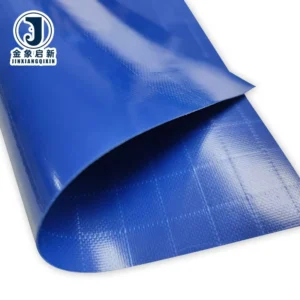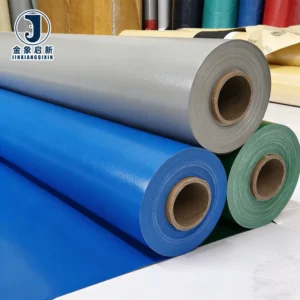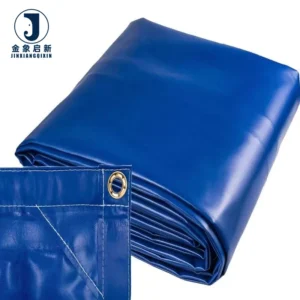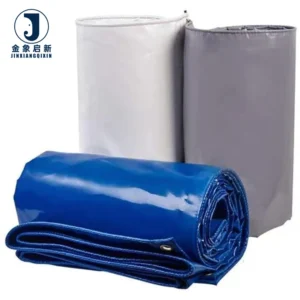
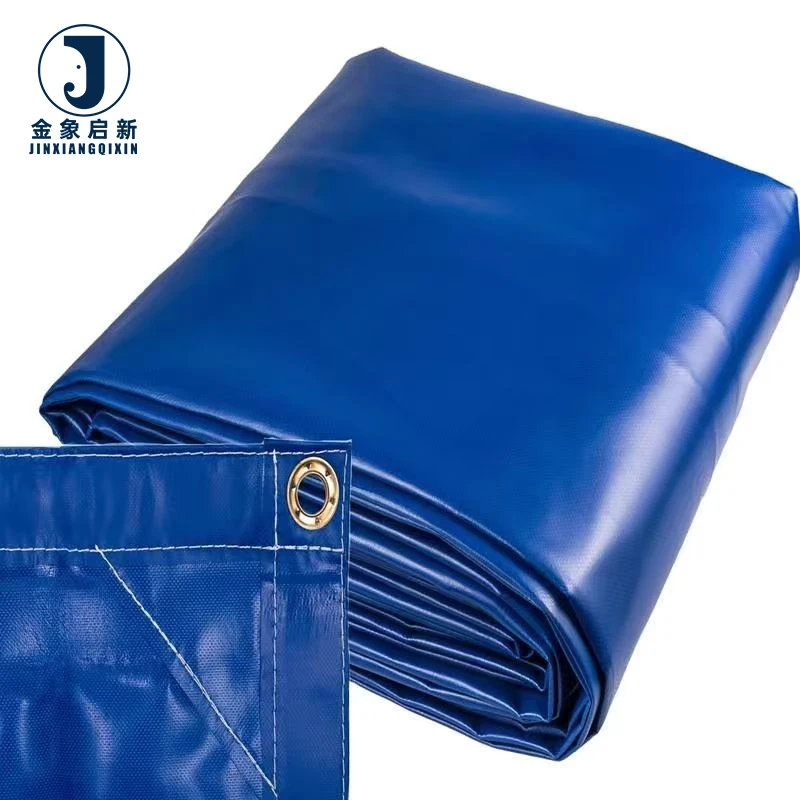
Deep coating process control — nearly 30 years of PVC formulation experience ensures consistent coating adhesion and GSM accuracy across every roll of PVC coated tarpaulin leaving the production line.
Technical Specifications
| Parameter | Value |
|---|---|
| Product Type | PVC Coated Tarpaulin |
| Coating Material | PVC (vinyl coated) |
| Weight Range | 500 to 800 g/m² |
| Waterproof Rating | Anti-permeable ≥20 KPa |
| Flame Retardant | ≤10 seconds (grade not stated — confirm the standard required for your market) |
| Low-Temperature Flexibility | Not fractured by pliers at -30°C |
| Seam Construction | Heat combined with high-frequency welding |
| Edge Reinforcement | Rip-stop construction |
| Chemical Resistance | Acid, alkali and brine corrosion resistance |
| Mildew Resistance | Mildew proofing properties (test basis not stated) |
| Water Absorption | Near-zero absorption, fast-dry after rainfall |
Application Suitability
| Application | Exposure & Requirement |
|---|---|
| Truck and trailer side curtains | Constant flexing, road vibration, abrasion at tie-down points, weather exposure across climate zones |
| Industrial equipment covers | Outdoor storage, acid and alkali splash risk, UV exposure, repeated uncovering and re-draping |
| Open-air stockpile protection | Rainfall, wind uplift, brine and salt-laden air near port or coastal facilities |
| Marine-adjacent containment | Brine corrosion resistance, mildew-prone humid environments, long-duration water contact |
Why Coating Weight Without Base Fabric Data Is an Incomplete Picture
GSM tells you what the roll weighs, not how the PVC coated tarpaulin will behave under tension at the weld line.
Technical buyers often specify material by grams per square metre alone, yet two rolls at the same coating weight can perform very differently once fabricated into truck covers or industrial enclosures. The base fabric denier, mesh count and weave structure determine tensile and tear resistance before any coating compound is applied. [NEED_CITE: tensile and tear test methods for coated fabrics per ISO 1421] Without a material specification sheet that breaks down base fabric construction alongside coating method and weight, you are comparing products on a single axis that does not predict field performance. Fabricators who have switched suppliers on price per kilogram have discovered that the lighter base fabric inside a comparable GSM roll leads to premature tearing at stress points within the first season of use.
How Vinyl Coating Adhesion Determines Long-Term Waterproof Integrity
The bond between PVC compound and polyester substrate is where waterproof performance either holds or degrades over repeated flex cycles. Knife coating applies the PVC layer under controlled tension and temperature, driving the compound into the weave interstices rather than simply sitting on the surface. This mechanical lock is what prevents delamination when the fabric folds, drapes and unfolds thousands of times on a truck curtain or retractable cover. A PVC coated tarpaulin with poor adhesion will show blistering or peeling at crease lines long before the coating itself wears through.
High-Frequency Welding vs. Stitching at Flex and Abrasion Points
Sewn seams rely on thread tensile strength and needle-hole integrity, both of which degrade under the constant vibration and load shifting experienced by transport covers. High-frequency heat bonding fuses the PVC layers into a continuous joint, eliminating the perforation line that stitching creates through the base fabric. The resulting seam carries load across the full weld width rather than concentrating stress at individual stitch points. [NEED_CITE: high-frequency welding parameters for PVC coated polyester] For fabricators building side curtains and industrial enclosures, this means the seam is no longer the first component to fail under operational stress.
Reading the Specification Sheet: What Each Parameter Actually Governs
The weight of 500 to 800 g/m² spans multiple grades within this PVC coated tarpaulin family, and the correct selection depends on the mechanical demands of the end use. Heavier grades use denser base fabric and thicker coating to resist higher wind loads and abrasion, while lighter grades trade some puncture resistance for easier handling and reduced dead weight on retractable systems. The anti-permeable rating of ≥20 KPa confirms that water will not penetrate the coating under hydrostatic pressure relevant to rainfall and pooling. Low-temperature flexibility verified to -30°C without fracture by pliers is significant for fleet operators running routes through cold-climate regions where stiffened fabric cracks during deployment. Chemical resistance to acid, alkali and brine makes this material suitable for industrial environments where corrosive splash or salt-laden air would degrade uncoated alternatives.
The Hidden Cost of Specifying on Price per Kilogram Alone
When procurement decisions are driven primarily by cost per kilogram of coated fabric, the savings at the purchasing stage frequently reverse during fabrication and field use. Rolls that meet the quoted GSM but use a lighter base fabric compensated by thicker coating will show reduced tear strength, because it is the polyester yarn — not the PVC layer — that arrests a tear once it starts. [NEED_CITE: tear propagation behaviour in coated polyester fabrics] Fabricators cutting and welding these rolls discover that the material does not hold dimensional stability on the table, and welded joints on a weak substrate crack under the same flex cycles that a properly constructed fabric would absorb. Transport operators then face warranty claims and early replacement costs that far exceeded the initial material saving.
Why Technical Buyers Source This PVC Coated Tarpaulin Here
Three full production lines and 36 sets of professional equipment support bulk roll output with consistent coating weight across the entire production run. A 10-person R&D team handles material selection, custom colour matching and sample development, allowing fabricators to confirm the grade and finish before committing to container-load orders. Dedicated QA/QC inspection at every production stage includes roll-by-roll verification, so the specification you approved is the specification that ships. ISO and CE certified processes provide documentation traceability required by regulated end markets. Samples are developed within days for custom width, colour or treatment requirements, removing the uncertainty from bulk purchasing decisions.
Documentation & Verification
- Material specification sheet stating exact GSM, base fabric denier and weave for the grade ordered
- Flame retardant test report citing the applicable standard for your destination market
- Roll-by-roll weight verification record from pre-shipment inspection
- ISO and CE certificates covering the production facility and coating process
- Colour reference and batch consistency record across all rolls in a single shipment
- Certificate of origin and customs documentation for international logistics
Fabrication, Handling & Storage
- Heat-weld at manufacturer-recommended temperature and dwell time for the specific PVC coating thickness to avoid burn-through or cold joints
- Allow rolls to acclimatise to workshop temperature before unrolling to prevent creasing in cold-stiffened vinyl coating
- Store rolls vertically on end caps to prevent flat-spotting and permanent deformation of the rip-stop base fabric
- Use compatible PVC-based repair cement for field patching to maintain chemical and waterproof continuity at repair edges
- Plan cutting layout to align rip-stop yarn direction with primary stress paths on truck curtains and tensioned covers
What We Need to Quote Accurately
Provide the end-use application and the environmental exposure conditions the finished cover will face, including temperature range and any chemical contact. Specify the flame retardant or fire classification standard required by your destination market so we can confirm the correct treatment grade. Let us know whether you need rolls in standard stock widths or custom dimensions, and whether colour matching or printed branding is part of the project scope.
Frequently Asked Questions
Q: How is the GSM weight of this PVC coated tarpaulin verified before shipment?
A: Every roll is weighed and measured during pre-shipment inspection, and the actual GSM is recorded against the quoted specification. The verification sheet travels with the shipment so you can cross-check on your cutting table before fabrication begins.
Q: What flame retardant test standard applies to the ≤10 second claim?
A: The ≤10 second result is documented, but the specific test standard must be confirmed for your market. We recommend requesting DIN 4102, NFPA 701 or M2 certification based on your destination country’s fire safety regulations before placing a bulk order.
Q: How does high-frequency welding compare to stitching for seam strength?
A: High-frequency welding fuses the PVC coating layers into a continuous bond without perforating the base fabric. This eliminates the needle-hole weakness line that stitching creates, resulting in seams that resist cracking under the flex and vibration loads typical of transport covers.
Q: How is colour consistency maintained across rolls in one order?
A: All rolls in a single production batch use the same compounded PVC colour formula and coating run. The batch record documents the colour reference, and pre-shipment inspection includes visual comparison between rolls to flag any variance before dispatch.
Q: What base fabric options are available within the 500–800 g/m² range?
A: Multiple base fabric deniers and mesh counts are available depending on the tensile and tear strength required for your application. Submit your performance requirements and we will recommend the base fabric construction matched to the correct coating weight grade.