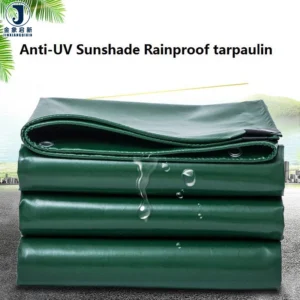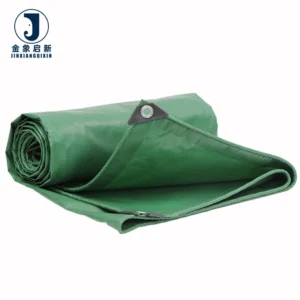
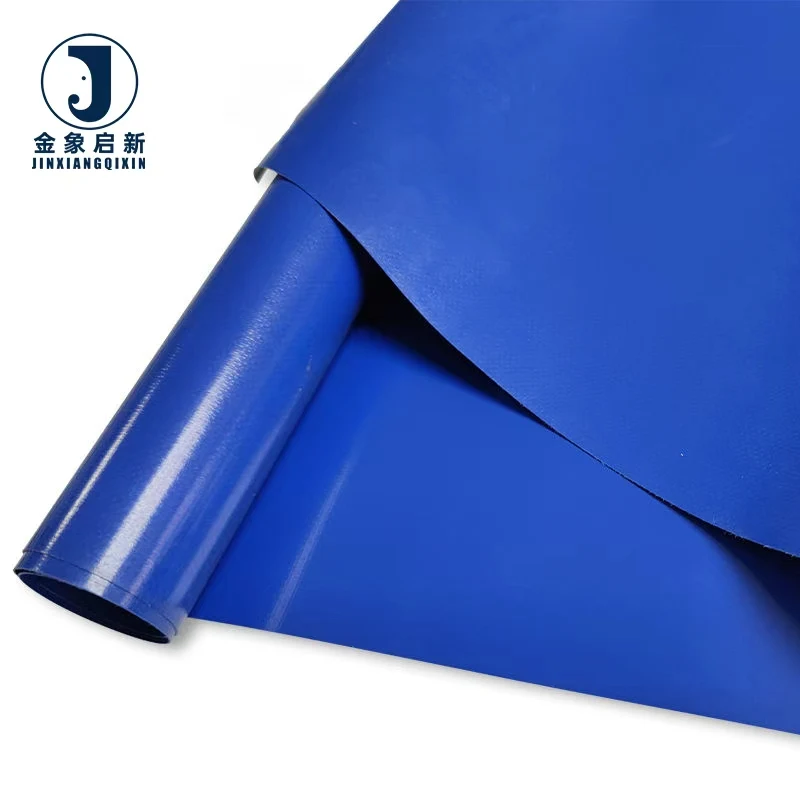
Deep Coating Process Control — every roll of PVC coated tarpaulin roll stock ships with a verified coating weight and adhesion standard tied to its specific base fabric construction.
Technical Specifications
| Parameter | Value |
|---|---|
| Product Type | PVC Coated Tarpaulin Fabric |
| Coating Material | PVC coated polyester (knitted and plain weave constructions available); HDPE weaving with LDPE lamination (PE variant) |
| Base Fabric Denier | 500D (medium); 1000D (heavy-duty); 500D–2000D (super heavy) |
| Weight (GSM) | 400–500 g/m² (medium); 700–1000 g/m² (heavy-duty); 1100–1500 g/m² (super heavy); PE variant 50–220 g/m² |
| Total Thickness | 0.35–0.45 mm (medium); 0.70–1.0 mm (heavy-duty); 1.2–1.5 mm (super heavy); PE variant 0.2–0.4 mm / 8–16 mil |
| Tensile Strength (N/5cm) | Warp 1500–2000 / Weft 1200–1800 (medium); Warp 2000–2500 / Weft 1800–2200 (heavy-duty); Warp 2500–3000 / Weft 2200–2800 (super heavy) |
| Roll Width Options | 6 ft, 8 ft, 10 ft, 12 ft / 2 m, 4 m, 6 m or custom |
| Roll Length Options | 100 yards, 100 meters, or custom |
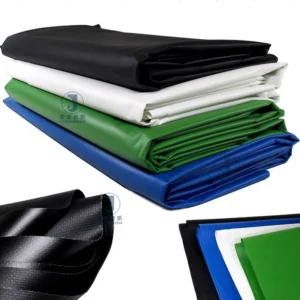
| Colour Options | Blue, Blue/Orange, Green, Grey, Black, Clear, Grey/Green, Orange, or custom |
| Coating Process | 100% PES dipping coating (vinyl-coated polyester mesh variant) |
| Key Features | Waterproof, mildew proof, anti-aging, UV treatment available, flame retardant grades available — confirm the grade required for your market |
| Standards | ISO, CE |
Application Suitability
| Application | Exposure & Requirement |
|---|---|
| Truck side curtain fabric | Constant flexing at load shift points, road salt and abrasion, long-term UV exposure, requirement for reliable heat-welded seams |
| Tensioned membrane structures | Sustained wind load and tensile stress across large spans, UV and weather exposure, coating adhesion critical for panel welding |
| Industrial pipe and equipment canopy | Permanent outdoor coverage, moisture and chemical splash, access for periodic inspection requiring fabric to flex without coating crack |
| Transport and logistics flatbed covers | Abrasion from shifting cargo, tie-down strap contact, UV and rain exposure, colour consistency across fleet |
| Tent and inflatable structure fabric | Repeated folding and deployment, UV exposure, requirement for lightweight yet tear-resistant base fabric |
Why Stated GSM Means Little Without Coating Adhesion Data
The number on the quotation is a weight, not a performance guarantee — coating adhesion is what determines whether the fabric and the coating move as one unit under load.
When a technical buyer specifies a PVC coated tarpaulin roll at 700 g/m², the assumption is that the base fabric and the PVC layer share the load. If the coating was applied at too low a temperature or the dipping penetration was insufficient, the PVC skin can delaminate from the polyester base at weld seams or high-flex zones. I have seen heavy-grade coated rolls fail at the weld line not because the fabric was weak, but because the coating lifted away from the yarn structure at the exact point where heat and pressure were applied. [NEED_CITE: coating adhesion test methods for PVC-coated polyester per ISO 2411]
Base Fabric Denier Determines What the Coating Cannot Fix
The denier of the base yarn sets the floor for tensile and tear performance. A 500D base at 400–500 g/m² total weight gives adequate strength for light covers and short-term outdoor use. Moving to a 1000D base in the 700–1000 g/m² range shifts the fabric into heavy-duty territory where the polyester yarn itself carries most of the mechanical load, and the PVC coating contributes weatherproofing and weldability rather than structural capacity. At the 1100–1500 g/m² tier with yarns up to 2000D, the base fabric is engineered for sustained tensile loads such as those found in tensioned structures or large-format truck covers.
Coating Method and Its Effect on Weld Behaviour
The dipping coating process used on the PES base saturates the knitted or plain weave mesh, forcing PVC into the interstices of the yarn. This penetration depth is what holds the two surfaces together when a hot wedge or high-frequency welder applies heat. A knife-coated or laminated alternative may achieve the same stated GSM but can show weaker peel strength at the seam because the coating sits on top of the weave rather than locking through it. For fabricators welding PVC coated tarpaulin roll stock into finished panels, specifying the coating process matters as much as specifying the weight. [NEED_CITE: peel strength and weld behaviour of coated fabrics per ISO 1421]
How Thickness, Tensile and GSM Interact in Practice
Total thickness and GSM are related but not interchangeable. Two rolls at 700 g/m² can differ in thickness depending on whether the base fabric is a tight plain weave or a more open knit construction. A tighter weave yields a thinner, denser fabric with higher tensile readings in both warp and weft directions. A more open knit may be thicker and more flexible but will show lower tensile values for the same GSM. When evaluating PVC coated tarpaulin roll stock, the specification sheet should always present GSM, thickness, base denier and tensile strength together — isolating any one of these values leads to a specification that looks correct on paper but behaves differently under load.
The Hidden Cost of Under-Specifying Coating Adhesion
A fabricator who purchases roll stock based on GSM alone, without verifying coating adhesion, often discovers the problem only after welding. The seam appears clean, but under the first significant load or wind event the PVC layer peels back from the weld line while the base fabric remains intact. The entire panel must then be scrapped or re-worked. This failure pattern is not random — it traces directly to insufficient coating penetration during manufacture, and it costs more than the price difference between a properly specified roll and a cheaper alternative. [NEED_CITE: weld seam failure analysis in PVC-coated polyester fabric]
Why Sourcing PVC Coated Tarpaulin Roll Stock Here Makes Sense
The three full production lines and 36 sets of professional equipment support batch-to-batch consistency across roll width, colour and GSM — the variables that matter most to a fabricator running multiple rolls through the same welding setup. The 10-person R&D team handles material selection and sample development, meaning a custom denier or width can be trialled and approved before a full order is committed. Dedicated QA and QC at every production stage with full pre-shipment inspection means the roll data on the packing list matches what arrives at your dock.
Documentation & Verification
- Material specification sheet stating GSM, base denier, coating method and weight per roll
- Test report for UV and flame retardant grades where applicable — confirm the grade required for your market
- Pre-shipment inspection record covering GSM verification and colour consistency check
- Roll packing list with batch reference enabling traceability on arrival
- ISO and CE certificates supporting export documentation requirements
- Certificate of origin and customs support for international roll shipments
Fabrication, Handling & Storage
- Heat-weld parameters must match the coating thickness — the 0.70–1.0 mm heavy-duty grades need higher dwell time than the 0.35–0.45 mm medium range
- Galvanized eyelets at 1-metre spacing require reinforced PP rope hems to distribute tie-down load across the base fabric
- Store rolls upright in a shaded, dry area to prevent flat-spotting on the coating surface of the PVC coated tarpaulin roll
- Unroll at ambient temperature above 5 °C to avoid coating crack in cold-conditioned super heavy grades
- Clean with mild detergent only — aggressive solvents can soften the PVC coating layer and reduce surface adhesion
What to Include with Your Enquiry
To specify the correct roll stock, provide the intended application and the environmental exposure the finished cover will face — sustained UV, chemical splash, mechanical abrasion or wind load. State the target market so that any required flame retardant grade or regulatory standard can be confirmed before sampling. Indicate the roll width and length format that fits your production line, and whether you need raw roll stock or a finished cut-to-size service with hems and eyelets.
Frequently Asked Questions
Q: How do you verify GSM per roll before shipment?
A: Each roll is weighed against its stated GSM as part of a full pre-shipment inspection. The material specification sheet lists the target GSM, base denier and coating weight, and the inspection record confirms the measured value falls within tolerance. You can re-check on arrival by cutting a measured sample and calculating weight per square metre.
Q: How is colour consistency controlled across multiple rolls in one order?
A: Colour reference is locked during sample approval and applied through dedicated QA checks at each production stage. Rolls from the same batch are compared side by side before packing. If a large order spans multiple production runs, the batch reference on the packing list lets you trace and match rolls on your cutting floor.
Q: What coating methods do you use and how do they affect seam welding?
A: The PES base receives a 100% dipping coat that forces PVC into the weave structure, creating mechanical interlock between yarn and coating. This penetration depth supports strong peel resistance at heat-welded seams. Knife-coated alternatives may achieve similar GSM but can show lower peel strength, so specifying the coating method matters for weld reliability.
Q: What is the relationship between base denier and tensile strength across your PVC tiers?
A: Higher denier base yarns carry more mechanical load within the composite structure. The 500D base at medium weight suits light covers; 1000D at heavy-duty supports sustained tensile stress; and up to 2000D at super heavy is engineered for tensioned structures. Tensile strength data is reported per tier in both warp and weft directions.
Q: Are UV and flame retardant treatments backed by test reports?
A: UV treatment and flame retardant grades are available — confirm the grade and standard required for your market and region. Where a specific grade is specified, the corresponding test report is supplied with the shipment documentation. A claim without a backing report is not treated as a confirmed specification.