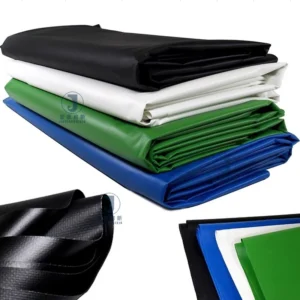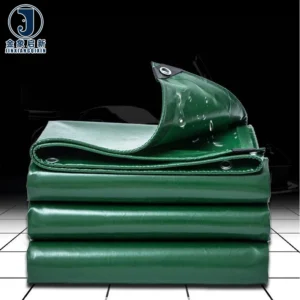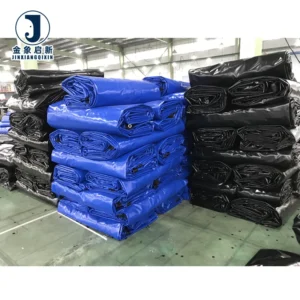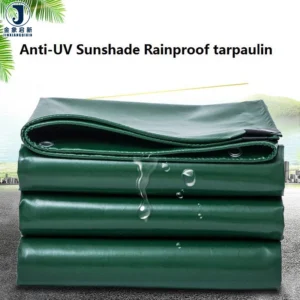
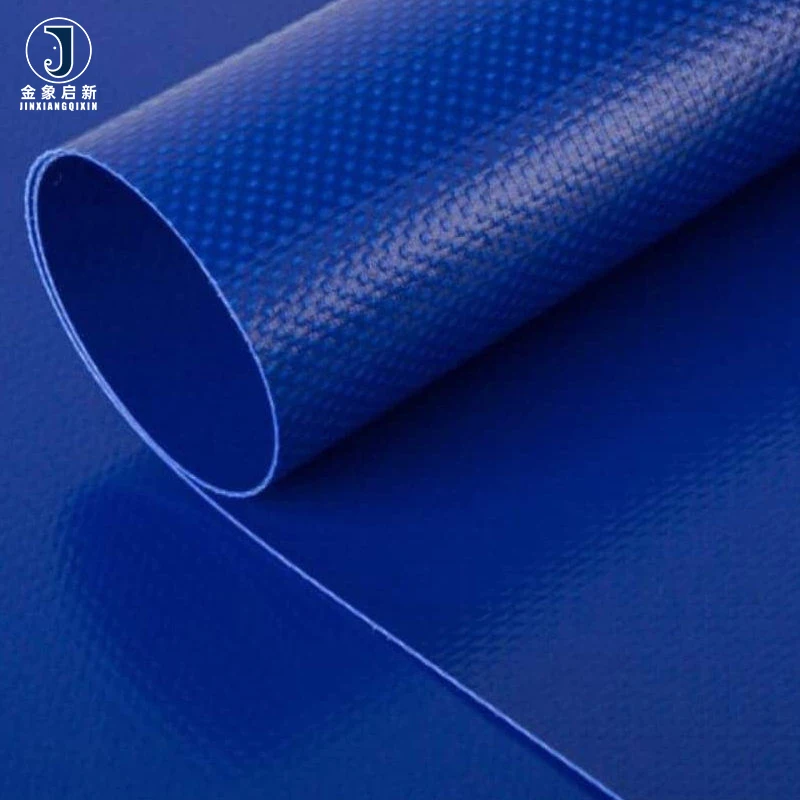
Process-Controlled Coating — Every roll of PVC coated tarpaulin gsm is verified for weight and adhesion before leaving the factory, ensuring fabricators receive material that behaves consistently during cutting and welding.
Technical Specifications
| Parameter | Value |
|---|---|
| Product Type | PVC Coated Tarpaulin Roll |
| Material | Polyester Base Fabric + Double-Sided PVC Coating |
| Weight Range | 500gsm – 1000gsm |
| Standard Weights Available | 610gsm / 650gsm / 800gsm |
| Coating & Joining Methods | High Frequency Hot Melt / Hot Air Welding / Sewing |
| Tensile Strength | 50-80 MPa (test standard not stated) |
| Density | 1.15-2.00 g/cm³ |
| Brittle Temperature | ≤ -50~-60°C |
| Softening Temperature | ≥ 80°C |
| Melting Point | 212°C |
| Key Features | Waterproof, Flame Retardant (confirm the grade required for your market), Anti UV (test basis not stated), Anti-Mildew, Heavy Metal Free, Self-Clean Surface, Printable |
Application Suitability
| Application | Exposure & Requirement |
|---|---|
| Truck Side Curtains and Top Roofs | Constant mechanical flexing, road debris abrasion, sustained UV exposure; requires hot-air weldable PVC for strong seam integrity. |
| Outdoor Event Tents and Awnings | High wind loads, rain pooling, solar heat gain; requires block-out capability and dimensional stability under tension. |
| Inflatable Structures and Membrane Covers | Internal positive pressure, dynamic stress, temperature fluctuation; demands predictable tensile behaviour and reliable high-frequency welding. |
| Construction Structure Enclosures | Dust containment, weather exposure, site impact; requires flame retardant grades — confirm the grade required for your market. |
Why GSM Alone Does Not Tell You How Strong the PVC Coated Tarpaulin Roll Actually Is
Coating adhesion and base fabric weave structure are what translate nominal weight into usable tensile and tear strength.
Technical buyers often receive a quotation stating a specific PVC coated tarpaulin gsm, only to find the delivered material feels lighter and tears more easily than expected [NEED_CITE: incoming inspection failures on coated fabric weight]. Weight is a useful starting reference, but without verifying base fabric denier, yarn count, and coating bond strength, two rolls at the same stated GSM can perform very differently on the fabrication table and in the field. This specification sheet gives you the material composition and density data needed to run your own verification.
Base Fabric and Coating Composition Under the Microscope
This PVC coated tarpaulin gsm range is built on a polyester base fabric with double-sided PVC coating. The polyester yarns provide the tensile backbone, while the PVC coating encapsulates the weave to deliver waterproofing and surface durability. The interaction between coating viscosity during application and the base fabric’s porosity determines how thoroughly the PVC penetrates and bonds to the individual yarns.
Weld and Seam Behaviour for Fabricators
Fabricators cutting and joining this material need to understand how the PVC coating responds to heat. Hot air welding and high frequency hot melt both achieve a molecular bond between PVC layers, creating a seam that can outperform the base fabric itself when done correctly. Sewing remains an option for specific construction details, though the needle holes introduce penetration points that must be sealed. The melting point of 212°C and softening temperature at ≥ 80°C define the thermal window your equipment should operate within for consistent weld quality [NEED_CITE: thermal welding parameters for PVC coated polyester fabric].
Interpreting the Specification Data
The tensile strength range of 50-80 MPa reflects the span across the weight grades — heavier grades with denser base fabrics sit at the upper end. GSM and tensile strength do not scale linearly: a heavier coating does not automatically mean a stronger fabric if the base fabric denier remains unchanged. The density range of 1.15-2.00 g/cm³ helps you identify the material composition during incoming inspection; significant deviation from this range can indicate filler content that compromises flexibility at low temperatures. The brittle temperature of ≤ -50~-60°C defines the lower thermal boundary, meaning the PVC compound remains flexible in cold climates without cracking at fold lines. Surface texture is smooth and soft with a leather-like finish, which supports self-clean behaviour and print adhesion for branded panels.
The Hidden Cost of Material Specified on Weight Alone
When material arrives lighter than the quotation stated, fabricators face problems beyond simple weight discrepancy. Coating adhesion may be insufficient, causing delamination at welded seams where the load flexes most [NEED_CITE: coating adhesion failure at flex points on load-bearing covers]. Colour can vary between rolls in the same order if batch consistency controls are absent, creating visible mismatches once panels are installed side by side. For fabricators producing truck curtains or tensioned structures, these inconsistencies lead to rework, rejected shipments, and warranty claims that erode margin far beyond the initial material savings.
Why Fabricators Specify Material Through This Supply Chain
The 10-person R&D team handles material selection and sample development, allowing you to confirm weld behaviour and colour accuracy before committing to production volume. Three full production lines and 36 sets of professional equipment provide bulk capacity while maintaining controlled coating application across every roll. Dedicated QA/QC operates at every production stage, with 100% pre-shipment inspection catching GSM deviation and surface defects before dispatch. Deep process control over coating weight and adhesion has been refined over nearly 30 years of focused PVC coated fabric production. Samples for custom width, colour, or print requirements are developed within days, enabling you to validate material on your own equipment before ordering.
Documentation & Verification
- Material specification sheet stating exact PVC coated tarpaulin gsm, base fabric denier, and coating composition per roll
- Weight verification measured per roll against the stated specification before dispatch
- Test reports for UV and flame-retardant grades where applicable — confirm the grade required for your market
- ISO and CE certificates available with batch documentation
- Pre-shipment inspection record with roll-to-roll consistency data
Fabrication, Handling & Storage
- Hot air welding temperature should reference the ≥ 80°C softening point and 212°C melting point for optimal seam strength
- High frequency welding is preferred over sewing for load-bearing joints on this PVC coated polyester base
- Store rolls vertically on pallets to prevent permanent creasing that compromises the leather-like surface finish
- Clean with mild detergent only; solvent-based cleaners may degrade the PVC coating and self-clean treatment
- Field repairs can be executed by hot air welding with compatible PVC scrap patches
- Plan panel layout to minimize cross-grain cuts, leveraging the 50-80 MPa tensile direction for structural panels
Before You Request a Quote
To ensure the material specification matches your fabrication requirements, please provide the target application, exposure conditions, and any mandatory fire classification for your market. Specify the required roll width, colour reference or print design, and whether you need raw roll stock or pre-cut panels. Include your annual volume estimate and whether you require samples for weld testing on your equipment before placing a production order.
Frequently Asked Questions
Q: How is the PVC coated tarpaulin gsm verified on arrival and what tolerance applies?
A: Each roll undergoes measured weight verification as part of 100% pre-shipment inspection. The dispatch record states actual GSM per roll against the specification. For incoming inspection at your facility, we recommend sampling multiple points across each roll using a calibrated scale and a fixed-area cutter to confirm the stated value before fabrication begins.
Q: What flame-retardant grade is available and which test standard does it meet?
A: Flame-retardant formulations are available across this PVC coated tarpaulin gsm range, but the specific grade must be matched to your market’s fire safety requirements. Standards such as M2, B1, NFPA 701, and DIN 4102 each test different material behaviours. Please specify the standard required for your project, and the corresponding test report will be provided with the shipment.
Q: Hot-air welding vs. high-frequency hot melt — which joining method suits my fabrication line?
A: Both methods create molecular bonds in PVC coating. High frequency welding delivers fast, consistent joins on flat panels and is preferred for high-volume curtain and tent production. Hot air welding offers more flexibility for curved seams, three-dimensional structures, and on-site repairs. The 212°C melting point and smooth surface of this material support both processes effectively.
Q: How is batch colour consistency controlled across rolls in the same order?
A: Colour matching is managed through controlled pigment dosing during the PVC compounding stage and verified before coating application. Rolls within a single production run are cross-checked against the approved reference. If your project requires multiple shipments over time, requesting retained colour samples from the original batch ensures continuity across future orders.