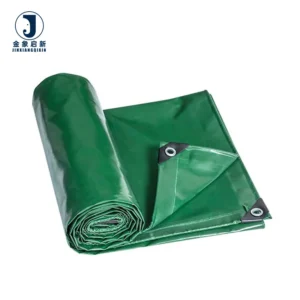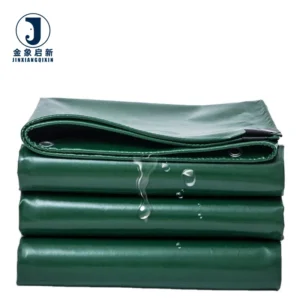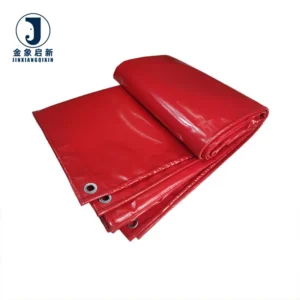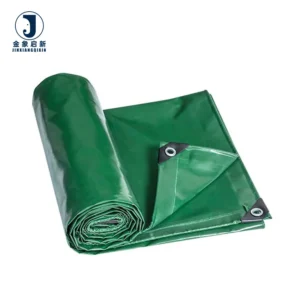
Coating Weight Mastery — Every roll of PVC coated tarpaulin base fabric denier and coating weight is verified against the quoted GSM through in-process QA and pre-shipment inspection, ensuring technical buyers receive exactly what the specification demands.
Technical Specifications
| Parameter | Value |
|---|---|
| Product Type | PVC Coated Tarpaulin |
| Base Fabric Denier | 200D×300D, 500D×500D, 840D×840D, 1000D×1000D |
| Coating Material | PVC |
| Weight Range | 250gsm–1500gsm (varies by denier grade) |
| Surface Finish | Available in glossy or matte finish |
| Color Options | Blue, yellow, black, green, white, etc. |
| Temperature Range | -15°C to 70°C |
| Flame Retardant | FR treated (grade not stated — confirm the grade required for your market) |
| UV Treatment | Customized (test basis not stated — request test report before specification) |
| Anti-Mildew | Anti-fungal treated |
| Waterproof | Waterproof, rain-resistant construction |
| Cut Sizes | 3×4m, 6×8m, 8×10m, 10×12m or custom made |
| Key Features | Tear-resistant, good flexibility, adhesion strength, abrasion resistance |
Application Suitability
| Application | Exposure & Requirement |
|---|---|
| Truck and trailer covers | Constant flexing at load points, road abrasion, weather exposure, tie-down stress at edges |
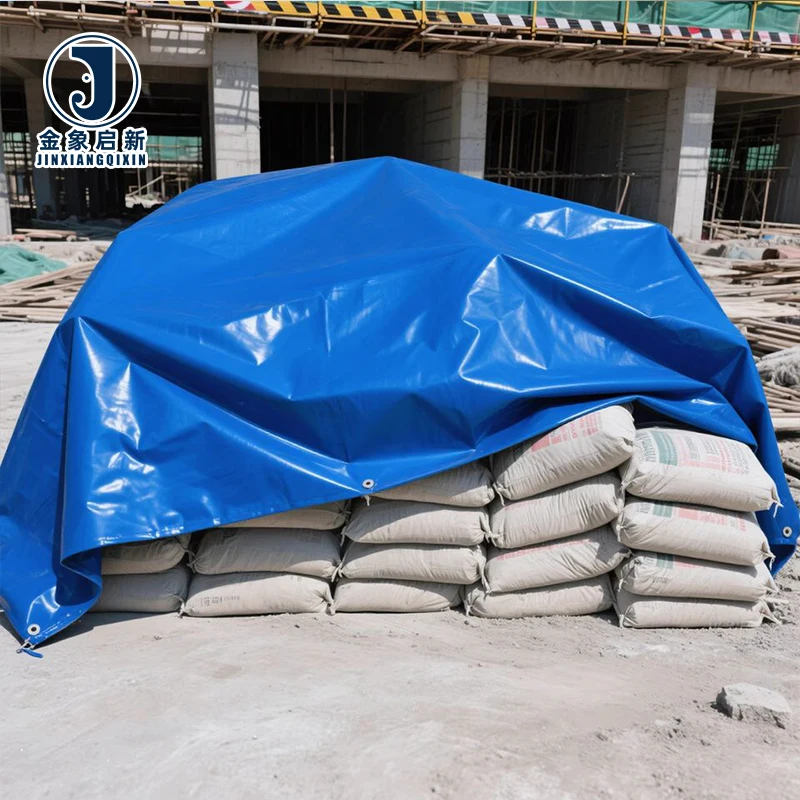
| Construction site equipment covers | UV exposure, dust and debris impact, repeated deployment and folding on-site |
| Agricultural and aquaculture stock covering | Permanent moisture contact, biological contamination, puncture risk from tools and stock movement |
| Tent and awning structures | Wind loading and fabric tension, UV degradation over extended outdoor seasons |
| Pond and reservoir lining | Continuous water immersion, soil chemistry interaction, sub-grade puncture risk |
Why Denier and Coating Weight Together Define PVC Coated Tarpaulin Performance
Base fabric denier sets the structural ceiling, but coating weight determines whether the fabric reaches it in practice.
Too often, a PVC coated tarpaulin base fabric denier and coating weight specification is reduced to a single GSM number on a quotation. When the roll arrives and feels lighter than expected, the buyer has no reference to separate base fabric mass from coating mass — or to understand which one was shortchanged. A 1000D×1000D base with insufficient coating will show the weave texture through the surface, creating abrasion points where the yarns contact load edges directly. A lower denier base overburdened with coating to hit a target GSM will crack at the fold before the coating itself fails. [NEED_CITE: tensile and tear test methods for coated fabrics per ISO 1421]
How Base Fabric Architecture Controls Tear Propagation
The four denier families in this range — from 200D×300D up to 1000D×1000D — represent fundamentally different yarn structures. Higher denier means thicker individual yarns in both warp and weft directions, which directly increases the force required to propagate a tear once the fabric is punctured. For applications like truck side curtains that experience repeated flexing at the same stress points, a 1000D×1000D base distributes load across thicker yarns that resist splitting. Lower denier constructions serve lighter-duty applications where weight and pack-down size matter more than ultimate tear resistance. PVC coated tarpaulin base fabric denier and coating weight selection starts here — matching yarn thickness to the mechanical demands of the end use.
Coating Weight and Adhesion Behaviour at Weld Seams
The PVC coating does more than waterproof the fabric; it provides the medium through which welded seams transfer load between panels. When coating weight is too low relative to the base fabric density, heat welding can expose bare yarn at the seam, creating a failure point that separates before the surrounding fabric reaches its tear limit. Glossy finishes tend to flow more predictably under heat welding heads, producing consistent seam widths. Matte finishes can require adjusted temperature and dwell time settings to achieve equivalent adhesion. [NEED_CITE: PVC coating adhesion and weld seam behaviour in coated technical textiles]
Decoding the Specification: Denier, GSM and Coating Method
Understanding how PVC coated tarpaulin base fabric denier and coating weight interact requires separating three variables that quotations often collapse into one. The base fabric denier (200D×300D through 1000D×1000D) defines yarn thickness and therefore the inherent tensile and tear capacity of the woven substrate. The coating weight — the mass of PVC applied to both faces — determines surface abrasion resistance, waterproofing integrity and weld seam quality. Together they sum to the total GSM, but two fabrics with identical GSM can perform completely differently depending on how that mass is distributed. A knife-coated construction forces PVC into the weave interstices under pressure, producing higher adhesion strength between coating and yarn compared to simple dip coating. This matters at flex points where coating delamination is the most common failure mode. The -15°C to 70°C operating range reflects the PVC compound’s transition boundaries: below the lower limit, the coating becomes brittle and cracks on folding; above the upper limit, it softens and loses dimensional stability under tension. Anti-fungal treatment protects stored fabric from biological degradation in humid environments, while flame retardant and UV grades are available upon confirmation of the specific standard required for your market. [NEED_CITE: knife coating versus dip coating adhesion performance for PVC tarpaulin]
What Happens When Specification and Reality Diverge
A quoted GSM that is not verified at the receiving dock creates downstream problems that surface only after the fabric is fabricated and installed. If coating weight is lower than specified, weld seams on truck covers may fail within weeks at the exact flex points where load movement concentrates stress. If the base fabric denier is substituted with a lighter grade, tear resistance drops in a way that no amount of additional coating can compensate for — the yarn structure simply cannot carry the load. Colour variation between rolls in the same order becomes visible once panels are installed side by side, forcing partial rework or full replacement of visible sections. [NEED_CITE: field failure analysis of coated fabric specifications versus delivered product]
Why Source PVC Coated Tarpaulin Base Fabric Denier and Coating Weight Here
- Three full production lines and 36 sets of equipment support consistent coating weight control across denier grades from 200D×300D to 1000D×1000D, with knife coating parameters adjusted per specification.
- 10-person R&D team develops samples within days for custom widths, colours and treatment combinations, letting you validate PVC coated tarpaulin base fabric denier and coating weight before committing to full production.
- Dedicated QA/QC at every production stage means coating weight is measured in-process, not just at final inspection — catching deviations before they compound across an entire roll.
- 100% pre-shipment inspection includes per-roll weight verification against the stated GSM, documented in the inspection record accompanying each dispatch.
Documentation & Verification
- Material specification sheet stating base fabric denier, coating method and total GSM per roll
- Test reports for flame retardant and UV grades where applicable, citing the requested standard
- Pre-shipment inspection record confirming measured GSM against quoted specification
- Roll packing list with batch numbers enabling traceability across the order
- Certificate of origin and customs documentation for international dispatch
Fabrication, Handling & Storage
- Heat welding parameters must account for glossy or matte finish to maintain seam adhesion across denier grades
- Cut sizes from 3×4m to 10×12m should be laid out to minimise weld seams at high-flex zones
- Store rolls horizontally on padded racks to prevent permanent creasing in heavy-weight PVC coatings
- Allow cold-stored rolls to reach ambient temperature before unrolling to avoid coating crack at -15°C threshold
- Clean matte finish surfaces with non-solvent agents to preserve coating adhesion and surface texture
What to Include in Your Specification Enquiry
Provide the base fabric denier and target GSM range for your application, along with the specific environmental exposures the fabric will face — UV intensity, temperature extremes, chemical contact or mechanical abrasion. State whether you require rolls in stock widths or custom cut sizes, and confirm the flame retardant or UV standard your end market demands. If colour consistency across multiple rolls is critical for visible installations, request batch samples before full production commitment.
Frequently Asked Questions
Q: How is GSM verified and what tolerance is acceptable on arrival?
A: Each roll is weighed and measured during pre-shipment inspection, with results recorded against the quoted specification. Acceptable GSM tolerance depends on the coating method and denier grade — request the inspection record with your shipment to compare measured values against your purchase order. Minor variance is normal in coated fabrics, but systematic deviation signals a process issue that should be raised before fabrication.
Q: What test basis supports the UV treatment claim, and how is it documented?
A: UV treatment is customized to the buyer’s requirement, and the specific test standard must be confirmed before production. Request a test report referencing a recognised method such as xenon arc exposure or QUV accelerated weathering. Documentation is supplied with the shipment so you can validate the treatment level against your market’s performance expectations.
Q: How does base fabric denier relate to tensile and tear strength across the product range?
A: Higher denier yarns — such as 840D×840D and 1000D×1000D — provide greater individual yarn strength, which translates directly to higher tear resistance once a puncture occurs. Tensile strength depends on both yarn thickness and weave density. The coating adds abrasion protection but does not significantly increase structural strength, making denier selection the primary driver for load-bearing applications.
Q: What flame retardant grade is available, and which standard does the test report reference?
A: Flame retardant treatment is available in multiple grades to meet different market requirements. Confirm whether your application requires classification under DIN 4102, NFPA 701, or another local standard, and request the corresponding test report before production. The report is included in the shipment documentation for verification at the receiving end.
Q: How does coating method affect weld seam integrity at high-stress flex points?
A: Knife coating forces PVC into the weave structure under pressure, creating stronger mechanical adhesion between coating and base fabric. This directly improves weld seam performance because the heat-activated coating layer is more uniformly distributed. At flex points where truck covers and side curtains experience repeated bending, this adhesion difference often determines whether the seam or the fabric fails first.