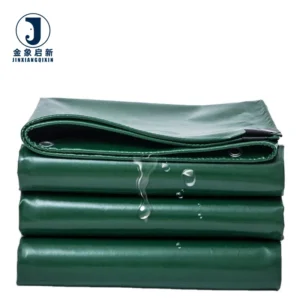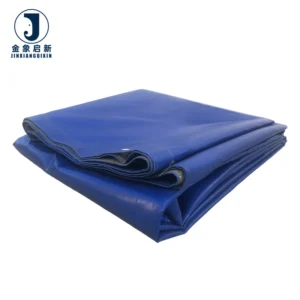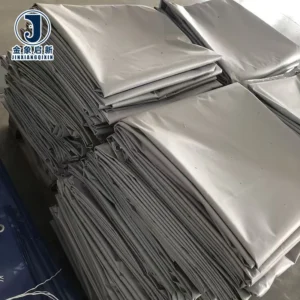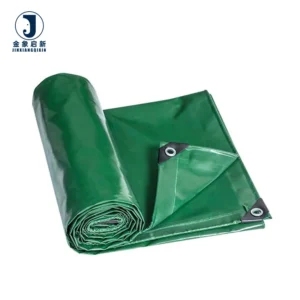
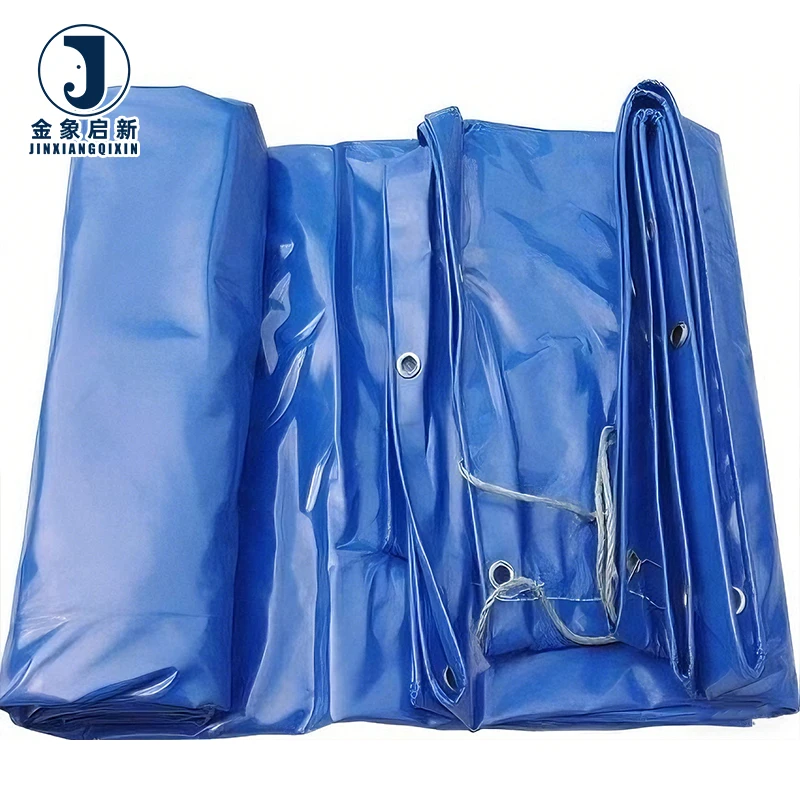
Precision Coating Control — every roll is backed by a material specification sheet stating exact GSM, base fabric denier and coating weight, verified at multiple production stages before dispatch.
Technical Specifications
| Parameter | Value |
|---|---|
| Product Type | PVC Coated Tarpaulin |
| Weight Range | 250gsm–1500gsm (confirm the grade for your application) |
| Base Fabric Denier | 200DX300D / 500DX500D / 840DX840D / 1000DX1000D |
| Coating Material | PVC |
| Surface Finish | Glossy or matte |
| Temperature Range | -15ºC to 70ºC |
| Waterproof | Yes |
| Flame Retardant | Treated (grade not stated — confirm the certification required for your market) |
| UV Treatment | Customized (test basis not stated — request test report for your batch) |
| Anti-Fungal | Treated |
| Color Options | Blue, yellow, black, green, white, and others |
| Size Options | 3x4m / 6x8m / 8x10m / 10x12m or custom made |
| Standards | ISO, CE |
Application Suitability
| Application | Exposure & Requirement |
|---|---|
| Truck and trailer side curtains | Constant flexing at load points, road spray abrasion, UV from prolonged sun exposure |
| Construction site and equipment covers | Wind uplift tension, puncture from scaffolding edges, rain and dust ingress |
| Agricultural and aquaculture pond liners | Permanent water immersion, soil chemistry contact, puncture from substrate |
| Tent and awning fabrication | Repeated folding and unfolding, seam stress at pole points, weather cycling |
| Inflatable and membrane structures | Internal air pressure tension, UV exposure on curved surfaces, weld seam integrity |
| Industrial equipment wrapping | Chemical splash resistance, abrasion from handling, tight folding for storage |
Why the PVC Coated Tarpaulin Fabric You Test Is Not the Fabric That Arrives
A quoted GSM means nothing without a verified weight test tied to the specific roll you receive.
Technical buyers regularly compare supplier quotations on a price-per-kilogram basis, assuming the stated 650 GSM or 900 GSM represents the actual coated fabric mass. In practice, the material that arrives on the loading dock can be lighter than the quoted specification — a gap that only becomes visible when tensile testing reveals lower-than-expected strength values. I have seen projects where the weld seam failed before the fabric body did, not because the welding parameters were wrong, but because the base fabric denier and coating weight did not match the data sheet. [NEED_CITE: tensile and tear test methods for coated fabrics per ISO 1421]
Denier Selection and Its Direct Impact on Mechanical Performance
The base fabric denier — whether 200DX300D for lighter applications or 1000DX1000D for heavy-duty exposure — governs how the PVC coated tarpaulin fabric responds to tensile and tear forces in the field. A higher denier yarn in the warp and weft provides greater resistance to tear propagation, which matters most at welded seams and eyelet reinforcement points where stress concentrates. Choosing the correct denier is not about picking the heaviest option available; it is about matching the base fabric construction to the actual mechanical demands of the installation.
Coating Weight and Its Relationship to Surface Behaviour
The PVC coating layer serves two functions: it encapsulates the base fabric to provide waterproofing, and it determines how the surface responds to welding, cleaning and environmental exposure. A glossy finish typically indicates a higher coating weight at the surface, which aids heat-seal welding by providing a consistent melt layer. A matte finish reduces glare and can improve ink adhesion for printed branding. The coating method and weight together define the GSM-to-strength relationship, and buyers specifying PVC coated tarpaulin fabric should request the coating weight breakdown separately from the total GSM. [NEED_CITE: coating adhesion and peel strength test standards for PVC coated textiles]
Reading the Specification Sheet Beyond GSM
Four parameters on the material data sheet interact to determine real-world performance. First, base fabric denier and weave density define the tensile and tear baseline before any coating is applied. Second, total GSM combines the base fabric weight with the PVC coating weight, and the ratio between them affects flexibility — a high GSM driven mostly by coating will be stiffer than the same GSM achieved with a heavier base fabric. Third, surface finish (glossy or matte) influences weld behaviour: glossy surfaces tend to seal at lower temperatures, while matte surfaces may require adjusted heat settings to achieve consistent seam strength. Fourth, the temperature range of -15ºC to 70ºC defines the operating envelope; below the lower bound the PVC layer becomes brittle and prone to cracking under flex, while approaching the upper bound the coating softens and may allow the base fabric to shift under load.
The Hidden Cost of Underspecifying Your Fabric Grade
When a technical buyer selects a PVC coated tarpaulin fabric grade based on price alone, the consequences surface weeks or months after installation. A lighter base fabric denier than the application requires leads to tear propagation starting at stress concentration points — corners, eyelets and welded seams. A flame-retardant claim without a documented test report means the material may fail site inspection or regulatory audit, forcing a full replacement at the contractor’s expense. Colour variation between rolls in the same shipment becomes visible once panels are installed side by side on a truck curtain or membrane structure, requiring selective panel sorting or outright rejection. Welded seams that fail before the fabric body typically indicate a mismatch between the welding temperature and the coating composition, a problem that only systematic in-process quality control can prevent. [NEED_CITE: common failure modes in PVC coated fabric installations at flex and weld points]
Why Technical Buyers Source This Material Here
Process control over PVC coating weight and base fabric adhesion has been refined across nearly 30 years of focused production, ensuring that the GSM stated on the quotation is the GSM verified on the roll. Three full production lines and 36 sets of professional equipment provide the capacity to deliver consistent batch quality across multi-roll orders. A 10-person R&D team handles material selection, sample development and custom sizing requests, producing samples within days rather than weeks. Dedicated QA/QC inspection runs at every production stage, with 100% pre-shipment inspection verifying weight, colour consistency and surface finish before any roll leaves the facility. ISO and CE certification underpins the documentation package, giving technical buyers the traceability their procurement systems require.
Documentation & Verification
- Material specification sheet stating exact GSM, base fabric denier and coating type per roll
- UV and flame-retardant test reports matched to the specific production batch where applicable
- ISO and CE certificates included with every shipment alongside certificate of origin
- Pre-shipment inspection record documenting weight verification and surface quality per roll
- Roll packing list with gross and net weight for container load planning
- Customs documentation support for international dispatch
Fabrication, Handling & Storage
- Heat-seal welding parameters should be adjusted based on whether the glossy or matte surface is being joined
- Store rolls upright on pallets to prevent flat-spot creasing that affects coating adhesion at the bend
- Allow cold-stored rolls to acclimatise above 10ºC before unrolling to avoid PVC layer cracking
- Cutting layout should account for the selected width to minimise off-cut waste and reduce seam count
- Clean matte surfaces with mild detergent only; solvent-based cleaners can degrade the surface treatment
Specifying the Right Grade for Your Project
Provide the mechanical demands of your application — tensile load at fixing points, expected flex frequency, and exposure conditions — so we can recommend the appropriate base fabric denier and GSM combination. If your market requires a specific flame-retardant or UV certification, state the standard and grade so test documentation can be matched to your production batch. Confirm whether you need roll stock in standard widths or custom sizing, and whether samples are required before bulk production proceeds.
Frequently Asked Questions
Q: How is the stated GSM verified before the PVC coated tarpaulin fabric ships?
A: Every roll undergoes weight verification during the pre-shipment inspection process. The measured GSM is recorded on the material specification sheet that accompanies each shipment, allowing you to confirm the fabric mass matches the quoted grade. If your procurement protocol requires third-party certified weight testing, this can be arranged for your specific batch.
Q: Which base fabric denier should I select for my tensile and tear requirements?
A: The choice depends on the mechanical demands of your application. Lower denier options such as 200DX300D suit lighter covering and temporary protection, while 1000DX1000D provides maximum tear resistance for truck curtains and membrane structures. Share your load and stress data so the appropriate denier can be matched to your performance requirement.
Q: What test documentation supports the UV and flame-retardant claims?
A: Where UV or flame-retardant treatment is specified, test reports are generated for the production batch and included with the shipment documentation. State the specific standard or grade required for your market at the inquiry stage so the correct treatment and corresponding test basis can be confirmed before production begins.
Q: How do glossy and matte finishes affect weld seam behaviour?
A: Glossy surfaces generally provide a more consistent melt layer during heat-seal welding, requiring standard temperature settings. Matte surfaces may need adjusted heat parameters to achieve equivalent seam strength. We recommend running weld tests on sample material to establish the correct temperature and dwell time for your chosen surface finish.
Q: What documentation comes with each roll of PVC coated tarpaulin fabric?
A: Each shipment includes a material specification sheet with GSM and denier data, relevant test reports for UV and flame-retardant grades, ISO and CE certificates, a pre-shipment inspection record, a roll packing list and certificate of origin. Additional customs documentation is provided based on your destination country requirements.