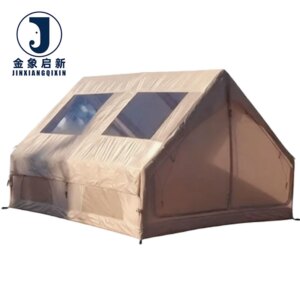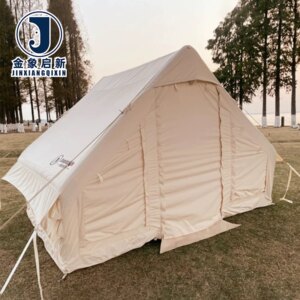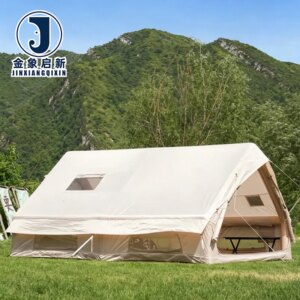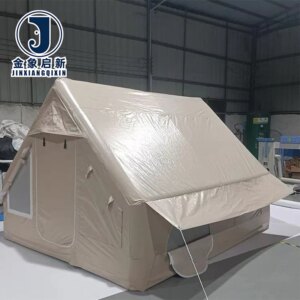
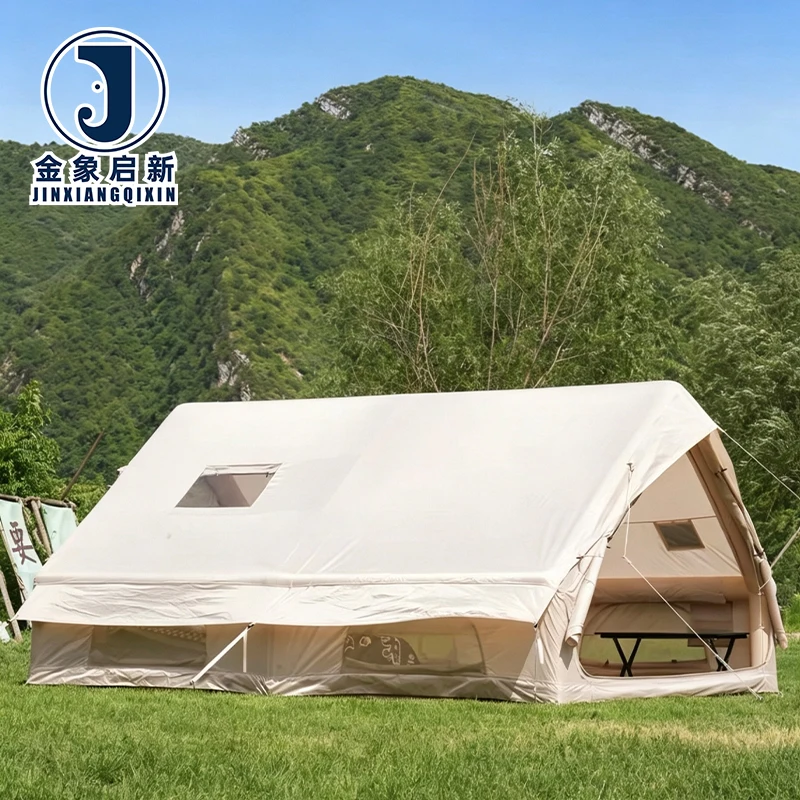
Precision Coating Control — Nearly 30 years of PVC resin formulation experience ensures consistent coating weight, adhesion, and weld behavior across every roll shipped for inflatable structure fabrication.
Technical Specifications
| Parameter | Value |
|---|---|
| Product Type | Inflatable Tent |
| Core Material | PVC Tarpaulin |
| Waterproof Rating | 3000mm water column |
| Fire-retardant Standard | EN 13501-1 |
| Raw Material | Virgin PVC resin (GB/T 5761-2006) |
| Thickness Tolerance | ±2% |
| Quality Testing | 24-hour inflation testing before shipment |
| Customization | Size adjustments, Pantone color matching, logo printing, custom door/window configurations |
| Certification | ISO9001, ISO14001, ISO45001, CE |
Application Suitability
| Application | Exposure & Requirement |
|---|---|
| Commercial outdoor events | Rapid deployment cycles, repeated inflation and deflation, public safety compliance requiring fire-retardant certification |
| Expedition base camps | High-altitude UV exposure, sub-zero temperatures, wind loading on inflated tube structures |
| Temporary workforce housing | Continuous occupancy, climate extremes, long-term air retention across seasonal temperature swings |
| Field research stations | Remote deployment where repair access is limited, demanding material durability and reliable seam integrity |
| Commercial adventure tourism | High-frequency setup and teardown by non-specialist crews, requiring abrasion resistance at ground contact and flex points |
Why Inflatable Tent Membranes Fail at the Seams Before the Fabric Does
Inflatable structures place continuous stress on welded joints that flat tarpaulin applications never encounter. The fabric must hold a consistent, airtight weld while flexing under inflation pressure across temperature cycles. When coating formulation is not optimized for heat-weld compatibility, the seam degrades before the membrane itself shows wear, leading to air leaks and structural deflation in the field [NEED_CITE: weld integrity testing for inflatable PVC structures].
Manufacturers sourcing PVC inflatable tent fabric aftermarket supplier options frequently discover that generic tarpaulin grades, while adequate for truck covers or pond liners, lack the specific coating chemistry needed for high-frequency or hot-air welding on inflatable tube construction. The result is warranty claims, returned goods, and project delays that erode margins on every tent produced.
Coating Formulation Engineered for Weld Integrity on Inflatable Chambers
The PVC coating on this inflatable tent material is formulated to achieve uniform melt behavior under both hot-air and high-frequency welding equipment. This ensures that the weld line achieves adhesion strength comparable to the base fabric, preventing the seam from becoming the failure point during inflation cycles. For inflatable tent fabric manufacturer custom orders, this weld consistency is what separates production-grade material from general-purpose tarpaulin that leaks within weeks of deployment.
Airtightness Validation Through 24-Hour Inflation Protocol
Every sample produced undergoes a continuous 24-hour inflation test before bulk production is authorized. This protocol detects micro-leaks at welded junctions and validates that the material maintains structural rigidity under sustained internal pressure [NEED_CITE: airtightness testing standards for inflatable membrane structures]. Commercial tent makers can evaluate weld behavior, flex response, and pressure retention on actual fabricated samples before committing to full container orders, reducing the risk of discovering performance gaps after material has been cut and assembled.
Thickness Tolerance and Its Effect on Automated Welding Lines
Maintaining a ±2% thickness tolerance across the production batch is critical for manufacturers running automated cutting and welding equipment. Variation beyond this range forces operators to adjust welding temperature and pressure settings mid-run, introducing inconsistency at seam junctions. Virgin PVC resin sourced to GB/T 5761-2006 provides the baseline material consistency that enables tight tolerance control, ensuring that every meter of PVC inflatable tent fabric aftermarket supplier rolls behaves identically on the production floor.
Understanding How Base Fabric and Coating Weight Interact
The tensile and tear performance of inflatable tent material depends on the interplay between base fabric denier, weave density, and coating weight — not on GSM alone. A heavier coating does not compensate for a loosely woven base fabric when inflation pressure stresses the material at tube bends and junction points. The coating method influences peel strength at welded seams: knife-over-roll coating typically achieves deeper penetration into the base weave, producing stronger mechanical bonding at the weld interface compared to lamination processes. This distinction matters when the inflatable structure must hold pressure through repeated setup and teardown cycles across varying ambient temperatures.
The Cost of Overlooking Batch Consistency in Inflatable Fabric Orders
When color varies between rolls within the same shipment, tent panels welded side by side reveal visible mismatches once the structure is inflated and displayed at an event or expedition site. Similarly, when thickness drifts outside tolerance across a batch, automated welding equipment produces inconsistent seams — some sections over-welded and brittle, others under-welded and prone to air leakage [NEED_CITE: batch consistency requirements for coated fabric in inflatable structures]. These defects typically surface after the material has been cut, welded, and assembled, making rework costly and delivery deadlines impossible to recover.
What Distinguishes This Supply Capability
Three full production lines dedicated to coated fabric enable simultaneous processing of multiple inflatable tent fabric orders without cross-contamination between formulations. A 10-person R&D team develops custom Pantone color matches, evaluates weld parameters for specific welding equipment brands, and produces sample rolls sized for client fabrication trials. In-process quality checks at the coating head verify GSM and thickness against the specification sheet before the roll advances to winding, catching deviations before they enter finished inventory. Dedicated QA inspection at 100% coverage before shipment confirms that fire-retardant treatment, color consistency, and surface finish meet the stated requirements on every roll packed.
Documentation & Verification
- Material specification sheet confirming GSM, base fabric construction, and coating type per roll
- Fire-retardant test report aligned to EN 13501-1 where applicable to the ordered grade
- Thickness and tensile verification report generated from in-process sampling
- Pantone color match approval record for custom color orders before bulk production
- Pre-shipment inspection record covering surface finish, weld test results, and roll labeling
Fabrication, Handling & Storage
- Hot-air welding temperature should be calibrated to the specific PVC coating grade before production runs begin
- High-frequency welding compatibility should be verified on sample material using the intended electrode configuration
- Rolls should be stored horizontally on pallets to prevent permanent creasing that affects weld surface contact
- Cold-weather deployment requires gradual unrolling to prevent coating surface cracking at low temperatures
- Surface cleaning with PVC-compatible solvents only, avoiding abrasive contact that damages the coating layer
Requesting a Specification Match for Your Inflatable Tent Project
Provide the intended deployment environment, including temperature range and UV exposure expectations, so the appropriate coating formulation and treatment grade can be recommended. Specify whether your production line uses hot-air or high-frequency welding equipment, as this influences coating optimization. Indicate required roll widths, annual volume, and whether Pantone color matching or logo printing is needed for your tent product line.
Frequently Asked Questions
Q: What PVC fabric weight and GSM do you recommend for inflatable tent tubes versus canopy panels?
A: Tube sections require higher tensile strength to sustain inflation pressure, so a heavier base fabric with tighter weave density is typically specified. Canopy panels prioritize lighter weight for handling and packing. We provide sample rolls in multiple grades so you can weld and inflation-test each before selecting the specification for your inflatable tent fabric manufacturer custom order.
Q: Can the fabric be welded on both hot-air and high-frequency welding equipment?
A: The PVC coating formulation is compatible with both welding methods. We recommend running sample material on your specific equipment to confirm optimal temperature and pressure settings. Our R&D team can adjust coating chemistry if your production line requires a narrower weld window or faster cycle times for the PVC inflatable tent fabric aftermarket supplier rolls you order.
Q: Do you provide fire-retardant certification accepted in European and North American markets?
A: Fire-retardant grades are available with test documentation aligned to EN 13501-1 for European markets. For North American requirements, confirm the specific standard your end customer or local authority requires. We supply available test reports with batch documentation — confirm the grade required for your market before placing the production order.
Q: What is the minimum order for custom colour or width on inflatable tent fabric?
A: Custom Pantone color matching and non-standard roll widths carry minimum quantities that vary by specification. Request a quotation with your target color reference and roll width, and we will confirm the minimum and lead time. Sample rolls in your custom color are produced for approval before bulk PVC inflatable tent fabric aftermarket supplier production begins.
Q: How do you ensure colour consistency across multiple rolls in a single order?
A: Color is matched to the approved Pantone reference at the coating stage, with in-process verification against the standard under controlled lighting. Rolls within a single production batch are inspected for visual consistency before packing. If your inflatable tent fabric manufacturer custom order spans multiple production runs, we retain the color standard on file to maintain consistency across shipments.