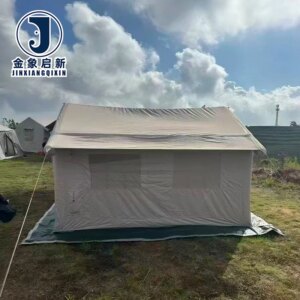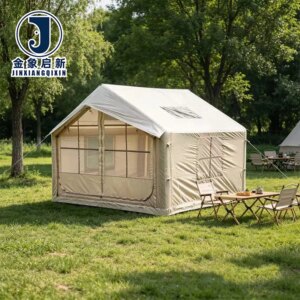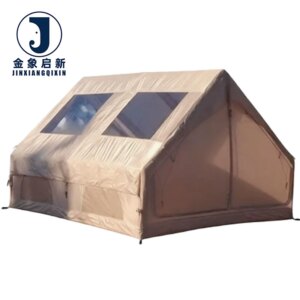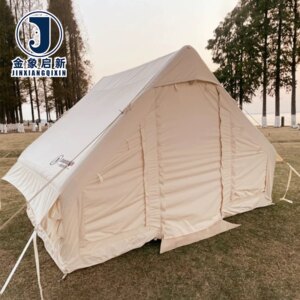
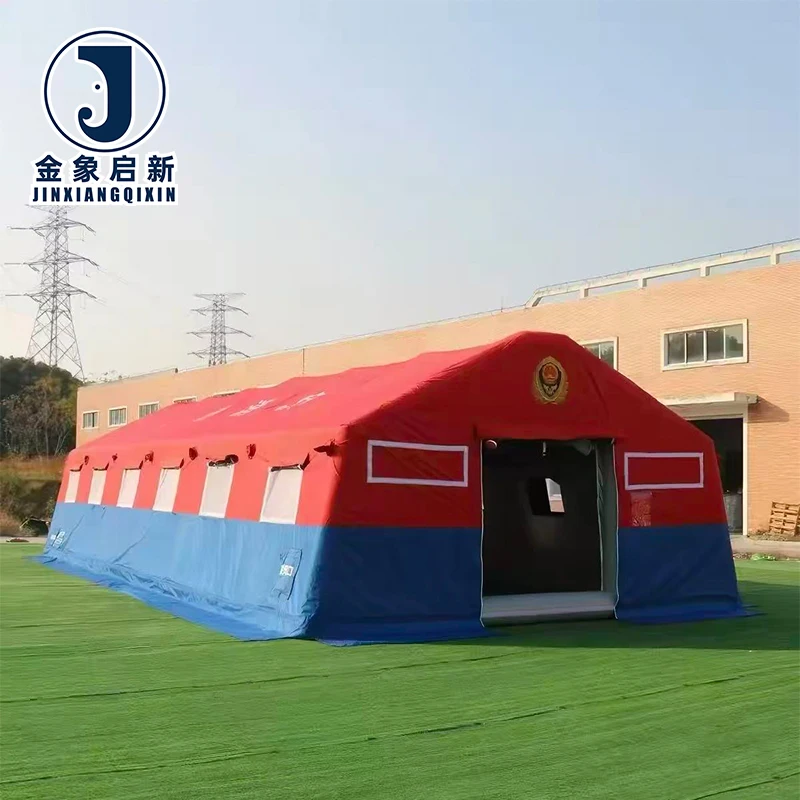
Deep Process Control — Coating weight and adhesion verified at every stage through 100% pre-shipment inspection, ensuring each roll of inflatable tent fabric meets your specified GSM before it leaves our facility.
Technical Specifications
| Parameter | Value |
|---|---|
| Product Type | Inflatable Tent Fabric |
| Core Material | PVC tarpaulin |
| Product Form | Single layer inflatable construction |
| Waterproof | Yes |
| UV Treatment | Available — confirm the treatment standard required for your market |
| Tear Resistance | Available — test standard to be specified per order |
| Flame Retardant | Available in fire-retardant grades — confirm the grade required for your market |
| Anti-Static | Available — surface resistance standard to be specified per application |
| Customization | OEM & ODM: size adjustment, pattern printing, material specification modifications |
| R&D Support | 10-person technical team handling material selection and sample development |
| Production Capacity | 3 full production lines, 36 sets of professional processing equipment |
| Certifications | ISO9001, ISO14001, ISO45001, CE |
Application Suitability
| Application | Exposure & Requirement |
|---|---|
| Mining and tunnelling inflatable shelters | Underground particulate environment, mandatory fire-retardant and anti-static compliance, continuous inflation pressure |
| Aviation ventilation duct fabrication | Airflow containment, fire code compliance in hangar environments, heat-weld airtight seams |
| Emergency response command centers | Rapid deployment, four-season weather cycles, repeated inflation and deflation |
| Membrane and inflatable structure contractors | Roll-stock sourcing with batch consistency, custom-coated PVC for site-specific engineering |
| Temporary construction site shelters | Abrasion from equipment movement, UV exposure during extended outdoor use |
What "Fire-Retardant" Means When the Certificate Does Not Follow the Roll
Fabric sold as fire-retardant without a batch-specific test report leaves your project exposed at the inspection stage.
Inflatable shelters deployed on mining sites or aviation facilities must pass fire safety audits before commissioning. Yet we regularly see PVC Inflatable Tent Fabric manufacturer quotations that state "FR treated" without naming the grade or attaching the test method [NEED_CITE: DIN 4102 fire classification for building materials]. When the site safety officer asks for documentation, the project stalls. Sourcing custom inflatable structure fabric with verified, batch-matched certification prevents this bottleneck entirely.
Coating Weight and Adhesion Under Inflation Stress
Inflatable structures place unique demands on coated fabric. The airbeam walls remain under constant internal pressure, meaning the coating-to-base-fabric bond must resist peeling forces that flat-sheet applications never encounter. A PVC Inflatable Tent Fabric manufacturer that controls coating weight in-house can adjust the formulation to maximise adhesion for single-layer inflatable construction, rather than relying on a generic laminating specification designed for truck covers or pond liners.
Heat-Weld Compatibility for Airtight Seams
Every seam in an inflatable shelter must hold air under positive pressure. The coating formulation directly determines whether hot-air welding produces a continuous bond or leaves micro-channels that bleed pressure over time. Our 10-person R&D team develops samples specifically for inflatable applications, testing weld parameters before bulk production begins so fabricators receive material with proven seam integrity.
How Base Fabric Construction Determines Tear Behaviour
When an inflatable beam is punctured, tear propagation speed determines whether the structure deflates gradually or collapses immediately. The base fabric denier, weave pattern, and thread count collectively control this behaviour. Higher denier yarns in the warp direction resist longitudinal tearing, while balanced weave density prevents the tear from deviating across the beam [NEED_CITE: tensile and tear test methods for coated fabrics per ISO 1421]. Selecting the right base fabric construction is therefore as critical as the coating specification itself for custom inflatable structure fabric.
Reading GSM and Coating Weight Correctly for Inflatable Applications
GSM alone does not predict how a fabric will perform inside an inflatable beam. A high GSM achieved through heavy coating but low-density base fabric may resist puncture yet tear rapidly once the coating is breached. Conversely, a moderate GSM built on a dense, high-denier base fabric with a thinner coating can outperform heavier material in tear propagation tests. For inflatable tent fabric, the ratio of base fabric weight to coating weight determines the balance between puncture resistance and structural tear strength — both must be evaluated together during specification.
The Cost of Accepting Undocumented Flame-Retardant Claims
A mining contractor recently received a container of inflatable shelter fabric labelled "FR" but accompanied only by a generic data sheet rather than a batch-specific test report. The site auditor rejected the entire shipment because the documentation did not reference the required standard or confirm the grade achieved by that production run [NEED_CITE: mine safety ventilation and shelter fire compliance requirements]. The project absorbed weeks of delay while replacement fabric was sourced and re-tested, a cost far exceeding the original material savings.
Why Sourcing Inflatable Tent Fabric Here Reduces Specification Risk
Our 9,180 m² facility runs three dedicated production lines, allowing inflatable tent fabric orders to be scheduled without competing against high-volume truck cover runs. Each roll undergoes 100% inspection against the agreed specification sheet before packing, with GSM and coating weight measured and recorded. The R&D team prepares application-specific samples so fabricators can validate heat-weld parameters and seam performance before committing to bulk. ISO9001, ISO14001, ISO45001, and CE documentation ships with every order, and pre-shipment inspection records are available for third-party review.
Documentation & Verification
- Material specification sheet confirming GSM, base fabric construction, and coating type per roll
- Fire-retardant and anti-static test reports issued per batch with grade and standard stated
- Pre-shipment inspection record documenting measured weight against quoted specification
- ISO9001, ISO14001, ISO45001, and CE certificates included with each shipment
- Certificate of origin and customs documentation prepared for export clearance
Fabrication, Handling & Storage
- Hot-air weld temperature and speed must be matched to the PVC coating formulation supplied — request the recommended parameters with your sample
- Store rolls upright on pallets in a dry, shaded area to prevent permanent creasing of the single-layer inflatable construction fabric
- Avoid dragging rolls across abrasive surfaces during warehouse handling to protect the coating face
- When unrolling in cold conditions, allow the PVC inflatable tent fabric to acclimatise before cutting to prevent coating micro-cracking
- Clean with mild detergent only — solvent-based cleaners may degrade the coating adhesion over repeated cycles
Requesting a Quotation That Matches Your Specification
To receive an accurate proposal for PVC Inflatable Tent Fabric manufacturer pricing and lead times, share the target GSM range, required fire-retardant or anti-static grade, and the total roll quantity. If your application demands custom width or pattern printing, provide artwork files and colour references so the R&D team can prepare a matched sample. Confirming your destination market’s compliance requirements at the inquiry stage ensures the correct test reports are prepared alongside your documentation package.
Frequently Asked Questions
Q: How do you verify GSM and coating weight on arrival against the quotation?
A: Every roll is weighed and measured during our 100% pre-shipment inspection. The recorded GSM and coating weight values are documented on the inspection record that accompanies your shipment, allowing you to cross-check against the specification sheet upon receipt.
Q: Which fire-retardant grades are available for inflatable tent fabric?
A: We produce inflatable fabric in multiple fire-retardant grades depending on your market requirements. Confirm the specific standard your project demands — such as M2, B1, NFPA 701, or DIN 4102 — at the inquiry stage so the correct formulation is applied and tested for your batch.
Q: What anti-static standard and surface resistance do you certify for mining and aviation applications?
A: Anti-static treatment is available for inflatable tent fabric destined for mining and aviation environments. Provide the surface resistance range or standard required by your site safety specification, and we will formulate and test accordingly, issuing a batch-specific report.
Q: How is batch-to-batch colour consistency controlled across multiple rolls of custom PVC fabric?
A: Colour matching is managed through controlled pigment dosing and verified against the approved reference sample during in-process quality checks. For multi-roll orders, rolls are produced in a single continuous run where possible to minimise variation.
Q: What heat-weld and seam performance testing is done before inflatable fabric ships?
A: Sample panels are heat-welded using parameters matched to your fabrication equipment, then tested for peel strength and air retention. The recommended weld temperature, speed, and pressure are documented and supplied with your order.