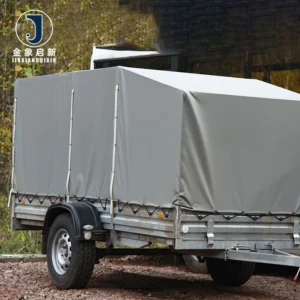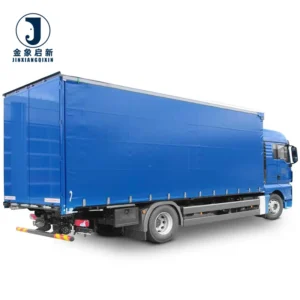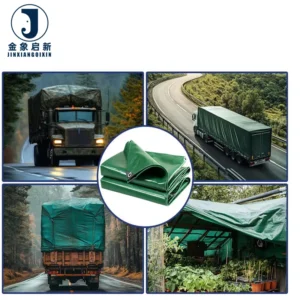
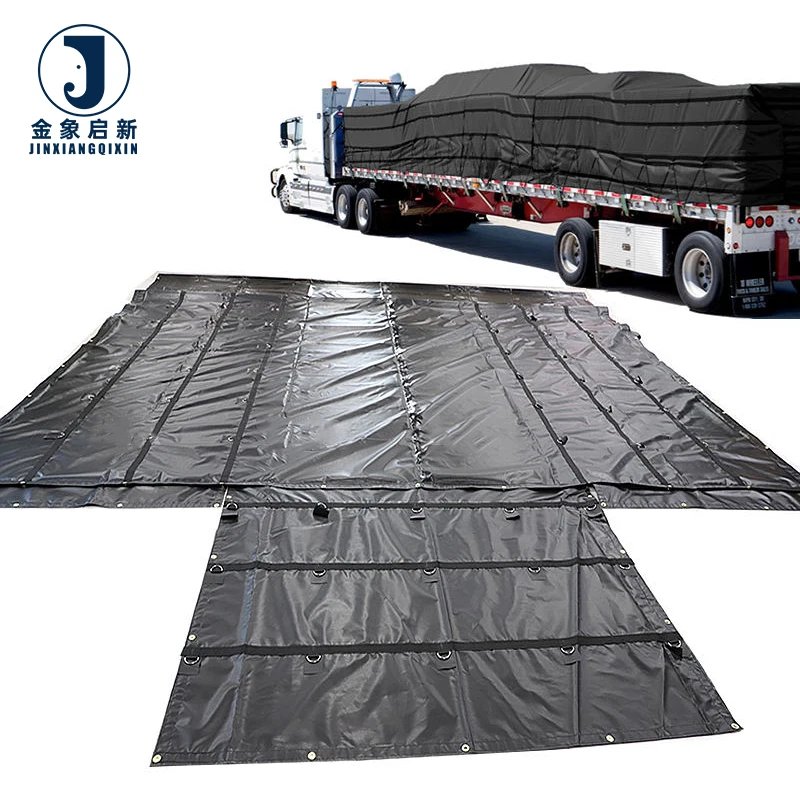
Coating Weight Control — dedicated QA/QC at every production stage with 100% pre-shipment roll inspection to eliminate GSM discrepancy between quotation and arrival on vinyl and RipSTOP truck tarpaulin grades.
Technical Specifications
| Parameter | Value |
|---|---|
| Product Type | PVC Coated Truck Tarpaulin |
| Base Fabric Options | Vinyl, RipSTOP |
| Weight Options | 12oz, 14oz, 15oz, 18oz |
| Construction Options | 1PC, 2PC, 3PC |
| Drop Length | 8′ |
| Waterproof | Yes |
| Abrasion-Resistant | Yes |
| Anti-Mildew | Yes |
| Anti-Pull | Yes |
| Customizable Density | Available to fit various truck sizes |
Application Suitability
| Application | Exposure & Requirement |
|---|---|
| Flatbed semi-truck cargo covering | Constant road vibration, wind-driven rain, UV exposure, tie-down strap abrasion at edges |
| Lumber transport protection | Heavy concentrated loads, sharp timber edges, repeated folding and unfolding at yard and delivery |
| Heavy-duty load weather protection | Extended highway exposure, temperature cycling, moisture ingress prevention across multi-day hauls |
Why the Quoted GSM Rarely Matches What Arrives on the Dock
Every roll leaves the line with verified coating weight documentation, not a batch average printed on a label.
Technical buyers specifying PVC coated truck tarpaulin GSM grades have encountered a recurring problem: the material specification sheet states one weight, but cutting into the roll on arrival reveals a lighter fabric. This discrepancy compounds when the cover must withstand tie-down strap tension, load flex, and road debris impact over thousands of miles. A few ounces per square yard of missing coating translates directly into reduced abrasion resistance at the drop panel and faster degradation at welded seams [NEED_CITE: tensile and tear test methods for coated fabrics per ISO 1421]. The gap between quoted and actual GSM is where premature failures originate — not in the design, but in the production oversight.
How Vinyl and RipSTOP Base Fabrics Differ Under Load
Vinyl base fabric provides a uniform weave structure that distributes tensile load evenly across warp and weft yarns, making it predictable for flat-panel truck cover fabrication. RipSTOP introduces a reinforcing grid at regular intervals within the weave, which arrests tear propagation if a puncture occurs at a tie-down point or where a sharp cargo edge presses against the fabric. For lumber transport, where timber ends concentrate stress on specific zones of the tarpaulin, the RipSTOP construction contains damage locally rather than allowing a split to run across the full panel. Selecting between the two depends on whether the primary risk is broad abrasion or localized puncture and tear. The PVC coated truck tarpaulin performs differently on the truck depending on which base fabric is specified.
Coating Weight and Its Direct Effect on Road Performance
Coating weight — expressed here as 12oz, 14oz, 15oz, or 18oz — determines the thickness of PVC applied to each side of the base fabric. Heavier coatings fill the weave more completely, increasing resistance to abrasion from strap friction and road grit while also improving waterproof integrity at seam overlaps. A 14oz grade suits standard flatbed loads where the cover is tensioned and removed regularly. An 18oz grade adds coating mass that better protects the base yarns from UV degradation and mechanical wear during steel or machinery transport [NEED_CITE: relationship between coating weight and abrasion resistance in PVC tarpaulin]. The adhesion between coating and base fabric is what prevents delamination at flex points, and this bond strength is a function of coating process control rather than weight alone.
Reading the Specifications Beyond the Weight Number
Coating weight without base fabric context is incomplete. A heavier vinyl weave with lower thread density may weigh the same as a lighter RipSTOP with a tighter grid, yet behave very differently under tensile load. The PVC coating method — whether knife-over-roll or dip coating — determines how deeply the compound penetrates the weave, which in turn governs peel strength at heat-welded seams. For truck tarpaulin fabrication, weld adhesion matters more than coating thickness alone because the seam is where load flex concentrates. Anti-mildew treatment integrated into the coating formulation prevents fungal growth trapped between folded panels during storage or wet-weather transit, extending usable service life without altering the surface finish. Anti-pull construction reinforces the fabric against distortion when ratchet straps apply point loads. Drop length of 8′ across 1PC, 2PC, or 3PC configurations determines how the cover drapes over the load and where seam lines fall relative to stress zones.
What Happens When Coating Weight Is Not Verified
When the coating applied falls short of specification, the first failure point is rarely obvious during initial installation. It appears weeks later at the welded seams where the PVC layer is too thin to form a proper heat bond, causing the seam to peel before the fabric itself shows wear. Anti-mildew treatment in a thinner coating layer depletes faster, leading to staining and fibre degradation on covers stored folded in damp conditions [NEED_CITE: common failure modes in PVC coated tarpaulin at welded seams]. Colour consistency also suffers when coating weight varies between rolls in the same order — visible as tonal shifts when two panels are installed side by side on the same trailer. These are not cosmetic issues; they are indicators that the process control behind the specification is absent.
Why Sourcing This Material Here Makes Sense for Your Fleet
Deep process control over PVC coating weight and base fabric adhesion comes from nearly 30 years of focused coated fabric production, applied specifically to truck tarpaulin grades. Three full production lines and 36 sets of professional equipment support bulk roll output with consistent GSM from first roll to last in a single order. A 10-person R&D team handles material selection and sample development, so you can evaluate vinyl versus RipSTOP performance with physical samples before committing to a production run. Dedicated QA/QC operates at every production stage, with 100% pre-shipment inspection verifying coating weight per roll against the stated specification. ISO and CE certified production ensures coating process traceability across every batch. Samples for custom sizing and drop configurations are developed within days, not weeks.
Documentation & Verification
- Material specification sheet stating exact GSM, base fabric type (Vinyl or RipSTOP), and coating method for each roll
- Weight verification per roll against the stated 12oz, 14oz, 15oz, or 18oz grade before dispatch
- Test report for UV and flame-retardant grades where applicable — confirm the grade required for your market
- Pre-shipment inspection record documenting roll-by-roll weight and visual consistency checks
- ISO and CE certificates with full production batch traceability
- Roll packing list with individual roll identification matching specification documentation
Fabrication, Handling & Storage
- Heat-weld at temperatures matched to the specific coating weight — 18oz grades require longer dwell time than 12oz at the weld bar
- Reinforce eyelet zones with additional PVC patches bonded to the base fabric before punching through the full thickness
- Store rolls upright on pallets to prevent flat-spot deformation that creates permanent creases in heavier 18oz grades
- Allow cold-stored rolls to reach ambient temperature before unrolling to avoid cracking the PVC coating at fold lines
- Use vinyl-compatible cleaners only — solvent-based products can dissolve the anti-mildew treatment integrated into the coating surface
- Plan panel layout on 1PC, 2PC, or 3PC configurations to place welded seams away from maximum-flex zones over cargo edges
Request the Right Specification for Your Load Profile
Provide the cargo type — lumber, steel, machinery, or mixed freight — and the typical haul distance and climate exposure. Specify whether you need roll stock for in-house fabrication or finished covers in 1PC, 2PC, or 3PC construction with 8′ drops. Indicate your target market so we can confirm whether fire-retardant or anti-static grades are required for compliance. State your preferred base fabric (Vinyl or RipSTOP) and coating weight, or request a sample comparison across grades before committing.
Frequently Asked Questions
Q: What is the difference between Vinyl and RipSTOP base fabric for truck tarpaulin?
A: Vinyl provides a uniform weave for predictable tensile performance across the full panel. RipSTOP adds a reinforcing grid that arrests tear propagation if punctured at a tie-down point or cargo edge. For lumber transport where sharp timber ends concentrate stress, RipSTOP contains damage locally. For general flatbed use, Vinyl offers consistent fabrication behaviour and weld performance.
Q: How do I verify the GSM matches what was quoted?
A: Request the material specification sheet stating exact coating weight per roll and the pre-shipment inspection record. On receipt, weigh a cut sample of known area and calculate GSM. Our 100% pre-shipment inspection verifies every roll individually before dispatch, so the documentation you receive reflects actual production weight, not a batch average.
Q: Can I get test reports for UV resistance and flame retardancy?
A: Test reports are provided for UV and flame-retardant grades where applicable. Specify the standard required for your market — such as NFPA 701 or a local fire classification — at inquiry stage so the correct treatment grade is selected and documented before production begins.
Q: What coating weight is right for my cargo type?
A: Standard flatbed freight typically suits 14oz or 15oz grades for balance of weight and durability. Heavy or abrasive loads like steel and machinery benefit from 18oz for additional coating protection at contact points. Lighter 12oz grades work for short-haul or less demanding loads. Request sample comparisons to evaluate against your specific tie-down and handling conditions.
Q: How are seams reinforced at drop panels and tie-down zones?
A: Welded seams at drop panels are heat-bonded with dwell time calibrated to the specific coating weight. High-stress zones near tie-down points receive additional PVC patch reinforcement bonded to the base fabric before eyelet installation, preventing the seam from peeling under repeated strap tension and load flex cycles.