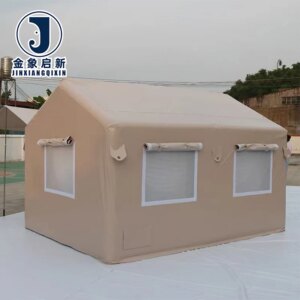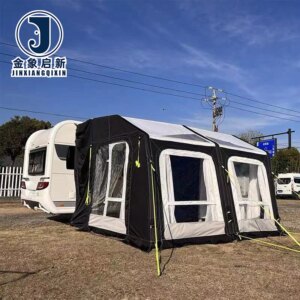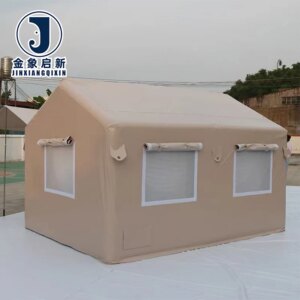
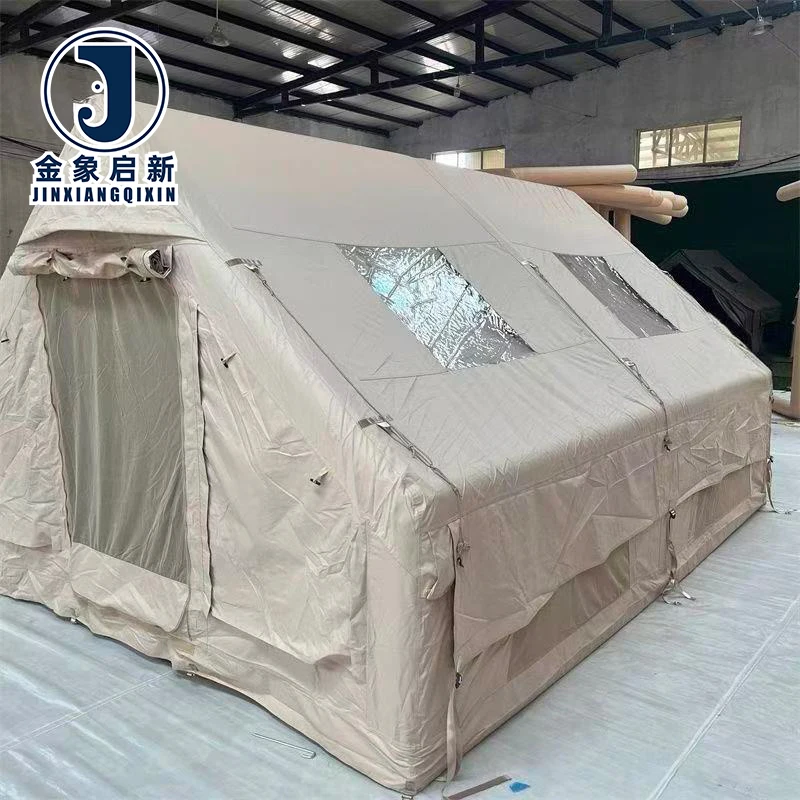
Process-Controlled Coating — Every roll of inflatable tent fabric undergoes dedicated QA/QC checks at each production stage, ensuring GSM and coating adhesion match the material specification sheet before dispatch.
Technical Specifications
| Parameter | Value |
|---|---|
| Product Type | Inflatable Tent |
| Core Material | PVC Tarpaulin |
| Key Performance | Waterproof, UV-resistant (test basis not stated in source), Tear-resistant |
| Season Rating | 4 Season |
| Capacity | 6-8 Person |
| Opening Mechanism | Automatic Opening |
| Customization | OEM & ODM, sample customization, pattern printing |
| Standards | ISO9001, ISO14001, ISO45001, CE |
Application Suitability
| Application | Exposure & Requirement |
|---|---|
| Commercial outdoor events | Repeated inflation cycles, public contact, rapid deployment and teardown |
| Construction site temporary housing | Dust, debris impact, prolonged weather exposure, high wind loads |
| Industrial camping operations | Remote site logistics, abrasion from ground contact, temperature fluctuation |
| Recreational facility supply | Seasonal storage, UV degradation risk, frequent handling by non-specialist users |
Why Material Verification Separates Reliable Inflatable Tent Fabric Manufacturers
A quoted GSM means nothing if the roll you receive weighs less on the warehouse scale.
Buyers sourcing PVC tarpaulin for inflatable structures often face a gap between the specification sheet and the material that arrives. Coating weight can drift across a production run without visible change to the surface, yet the structural performance under inflation pressure drops accordingly. UV-resistant or flame-retardant claims appear on invoices without a test report attached, leaving the fabricator exposed when the end user demands compliance documentation. [NEED_CITE: ISO 1421 test methods for tensile properties of rubber- or plastics-coated fabrics] When welded seams on an inflatable beam fail before the fabric itself degrades, the root cause is frequently a coating formulation that does not bond adequately to the base weave under thermal stress.
Base Fabric and Coating Adhesion Under Inflation Stress
Inflatable tent structures place continuous internal pressure on every welded seam and fabric panel. The base fabric denier and weave density determine how the material distributes that load, while the coating adhesion governs whether the PVC layer stays bonded when the beam flexes during wind gusts or occupant movement. An Inflatable Tent Fabric manufacturer with control over both the weaving and coating stages can match the formulation to the structural demand, rather than relying on generic stock.
Batch Consistency Across Multi-Roll Orders
Fabricators producing multiple inflatable shelters from a single purchase order need every roll to behave identically on the welding table. Variations in plasticiser content or coating thickness between batches shift the heat-seal parameters, forcing operators to recalibrate mid-run. Consistent roll-to-roll output from a controlled production line eliminates this variable, reducing scrap and rework at the fabrication stage. [NEED_CITE: ASTM D751 standard test methods for coated fabrics]
Reading the Specification Beyond the GSM Number
The GSM figure tells you the total mass per square metre but reveals nothing about how that mass is distributed between the base yarn and the coating layers. Two fabrics at identical weight can differ substantially in tear strength if one uses a heavier yarn with a thinner coat while the other relies on a thick coating over a lighter weave. For inflatable tent beams that must resist puncture and maintain shape under pressure, the yarn specification is as critical as the coating weight. Surface finish — whether glossy or matte — affects dirt retention and the adhesion of printed branding applied after fabrication. Understanding these relationships allows a technical buyer to specify on performance rather than a single headline number.
The Hidden Cost of Specifying on Price per Kilogram
When procurement decisions reduce to cost per kilogram, the incentive for the supplier shifts toward minimising raw material input while holding the quoted weight. This can result in a higher filler loading in the coating compound, which maintains the GSM reading but reduces flexibility at low temperatures and accelerates surface cracking after sustained UV exposure. For an inflatable tent deployed in seasonal conditions, the material may pass initial waterproof testing yet become brittle and prone to seam failure within a short service period. [NEED_CITE: plasticiser migration effects on PVC flexibility over time] The fabricator then absorbs the warranty cost, and the end user loses confidence in the inflatable structure format entirely.
Direct Process Control From Coating to Dispatch
Our 9,180 m² facility houses three full production lines and 36 sets of professional processing equipment dedicated to coated fabric, giving us direct control over coating weight, adhesion, and surface finish on every roll of inflatable tent material. A 10-person R&D team handles material selection, pattern printing development, and custom sample builds, returning samples within days rather than weeks. Dedicated QA and QC staff inspect at each production stage, not only at final packing, catching deviations in coating thickness or colour before they compound across the batch. Every shipment is accompanied by a pre-shipment inspection record that documents waterproof testing, structural load testing, and deployment functionality checks specific to the rolls in that consignment. This process discipline is what defines a dependable Inflatable Tent Fabric manufacturer for buyers who cannot afford material surprises on the production floor.
Documentation & Verification
- Material specification sheet stating base fabric type, coating method, and colour reference for every batch produced
- UV treatment test report supplied where applicable to substantiate performance claims for outdoor-rated inflatable tent rolls
- ISO and CE certificates included with each shipment for regulatory compliance in destination markets
- Pre-shipment inspection record covering waterproof testing and structural load testing per roll before container loading
- Roll packing list with individual roll weights and dimensions for receiving verification at the fabrication facility
Fabrication, Handling & Storage
- Heat-seal parameters should be established on sample cuts from the actual production batch before full panel welding begins
- Store rolls horizontally on racking to prevent permanent creasing in the PVC coating that can weaken at fold lines
- Use a compatible PVC-based repair adhesive matched to the coating formulation for field patching of punctures or seam lifts
- Allow cold-stored rolls to reach ambient temperature before unrolling to avoid coating crack at low-temperature flex points
- Cut panels with consideration for weave orientation to align the stronger warp direction with the primary inflation load axis
Moving From Inquiry to Production
To specify the correct PVC tarpaulin grade for your inflatable tent programme, share the intended deployment environment, the inflation pressure your design operates at, and any fire classification your destination market requires. Provide target roll widths and annual volume so we can align production runs for batch consistency. If pattern printing or custom colour is part of the design, we will develop a sample roll section for your approval before committing to full production.
Frequently Asked Questions
Q: How is UV resistance verified and what test basis supports the claim?
A: Where UV-resistant treatment is specified, we supply a test report documenting the method and exposure duration used. If your market requires a particular standard such as ISO 4892 or ASTM G154, confirm the requirement at inquiry stage so the correct additive package and test protocol can be applied to your batch.
Q: How is batch-to-batch colour consistency controlled across roll production?
A: Each production run references a master colour sample approved during the development phase. In-process checks compare the coating output against this reference under controlled lighting. The pre-shipment inspection record documents the colour verification result for every roll in the order.
Q: What customization options are available for pattern printing and custom sizing?
A: Our R&D team supports OEM and ODM requirements including pattern printing, custom roll widths, and cut-to-size panels. Sample development is completed within days for approval before bulk production. Minimum order quantities and lead times depend on the complexity of the print and the width requested.
Q: What documentation accompanies each shipment for compliance and quality traceability?
A: Every dispatch includes a material specification sheet, relevant test reports, ISO and CE certificates, a pre-shipment inspection record, and a detailed roll packing list. This documentation package supports traceability from raw material batch through to the finished rolls received at your facility.
Q: How are welded seams tested to ensure they outlast the fabric under inflation flex cycles?
A: Welded seam samples from each production batch undergo peel strength testing to verify that the bond between coating layers exceeds the minimum threshold for the specified inflation pressure. Results are recorded in the pre-shipment inspection documentation supplied with the shipment.