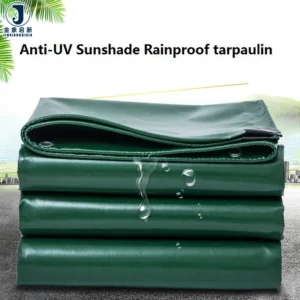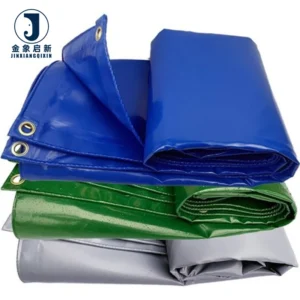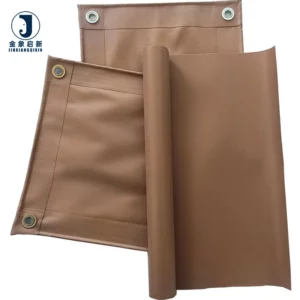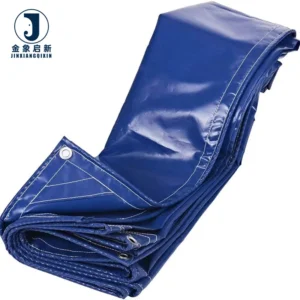
Coating Weight Control — Three full production lines and 36 sets of equipment maintain verified GSM consistency across every roll of PVC coated tarpaulin shipped, with 100% pre-shipment inspection confirming weight against the material specification sheet.
Technical Specifications
| Parameter | Value |
|---|---|
| Product Type | PVC Coated Tarpaulin |
| Coating Material | PVC |
| Weight Options | 700gsm / 850gsm / 900gsm |
| Coating Method | Knife Coated |
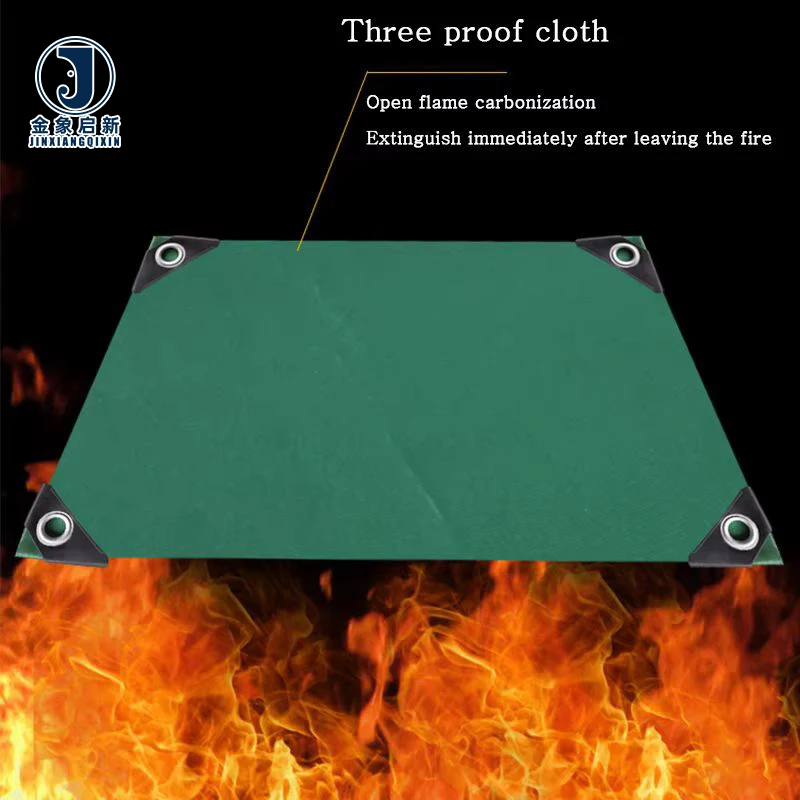
| Flame Retardant | Available — grade not stated, confirm required standard |
| Anti-Static | Available — test basis not stated, verify surface resistance values |
| Anti-Mildew | Treatment available |
| Anti-Cold | Treatment available |
| Waterproof | Fully waterproof coated construction |
| Outdoor Weather Resistance | 1–3 years (source value — verify against current batch data) |
| Customization | Custom sizes, treatments and colour options |
Application Suitability
| Application | Exposure & Requirement |
|---|---|
| Truck side curtain fabric | Constant flexing at load points, road abrasion, UV and rain exposure |
| Top cargo cover | Direct sunlight, wind-driven rain, tie-down strap pressure at contact zones |
| Flatbed trailer cover | Puncture risk from irregular loads, pooling water on horizontal surfaces |
| Fleet-standard curtain sider | Repeated opening and closing cycles, rail track abrasion at upper edge |
| Industrial equipment wrap | Dust ingress prevention, outdoor storage through seasonal temperature swings |
Why Coating Weight Alone Fails to Predict Field Performance
The PVC layer must bond to a base fabric engineered for the specific stress pattern of a moving load.
When a truck cargo cover fails, it rarely tears across a flat panel. The split opens at a welded seam, along a fold line, or at an eyelet that was punched through a c* Buyers who specify only GSM on the enquiry often receive material that meets the weight target but delivers inconsistent adhesion between the PVC coating and the polyester scrim beneath [NEED_CITE: tensile and tear test methods for coated fabrics per ISO 1421]. The result is a cover that passes arrival inspection but delaminates within months of highway use.
Selecting the right PVC coated tarpaulin material coating technology gsm combination requires reading the specification sheet as a system — base fabric denier, weave density, coating method and treatment chemistry all interact to determine how the fabric behaves under real transport conditions.
Knife Coating and Adhesion at Flex Points
The knife-over-edge coating method forces PVC paste into the interstices of the base fabric under controlled pressure, producing a mechanical bond that resists peeling when the material flexes repeatedly. For truck side curtains that open and close dozens of times per delivery route, this adhesion strength determines whether the coating stays locked to the scrim or begins to lift at stress concentrations. PVC coated tarpaulin produced by knife coating maintains a consistent coating profile across the full roll width, reducing the risk of thin spots that become failure origins.
Treatment Chemistry and Compliance Verification
Flame retardant and anti-static treatments are available across the 700gsm, 850gsm and 900gsm range, but the test basis for each must be confirmed against the compliance framework of the destination market. A mining site in Western Australia may require anti-static surface resistance values measured to a specific standard, while a European logistics hub may reference EN 13501-1 for flame classification. Request the test report before production begins, not after the container arrives [NEED_CITE: fire classification test standards for transport and industrial fabrics]. Anti-mildew and anti-cold treatments modify the PVC compound formulation and can interact with flame retardant chemistry, making pre-production sample approval essential when multiple treatments are specified on the same fabric.
Reading GSM, Base Fabric and Coating Weight as a System
GSM measures total fabric weight per square metre — it combines the base polyester scrim and the PVC coating together. A 900gsm fabric can achieve that weight through a heavy coating on a light base, or a moderate coating on a dense, high-denier scrim. The second construction delivers higher tensile and tear strength because the load-bearing yarns carry more of the stress. Knife coating adds weight primarily through the PVC layer, so understanding the ratio between base fabric weight and coating weight reveals how the material will handle at weld seams. When coating thickness exceeds what the base fabric can anchor, the PVC layer can crack independently of the scrim during cold-weather folding [NEED_CITE: relationship between coating adhesion and low-temperature flexibility in PVC fabrics]. Always request the base fabric denier and weave density alongside the total GSM figure.
What Happens When the Specification Is Incomplete
A truck fleet that orders PVC coated tarpaulin by GSM alone, without specifying base fabric construction or treatment test basis, exposes itself to several downstream failures. Rolls that arrive at the correct weight but with lower denier base yarns will tear more easily at tie-down points. Flame retardant claims unsupported by a test report lead to rejected deliveries at sites with documented fire safety audits. Colour variation between production runs forces fabricators to reject panels that are visibly mismatched once installed side by side on the same trailer [NEED_CITE: batch colour consistency standards in coated fabric production]. Each of these outcomes traces back to an incomplete enquiry that left critical parameters to supplier discretion.
Why This Production Facility Fits Technical Buyers
Deep process control over coating weight and adhesion comes from nearly 30 years focused exclusively on coated fabric, giving the technical team the pattern recognition to anticipate how formulation changes affect weld behaviour. Three full production lines running 36 sets of professional equipment provide the capacity to deliver multi-container orders of PVC coated tarpaulin with consistent roll-to-roll properties. The 10-person R&D team develops material formulations and treatment combinations against specific buyer requirements, producing samples within days rather than weeks. Every roll undergoes 100% inspection before dispatch, with GSM verified and recorded per roll against the purchase specification. ISO and CE certified production processes underpin the documentation package that accompanies each shipment.
Documentation & Verification
- Material specification sheet stating exact GSM, base fabric denier, weave density and coating method for the grade ordered
- Test reports for flame retardant and anti-static treatments referencing the specific standard required by the buyer’s market
- Roll-by-roll GSM verification record generated during pre-shipment inspection
- ISO and CE certificates covering the production facility and quality management system
- Certificate of origin and customs documentation supporting international freight clearance
- Pre-shipment inspection record with photographic evidence of roll condition and packing
Fabrication, Handling & Storage
- Knife coated surfaces require hot air welding at temperatures matched to the specific PVC formulation — request weld parameter guidance for the selected GSM grade
- Reinforce eyelet zones with additional PVC patches to distribute tie-down loads across the base fabric weave
- Store rolls upright on pallets to prevent flat-spotting that creates permanent creases in 700gsm through 900gsm material
- Allow cold-stored rolls to reach ambient temperature before unrolling to avoid cracking the PVC coating at low flex points
- Use only PVC-compatible cleaners — solvent-based products can degrade anti-mildew and anti-cold treatment additives
Requesting a Specification Match
Provide the truck or trailer model, the panel dimensions and whether the cover will be supplied as a finished fabricated unit or as roll stock for your own workshop. State the compliance framework your end customer or site operator requires — particularly for flame retardant and anti-static properties — so the correct test reports can be prepared before production. Confirm annual volume and colour requirements to establish batch consistency parameters across repeat orders.
Frequently Asked Questions
Q: How is GSM verified on PVC coated tarpaulin before shipment?
A: Each roll is sampled and weighed against the stated GSM during pre-shipment inspection. The verification record is included in the dispatch documentation. Weight discrepancy typically originates from coating thickness variation during production, which is why in-process quality checks at the coating head are essential to catch deviation before the roll is wound.
Q: What flame retardant grades can be supplied and how do I confirm the right one?
A: Flame retardant treatment is available across all GSM grades, but the specific grade must be matched to your target market’s fire safety standard. Provide the regulation or test method your end user requires — such as a national building code or transport authority specification — and request the corresponding test report before committing to production.
Q: What test basis supports the anti-static treatment claim?
A: Anti-static treatment modifies the PVC compound to control surface resistance. The test method and target resistance value must be agreed before production, as different regulated environments specify different measurement standards. Request a sample with test documentation for your compliance team to review before bulk manufacture begins.
Q: How does the coating method affect weld seam durability at flex points?
A: Knife coating forces PVC into the base fabric interstices, creating a mechanical bond that resists peeling under repeated flexing. This adhesion quality is critical for truck side curtains where welded seams experience constant movement. Poorly bonded coating lifts at the weld line before the base fabric itself reaches its fatigue limit.
Q: What base fabric options are available across the 700gsm to 900gsm range?
A: Each GSM grade is built on a base fabric selected to balance coating weight with scrim strength. Higher GSM grades can be constructed with heavier denier yarns or denser weaves to improve tear resistance. Request the base fabric specification sheet for each grade to compare denier and weave density against your tensile and tear requirements.