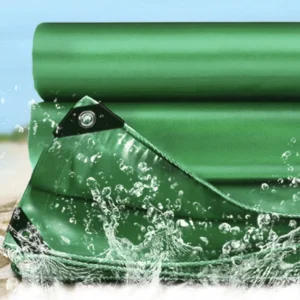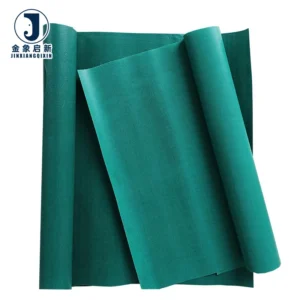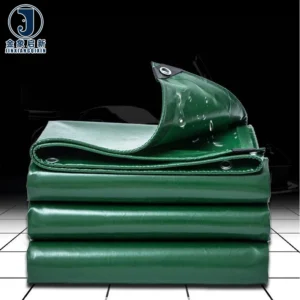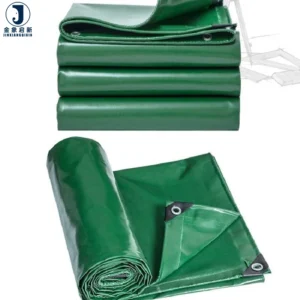
Technical Grade PVC Coated Tarpaulin Roll for Farm – Knife Coated
Deep process control over coating weight — every PVC coated tarpaulin roll leaving our production line carries a documented coating adhesion value verified against the base fabric denier before winding.
Technical Specifications
| Parameter | Value |
|---|---|
| Product Type | PVC Coated Tarpaulin Roll |
| Material | PVC Coated Polyester Fabric |
| Base Fabric Construction | Warp knitted / woven plain |
| Finish | Waterproof and Anti-Static |
| Feature | Durable and Tear Resistant |
| Custom Options | Customizable Colors |
| Application Grade | Industrial Strength / Heavy-duty |
| Standards | ISO, CE |
Application Suitability
| Application | Exposure & Requirement |
|---|---|
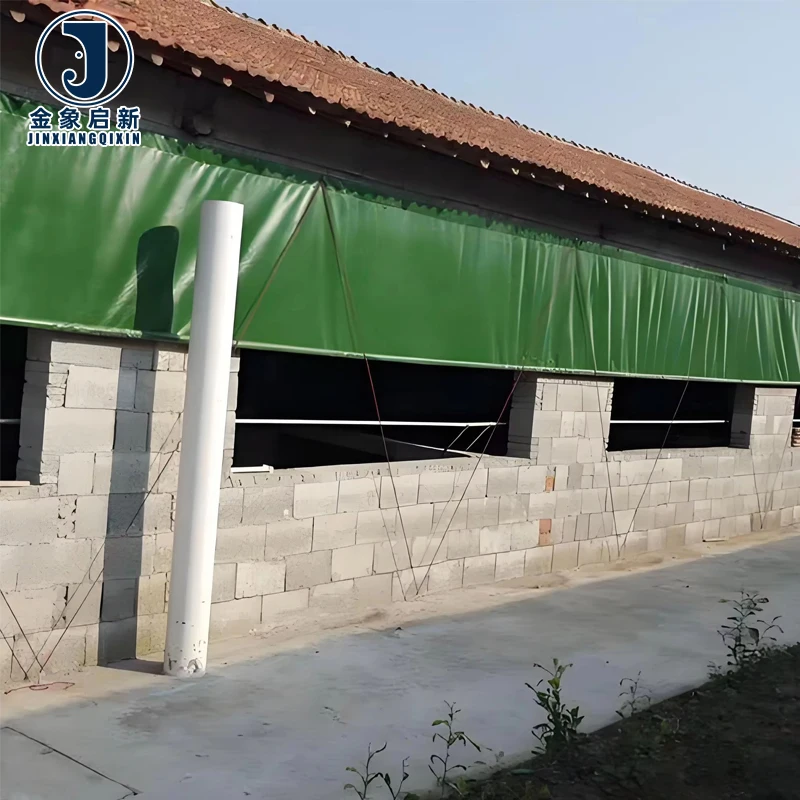
| Poultry farm sidewall curtains | Continuous moisture, ammonia vapour, daily roll-up flex cycles |
| Pig and sheep pen enclosures | Animal contact abrasion, wind load, rain ingress prevention |
| Broiler house roof liners | Condensation drip, thermal retention, static build-up risk |
| Agricultural tent and shelter | Full weather exposure, rapid assembly tear stress at pole contact |
What "Waterproof and Anti-Static" Means Without a Test Report
Request the coating specification sheet and test report before committing to roll quantity. A PVC coated tarpaulin roll for farm cover can claim anti-static treatment, but without a measured surface resistance value or a named standard, the claim remains unverifiable on arrival. Technical buyers specifying material for livestock enclosures where static build-up attracts dust or poses ignition risk need documented proof, not catalogue wording [NEED_CITE: anti-static test standards for PVC coated agricultural fabrics]. Coating weight variation between production batches compounds the problem — a roll that tests within tolerance in January may drift outside it by August if in-process QA does not catch the shift early.
Base Fabric Weave and Its Effect on Dimensional Stability
Warp knitted construction in this PVC coated tarpaulin roll provides multi-axial yarn interlocking, meaning the base fabric resists distortion when cut, welded or subjected to uneven tension across a farm enclosure frame. Woven plain alternatives offer higher initial tensile figures in warp and weft but can skew under bias loads common in curved shelter roofs. The choice between these two base fabrics directly determines how the material behaves during fabrication and in service.
Coating Method and Adhesion Behaviour
Knife-over-edge coating applies a measured layer of PVC plastisol directly onto the warp knitted base, then passes through a multi-zone oven for gelation and fusion. This method produces a continuous film with strong mechanical keying into the yarn structure, supporting reliable hot-air welding at seams. Dip coating, by contrast, yields a thinner layer with lower adhesion values — acceptable for short-life covers but unsuitable for permanent farm structures where flex cycles peel the coating from the substrate [NEED_CITE: coating adhesion test methods for PVC tarpaulin per ISO 2411].
How GSM Relates to Base Fabric Denier and Coating Weight
GSM on a PVC coated tarpaulin roll is the sum of the base fabric weight plus the PVC coating applied to both faces. A heavier base fabric denier contributes tensile and tear strength, while coating weight governs waterproof integrity, surface abrasion resistance and weld seam behaviour. Two rolls with identical GSM can perform very differently if one achieves it through heavy coating on a light base and the other through a dense base with thinner coating. Technical buyers should request a breakdown showing base fabric weight and coating weight separately, then match the ratio to the mechanical demands of the farm structure being fabricated.
The Hidden Cost of Specifying on GSM Alone
Purchasing PVC coated tarpaulin rolls for farm cover based on a single GSM figure invites batch-to-batch inconsistency that only appears once installed side by side. Lighter-than-agreed material shows up as visible sag between frame members, increased flutter in wind and earlier coating delamination at welded seams. Anti-static treatment applied without dosage control produces rolls that pass initial surface resistance checks but degrade within weeks of exposure to ammonia-rich farm air. Colour drift across rolls from different production runs forces the fabricator to either accept visible panel mismatches or reject an entire container load [NEED_CITE: roll-to-roll colour consistency standards in coated fabric production].
Why Procure Here
Nearly 30 years of focus on PVC coated fabric means the coating formulation for agricultural grades has been adjusted through multiple farm-installation feedback cycles, not borrowed from general-purpose tarpaulin lines. Three full production lines with dedicated knife-coating heads maintain coating weight consistency across long roll runs. A 10-person R&D team handles base fabric selection and anti-static additive dosing, supplying formulation data on request. Every roll undergoes inspection for coating adhesion, surface finish and colour match against the approved reference before winding. Custom widths and colours are produced on the same lines as stock grades, eliminating the minimum-quantity barrier that delays farm enclosure projects.
Documentation & Verification
- Material specification sheet stating GSM breakdown between base fabric and coating weight for each PVC coated tarpaulin roll.
- Anti-static surface resistance test report citing the applicable standard and measured values.
- Pre-shipment inspection record confirming coating adhesion, colour match and weld test strip results.
- ISO and CE certificates covering the production facility and quality management system.
- Roll packing list with individual roll identification numbers traceable to the production batch.
Fabrication, Handling & Storage
- Hot-air weld temperature and speed must be set to the specific PVC coating formulation used on this roll to avoid seam delamination.
- Store rolls upright on pallets in a dry, shaded area to prevent edge crushing and surface marking on the waterproof coating.
- When unrolling in cold conditions, allow the PVC coated fabric to reach ambient temperature before flexing to avoid micro-cracking in the coating.
- Cut panels with sharp blades to prevent yarn pull on the warp knitted base fabric edges.
- Clean installed farm covers with mild detergent only; solvents attack the PVC plasticiser and reduce anti-static treatment effectiveness.
Next Steps for Specification
Send the target farm type, expected exposure conditions and any anti-static or fire classification requirements applicable in your market. Specify required roll width, colour reference and annual volume so the quotation reflects your actual fabrication yield. If a sample panel is needed to validate weld parameters on your equipment, request it before confirming roll quantity.
Frequently Asked Questions
Q: How is GSM related to base fabric denier and coating weight in this roll?
A: GSM is the combined weight of the warp knitted base fabric plus the PVC coating on both faces. A heavier denier base improves tear resistance, while coating weight governs waterproof integrity and weld behaviour. Request a GSM breakdown showing each component separately to match the ratio to your farm structure requirements.
Q: Can anti-static treatment be verified with a test report?
A: Yes. Each PVC coated tarpaulin roll ordered with anti-static treatment can be accompanied by a surface resistance test report citing the standard used and the measured ohmic value. Confirm the standard required for your market at the inquiry stage so the correct additive dosage is applied during production.
Q: How is colour consistency maintained across multiple rolls in one order?
A: All rolls in a single order are produced from the same PVC batch with colour matched against a physical reference swatch. A pre-shipment inspection compares adjacent panels from the first, middle and last roll under controlled lighting before dispatch, and results are recorded in the inspection report.
Q: What documentation is supplied with each roll shipment?
A: Every shipment includes a material specification sheet with GSM breakdown, applicable test reports for anti-static or UV claims, a roll packing list with batch traceability, ISO and CE certificates, and a certificate of origin for customs clearance.