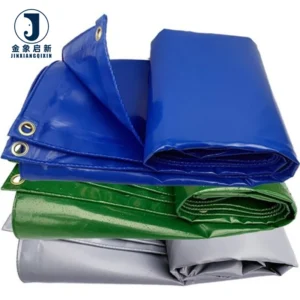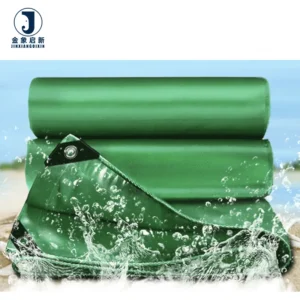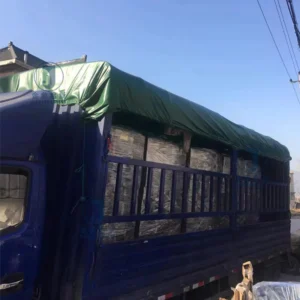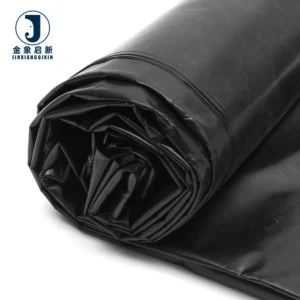
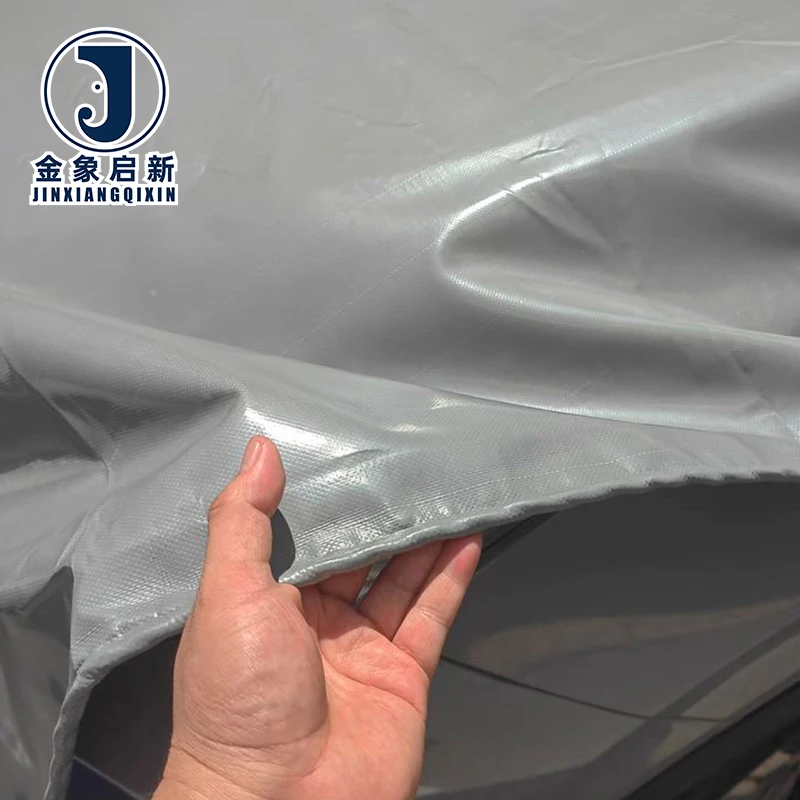
Coating Weight Transparency — we map base fabric denier, mesh count and PVC coating weight to the stated GSM so technical buyers can verify material on arrival, not just trust the quotation.
Technical Specifications
| Parameter | Value |
|---|---|
| Product Type | PVC Coated Tarpaulin Roll for Farm Tent Cover |
| Material | PVC coated woven fabric |
| Base Fabric Construction | Warp knitted / woven plain |
| Style | Plain woven |
| Surface Treatment | Anti-static (test basis not stated in source), waterproof |
| Tear Resistance | Enhanced for harsh conditions (grade not stated in source) |
| Color Options | Customizable shades |
| Application Grade | Industrial strength, heavy-duty |
| Standards | ISO, CE |
Application Suitability
| Application | Exposure & Requirement |
|---|---|
| Poultry farm side-wall and roof covers | Constant humidity, ammonia-rich air, daily thermal cycling, mechanical stress from wind loading |
| Pig and sheep farm tent enclosures | Animal contact abrasion, high moisture, periodic cleaning with pressurised water |
| Broiler and layer house curtain systems | Repeated rolling and unrolling, flex fatigue at fold lines, static charge accumulation risk |
| Temporary agricultural shelters | Direct weather exposure, UV radiation, tensioned installation over frame structures |
Why a Quoted GSM Fails to Predict Real-World Tensile and Tear Performance
A 650 GSM label tells you nothing about how that weight is distributed between base fabric and coating.
Technical buyers sourcing PVC Coated Tarpaulin base fabric denier coating weight GSM for agricultural enclosures often discover on delivery that the roll feels lighter than expected. The problem is rarely fraud — it is usually a specification that listed only total GSM without breaking it into base fabric weight and coating weight. A roll can meet the quoted GSM with a heavy coating over a thin base fabric, and that combination will tear at the first fold point under wind load [NEED_CITE: tensile and tear test methods for coated fabrics per ISO 1421]. The base fabric carries the structural load; the coating provides the barrier. When the split is unknown, performance is a guess.
How Warp Knitted Construction Controls Dimensional Stability
A warp knitted base fabric locks each yarn into a loop structure that resists bias stretch, keeping the PVC Coated Tarpaulin Roll for Agricultural Farm Cover flat and square when tensioned over a livestock tent frame. Plain woven variants offer uniform tensile strength in both warp and weft directions, which suits applications where the fabric is pulled equally from all sides. The choice between these constructions depends on whether the installation places more stress on one axis — common in side-curtain systems that roll vertically.
PVC Coating Adhesion and Its Role in Waterproof Reliability
The bond between the PVC coating and the woven base fabric determines whether moisture penetrates at stress points or remains sealed across the full roll surface. Knife coating forces the PVC compound into the interstices of the base weave, filling gaps that would otherwise become leak paths under hydrostatic pressure. Coating weight directly influences the thickness of this waterproof barrier, and a consistent coating application across the roll width prevents thin spots that fail prematurely in poultry farm environments where humidity never drops [NEED_CITE: DIN 4102 fire classification for building materials].
Reading Base Fabric Denier and Mesh Count as Performance Indicators
Base fabric denier defines the thickness of individual yarns, while mesh count describes how many yarns occupy each linear unit of fabric. Higher denier yarns resist tearing because each filament absorbs more energy before breaking, and a tighter mesh count distributes load across more yarns at the tear front. Together they explain why two rolls at identical GSM can show very different tear behaviour — one may carry its weight in coating while the other invests more in the structural base. For farm tent covers exposed to animal contact and wind-driven debris, the base fabric specification matters more than the coating thickness alone.
The Cost of Specifying on Total Weight Alone
When a buyer approves a roll based only on total GSM, the hidden risk is coating-heavy construction that passes weight inspection but lacks the tear strength to survive installation and service. In poultry farm applications, a coating-heavy roll may crack along fold lines after repeated curtain cycling, exposing the base fabric to ammonia-laden moisture that degrades unprotected yarns. Across multiple rolls installed side by side, inconsistent coating-to-base ratios also produce visible shade variation under natural light, forcing costly panel replacement [NEED_CITE: coating weight distribution effects on tarpaulin tear propagation]. Batch-to-batch colour drift compounds this problem when replacement rolls are ordered months later.
Why Technical Buyers Source This Fabric Here
Our three full production lines maintain coating weight consistency from the first metre to the last across every roll, eliminating the thin-spot failures that arise from uneven knife pressure. The ten-person R&D team develops material specification sheets that break GSM into base fabric weight and coating weight, giving buyers the data to compare structural performance rather than total weight alone. Dedicated QA/QC inspection at every production stage catches adhesion failures and colour deviation before the roll leaves the facility. Samples for custom colours and anti-static treatment levels are developed within days, allowing buyers to validate the material against actual farm conditions before committing to bulk. ISO and CE certified processes support technical documentation packages that satisfy compliance files for agricultural construction projects.
Documentation & Verification
- Material specification sheet stating base fabric denier, coating weight and total GSM per roll
- Anti-static test report available — confirm the test basis required for your market
- UV and flame-retardant test reports supplied where applicable grades are specified
- 100% pre-shipment inspection record documenting weight verification and visual consistency
- ISO and CE certificates included for technical buyer compliance documentation
- Roll packing list with net weight and roll count matching the purchase order
Fabrication, Handling & Storage
- Heat-weld seams at temperatures matched to the PVC coating thickness to avoid burning through thin coating zones
- Store rolls upright on pallets to prevent flat-spot deformation of the woven base fabric structure
- Allow rolls to acclimatise before unrolling in cold conditions to prevent coating micro-cracking at flex points
- Use compatible PVC adhesive patches for field repairs, ensuring the patch coating weight matches the roll specification
- Cut panels with a layout plan that accounts for roll width to minimise offcuts and welded seam count
- Clean with neutral pH detergents to protect the anti-static surface treatment from chemical degradation
What to Include in Your Enquiry
Provide the specific livestock environment — poultry, pig, sheep or mixed — along with the humidity range and ventilation regime so we can recommend the appropriate coating weight and treatment package. State the roll width and total linear metres required, and confirm whether you need the PVC Coated Tarpaulin Roll for Agricultural Farm Cover supplied as stock rolls or pre-cut panels with hemmed edges. If your market requires specific fire classification or anti-static certification, name the standard so we can match test documentation to your compliance file. Requesting a sample roll in your target colour allows side-by-side verification before production begins.
Frequently Asked Questions
Q: How can I verify that the GSM on the quotation matches the roll I receive?
A: Request a material specification sheet that breaks total GSM into base fabric weight and coating weight. On arrival, cut a measured sample from the roll and weigh it on a calibrated scale. Compare the result against the stated GSM on the pre-shipment inspection record we supply with every dispatch.
Q: What base fabric construction suits a poultry farm cover exposed to high humidity?
A: Warp knitted base fabric offers strong bias stability for curtain systems that roll repeatedly, while plain woven fabric delivers uniform tensile strength for static tensioned covers. The choice depends on whether the installation involves dynamic movement or fixed positioning over the structure.
Q: How do I confirm anti-static treatment is present and not just listed on the label?
A: Ask for a test report from a recognised laboratory that measures surface resistivity under controlled humidity conditions. We provide anti-static test documentation on request — specify the test standard your market requires so we can match the correct certification to your shipment.
Q: Can this fabric be heat-welded on site for wider coverage?
A: Yes, PVC coated woven fabric is heat-weldable using hot air or wedge welding equipment. Set welding temperature and speed to match the coating weight, and test a sample seam before full production to confirm peel strength meets your structural requirement.
Q: How consistent is colour across multiple rolls ordered for the same installation?
A: Our production process controls pigment dosing and coating temperature to minimise roll-to-roll shade variation. For installations where panels sit side by side, we recommend ordering all required rolls in a single production run and requesting pre-shipment colour comparison documentation.