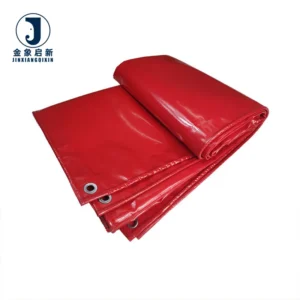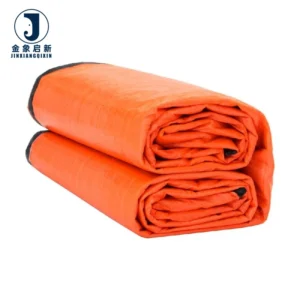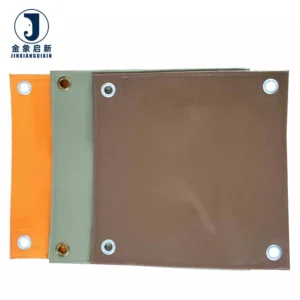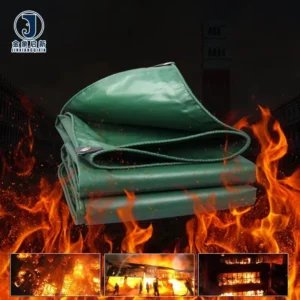
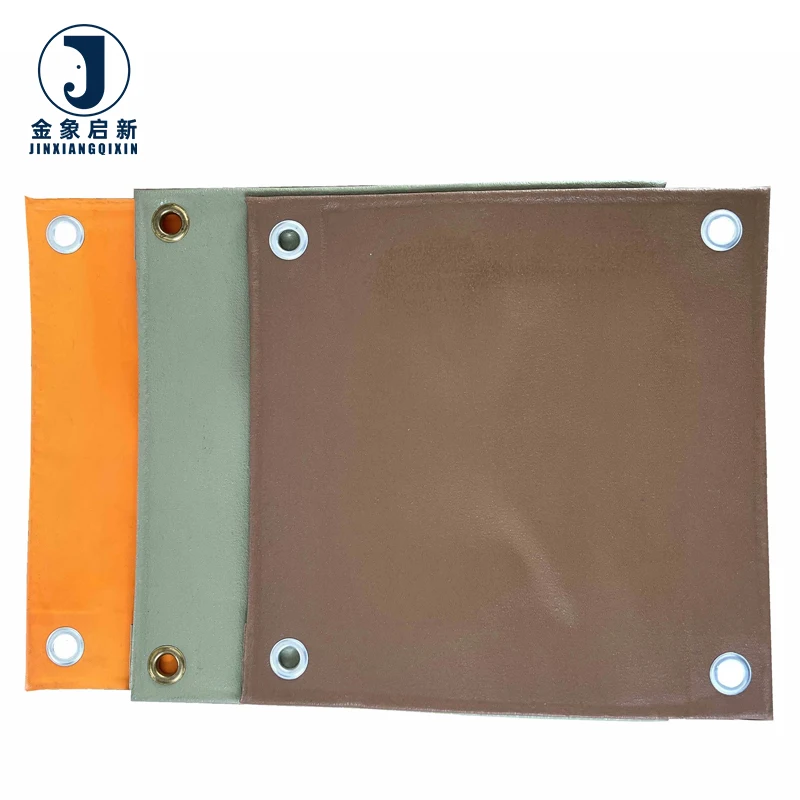
Deep Coating Process Control — Three dedicated production lines and nearly 30 years of PVC formulation experience ensure every roll of Technical Grade PVC Coated Tarpaulin with Flame Retardant – Knife Coated meets the stated GSM, coating adhesion, and treatment specification before it leaves the factory.
Technical Specifications
| Parameter | Value |
|---|---|
| Product Type | PVC Coated Tarpaulin |
| Coating Material | PVC (knife coated) |
| Weather Resistance | Outdoor life assurance, 1-3 years (verify against current batch data) |
| Flame Retardant | Flame retardant treatment available (grade not stated — confirm required standard for your market) |
| Anti-Static | Anti-static treatment available (surface resistance or standard to be confirmed) |
| Anti-Cold | Anti-cold treatment available |
| Anti-Mildew | Anti-mildew treatment available |
| Waterproof | Fully waterproof coated construction |
| Strength Characteristic | High strength to prevent damage during installation |
| Facility Certification | ISO, CE |
Application Suitability
| Application | Exposure & Requirement |
|---|---|
| Industrial site enclosures | Constant weather exposure, wind loading, requirement for fire-safe materials in occupied zones |
| Outdoor equipment and stockpile covers | UV radiation, rain ingress, abrasion from loading and unloading operations |
| Temporary workshop and warehouse extensions | Flame retardant compliance for building authority approval, large unsupported spans |
| Agricultural storage covers | Moisture, fungal spores, temperature fluctuation requiring anti-mildew and anti-cold treatments |
Why the Flame Retardant Claim on Your Data Sheet Means Nothing Without a Grade
A fabric described as "flame retardant" without a referenced standard such as DIN 4102, NFPA 701, or M2 cannot be submitted to a building inspector or safety auditor.
Technical buyers regularly receive quotations stating flame retardant treatment, only to discover at the job site that the certificate does not name the standard the local authority requires, or the test report covers a different product from the batch that arrived [NEED_CITE: DIN 4102 fire classification for building materials]. When the specification gap surfaces during a site inspection, the entire installation halts until compliant material arrives. The PVC Coated Tarpaulin manufacturer custom approach at Jinxiang addresses this by providing test reports tied to the specific flame retardant grade ordered, so the documentation matches the roll on the cutting table.
How Knife Coating Drives the Performance of This PVC Coated Tarpaulin
The knife-over-edge coating method forces PVC paste into the interstices of the base fabric under controlled pressure, producing a mechanical bond between coating and yarn that resists delamination during fabrication. For technical buyers and fabricators, this means the heat-weld seam can be tuned to fuse the coating layers without exposing the base fabric, maintaining waterproof continuity across joined panels. The PVC Coated Tarpaulin manufacturer custom specification allows coating weight to be set independently of base fabric denier, giving fabricators control over the balance between flexibility and tensile strength.
Treatment Chemistry and What It Means at the Specification Stage
Flame retardant, anti-static, anti-cold, and anti-mildew treatments are each introduced at different stages of the PVC compounding process, and their effectiveness depends on dispersion uniformity within the coating layer [NEED_CITE: tensile and tear test methods for coated fabrics per ISO 1421]. A flame retardant additive that is poorly dispersed will pass a small-sample test but produce inconsistent results across a full roll. Jinxiang’s 10-person R&D team formulates each treatment batch against the target performance, and the 100% pre-shipment inspection checks that the treatment concentration is consistent from the first metre to the last.
Reading the Specification Sheet: What GSM, Denier, and Coating Weight Actually Tell You
GSM alone does not define mechanical performance — a 650 GSM fabric with a light base fabric and heavy coating will tear more easily than a 650 GSM fabric with a dense, high-denier base and a thinner coating layer. The base fabric denier and weave density govern tensile and tear strength, while the coating weight governs waterproof integrity, abrasion resistance, and heat-weld behaviour. Knife coating produces higher coating adhesion than dip coating, which directly affects how well the seam holds when the fabricated cover flexes under wind load or during installation. Technical buyers should request the base fabric specification alongside the GSM to understand the full construction.
What Happens When the Flame Retardant Grade Does Not Match the Site Requirement
A mining ventilation duct specified for anti-static performance but delivered without a surface resistance test report will fail the site safety audit before it is hung. A construction enclosure that requires B1 classification per DIN 4102 but arrives with only a generic "flame retardant" certificate will be rejected by the building control officer, and the entire order must be replaced at the contractor’s cost [NEED_CITE: DIN 4102 fire classification for building materials]. These are not edge cases — they represent recurring patterns in coated fabric procurement where the gap between the quotation claim and the delivered documentation causes project delays and material waste.
Why Technical Buyers Source This PVC Coated Tarpaulin from Jinxiang
The specification sheet supplied with each roll states the base fabric denier, coating weight, and GSM, so the technical buyer can verify the construction matches the project requirement. Flame retardant and anti-static grades are supported by test reports tied to the production batch, not a generic document from a previous run. Three full production lines and 36 sets of professional equipment provide the capacity to maintain colour and weight consistency across container-load volumes. The 10-person R&D team develops custom formulations when standard treatments do not meet a specific site requirement. Every roll undergoes 100% inspection before dispatch, and the ISO and CE certified facility provides full customs documentation including certificate of origin.
Documentation & Verification
- Material specification sheet stating GSM, base fabric denier, and coating weight per roll
- Flame retardant test report referenced to the applicable standard and batch number
- Anti-static surface resistance data where anti-static treatment is specified
- Pre-shipment inspection record confirming colour and weight consistency across the order
- ISO and CE certificates and certificate of origin for customs clearance
Fabrication, Handling & Storage
- Set heat-weld temperature and dwell time to the PVC coating weight — heavier coats require longer dwell to achieve full fusion at the seam
- Store rolls horizontally on racking to prevent flat-spotting that affects tension during unrolling and cutting
- Allow anti-cold treated rolls to acclimatise to workshop temperature before cutting to avoid coating crack at the knife edge
- Use a rotary blade rather than a guillotine on knife-coated PVC to produce a clean edge that welds without fraying
- Clean fabricated surfaces with pH-neutral detergent — solvent-based cleaners can attack the anti-mildew additive in the coating
Requesting a Technical Quotation
Provide the target flame retardant or anti-static standard required by your site authority, the required roll width and annual volume, and whether you need material for in-house fabrication or pre-cut panels. If your project requires a treatment combination not listed in standard grades, describe the exposure conditions so the R&D team can formulate a custom compound. Sample rolls are developed within days for specification approval before production commitment.
Frequently Asked Questions
Q: How is the flame retardant grade verified and which standards can be supplied?
A: Flame retardant treatment is formulated to the grade specified at order — confirm whether your market requires DIN 4102 (B1/B2), NFPA 701, or M2 classification. A test report referencing the applicable standard and the production batch is supplied with the shipment, so the documentation can be presented directly to the site safety authority or building inspector without additional testing.
Q: How is GSM verified on arrival to match the quoted specification?
A: Each roll is weighed during the 100% pre-shipment inspection, and the measured GSM is recorded on the packing list. The material specification sheet supplied with the order states the target GSM alongside the base fabric denier and coating weight, so the receiving team can cross-check the physical roll against the documented specification immediately on delivery.
Q: What anti-static surface resistance levels can be achieved and how are they tested?
A: Anti-static treatment is available with surface resistance levels confirmed by test — state the ohm range your site specification requires at the inquiry stage. The test report is matched to the production batch, and the R&D team can adjust the anti-static additive concentration to meet specific thresholds required in mining or aviation ventilation applications.
Q: How do coating method and weight affect heat-weld seam performance?
A: Knife coating forces PVC into the base fabric under pressure, producing higher coating adhesion than dip coating. This means the heat-weld fuses the coating layers thoroughly without exposing the base yarn. Heavier coating weights require adjusted weld temperature and dwell time — the specification sheet includes the coating weight so fabricators can calibrate their welding equipment before production runs.