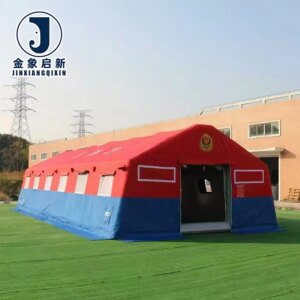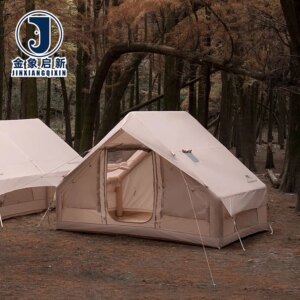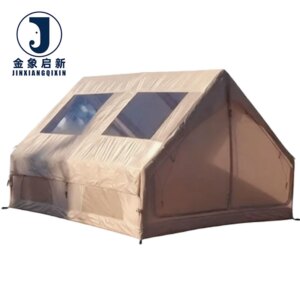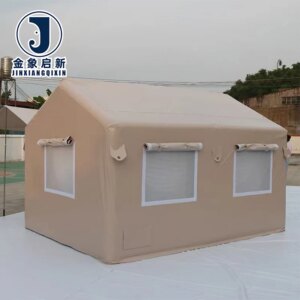
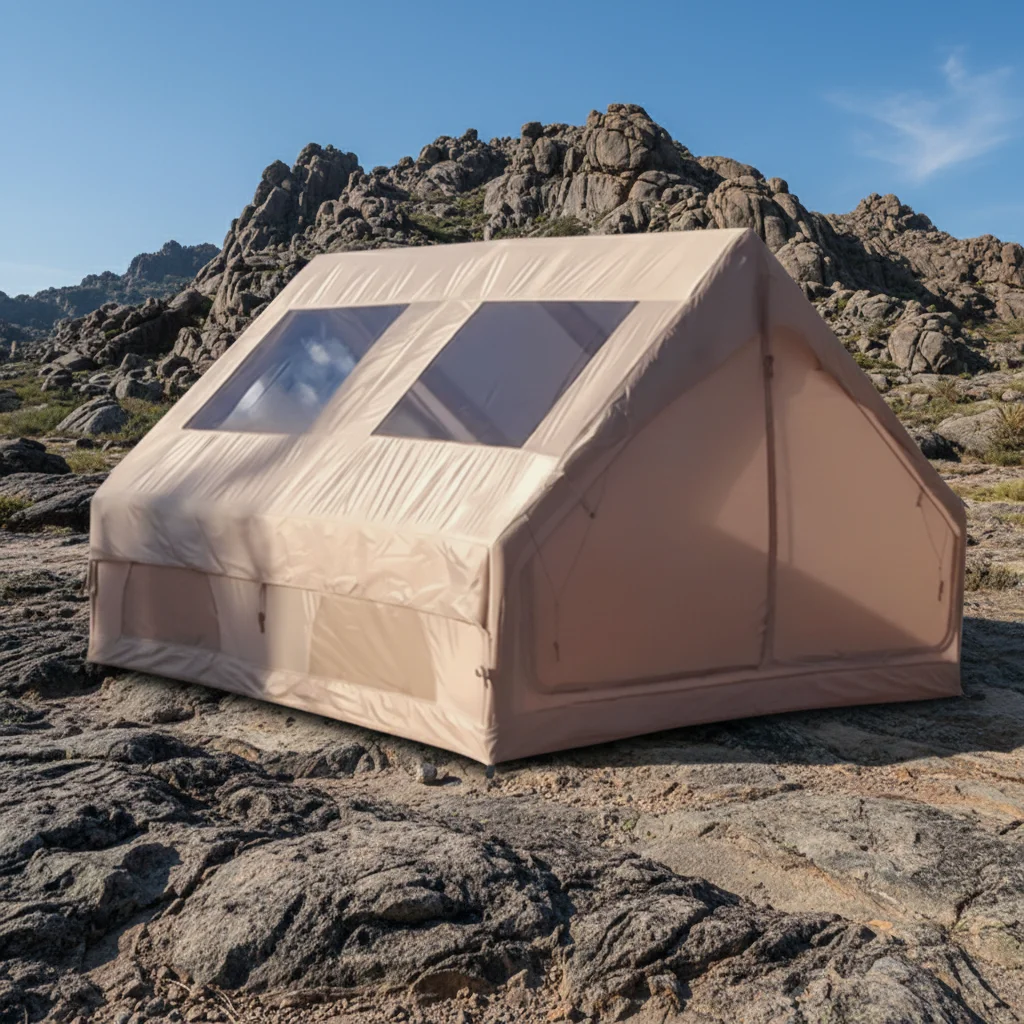
Process-Controlled Coating — three dedicated production lines maintain consistent adhesion and coating weight across every roll of PVC inflatable tent fabric.
Technical Specifications
| Parameter | Value |
|---|---|
| Product Type | Inflatable Tent Fabric |
| Core Material | PVC Tarpaulin |
| Coating Method | Knife coated |
| Waterproof | Yes |
| UV-resistant | Available — confirm the grade required for your market (test basis not stated in source) |
| Tear-resistant | Yes (test standard not stated in source) |
| Fire-retardant | Available in flame retardant grades — confirm the grade required for your market (grade not stated in source) |
| Anti-static | Available — confirm surface resistance standard applicable to your site (test standard not stated in source) |
| Product Forms | Inflatable structure with quick automatic opening mechanism |
| Customization | OEM & ODM: sample customization, pattern printing, material selection, product design |
| Quality Control | Full-process inspection with dedicated QA & QC staff |
| Certifications | ISO9001, ISO14001, ISO45001, CE |
Application Suitability
| Application | Exposure & Requirement |
|---|---|
| Inflatable membrane structure manufacturing | Internal inflation pressure cycles, flex stress at welded seams, airtightness integrity |
| Emergency relief temporary shelters | Rapid deployment, fire safety compliance in camp settings, repeated inflation and deflation |
| Outdoor expedition tent fabrication | Four-season weather exposure, UV load, abrasion during transport and ground contact |
| Remote industrial field operations | Equipment storage under tension, wind load on inflated beams, dust and chemical particulate exposure |
Why Claimed Fire-Retardant PVC Inflatable Tent Fabric Often Fails Site Inspection
A flame-retardant claim without a published test standard is a compliance gap waiting to surface at the wrong time.
Inflatable shelters used at mining sites, aviation hangars, and disaster-relief staging areas frequently require documented fire classification before they are permitted on site. Yet suppliers routinely quote flame-retardant treatment as a checkbox feature, shipping material that carries no test report tied to a recognized standard. Procurement teams then face rejection at the site safety audit, delayed project timelines, and costly replacement orders — all traceable to a specification sheet that never defined what the treatment actually met. [NEED_CITE: fire classification standards for temporary structures in industrial sites]
How Coating Weight and Base Fabric Define Inflatable Beam Performance
The structural reliability of an inflatable tent depends on the PVC inflatable tent fabric holding air under continuous pressure. The coating method and weight directly govern airtightness at the weld line, while the base fabric denier and weave determine how the material resists the tensile forces generated when beams are inflated. A knife-coated construction delivers deeper penetration into the base yarn, producing higher peel strength at the seams where flex cycles concentrate stress during repeated setup and breakdown.
What Fire-Retardant and Anti-static Treatments Actually Require
Specifying fire-retardant PVC inflatable tent fabric means selecting a grade tied to a defined test method — whether M2, B1 per DIN 4102, or NFPA 701 — rather than accepting a generic claim. Anti-static treatment follows the same logic: the measured surface resistance must align with the compliance framework of the deployment site, particularly in mining and aviation environments where static discharge poses ignition risk. [NEED_CITE: surface resistance thresholds for anti-static fabric in hazardous environments] Requesting the test report with the quotation, not after delivery, eliminates the gap between what is promised and what arrives on the production floor.
Reading the Specification Sheet Beyond GSM
GSM alone describes weight per square metre, not structural capability. The base fabric denier and weave density determine how load distributes across the yarn network before a tear initiates and propagates. Coating adhesion — governed by knife-coating penetration depth — controls whether the PVC layer stays bonded to the base fabric under the cyclic inflation pressure that inflatable beams experience. Surface finish, whether glossy or matte, affects both field cleaning behaviour and the adhesion of printed branding or pattern overlays applied during fabrication. Together, these parameters define how the fabric performs under the specific mechanical and environmental loads your inflatable structure will face, far beyond what a single weight figure can communicate.
The Hidden Cost of Under-specified Inflatable Fabric
Inflatable structures fail at the weld before the fabric body reaches its tensile limit. When coating adhesion is insufficient, the seam separates under inflation pressure, and the entire beam collapses — a failure mode that is difficult to detect during incoming fabric inspection but becomes obvious in field use. Colour variation between rolls in the same production batch creates visible mismatches once panels are welded side by side on a large membrane structure. And when fire-retardant treatment lacks supporting documentation, the structure may pass visual inspection but fail the compliance audit that follows, forcing removal and replacement at significant project cost. [NEED_CITE: weld failure modes in coated fabric inflatable structures]
Why Fabrication Teams Source Inflatable Tent Fabric Here
Three full production lines with dedicated coating equipment support batch-to-batch consistency in coating weight and colour across multi-roll orders. The ten-person R&D team develops material samples matched to your inflatable beam design, adjusting base fabric selection and coating parameters before production begins. Every roll undergoes in-process quality checks at each coating stage, with a full pre-shipment inspection confirming GSM, colour, and coating adhesion before dispatch. Custom widths, colours, and pattern printing are available with sample approval built into the sales process, reducing the risk of specification mismatches reaching your cutting table. Documentation accompanies each shipment — specification sheets, test reports, and inspection records — so your compliance team has the evidence required at site handover.
Documentation & Verification
- Material specification sheet stating GSM, base fabric denier, and coating type per roll
- Fire-retardant and anti-static test reports referencing applicable standards where confirmed
- ISO9001, ISO14001, ISO45001, and CE certificates included in shipment documentation
- Pre-shipment inspection record verifying coating weight, colour consistency, and surface quality
- Certificate of origin and customs documentation for cross-border shipment clearance
Fabrication, Handling & Storage
- Adjust hot-air welding temperature and dwell time to the knife-coated PVC layer for airtight beam seams
- Store rolls vertically on end-caps to prevent permanent creasing across the coated surface
- Allow cold-stored rolls to reach ambient temperature before unrolling to avoid coating micro-cracking
- Use compatible PVC adhesive for field repairs on coated fabric punctures and seam separations
- Plan panel cutting layout to minimise weld seams at high-stress inflation points
Requesting a Material Match for Your Inflatable Structure
Provide the inflation pressure range, deployment environment, and the fire-retardant or anti-static standard your site requires so we can recommend the appropriate base fabric and coating combination. Specify whether you need rolls for your own fabrication line or finished cut-to-shape panels with welded seams. Include target roll width, colour references, and annual volume to receive a quotation with lead time and sample development timeline.
Frequently Asked Questions
Q: What fire-retardant grades are available and which test standards do they meet?
A: PVC inflatable tent fabric is available in flame-retardant grades aligned with standards such as M2, B1 per DIN 4102, or NFPA 701. Confirm the specific classification required by your deployment site or local regulation, and we will match the formulation and provide the corresponding test report with shipment documentation.
Q: How is the anti-static property verified before shipment?
A: Anti-static treatment is applied during the coating process and verified through surface resistance measurement. Specify the compliance standard applicable to your site — such as mining or aviation requirements — and we will provide the measured values and test documentation alongside the material specification sheet.
Q: How do you confirm GSM and coating weight on delivery?
A: Each roll is inspected during production against the stated specification. A pre-shipment inspection record documents the verified GSM, coating adhesion, and surface quality. This record ships with your order, enabling your incoming quality team to cross-reference values without relying on supplier claims alone.
Q: What welding parameters produce airtight seams on inflatable beam structures?
A: Hot-air welding temperature and speed must match the coating weight and PVC formulation. We provide recommended welding parameters based on the specific material supplied. Sample panels are available for your fabrication team to validate seam integrity before committing to full production runs.
Q: Can you supply fabric in roll form or only finished inflatable structures?
A: Both options are available. Fabric is supplied by the roll for manufacturers with their own welding and fabrication lines, with custom widths and colours produced to order. Finished inflatable structures with welded seams and quick-opening mechanisms are also available through our OEM and ODM capability.