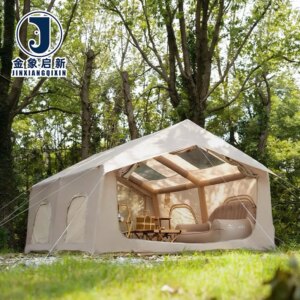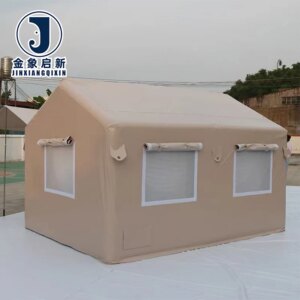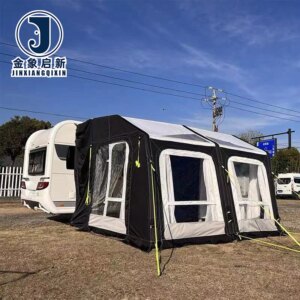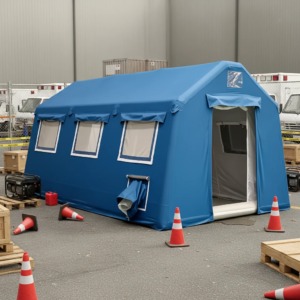
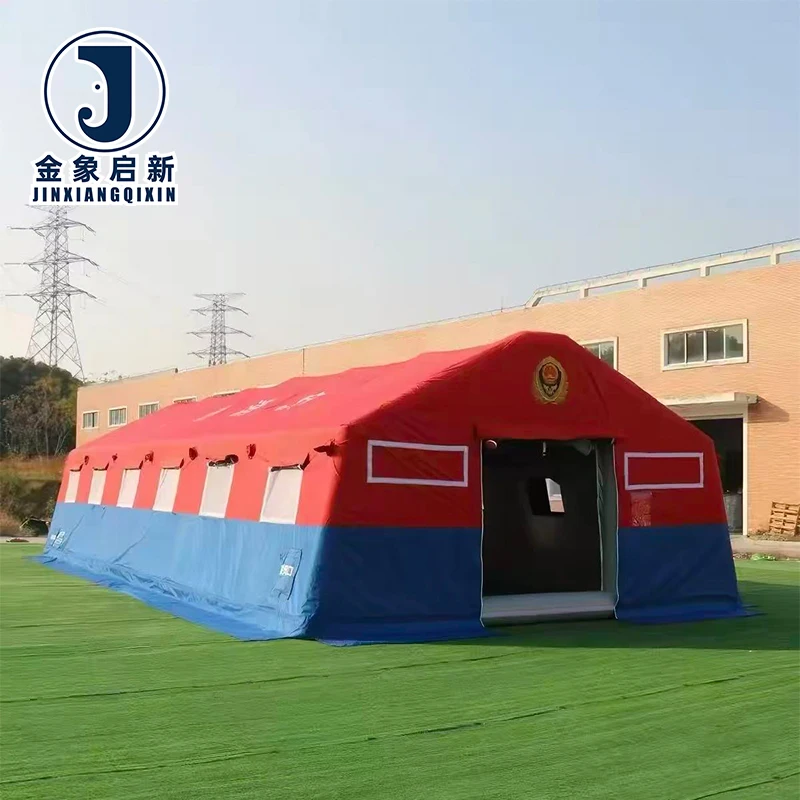
Coating Process Control — Our 10-technician R&D team manages formulation, coating weight, and adhesion parameters at every stage to ensure the PVC inflatable tent fabric you specify is the fabric you receive.
Technical Specifications
| Parameter | Value |
|---|---|
| Product Type | Inflatable Tent |
| Core Material | PVC tarpaulin |
| Construction Type | Inflatable structure with single layer construction |
| Deployment Method | Quick automatic opening |
| Season Rating | Four-season use |
| Key Performance | Waterproof, UV-resistant, tear-resistant, fire-retardant, anti-static |
| Fire-Retardant Treatment | Available in fire-retardant grades — confirm the grade required for your market |
| Anti-Static Treatment | Available in anti-static grades — confirm the standard required for your market |
| UV Resistance | UV-resistant treatment applied — confirm test basis for your specification |
| Customization | OEM & ODM (sample customization, pattern printing) |
| Production Lines | 3 full production lines |
| Processing Equipment | 36 sets of professional processing equipment |
| Standards | ISO9001, ISO14001, ISO45001, CE |
Application Suitability
| Application | Exposure & Requirement |
|---|---|
| Disaster relief rapid deployment shelters | Immediate inflation, repeated packing and unfolding, variable climate exposure requiring four-season material stability |
| Emergency response command centers | Fire-retardant certified fabric for enclosed occupied spaces, anti-static protection for communications and electronic equipment |
| Construction site temporary shelters | Prolonged UV and moisture cycles, abrasion from site debris, wind loading on inflated membrane surfaces |
| Mobile field operations bases | Rapid automatic opening under field conditions, structural load on heat-welded seams during sustained inflation |
| Seasonal storage facilities | Long-term weather exposure, waterproof integrity for stored goods, resistance to coating degradation over seasons |
Why Coating Weight Verification Matters More Than the Quoted GSM for Inflatable Tent Fabric
The Inflatable tent fabric coating technology you pay for must be the coating weight that arrives on site — verified, not assumed.
When a technical buyer specifies PVC tarpaulin for inflatable structures, the GSM figure on the quotation becomes the basis for tensile and tear expectations. Yet fabric that arrives lighter than agreed loses load-bearing capacity exactly where an inflated structure needs it most: at the welded seams under internal air pressure. We have seen shelters fail mid-season not because the base fabric tore, but because insufficient coating adhesion allowed seams to peel apart under cyclic inflation stress [NEED_CITE: tensile and tear test methods for coated fabrics per ISO 1421]. For disaster relief applications, this kind of failure is not a warranty claim — it is a life-safety risk.
PVC Coating Adhesion and Its Role in Inflated Seam Integrity
In a single-layer inflatable tent, the fabric does more than keep out weather — it is the structural skin. Internal air pressure creates continuous tension across every welded seam. The Inflatable tent fabric coating technology must deliver not only surface waterproofing but sufficient coating-to-substrate adhesion to prevent delamination at heat-welded joints. When adhesion is weak, the first sign of failure is not a visible tear but a slow seam peel that deflates the structure gradually, often going undetected until wind load accelerates the separation.
Fire-Retardant and Anti-Stable Treatment Chemistry for Enclosed Shelters
Emergency command centers and disaster relief shelters house personnel, heating equipment, and electrical systems inside an enclosed membrane. The fire-retardant grade of the PVC compound determines whether the fabric self-extinguishes or continues to burn once the ignition source is removed. Anti-static treatment matters equally when sensitive communications gear operates inside the structure — surface charge accumulation on untreated PVC can discharge unpredictably. Both treatments must be verified with test reports tied to the production batch, not generic data sheets [NEED_CITE: DIN 4102 fire classification for building materials].
How Base Fabric Denier and Weave Density Interact With Coating Weight
GSM alone does not define how the PVC tarpaulin will behave under inflation load. The base fabric denier determines individual yarn strength, while warp and weft density governs how that strength distributes across the sheet. A heavier coating on a low-denier, loose-weave base may produce acceptable GSM on the scale but poor tear propagation resistance. Conversely, a high-denier tight weave with a lighter, precisely controlled coating can deliver superior tensile performance. Inflatable tent fabric coating technology must balance all three variables — denier, weave density, and coating formulation — to produce a membrane that holds pressure without brittle failure in cold conditions or excessive softening in heat. For technical buyers specifying material for four-season deployment, requesting the base fabric specification alongside the coating weight is essential to evaluating true field performance [NEED_CITE: coating adhesion and peel strength testing for PVC-coated polyester].
The Hidden Cost of Specifying Coated Fabric Without Batch-Level Data
When flame-retardant treatment is claimed on the quotation but no batch-specific test report accompanies the shipment, the buyer faces a compliance gap at the project inspection stage. Emergency shelters rejected for lacking documented fire certification must be replaced under deadline pressure, often at premium cost. Similarly, colour variation between rolls in a single order becomes visible only after the structures are inflated side by side on site — a problem that cannot be corrected without full replacement. Coating weight shortfalls compound these issues: a membrane that tested adequately in the sample may underperform in bulk if process control drifts during production [NEED_CITE: batch consistency verification for coated technical textiles].
Why Procurement Teams Specify This Fabric Through Our Facility
Our three full production lines and 36 sets of processing equipment allow us to run dedicated batches for inflatable tent orders, maintaining coating parameter consistency from first roll to last. The 10-technician R&D team develops custom formulations and validates coating adhesion before production scales, ensuring the Inflatable tent fabric coating technology matches your structural requirements. Every production stage includes dedicated QA/QC checkpoints, and a 100% pre-shipment inspection covers airtightness, seam weld integrity, and coating weight verification against the stated specification. Samples are developed within days for custom GSM, colour, or treatment requirements, giving technical buyers physical confirmation before committing to volume. ISO9001, ISO14001, ISO45001, and CE documentation ships with each order, traceable to the production batch.
Documentation & Verification
- Material specification sheet stating base fabric denier, coating weight, and treatment parameters for the exact batch
- Test reports for fire-retardant and anti-static grades issued against the order number
- Pre-shipment inspection record confirming seam weld integrity and airtightness testing
- ISO9001, ISO14001, ISO45001, and CE certificates traceable to production batch
- Certificate of origin and customs documentation for cross-border shipment
Fabrication, Handling & Storage
- Heat-weld seams at temperatures calibrated to the specific PVC coating formulation to prevent delamination under inflation pressure
- Store rolls upright on end-caps in a dry, shaded area to avoid flat-spot deformation of the PVC coating surface
- Use compatible PVC solvent cement for field repairs on single-layer inflatable membrane punctures
- Avoid folding the inflated tent fabric at the same crease line repeatedly to prevent coating crack initiation
- Clean surfaces with neutral pH detergent only — alkaline agents can degrade the fire-retardant and anti-static surface treatment
How to Request a Material-Grade Quotation
Provide your target deployment environment, including temperature range and expected wind load, so we can recommend the appropriate coating weight and base fabric construction. Specify the fire-retardant grade and anti-static standard required by your project’s compliance authority, along with any colour or pattern printing requirements. Confirm whether you need rolls at a specific width for your own fabrication line or fully welded inflatable structures ready for deployment, and whether pre-production samples are required for approval before bulk production.
Frequently Asked Questions
Q: What test basis supports the fire-retardant and anti-static claims on inflatable tent fabric?
A: We supply test reports tied to your production batch, specifying the grade achieved and the test standard applied. For fire-retardant performance, confirm the classification required in your market — we will formulate the PVC compound accordingly and provide the matching certification documentation with your shipment.
Q: How does PVC coating weight relate to tear and tensile strength in inflatable structures?
A: Coating weight interacts with base fabric denier and weave density to determine overall mechanical performance. A higher GSM on a low-density base does not guarantee better tear resistance. Request our material specification sheet showing all three parameters for the exact formulation proposed for your inflatable tent project.
Q: Can anti-static treatment be verified with a surface resistance test report before shipment?
A: Yes. We conduct surface resistance testing on treated batches and include the measured values in the pre-shipment inspection record. Specify the surface resistance range required for your application — particularly relevant when the shelter will house electronic or communications equipment.
Q: How are welded seams tested for airtightness and load-bearing integrity?
A: Every welded seam undergoes visual inspection and pressure testing during the 100% pre-shipment inspection. We verify that seam peel strength meets the structural demands of sustained inflation, and the inspection record ships with your order for compliance documentation.
Q: Can you customize the coating formulation for a specific inflatable structure project?
A: Our R&D team develops custom PVC formulations targeting specific coating weights, colour references, and treatment combinations. Submit your material performance requirements and we will produce samples within days for your evaluation before volume production begins.